Sabitlenmiş Tweet
deb belt
5.9K posts


deb belt
@debbelt
Reader. Listener. Writer. Amateur piano player. Professor Longhair faithful. Your friend here.
Way Out West Katılım Mayıs 2010
2.2K Takip Edilen539 Takipçiler
deb belt retweetledi

Chinese longevity hacks better than morning matcha
English
@gingerfiest That’s crazy! Maybe he could smell the rawhide bones? But it’s probably his sixth sense.
English

@debbelt & hide treasures & rawhide bones in it. They did have a few hiding places. Before we even got up there he was heading back to us with a big ass raw hide bone in his mouth. It creeped us all tf out because how did he know where to go and look? It was like she gave her blessing.
English
Had to take Frost back to vet. Skin infection on his stomach returned. I promised him I wouldn’t leave him. So when she came in to examine him he backed up squeezing between my legs and sitting down putting all his weight against my leg. I wrapped my arms around him. It broke me.
English
deb belt retweetledi

In 2006 a high school English teacher asked students to write to a famous author & ask for advice.
KURT VONNEGUT (who left us 19yrs ago today) was the only one to respond.
His reply was a doozy.

English
deb belt retweetledi

You must write. Write about what you learn. Write about what’s on your mind. Write about what’s happened to you. Write about what you want. Write about what you know. Write to yourself. Write to your friends. Write to your family. Write to an audience. It doesn’t really matter what, who and where you write. It matters that you write. No skill will help you see, or communicate, more clearly.
English
@gingerfiest Wow. I hope you write all of this down. There’s a lot of material here. What he steals, where he hides it, how he goes about bartering. Golden. People love this kind of thing!
English
@debbelt Frost can throw shade that could put beyonce to shame, & hurt your feelings with the succinct precision of a teenaged girl. He also enjoys arguing. He’s… opinionated. Shane gave the sit command last week and he play snapped his teeth at his finger telling him no.
English
deb belt retweetledi

Seeking furniture donations for disabled elderly in Algiers due to fire. Currently need three twin beds and boxspring w/ stand, night table, tv table, very small kitchen table and two chairs, and tall or long dresser. Any small arm chairs welcome too!

English
@gingerfiest A sarcastic canine is not something I had considered. Makes perfect sense tho, because animals are incredibly smart. They have us wrapped around their paws.
English
deb belt retweetledi


A toast to @ronslate who just published my poems in ON THE SEAWALL 🥂
Content Warning:
Rhyming & Metrical
ronslate.com/explain-the-he…

English
@CWaddington504 @ronslate @aliner @BorisDralyuk @Poochigian when one’s darling slips away in snowglobe swirls of yore…
Beautiful work. We require poetry
English
deb belt retweetledi

A glimpse into the musical world that came before jazz.
Opening April 16 at the New Orleans Jazz Museum, The First Piano Professors and the Lost Music of Early New Orleans explores the early composers and performers who helped shape the city’s sound.
The opening is from 6-8 PM on the 16th and features a performance by Victor Campbell.
Presented by Anne Atkinson and curated by John Davis, the exhibition features rare works that have not been heard in over a century.
Celebrate the opening and return during French Quarter Fest weekend to hear curator John Davis perform this historic music live on April 18th, 5:30 PM, at the New Orleans Jazz Museum.
#NOLAJazzMuseum #NewOrleansMusic #CulturalHistory

English
deb belt retweetledi

A community college professor taught the same study skills lecture for 30 years, and the video quietly became one of the most watched educational recordings on the internet.
His name is Marty Lobdell. He spent his career as a psychology professor watching students fail not because they were lazy, but because nobody had ever taught them how their brain actually works under the pressure of learning something hard.
The lecture is called "Study Less Study Smart." Over 10 million views. Passed around in Reddit threads, Discord servers, and university study groups for over a decade. And the core insight buried inside it has been sitting in cognitive psychology research for years, waiting for someone to explain it in plain language.
Here is the framework that completely changed how I think about effort.
Your brain does not sustain focus the way you think it does. Studies tracking real students found that the average learner hits a wall somewhere between 25 and 30 minutes.
After that, efficiency doesn't just decline. It collapses. You're still sitting at your desk, still looking at the page, but almost nothing is going in.
Lobdell illustrated this with a student he knew personally. She set a goal of studying 6 hours a night, 5 nights a week, to pull herself out of academic probation. Thirty hours of studying per week. She failed every single class that quarter.
She wasn't failing because she lacked effort. She was failing because she had confused time spent near books with time spent actually learning. The 25-minute crash hit her at 6:30pm every night. She spent the next five and a half hours sitting in the wreckage of her own focus and calling it studying.
The fix sounds almost too simple. The moment you feel the slide, stop. Take five minutes. Do something that actually gives you a small reward. Then go back. That five-minute reset returns you to near full efficiency. Across a six-hour window, the difference is not marginal. It is the difference between thirty minutes of real learning and five and a half hours of it.
The second thing he taught destroyed something I had believed about how memory actually works.
Highlighting feels productive. Going back over your notes and recognizing everything feels like knowing. But recognition and recollection are two completely different cognitive processes, and your brain is very good at making you confuse them.
You can see something you've read before and feel completely certain you understand it, even when you couldn't reconstruct a single sentence from memory if the page were blank.
He proved this live in the room. He read 13 random letters to his audience. Almost nobody could recall them. Then he rearranged the same 13 letters into two words: Happy Thursday. The whole room got all 13 without effort.
Same letters. Same count. The only thing that changed was meaning.
The brain stores meaning. Not repetition. The moment new information connects to something you already understand, the retention changes entirely.
This is what the cognitive psychology literature calls elaborative encoding, and it is the mechanism underneath every effective study technique.
The third principle was the one that hit me hardest, and the one almost nobody applies.
Lobdell cited research showing that 80 percent of your study time should be spent in active recitation, not passive reading. Close the material. Say it back in your own words.
Teach it to someone else, or to an empty chair if no one is around. The struggle of retrieval is where the actual learning happens. Reading your notes again is watching someone else do the work.
His parting line has stayed with me longer than almost anything else I have read about learning.
He told the room that if what he shared didn't change their behavior, they hadn't actually learned it. It would just live in their heads as something they had heard once and felt good about.
He was right. And most people leave every lecture exactly like that.
The students who remember everything aren't putting in more hours.
They stopped confusing the feeling of studying with the fact of it.
English
deb belt retweetledi

How to participate in this week’s #JazzCallforFreedom
1. Post your own response video of “Visions" by Stevie Wonder.
2. Your response can take many forms: music, song, spoken word, dance, visual art, etc.
3. TAG @jazzdotorg and use #JazzCallforFreedom, so we can post your video!
English
deb belt retweetledi

My analog contribution to the recent AI-in-writing discourse has been to recommend the very best books on writing, written by humans. If you share my aversion to wallowing in the prospect of a post-literate apocalypse and just want to make better sentences, I can think of few better guides than @NealFAllen and @ANNELAMOTT: penguinrandomhouse.com/books/786813/g…
English
deb belt retweetledi

deb belt retweetledi
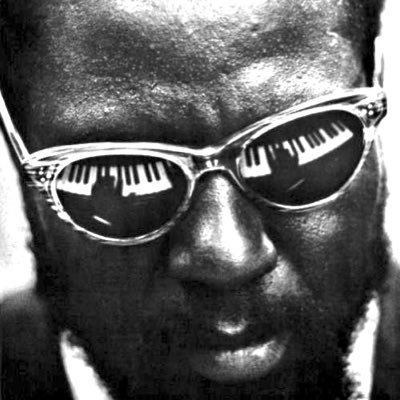
Marvin Gaye delivering one of the smoothest national anthems ever at the 1983 NBA All-Star Game.
English

deb belt retweetledi