

De México
184 posts


In 1974, Dan Jury was just 23 years old when he made a decision that would change his life forever—and, in some way, the lives of many others.
He chose to take his grandfather, Frank Tugend, then 81, out of a nursing home. He welcomed him into his small apartment and cared for him day and night.
What might have seemed like a quiet, almost invisible act gradually became something much greater.
For three years, Dan stayed by his grandfather’s side, accompanying him through every moment with patience and devotion. During that time, he began photographing their daily life—honest, unfiltered images that captured not only fragility, but also the depth of their bond.
From those photographs came Gramp, published in 1978 together with his brother Mark. The book sold over 100,000 copies and helped spark a new awareness in the United States, paving the way for the hospice movement and a different approach to end-of-life care.
In the 1970s, many believed Dan was wasting his youth—giving up opportunities, experiences, and freedom.
But he chose to stay.
He chose to listen.
He chose to be present.
Years later, he would say that the time spent with his grandfather had taught him more than any job or relationship ever could.
Frank, an immigrant and survivor of the Great Depression, was never a burden. He was a quiet guide. He taught Dan the strength hidden within vulnerability, the true value of family, and the dignity that exists even in asking for help.
Their photographs tell a simple yet powerful truth: caring for someone is not only about giving—it is also about receiving. It is a profound human exchange, made of love, presence, and respect.
This story helped change the way many people see aging and the end of life. It showed that there is an alternative to loneliness: being cared for at home, surrounded by affection and dignity.
And perhaps that is the point that remains.
Because in a fast-moving world, choosing to pause and stay beside someone is not a waste of time—it is a revolutionary act.
And sometimes, the simplest gesture—staying—is the one that leaves the greatest legacy. 💙

English

Both of those cards are smaller than a fingernail and physically identical, down to the millimeter. The 2005 one held about 30 songs. The 2024 one holds half a million. Storage inside the exact same chip multiplied 15,625 times in 19 years.
In 2006, SanDisk's biggest microSD card held 4GB and cost $99, which meant storing a single song ran you about 10 cents. The 2TB version from summer 2024 sells for around $200, which works out to about four hundredths of a cent per song. Per gigabyte, storage got 250 times cheaper in 18 years.
The chips themselves were flat back then. Just one storage layer spread across a piece of silicon, like a parking lot with no second floor. To pack in more storage you needed a bigger chip. But microSD wasn't allowed to grow because phones kept getting thinner every year.
So engineers went vertical. They started stacking memory in layers, like floors of a tiny building. By 2014, SanDisk was stacking 16 floors inside one microSD, each floor shaved thinner than a human hair. Today's chips from Kioxia and SK Hynix stack 218 to 321 floors of memory inside a single piece of silicon. From the outside, the card looks identical to the 2005 version. Inside, it's a tiny skyscraper.
That fingernail-sized card now holds about 47 hours of 4K video, or roughly half a million high-quality photos. The whole thing weighs less than a paperclip.
The era of cheaper storage may be ending though. AI companies are buying up every memory chip they can get their hands on for their data centers. SanDisk raised its prices around 50% in November 2025. Memory card prices have jumped over 100% on some models since early 2025. The same 2TB card that hit a low of $176 last April is creeping back toward $200 today.
For 19 years, your phone and your camera bankrolled a 250x drop in storage costs. Now that bill gets paid by training the next ChatGPT.
DaVinci@BiancoDavinci
Technology then and present
English
De México retweetledi

En Italia hay una idea hermosa llamada “el placer de no hacer nada”.
Sentarse en calma, beber tu café y vivir el momento sin prisas.
Un recordatorio simple: a veces el descanso en sí mismo es la felicidad.
Español

In 2019, Donald Hoffman made a discovery so powerful it could rewrite reality.
The cognitive scientist at UC Irvine ran evolutionary simulations that destroyed a belief humans have held for 200,000 years: that our senses show us the world as it actually exists.
The results were brutal. Every single simulation revealed the same pattern. Organisms that evolved to see truth went extinct. Every time. Organisms that evolved to see fitness advantages survived and thrived. Evolution doesn't care about accuracy. It cares about keeping you alive long enough to reproduce.
Your entire perceptual experience is a lie optimized for survival.
Think about what you see when you look around right now. Colors, shapes, textures, distances. You experience these as fundamental properties of reality itself. The red of an apple exists "out there" in the world. The hardness of a table is a fact about the table. The boundaries between objects are real divisions in the fabric of space.
Hoffman's mathematics prove otherwise.
What you call "red" has nothing to do with the electromagnetic radiation bouncing off the apple.
What you call "solid" has nothing to do with the quantum field interactions that constitute matter.
What you call "separate objects" has nothing to do with the underlying structure of reality. Your brain constructs every single aspect of your perceptual world the way a computer constructs desktop icons.
The icon that says "trash" on your screen isn't actually a small receptacle made of pixels. It's a simplified interface that lets you interact with complex file deletion algorithms without needing to understand the underlying code. Evolution built your senses the same way. Your perceptions are icons that let you interact with fitness relevant information without needing to process the true structure of reality.
The apple isn't red. Redness is your brain's icon for "edible wavelength pattern detected." The table isn't solid. Solidity is your brain's icon for "molecular resistance structure encountered." Space and time themselves aren't fundamental features of reality. They're the coordinate system your perceptual interface uses to organize fitness relevant data.
Hoffman calls this the Interface Theory of Perception. Reality exists. But the relationship between reality and your experience of it is the same as the relationship between complex software processes and the simplified desktop interface you use to access them.
The profound implication is that science itself has been studying the interface, not the reality behind it. Every physics equation, every chemistry formula, every biological mechanism describes patterns in human perceptual experience, not patterns in objective reality. We've been reverse engineering the desktop instead of the operating system.
Which raises an impossible question. If our senses evolved to hide truth, how do we access what's actually there?
Hoffman argues consciousness is the answer. Not brain activity. Not neural processing. Consciousness itself as a fundamental feature of reality, like mass or charge. The interface theory suggests that what we call "physical matter" is actually the perceptual icon our consciousness uses to represent other conscious agents. When you see another person's body, you're seeing the interface representation of their consciousness, not their consciousness directly.
This makes consciousness primary and matter secondary. The exact opposite of how science has operated for centuries.
The mathematical framework Hoffman developed proves this isn't mysticism or philosophy. It's engineering. Conscious agents interacting according to specific mathematical rules create the perceptual experiences we interpret as physical reality. Space and time emerge from these interactions. Matter and energy emerge from these interactions. The laws of physics emerge from these interactions.
What we call the universe is consciousness talking to itself through evolved interfaces.
The practical implications explode in every direction. If your perceptual interface can be understood as software, it can potentially be modified like software. Meditation, psychedelics, and altered states might not be "hallucinations" that distort reality. They might be interface modifications that reveal aspects of reality normally hidden by survival focused perception.
Technology that interfaces directly with consciousness rather than sensory organs becomes theoretically possible. Virtual reality that bypasses your eyes and ears entirely. Artificial intelligence that interacts with the conscious substrate rather than the perceptual interface. Communication that transcends the limitations of language and sensory transmission.
The most unsettling possibility is that Hoffman's framework makes death comprehensible without being comforting. If consciousness is fundamental and bodies are perceptual interfaces, death might be interface termination, not consciousness termination. But there's no guarantee the conscious agent continues in any form recognizable to the human interface.
We think we live in a world made of matter.
We actually live in a world made of consciousness wearing the costume of matter.
The costume is so convincing we forgot we were wearing it.

English

“No me digas que hablaron mal de mí. Dime por qué se sintieron cómodos hablando de mí delante de ti.”
–Victor Hugo
Esta frase es un golpe directo al estómago. Porque no se trata sólo de que hablen mal de ti a tus espaldas… eso es casi inevitable. Lo verdaderamente doloroso es descubrir que las personas que considerabas cercanas se sintieran tan seguras y cómodas criticándote frente a alguien que pensabas que te respetaba.
Ahí es donde duele la traición: no en el que habla, sino en el que escucha y calla. Revela quién valora realmente tu amistad y quién estaba solamente esperando el momento para bajar la guardia.
La lealtad verdadera no consiste NUNCA en escuchar críticas, sino en no permitir que se hagan cómodamente delante de ti.
¿Cuántas veces has vivido esto?
¿Te ha cambiado la forma en que confías en los demás?

Español
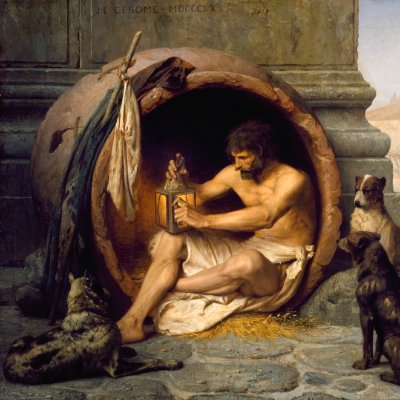
“People are strange: they are constantly angered by trivial things, but on a major matter like totally wasting their lives, they hardly seem to notice.”
— Charles Bukowski

English

He Had $20 to His Name. He Gave Every Dollar of It to a Stranger.
It was 11:47 PM on a Tuesday when Kate McClure's car sputtered and died on the I-95 exit ramp in Philadelphia.
No gas. No cash. No one stopping.
She sat in the dark, hazards blinking, trying not to panic — a young woman alone on the side of a highway in the middle of the night. She called her boyfriend. He was 45 minutes away. She waited, doors locked, watching headlights blur past.
Then there was a knock on her window.
A man — worn coat, weathered face, a bedroll under his arm — stood in the cold. Johnny Bobbitt had been living under that overpass for three months. He'd spent the day collecting enough change for something to eat.
"I used to be a paramedic," he told her through the glass. "You shouldn't be out here alone."
Before Kate could protest, Johnny walked to the nearest gas station — 20 minutes on foot — and came back carrying a red plastic can full of fuel. He spent his last $20. His only $20. He didn't ask for anything back.
"I figured she needed it more than I did tonight," he'd later say, with a shrug like it was nothing. Like giving away everything you own to a stranger is just what you do.
Kate made it home safely.
But she couldn't stop thinking about that shrug.
She went back to find him. Then she started a GoFundMe — just to return the $20, maybe do a little more. She wrote a few sentences about what he'd done and hit share.
By morning, her phone wouldn't stop buzzing.
By the end of the week, strangers from 49 states had donated.
The total raised: $400,000.
For a man who gave his last $20 so a woman he'd never met could get home safe.
When reporters asked Johnny how it felt to have hundreds of thousands of people moved by his simple act of kindness, he got quiet for a moment.
"I didn't do it for attention," he said softly. "I just didn't want her to be scared."
That's it. That's the whole reason.
Not for cameras. Not for a reward. Just because a young woman was alone and frightened, and he remembered what it felt like to be able to help someone.
In a world that can feel so divided, so loud, so exhausting — a homeless man in a worn coat walked 20 minutes in the cold and reminded us what we're actually capable of.
Share this if you believe one small act of kindness can still change everything. 💙

English

Netflix Content VP Kazutaka Sakamoto says some Netflix anime failed to connect with audiences due to too much creative freedom, emphasizing the need for stronger creative alignment between studios and Netflix
He also says adapting anime to a Western style, rather than embracing local elements, isn't the answer for global success
"When thinking about the future of anime, it becomes difficult to move forward unless both sides' visions and processes align at the creative level.
There are many cases where a studio completes a work and says, 'It's finished, please release it,' only for it to not align with audience needs. For example, a studio might aim to create something more Western in style, but in reality, works that fully embrace local elements often resonate more strongly on a global scale.
At the same time, these creative philosophies are important to each studio. If Netflix were to impose its own ideas unilaterally, it would be difficult to produce strong original works. That is why we believe collaboration must extend to how projects are selected, how they are created, and how they can expand as IP while ensuring the studio benefits properly.
Tokuriki: So in the past, there was less of this 'connection,' and now you are aiming to strengthen it through this partnership?
Sakamoto: That has been one of the most difficult areas for us. In the past, when working on Netflix original anime, many projects leaned heavily into creative freedom. While it is wonderful for creators to express what they have always wanted to do, this sometimes led to a disconnect with audiences.
What matters most is that as many people as possible genuinely enjoy a work, and that response spreads globally. To achieve that, we came to believe that collaboration at the creative stage is essential.
For that to work, the studio's leadership and production teams must operate as one unit. If leadership says one thing but the team feels differently, the process falls apart."


English
De México retweetledi

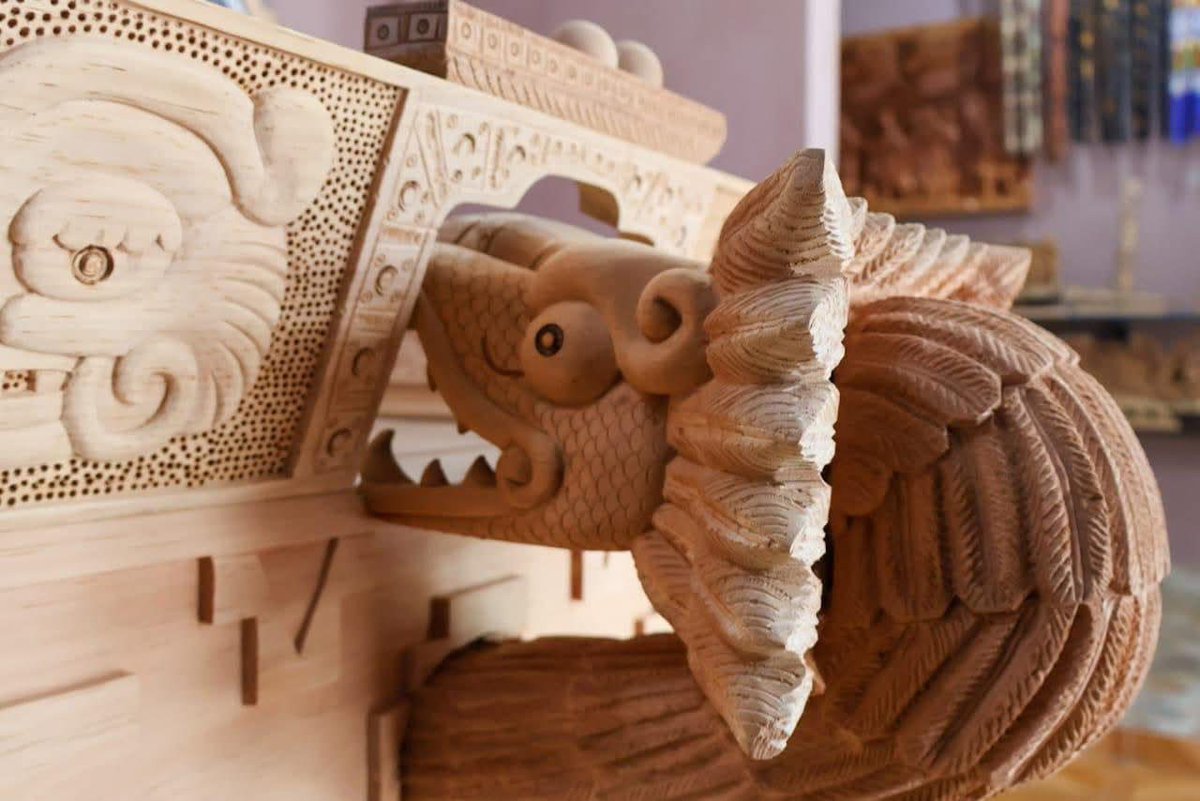
Un artesano mexicano convirtió un futbolito en una obra de arte monumental… y ganó un premio nacional.
Luis Jesús Vázquez Gabriel, originario de Tizatlán, Tlaxcala (ya ven que si existe), creó “Legado de los Dioses”, un futbolito tallado completamente a mano con figuras inspiradas en dioses mayas y mexicas.
La pieza tomó cerca de 6 meses de trabajo y logró obtener el primer lugar nacional en la Copa de Arte Popular Banamex 2026, destacando entre más de 900 obras de todo México.



Español

Dijo una vez George Carlin: “La gente es maravillosa individualmente. Pero en cuanto empiezan a agruparse… sacrifican la belleza del individuo por el bienestar del grupo.”
Y en esa frase hay una verdad incómoda sobre la naturaleza humana. A solas pensamos, dudamos, sentimos matices. Pero en grupo, demasiadas veces dejamos de ser personas para convertirnos en bandos. Y cuando eso pasa, lo individual se diluye: el juicio propio se apaga, la conciencia se reparte y lo que uno nunca haría solo… a veces lo hace acompañado.
Carlin entendió que no siempre es el individuo quien asusta, sino lo que ocurre cuando deja de pensar por sí mismo para pertenecer. Porque pertenecer da calor, sí… pero también puede costar criterio.
Quizá el problema no es estar juntos… sino olvidar quién eres cuando te mezclas con los demás

Español

Evernote was the most beloved note app on the internet for a decade.
Then Bending Spoons bought it in January 2023.
They raised prices. They renamed the plans. Then they did something nobody saw coming.
They capped the free plan at 50 notes.
Fifty.
Your grocery list. Your meeting notes. Your journal. Your ideas. Your recipes. Your passwords you wrote down because you forgot them.
All capped at 50.
The app that promised to be your "second brain" now rations your thoughts.
Evernote Advanced: $249/year.
Evernote Starter: $99/year.
Notion Plus: $120/year per user.
Apple Notes: free, locked to iCloud.
OneNote: free, every note synced through Microsoft.
The free note apps read your notes. The paid ones ration them.
A French-British developer named Laurent Cozic saw this coming nine years ago.
In January 2017 he started writing his own notes app. Encrypted. Open. Owned by you.
He called it Joplin.
→ End-to-end encryption built in
→ Imports every Evernote .enex file you ever made, in one click
→ Syncs to Dropbox, OneDrive, Nextcloud, WebDAV, S3, or your own server
→ Markdown native, with a real WYSIWYG editor for people who hate Markdown
→ Web clipper for Chrome and Firefox
→ Works on Windows, macOS, Linux, Android, iOS
→ Plugin marketplace with hundreds of community extensions
→ REST API to automate everything
→ No account required
→ No "AI features" upsell email every Tuesday
→ No 50-note cap
Here's the part Bending Spoons does not want you to think about:
Your Evernote notes live on Evernote's servers. If they shut it down tomorrow, your second brain dies with it. If they raise prices again, you pay or you lose access. If they get breached, your private journal is in someone else's hands.
Joplin notes live in a SQLite database on YOUR device. If Joplin disappeared tomorrow, your notes would still be there. On your laptop. In a format any text editor can open. Nobody can take them. Nobody can read them. Nobody can cap them at 50.
54,595 stars. 6,074 forks. ~802 contributors. AGPL-3.0. Built since January 2017. Last release in February. Last commit yesterday.
One developer in 2017 vs. a billion-dollar productivity industry in 2026.
Your notes. Your encryption. No renewal email.
100% Open Source.
(Link in the comments)

English
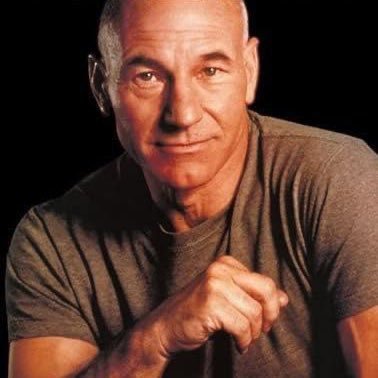
Dijo una vez Nicolás Maquiavelo: “La sabiduría consiste en saber distinguir la naturaleza del problema y en elegir el mal menor.”
Y en esa frase hay una verdad que no suena cómoda, pero sí real. Porque no siempre se trata de elegir entre lo correcto y lo incorrecto. Muchas veces la vida pone delante decisiones imperfectas, donde ninguna opción es limpia y aun así hay que decidir.
Maquiavelo entendió que la sabiduría no está en idealizar el mundo, sino en verlo como es. En reconocer que no siempre se puede evitar el daño, pero sí reducirlo. Que madurar también es aceptar que a veces gobernar, vivir o elegir no consiste en encontrar la mejor salida… sino la menos destructiva.
Quizá la verdadera inteligencia no está en tomar decisiones perfectas… sino en asumir con lucidez las consecuencias de las necesarias.

Español
De México retweetledi

Japón tenía un problema imposible... hasta que un pequeño pájaro lo resolvió.
El famoso tren bala de Japón una vez tuvo un gran problema. Cada vez que salía de un túnel, creaba un fuerte estruendo sónico que molestaba a las personas que vivían cerca. Los ingenieros lucharon durante años para solucionarlo. Entonces, un ingeniero que amaba observar aves notó algo increíble.
El pájaro martín pescador se sumerge del aire al agua a gran velocidad sin hacer salpicaduras. Así que los ingenieros rediseñaron la nariz del tren Shinkansen para que se pareciera al pico del pájaro.
A veces la solución no está en pensar más fuerte, sino en mirar mejor. La naturaleza lleva millones de años resolviendo problemas que nosotros apenas empezamos a entender, y cuando alguien tiene la sensibilidad de observarla sin prisa, aparecen respuestas que la lógica sola no encontraba.
Ese ingeniero no solo arregló un tren, nos recordó que la innovación real nace cuando dejamos el ego de “inventar” y aprendemos a escuchar lo que ya funciona en silencio.
Español
De México retweetledi
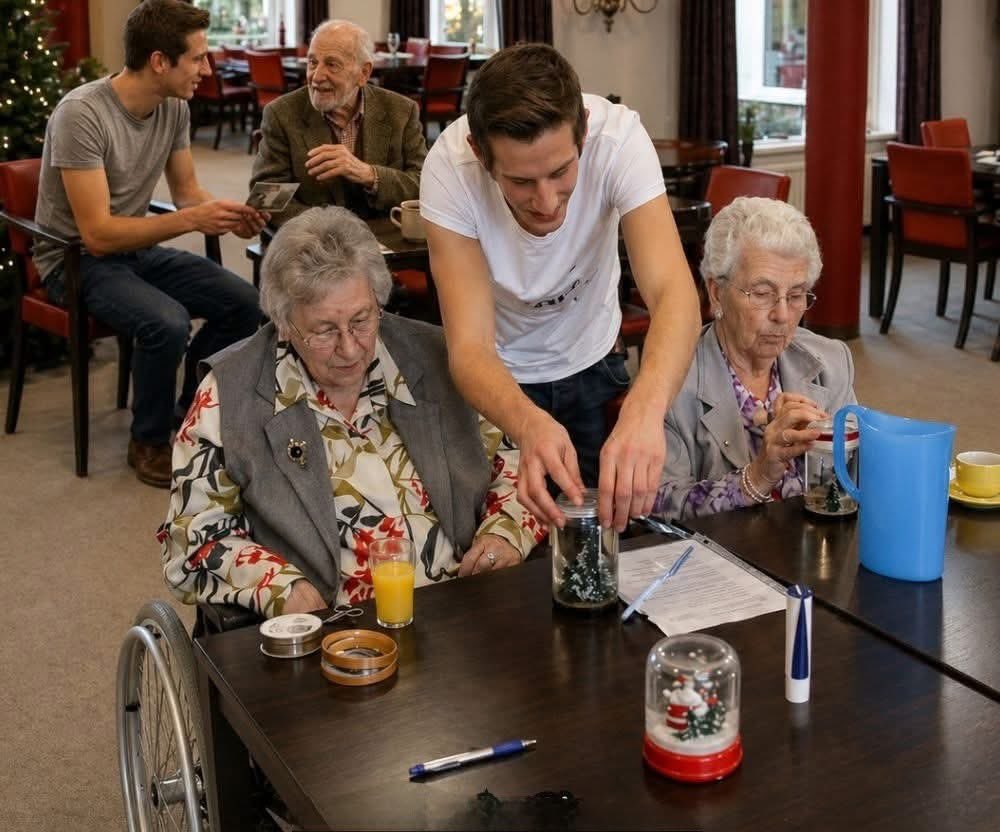
In the Netherlands, some students live rent-free in a nursing home. In return, they spend time with the elderly residents.
This happens at Humanitas Deventer, where a program brings together two different needs: housing for students and companionship for older people. University students can have a room without paying rent, but they are required to dedicate at least 30 hours per month to the residents.
The time is not structured into rigid activities. It consists of simple gestures: sharing meals, watching television, having conversations, or helping with phones and computers.
It is not medical care. It is presence.
For students, it means reducing a significant expense. For the elderly, it means having someone nearby in their daily lives, without formality.
Over time, spontaneous relationships develop. Some students stay beyond the agreed period, while others continue to visit even after moving out.
The model has been observed and replicated in other European contexts, where similar solutions are being tested.
It started as a practical need, but it works because it is based on a direct exchange: time in return for space.
English

In winter of 1944, a 15-year-old girl danced in a blacked-out room in occupied Holland. The windows were covered. The audience made no sound - not during the performance, not after. Any noise could alert the Nazis. Any light could mean death.
These were the "zwarte avonden" - the black evenings - secret performances held across the Netherlands to raise money for the Dutch Resistance. The money fed families in hiding. It bought forged documents. It kept people alive.
The girl dancing was Audrey Hepburn...
"The best audiences I ever had," she said decades later, "made not a single sound at the end of my performance."
Born on May 4 in 1929 in Brussels, Audrey Hepburn spent most of her childhood moving between Belgium, England, and the Netherlands. Her mother, Baroness Ella van Heemstra, was Dutch aristocracy. Her father, a British banker, abandoned the family when Audrey was six. He would spend the war interned on the Isle of Man after being arrested as a member of the British Union of Fascists.
In 1939, with war looming, her mother moved them to Arnhem in the Netherlands, believing it would stay neutral as it had in the first World War.
She was wrong. In May 1940, the Germans invaded. Audrey was eleven years old.
To hide her English-sounding name, she began going by Edda van Heemstra. She enrolled at the Arnhem Conservatory and threw herself into ballet, dreaming of becoming a professional dancer. For a while, life went on -- performances at the city theater, lessons, practice. But the occupation darkened everything. Jewish musicians and dancers disappeared one by one. German officers sat in the front rows.
"I remember, very sharply, one little boy standing with his parents on the platform, very pale, very blond, wearing a coat that was much too big for him," she recalled years later. "And he stepped on the train."
In 1942, the Nazis executed her uncle Otto van Limburg Stirum in retaliation for resistance activities. His body was dumped in a mass grave. One of her half-brothers was deported to a forced labor camp in Berlin. The other went into hiding. Whatever sympathy her mother had once held for the Nazi regime died with Uncle Otto.
The family moved to the village of Velp and began working with the local resistance. Dr. Hendrik Visser 't Hooft, the resistance leader, used children as couriers because the Germans tended to ignore them. Audrey, who spoke fluent English, was perfect for the job. She carried messages. She delivered food and instructions to downed Allied pilots hiding in the forests. Once, when a German patrol approached while she was on a mission, she bent down and pretended to pick wildflowers. They passed without stopping.
"We saw young men put against the wall and shot," she said, "and they'd close the street and then open it and you could pass by again. Don't discount anything awful you hear or read about the Nazis. It's worse than you could ever imagine."
In September 1944, the Allies launched Operation Market Garden -- the disastrous attempt to capture the bridge at Arnhem. British paratroopers were stranded behind enemy lines. Audrey's family hid one of them in their cellar for nearly a week, bringing him food, knowing that discovery meant execution.
Then came the Hunger Winter. After Dutch railway workers went on strike to support the Allies, the Germans cut off food supplies to the western Netherlands. Starvation spread. Audrey's family ate tulip bulbs. Then grass. Then whatever they could find.
"I went as long as three days without food," she recalled. "For months, breakfast was hot water and one slice of bread made from brown beans."
© A Mighty Girl
#archaeohistories

English

Bueno amigos, ya pude conversar un poco con la gente de Hoshikari, aquí les cuento lo que pude averiguar:
No son una editorial que busque licencias ya existentes, sino que buscan publicar obras de autores locales.
Tienen un enfoque de "100% originalidad", donde su principal misión es, junto a los autores, desarrollar las historias para poder llevarlas desde la concepción de la idea hasta la publicación.
Creen que el mercado regional cuenta con la misma pasión que el japonés, pasión que quieren responder brindando oportunidades que durnate años se han visto mermadas e ignoradas.
Si bien buscan publicar tanto novelas ligeras como manga, de momento se están enfocando en las novelas ligeras, ya que consideran que es el formato con más oportunidad de crecimiento en el país.
Y hablando del país, a pesar de ser una editorial mexicana, están dispuestos a recibir propuestas de autores de toda latinoamérica.
Para sus primeros pasos, están buscando obras con temáticas que apelen más a los sentimientos y a la pasión, enfocándose en el romance, slice of life, fantasía, aventuras, suspenso y drama.
Ellos se ven más cercanos a ser una casa productora, es por eso que cada licencia la van a tratar de manera individual, asignando personal especializado para que el ritmo de trabajo entre autor y editorial sea uno que funcione para ambas partes.
De momento, es cierto que es muy pronto para hablar de formatos, precios y canales de distribución, pero sí tienen un par de cosas ya definidas como parte de sus metas a mediano plazo.
Primero, la distribución será tanto digital como física, ya que están conscientes de que cada formato tiene su público objetivo.
Y segundo, respondiendo a lo que a mucha gente se preguntaba; la editorial tiene contemplado un contraro de regalía por ventas, lo que asegura el compromiso de la editorial al apoyo constante de las obras publicadas. El resto de los detalles contractuales los obtendrán los autores al ponerse en contacto con ellos. Pueden revisar la convocatoria en sus redes para más detalles.
Por último, me dejaron saber que la editorial se encuentra en proceso de búsqueda para el establecimiento de oficinas centrales, por lo que con el paso del tiempo, la formalidad y el crecimiento se notará más y más.
_____
Ya a manera de opinión propia, me parece un intento sincero de dar difusión a autores locales a través de un medio que ha ganado mucha popularidad en los últimos años como lo son el manga y la novela ligera.
El único "pero" que yo logro ver, es que la editorial se dio a conocer muy pronto al público general.
Es normal que la gente tenga dudas de lo que se plantea, aunque, siendo justos, sí parecen tener todo bien encaminado.
Solo queda darles tiempo para poner todo en orden y cumplir con las fechas que ellos mismos se están estableciendo, así como para que puedan entablar una conversación más directa con el público en general en sus redes, para así generar confianza.
A los autores:
Les recomiendo que, si quieren tomar la oportunidad, tengan el aspecto legal de sus obras bien regulado, por más que solo sean borradores o primeros manuscritos, no por desconfiar de la editorial, sino porque así se pueden cersiorar ambas partes de que se está buscando el mejor interés común al tener todo bien esclarecido desde el principio.
La editorial parece estar en la mejor de las disposiciones para entablar conversaciones, por lo que les recomiendo que despejen sus dudas con ellos directamente si el proceso de reclutamiento publicado no les parece claro o conciso.
_____
La editorial tiene una visión de 18 meses de trabajo a futuro bien establecidos, y por mi parte voy a estar siguiéndolos de cerca para mantener una comunicación entre ellos y la comunidad.
Vamos a ver cómo sale todo esto. :)

Hoshikari Editorial@Hoshikari_HQ
【Oficial】 Se invita a la comunidad a leer detenidamente la información presentada para evitar confusiones durante el proceso. #latinoamerica #autores #novelaligera #original #mexico
Español
De México retweetledi

Que puta pasada, los pelos de punta. Esto sí que es arte. Y los taurinos nos lo quieren vender como un animal agresivo, cuando solo busca cariño y comprensión. 👏👏👏
Español

El médico que vivió hasta los 108 años nombró al principal enemigo de la longevidad. No es la comida. No es el estrés. 🧵

Español
De México retweetledi

La Presidenta de Croacia, Kolinda Grabar-Kitarović, habló a su pueblo diciendo: “NO tomaremos prestado del Banco Mundial aunque muramos de hambre.
- Vendió el avión presidencial.
- Vendió 35 autos Mercedes Benz para transporte de los ministros.
- Redujo su salario en 30% para que sea igual al promedio.
- Combatió la corrupción en el Estado
- Eliminó las bonificaciones e incentivos para los ministros y el cuerpo diplomático del Estado.
- Redujo embajadas, consultados y representaciones de su país en el extranjero para limitar el despilfarro.
- Cuando viaja al exterior siempre lo hace en vuelos comerciales

Español