Dhimant Parekh
9.9K posts

Dhimant Parekh
@dhimant
Founder, @thebetterindia | Tweet about impact, physics, finance, running, startups.
India Katılım Temmuz 2007
1K Takip Edilen4.7K Takipçiler
Sabitlenmiş Tweet

“There are two ways of constructing a software design: One way is to make it so simple that there are obviously no deficiencies, and the other way is to make it so complicated that there are no obvious deficiencies.”
blog.computationalcomplexity.org/2026/03/tony-h…
English

We at @thebetterindia in collaboration with Mann Deshi Foundation, are helping women in Maharashtra’s most vulnerable villages to get access to solar dehydrators, which will help them process the harvested fruits to avoid post-harvest crop spoilage. Read how you can contribute:
thebetterindia.com/farming/mahara…
English

A transgender activist builds 23 grassroots organisations. A teenage girl prevents child marriages in her village. A young father reshapes caregiving at home. These are not isolated stories — they show what happens when communities lead change from within. thebetterindia.com/changemakers/c…
English

How are folks getting their @openclaw agent to span sub-agents? What’s the prompt?
English

Running OpenClaw 🦞 on your personal laptop is fine for tinkering — but it’s a bad default for “always-on”.
Laptops sleep/reboot, switch networks, and mix an execution engine with your SSH/API keys + personal docs.
Better: run it on a VPS / isolated box (or a managed sandbox).
Full write-up: celesto.ai/blog/posts/ope…
English
Dhimant Parekh retweetledi

Dhimant Parekh retweetledi

In medical school, we are taught a golden rule: "When you hear hoofbeats, think horses, not zebras." It is a reminder to look for the common explanation before the exotic one. But after decades in cardiology, I’ve learned that if a patient is still suffering after the "horses" have been ruled out, a doctor must have the courage—and the curiosity—to go hunting for the zebra.
Sarah was a thirty-four-year-old marathon runner and a devoted mother who came to me after six months of being told she was "fine." She had been bounced from one specialist to another, each one pointing to her normal EKG and standard blood tests as proof that her crushing fatigue and racing heart were simply the result of "new mom stress." By the time she reached my office, she didn't just look tired; she looked invisible, as if the medical system had stopped seeing the woman and only saw the data.
Instead of re-reading the normal test results that had already failed her, I asked Sarah to walk me through her life. We talked about her training and her family, eventually landing on a backpacking trip she took to the Mendoza province of rural Argentina. She described staying in a charming, rustic cottage made of sun-dried mud bricks. She mentioned waking up one morning with a strangely swollen, purple eyelid that she assumed was a simple spider bite.
As she spoke, a memory surfaced from a biography I had read years ago about Charles Darwin. Most people know Darwin for his theories on evolution, but medical historians have long puzzled over the mysterious, debilitating illness that plagued him for decades after he returned from his voyage on the HMS Beagle. Darwin had written in his journals about being bitten by the "great black bug of the Pampas" while sleeping in mud-walled huts in South America. He spent the rest of his life suffering from heart palpitations and exhaustion that the Victorian doctors of his time could never explain.
I realized then that Sarah wasn't suffering from stress; she was likely hosting the same "silent killer" that may have haunted Darwin: Chagas Disease.
The "Kissing Bug" lives in the cracks of those mud-brick walls. It bites its victims—often near the eyes or mouth—while they sleep, passing a parasite called Trypanosoma cruzi into the blood. The danger of Chagas is that the initial symptoms disappear quickly, but the parasite can hide in the body for years, slowly weaving itself into the muscle and electrical "wiring" of the heart.
To confirm this, I moved beyond the standard tests. I ordered a specialized "Strain Rate" ultrasound, which doesn't just look at whether the heart is pumping, but at how the individual muscle fibers are stretching. We saw that while her heart looked strong to the naked eye, the fibers were "stuttering," a sign of early parasite-induced scarring. A specific blood test for the parasite's antibodies confirmed the diagnosis.
Treatment required a difficult, sixty-day course of anti-parasitic medication to stop the infection, paired with a protective heart regimen to keep her electrical system stable while the inflammation settled. Because we caught it before her heart was physically damaged or enlarged, the recovery was a success.
Months later, Sarah returned to my office, her vibrant energy restored. She brought me a leather-bound copy of The Voyage of the Beagle with a note tucked inside. She wrote that while other doctors had looked at her charts, I had looked at her. This case remains a vital reminder for my memoir: in a world of high-tech scans and AI, the most sophisticated diagnostic tool we possess is still the human story. When we truly listen, we don't just find the disease—we find the patient.
Good morning.
English

The Notorious Delayed-Choice Quantum Eraser. preposterousuniverse.com/blog/2019/09/2…
English

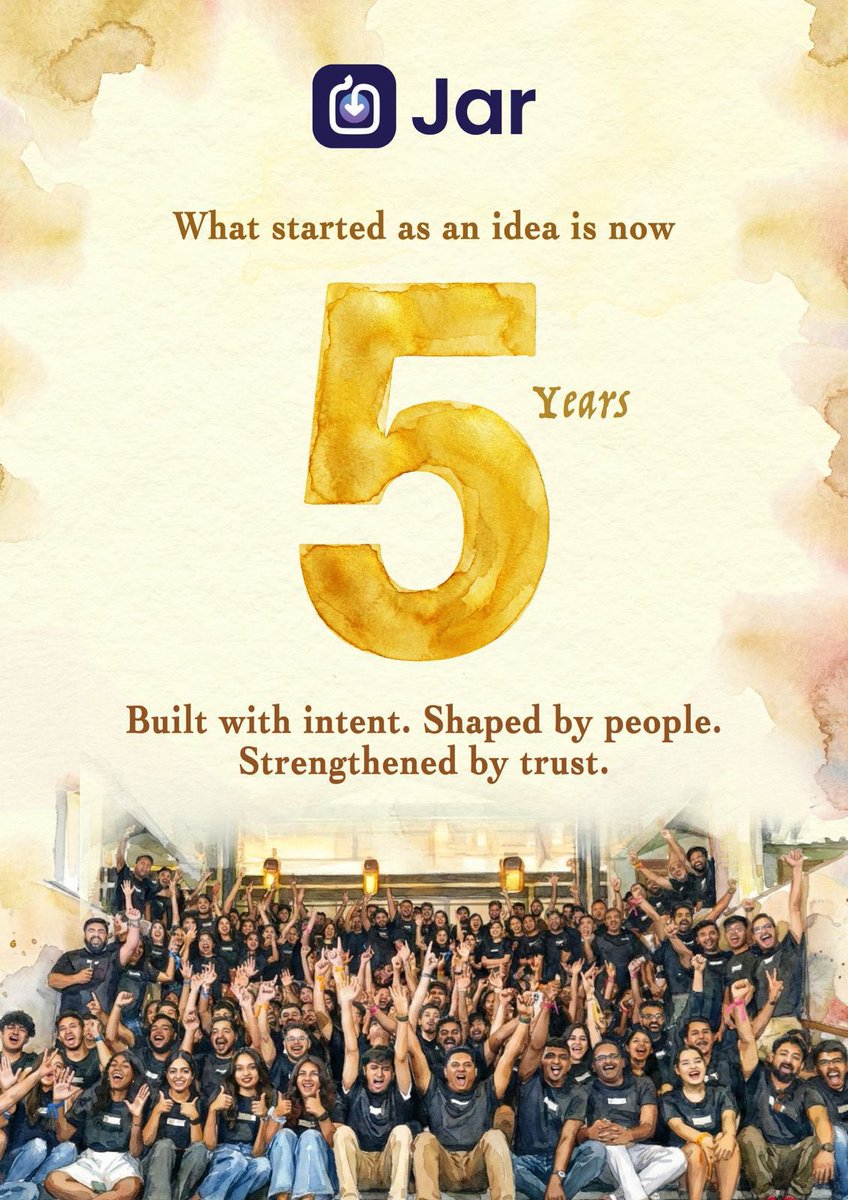
In 2025, we clocked over a billion transactions..
That’s millions of Indians trusting us with something deeply personal to them, their finance, their trust and their hope..
The first 5 was the foundation.. the real impact will start now..
@misbahspeaks @JarAppHQ

English

Surprisingly, Scott skipped mentioning his book "God’s Debris".
For me, that book was his most profound work. The way it explores probability, free will, and consciousness through a simple dialogue completely shifted my perspective on reality.
Scott Adams@ScottAdamsSays
A Final Message From Scott Adams
English

Is there a @nammayatri equivalent for food delivery coming up sometime soon? The time seems ripe.
English
Dhimant Parekh retweetledi

He achieved escape velocity from his modest beginnings…
But never abandoned the orbit he escaped from.
I will connect & support his project 30303
#MondayMotivation
English
Dhimant Parekh retweetledi

STAY WITH ME.
A few years ago, a patient was referred to me because he was diagnosed with complicated cirrhosis. He had an infection which led to a condition called hepatic encephalopathy (brain failure due to high ammonia levels). The treatment largely involved ammonia reducing therapies. One drug was central to this - Rifaximin - a non-absorbable antibiotic that reduced ammonia in the body. I prescribed him Rifaximin for 6 weeks and advised him follow-up.
He came back to me, not after six weeks, but in 4 weeks, this time, in liver coma (worst stage of brain failure - due to very high ammonia). He spent two days in the ICU and six days in total in the hospital. His hospital bill was close to INR 80,000. He had no insurance and his wife borrowed the money from neighbors and friends to clear hospital dues.
Upon questioning, I found that he was not taking the Rifaximin drug I had prescribed. He was only on the other two drugs (one, a syrup called lactulose for improving ammonia clearance in gut). I was furious, because the patient spent a whole week unecessarily in the ICU and wasted so much money that he never had - just because he was "not compliant" to my orders. I decided it was time for me to school him a bit.
But I was wrong. He was compliant. He had purchased Rifaximin and was on it. For 15 days. Thereafter, he could not afford it. He was an autorickshaw driver who shuttled school children every morning and evening. He could hardly make ends meet. He had two children of his own. The Rifaximin brand I prescribed him was 42 rupees per tablet. He had to consume two a day - which would mean 2520 rupees a month. He just did not have that money - so he skipped it - to not compromise on other important matters - childrens education and food.
He was confused and scared about opting for a cheaper version of Rifaximin because one, he was unsure about the quality of Rifaximin that was not prescribed by me and two, he was "scared" that I would scold him for buying a cheaper Rifaximin and if that got him into trouble.
I was confused and scared about prescribing a cheaper version of Rifaximin because one, I was unsure about the quality of Rifaximin that was not "a good promoted brand" and two, I was "scared" that his family would scold me for prescribing a cheaper Rifaximin and if that got him into trouble.
It is heartbreaking that many doctors still simply don’t trust generic medicines. Too often, they worry that these cheaper options are lower quality or might cause more problems than the big, famous brands. This fear leads them to prescribe expensive drugs instead, and the real tragedy is that it pushes vital healthcare out of reach for the ordinary people who need it most - like my patient.
This narrative, that generic drugs 'are never good' and that only big pharmaceutical marketed drugs are what works has been deeply ingrained into doctors and patients alike - I do not know by whom and since when. Looking back, these strong emotions were based on either opinions, testimonials or second- and third-hand information. Not evidence.
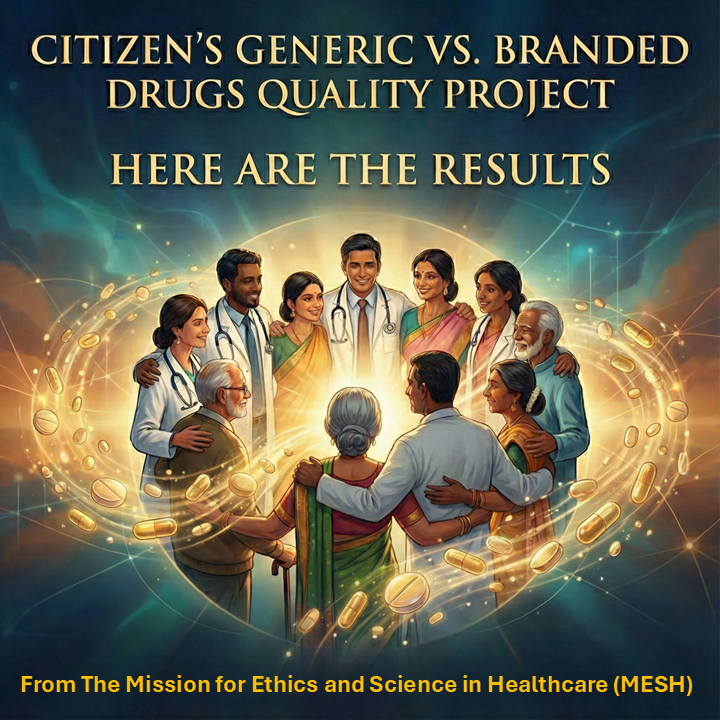
Like I said. Stay with me. This is life changing and will disrupt the drug market in India. Here are the results of The Citizens Generic vs. Brand Drugs Quality Project.
1/11

English
Dhimant Parekh retweetledi

When @arunpaiblrwalks announced the mega 26km New Year Day Walk from Jayanagara to Yeswanthapura, the buzz was palpable on the WhatsApp group - more than 700 joined. With my experience and considering its 7AM on Jan 1st, I figured a 100 will actually show up. To my utter surprise and joy, 300+ were there and came from koramangala, whitefield even yelahanka as you can see in the video!
The walk is still on, almost reaching the destination with many of them determined to walk all the way. Arun’s Bengaluru history anecdotes and the conversations with strangers united for the cause and the unmatched beauty of our city makes it a great experience.
I see #Walkaluru as a mass movement for pedestrian rights and a unique way for citizens to collaborate with civic authorities, parenting with them to make our city walkable and acknowledging their work. From poura karmikas to Chief Secretary everyone felt a degree of ownership and that’s just amazing.
Kudos to @arunpaiblrwalks and his team for taking on this mission and making everyone a part of it. Kudos to every one that joined.
As a senior citizen told me at 6:45AM this morning, attitude about footpaths changed once @GBAChiefComm started walking as soon as he took over. I tend to agree!
English

From caring for animals and preserving mango diversity to healthcare on wheels and sustainable bricks, discover the changemakers whose work quietly transformed India.
thebetterindia.com/innovation/sto…
English