Yossi Melman@yossi_melman
MEET THE NEW HEAD OF MOSSAD
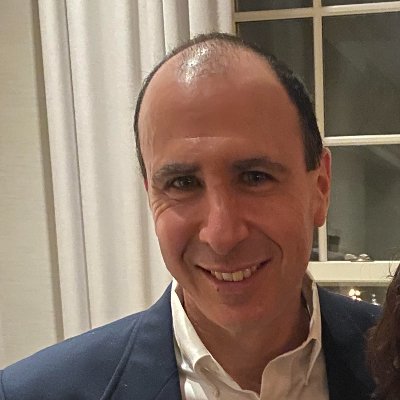
The 14th head of Mossad is expected to assume his post in two months. But his appointment by Prime Minister Benjamin Netanyahu is already stirring unease inside the 8000 workforce of the agency and in the public at large.
Gofman is widely regarded as the most controversial, politicized, and inexperienced candidate ever chosen to head the Mossad, a man whose grasp of strategic special operations and international relations appears limited. These are not peripheral skills, of course.
Over the past two decades, a Mossad chief’s deep understanding of such subjects has become central to Israel’s ability to gather intelligence on its most formidable adversaries, particularly Iran and Hezbollah.
Despite completing various military and academic programs, Gofman does not speak English, a shortcoming that could hinder his ability to build rapport with the Mossad’s most important partner, the CIA.
Born in 1976 in a part of the former Soviet Union that is now Belarus, he immigrated to Isral in 1990. The broad-faced, bespeckled Gofman has not expanded his linguistic skills beyond Hebrew and Russian, an unusual constraint for someone poised to lead one of the world’s most internationally engaged intelligence services.
More troubling, however, are questions surrounding his moral judgment and ethical compass. Gofman has been accused on several occasions of misleading his commanders and acting without authorization. As an IDF colonel in the occupied West Bank, he ran Palestinian agents in unsanctioned, rogue activities.
And he firmly believes he has the right, no matter the rules. During his military studies, Gofman wrote that a commander must at times act even without formal authority, exceeding his mandate to fulfill the perceived will of policymakers—even when that will has not been explicitly defined. He claimed to have drawn intellectual grounding for this approach from the writings of the Slovenian philosopher Slavoj Žižek, a neo-Marxist philosopher and author known for peppering his many books, articles and speeches with obscene jokes and politically incorrect provocations.
In Gofman’s adaptation, a military commander operates within a “discursive space,” identifying an external “anchoring point” beyond himself and the system and acting accordingly—in other words, outside the lines.
Over the past two years, Gofman has served as military secretary to Netanyahu, who dispatched him on several sensitive missions, including efforts to appease Russian President Vladimir Putin and his advisers on issues like Ukraine, Syria and Gaza.
Before Gofman’s appointment, Israeli media reported that he had been interviewed by Sara Netanyahu, the prime minister’s influential wife, widely seen as the power behind her husband’s decisions. The prime minister’s office denied the allegation.
What is less disputed is Gofman’s evident loyalty. He proved highly responsive to Netanyahu’s expectations and made sustained efforts to align with and carry out his increasingly authoritarian politics. In his capacity as the prime minister’s military expert, he argued that Netanyahu should be excused from testifying in his corruption trial on the grounds of “security concerns” -a position other senior officers declined to endorse.
At 18, like all Israeli youths, he was drafted into compulsory military service. He aspired to join a commando unit but was instead assigned to the Armored Corps, where he would spend his entire career—never in an intelligence billet. He served first as a soldier and later as a commander, operating in Gaza and the West Bank against Palestinian militants, and in Lebanon against Hezbollah.
His most senior field role came at the rank of brigadier general, when he commanded a division along the Syrian border. It was there, in 2022, that he became entangled in the most serious controversy of his career.
An intelligence officer under his command covertly recruited Uri Elmakias, a 17-year-old technological prodigy, to disseminate false information on social media as part of an effort to mislead Hezbollah operatives and Iranian officers. Uri was never formally enlisted in the army; his recruitment was carried out without the knowledge of Gofman’s superiors in the general staff.
When Israel’s internal security service, the Shin Bet (aka Shabak), detected Uri’s online activity, he was arrested on suspicion of espionage. During interrogation, he immediately identified Gofman as the person behind his recruitment. But once it became clear that the operation had crossed legal boundaries—for, among other reasons, Uri was a minor—Gofman denied ever knowing him.
The teenager was left to face the consequences alone. He spent a year and a half in detention, undergoing repeated interrogations (and abuse, he said) before ultimately being fully acquitted by the court.
Gofman, was reprimanded but continued his military career uninterrupted, eventually rising to become Netanyahu’s military adviser.
In that role, he handled highly sensitive intelligence materials and, according to media reports, facilitated leaks aimed at shaping public perception in the aftermath of the Oct. 7, 2023 Hamas massacre—casting primary responsibility on the military for being unprepared while deflecting scrutiny from Netanyahu and his right-wing cabinet.
In the meantime, Uri Elmakias has resurfaced, seeking accountability and compensation. In a recent appeal to the Supreme Court, he posed a stark question: “Is a person who left me to languish in prison for more than a year—while repeatedly misleading investigators and the court about his role in recruiting me—fit to lead one of Israel’s most important security agencies?”
It’s a question a number of Israelis, including high ranking IDF and Mossad officers, are asking.
Outgoing Mossad boss David Barnea is one of them.
Barnea, who is set to step down in June, told the committee weighing Gofman’s appointment that a reprimand for conduct unbecoming should disqualify a candidate from promotion, “certainly for the position of Mossad chief.”
“Handling sources is a profession,” Barnea told the committee, according to its summary. “There is one unit in the military that deals with it. When a commander decides to bypass procedures or military law, it has very significant implications.”