Daphne

1.4K posts

Daphne banner
Daphne

Daphne

@dieubui2522

Taking notes in public. Building at @SuperteamVN 🇻🇳

Katılım Ekim 2017
980 Takip Edilen1.2K Takipçiler
Daphne
Daphne@dieubui2522·
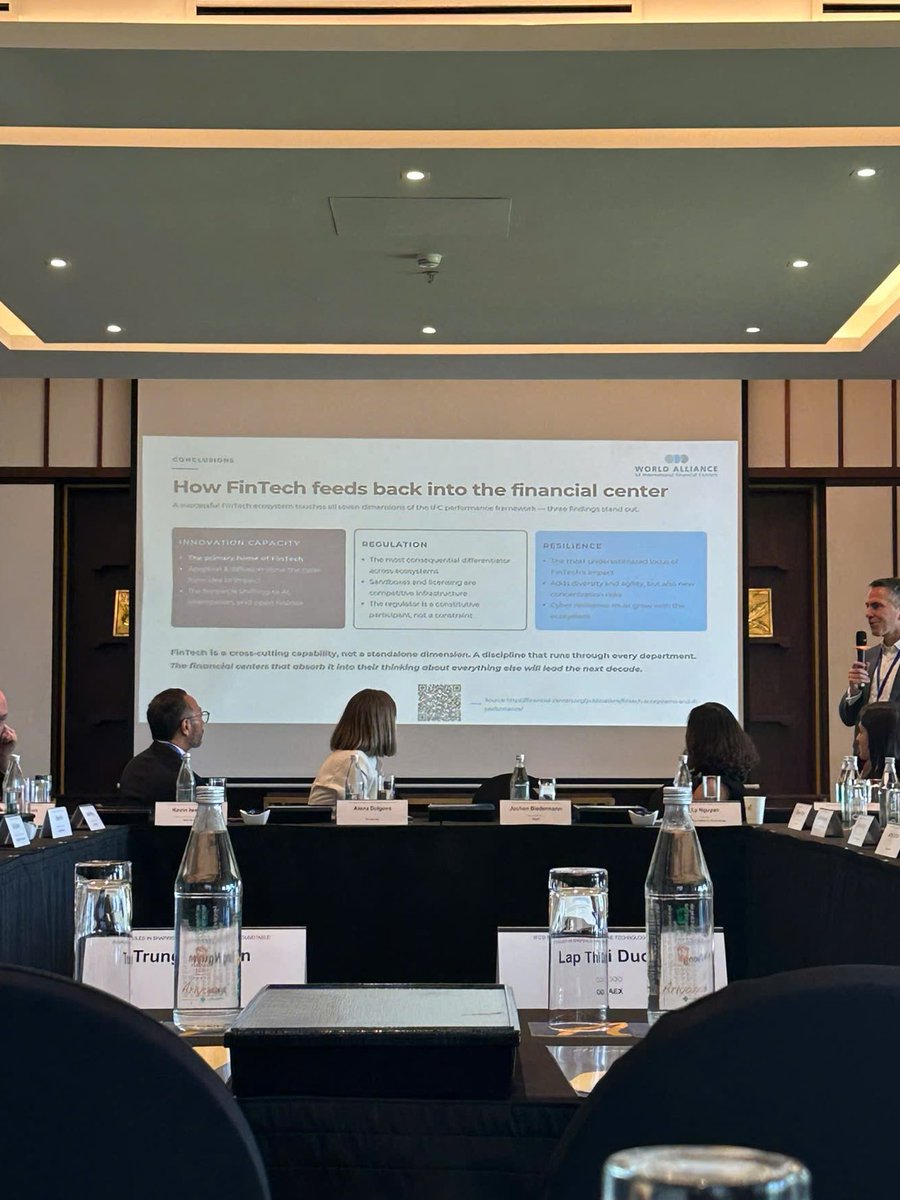
This is Part 2 of my recap on what Rich McClellan (VIFC HCMC) and Kevin (VIFC Da Nang) shared about how the two centers relate to each other in the Vietnam Financial Forum (VFF) event. Part 1 is on my profile. 1. Both were clear that the two cities are complementary by design, not competitors. Kevin's analogy: HCMC is where the capital is, where the banks are, the Wall Street of Vietnam, and it will always remain that. Da Nang wants to position itself as the Silicon Valley of Vietnam. And Da Nang's products are designed around whom they believe they can attract: blockchain and AI developers, and the tech community that values a casual lifestyle. 2. Rich's side of it was very focused. HCMC's first year is largely about mobilizing massive amounts of high-quality capital through infrastructure funds and bonds to unlock global capital flows. His reasoning: Vietnam has thousands of SMEs, each looking for $100 million globally to hit their next growth targets. He was also candid about what the job demands: it carries the pains and joys of a brand new startup, a large institution, and policymakers' burdens all at once, and the discipline is to focus on just a handful of products and resist the temptation of many small bets. 3. Kevin's plan for Da Nang follows from its identity. HCMC will build deep capital markets; Da Nang won't try to copy that. Instead, it will, in his words, improvise with a technology twist: financing local infrastructure projects, the IFC buildout, and nature-based carbon credit solutions through tokenization and RWA infrastructure. His reasoning: tokenization is moving from adoption to infrastructure. He also noted what sits underneath: blockchain infrastructure, AI and data centers, and ultimately the energy grid to support all of it. 4. On legal foundations, Kevin was clear about what makes the model work: an IFC needs its own internationally compatible common-law framework, because that's precisely what makes it valuable to international investors. The case he's studying most closely is Hong Kong, which integrated an English common law ecosystem with the broader Chinese mainland civil system. And as he put it, this is still the institution-building phase, not the opening phase. The open question for me is who connects the builders, both cities are counting on, to the actual problems worth solving. Curious what others in the room, or outside it, think. Quick notes: All quotes are from my session notes, lightly paraphrased; happy to be corrected by anyone who was in the room.
Daphne tweet media
English
2
3
34
1.5K
Daphne retweetledi
Superteam Vietnam
Superteam Vietnam@SuperteamVN·
The biggest blockchain opportunities won't come from people trying to invent more "crypto use cases." They'll come from people who already understand real industries: finance, commerce, communities, infrastructure, and can identify exactly where on-chain makes it better. Don't start with "what can we put on-chain?" Start with "what is broken, and can on-chain fix it?" We're bringing Web2 ideas on-chain. July 13.
Superteam Vietnam tweet media
English
19
14
61
2K
Eno
Eno@YouKnowEno·
gm world
Eno tweet media
English
61
2
186
18.2K
Superteam Thailand
Superteam Thailand@SuperteamTH·
everyone wants to build on @solana far fewer know how to navigate the ecosystem once they arrive who do you speak to? what should you build? how do you find distribution? where do founders waste the most time? what separates projects that disappear from those that compound over time? these lessons rarely exist in docs or playbooks. they come from founders who were there early and stayed long enough to see multiple cycles play out. join superteam thailand for a 1 hour workshop with @OhMeOhMy_Sol from @Kyzzen_io as he shares lessons, observations, and practical advice for aspiring solana founders looking to build with greater clarity and conviction. OhMeOhMy brings one of the deepest firsthand perspectives in the ecosystem: • founding team of @SolariansNFT, Solana's first onchain generative NFT collection minted in april 2021 • founding team of DigitalEyes, the first open NFT marketplace on Solana • founder of Kyzzen, a discovery platform on Solana • author of 60+ courses on Kyzzen Academy • interviewed 170+ solana projects through x spaces and livestreams • editor of Solana Pulse, one of the ecosystem's most comprehensive daily newsletters • @MonkeDAO Singapore ambassador and host of Monday Monke Spotlight if you are exploring an idea, building an MVP, or looking to understand how founders navigate the solana ecosystem, this session is for you. learn from someone who has seen the ecosystem evolve from the beginning and continues to build through every chapter. registration link below
Superteam Thailand tweet media
English
14
7
49
2.9K
Daphne
Daphne@dieubui2522·
He tokenized one of the world's first funds back in 2019. Selling it to the first investor was easy. Then he tried three times to build a market where people could actually trade those assets. He failed all three times. That was Bhaskar (ex-ADGM) at the "IFCs & The Future of Tech-enabled Finance" luncheon at Vietnam Financial Forum yesterday. Sharing a few lessons for anyone who couldn't join. - A sandbox is a signal, not a foundation. Alena Dolgova (IFC Advisory) pointed out that 50 other centers have already copied the sandbox playbook. What actually builds an ecosystem is infrastructure in the right order: digital ID and eKYC first, then interoperable payments, then digitized government services, then digital financial markets. - Enforcement is what builds trust, not marketing. Stephen Glynn (former CEO of AFSA) told a story I didn't expect. In its early years, the international community didn't see Dubai IFC as a real financial center. They saw it as a real estate project with a fancy label. What changed that perception was the first time the regulator actually punished firms that broke the rules. Serious institutions only came in after that, because a regulator willing to enforce is the only proof that the rules mean anything. - Governments build the rails; companies build on top. James Wong (InvestHK) explained Hong Kong's approach: the government lays down infrastructure like stablecoins, CBDCs and tokenized deposits, then lets the private sector figure out what to build on it. Their regulatory principle is simple: same activity, same risk, same regulation. Regulate, don't prohibit. - And Bhaskar's advice for Vietnam stuck with me most. Fintechs don't come for licenses; they come for revenue. Get Vietnam's manufacturers and exporters to name five problems they'd pay to solve, and firms will show up before the framework is even finished. He also added something no framework captures: people choose where to live before capital chooses where to go. Gift City is impressive on paper and empties at 5 pm every day. The part of the session that fascinated me most, though, was hearing the two people actually building Vietnam's IFCs. Rich McClellan (VIFC HCMC) and Kevin Iwanaga (VIFC Da Nang) are running what I'd call two very different experiments. That deserves its own post. Part 2 coming soon.
Daphne tweet media
English
0
2
27
851
Daphne
Daphne@dieubui2522·
Gold check 🟡 unlocked. Org badge too Not a whole thing, we’re just heads down building 🇻🇳 Psst 🤫 more’s cooking …
Daphne tweet media
English
8
0
36
1.2K
moe
moe@themoe·
don't panic @SuperteamTH has entered the chat Solana to trillions Time to tokenize everything and bring it all onchain
moe tweet media
English
21
4
49
2.1K
Jacob Creech
Jacob Creech@jacobvcreech·
Solana <> AI is going to happen in a big way We're cooking up something special 🔜
English
75
41
415
32.1K
Stan
Stan@stan_ngx·
Excited to be joining the Vietnam RWA Summit 2026, hosted by the @VietnamVBA - Vietnam Blockchain Association, in Hanoi! I’ll be there representing @Aptos, exploring Real World Assets, tokenization, and blockchain innovation with industry leaders. There will be some updates from regulators as we're stepping into this new era See you July 18–19 at the National Convention Center.
Stan tweet media
English
21
6
68
8.3K
Daphne retweetledi
Superteam Vietnam
Superteam Vietnam@SuperteamVN·
The first Builder Room is happening this Thursday. @LynnWWins opens the floor to the Superteam Vietnam community for the first time since the relaunch. She'll walk through the vision, direction, and what STVN 2.0 means in practice, then open it up for questions. You can submit the question for Lynn at the form here: forms.gle/UnQZBq3VnLYyju… 🟣 8pm (GMT+7) 🟣 This Thursday (July 2nd, 2026)
Superteam Vietnam tweet media
English
18
6
66
3.9K
Daphne
Daphne@dieubui2522·
Most Web3 builders I know don't attend policy forums. I get it. It feels far from the actual work. But this one's different. Da Nang is hosting its Economic, Financial & Technology Week next week (Jul 7–10), and after going through the agenda, I think it's worth paying attention to, especially if you're building in Vietnam or thinking about it. — If you care about the macro picture, let's join Jul 7–8, High-Level Policy Dialogue lnkd.in/gs-AmX4q The sessions cover Vietnam's new growth model, green finance, and Da Nang's IFC roadmap, from keynotes down to actual policy dialogues. This is the "why" behind everything being built in Vietnam's financial sector right now. Worth understanding before it becomes context you wish you had earlier. — If you're building in Web3, let's join Jul 9–10, Vietnam Financial Forum (VFF) Some panels worth joining: 1. Global trends in digital payments & blockchain: where the infrastructure conversation is across the region right now. 2. Digital Assets as a Capital Gateway for VIFC: how digital assets are being integrated into Vietnam's IFC in practice. This one I'm personally watching closely; it's directly relevant to what Superteam is trying to build here. 3. Fintech, Digital Assets & Market Innovation (working session, Jul 10): smaller format, more room for real conversation. These are usually where the interesting things actually get said. — If you're on the capital side → Jul 9–10, VFF 1. Why Vietnam, Why Now? - The macro case for Vietnam as a financial hub and why the timing matters. 2. What would it take to bring $1B into Vietnam? - honest look at what's still missing: regulation, deal flow, exit infrastructure. 3. Private Capital Channels: VC, PE & Growth Equity - where the money is and how it's actually moving into Vietnam. 4. Building the Pipes: Market Infrastructure, FX & Derivatives - the structural layer underneath. — If you're in talent or ecosystem building → Jul 9, VFF 1. The Diaspora Dividend: how Vietnam is mobilizing overseas talent to build the IFC from the inside. Relevant if you're thinking about who's coming back and why. 2. AI, Fintech & the Future Financial Workforce: what the finance job market looks like when AI takes the bottom layer. — Also: Jul 8 evening: Speakers & VIP Welcome Reception at Ariyana. Open to guests, 400k VND. Good room to be in before the main days. — That's my read after going through the full agenda. A lot is happening across 4 days. Not everything is relevant to everyone, but if you know what to look for, it's a useful week to be in Da Nang. @SuperteamVN is showing up. If you're serious about building here, this is a week worth paying attention to. Going to be there? Drop me a comment or DM.
Daphne tweet media
English
1
1
19
973
Daphne
Daphne@dieubui2522·
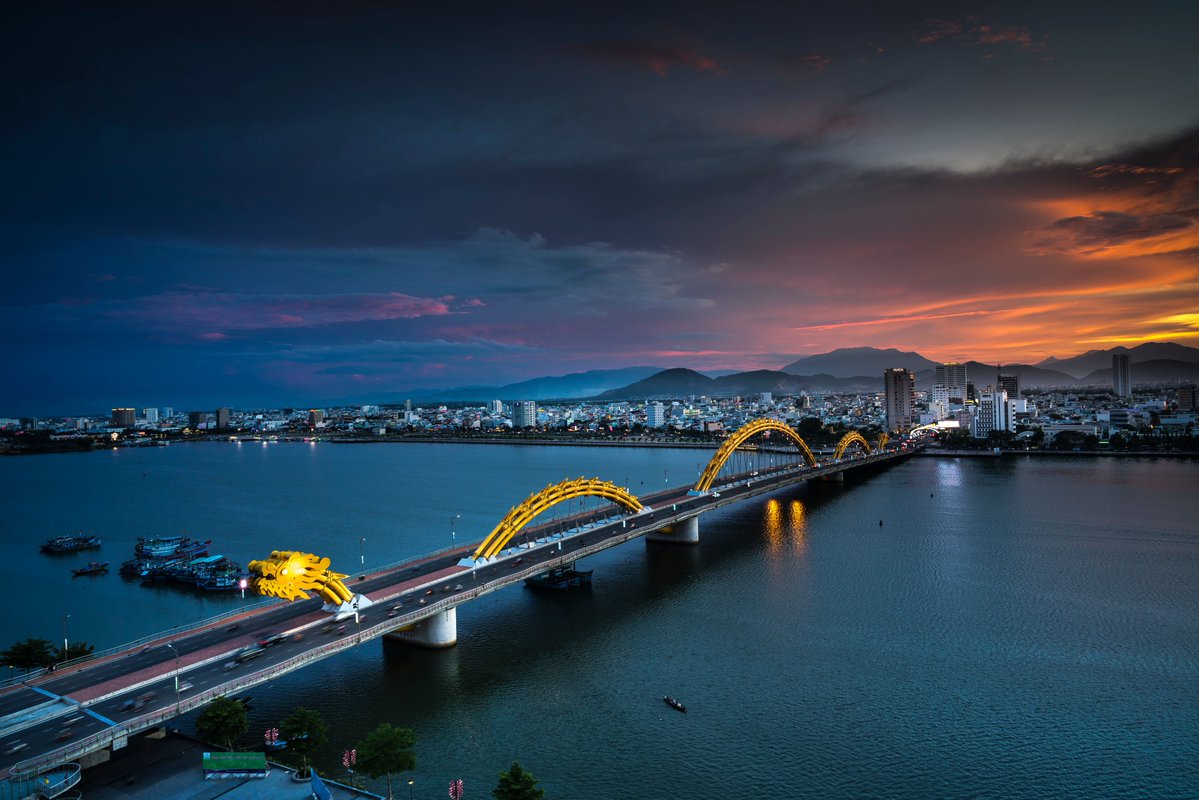
The People's Committee of Da Nang has just greenlit an ambitious master plan to drive blockchain application and development through 2030. If you still think blockchain is just about cryptocurrency, this initiative will change your mind. Da Nang is positioning this technology as a "Digital Trust Layer" - a core infrastructure designed to secure data integrity, power a data-driven economy, and lay the groundwork for the upcoming Da Nang International Financial Center (IFC). Here is a quick breakdown: 🔹 DNC-Chain (The Shared Infrastructure) The city will build and operate its own shared blockchain network called DNC-Chain. Strategically, it will leverage a Layer-1 platform engineered and mastered by Vietnamese enterprises. By 2027, seven core modules (including cross-chain bridges and smart contract management) will go live. 🔹 10 Core Applications The city is rolling out 10 concrete use cases, starting with high-priority projects like e-record integrity and diploma verification, followed by a digital twin city model, intellectual property (IP) trading platforms, and a unified City Loyalty Program. 🔹 Cultivating 1,000+ Blockchain Experts To back this vision, Da Nang is targeting the training of at least 1,000 high-quality blockchain workers by 2030. The focus will be on highly specialized roles: blockchain architects, cryptographic key managers, and smart contract security auditors. My Takeaway: As someone born and raised in Da Nang, seeing the city pivot from a tourism-heavy economy to a high-tech and financial pioneer is incredibly exciting. Whether you are a developer, a legal expert, or a business strategist, it’s time to look closely at Da Nang. The opportunities over the next few years will be massive. 🇻🇳 Proud to see my hometown leading the digital frontier. Let's build!
Daphne tweet media
English
4
2
31
3K
Ol'Sailor 🌊
Ol'Sailor 🌊@Ol_Sailor9h·
Danang will be the tech center of Vietnam!
Daphne@dieubui2522

The People's Committee of Da Nang has just greenlit an ambitious master plan to drive blockchain application and development through 2030. If you still think blockchain is just about cryptocurrency, this initiative will change your mind. Da Nang is positioning this technology as a "Digital Trust Layer" - a core infrastructure designed to secure data integrity, power a data-driven economy, and lay the groundwork for the upcoming Da Nang International Financial Center (IFC). Here is a quick breakdown: 🔹 DNC-Chain (The Shared Infrastructure) The city will build and operate its own shared blockchain network called DNC-Chain. Strategically, it will leverage a Layer-1 platform engineered and mastered by Vietnamese enterprises. By 2027, seven core modules (including cross-chain bridges and smart contract management) will go live. 🔹 10 Core Applications The city is rolling out 10 concrete use cases, starting with high-priority projects like e-record integrity and diploma verification, followed by a digital twin city model, intellectual property (IP) trading platforms, and a unified City Loyalty Program. 🔹 Cultivating 1,000+ Blockchain Experts To back this vision, Da Nang is targeting the training of at least 1,000 high-quality blockchain workers by 2030. The focus will be on highly specialized roles: blockchain architects, cryptographic key managers, and smart contract security auditors. My Takeaway: As someone born and raised in Da Nang, seeing the city pivot from a tourism-heavy economy to a high-tech and financial pioneer is incredibly exciting. Whether you are a developer, a legal expert, or a business strategist, it’s time to look closely at Da Nang. The opportunities over the next few years will be massive. 🇻🇳 Proud to see my hometown leading the digital frontier. Let's build!

English
1
0
2
197
Daphne
Daphne@dieubui2522·
@kurodenjiro Not right now but maybe for VFF next week. Are u in DN now?
English
1
0
2
77