Dionysius Maurus

4.5K posts

Dionysius Maurus banner
Dionysius Maurus

Dionysius Maurus

@dionysiusmaurus

🇲🇦ⵣ☦️ 25(Y) M - Orthodox Catholic catechumen (MP) 📖 Infelix ego homo, quis me liberabit de corpore mortis hujus ? —Rom 7:24

Morocco Katılım Haziran 2025
516 Takip Edilen337 Takipçiler
Sabitlenmiş Tweet
Dionysius Maurus
Dionysius Maurus@dionysiusmaurus·
I love those who love our holy Father and Saint Augustine, may he pray for us, and I dislike those who dislike him
English
1
2
21
343
Dionysius Maurus
Dionysius Maurus@dionysiusmaurus·
I always confuse Avicenna (Ibn Sina) and Averroes (Ibn Rushd), I also don't remember most of the time which one was the more Aristotelean and which one was more of a Neoplatonist
English
1
1
5
162
John
John@John_markos_·
If there's a female convert influx we might need to bring back gender divides in church There's no other way to protect the women from autistic men who've read Scotus more than the bible
English
13
1
34
1.1K
Dionysius Maurus retweetledi
Cynic in the Desert
Cynic in the Desert@desertcynic·
Don't forget to buy your tickets for the SYMBOLIC WORLD Summit! Ontologize as you mythologize! Mystify as you symbolify! Re-enchant the hierarchically ordered patterns of meaning! Reclaim the COSMIC IMAGE! And a bunch of other crap that has ZILCH to do with Holy Orthodoxy!!!
English
4
1
10
1K
Dionysius Maurus retweetledi
Zurab ☦︎
Zurab ☦︎@KafkaziFantast·
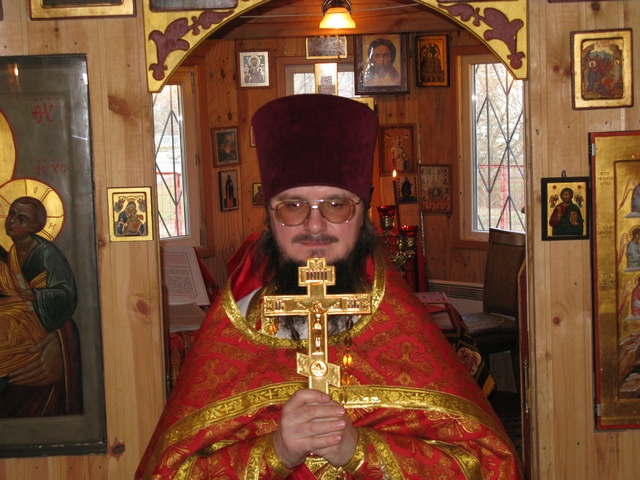
Kilegez Padişa Allabız Xristosnıñ Üzenä cığılıp başıruyıq! "Being a Tatar on his mother's side, Father Daniel devoted particular attention to spreading and strengthening Orthodoxy among the Tatar people. He became the first and, it seems, the only Priest who, with the blessing of the hierarchy, regularly served prayers in the Tatar language (partially) for Orthodox Tatars and self-published a prayer book in Tatar. Along with his assistants, he preached at Sabantuy (a Tatar national holiday) and at the Tatar cultural center. In Egypt, he spent hours preaching to his Muslim guide, and debated faith with muftis on television."
Zurab ☦︎ tweet mediaZurab ☦︎ tweet media
0
8
47
670
Litterae Christianae
Litterae Christianae@litteraechristi·
Dic mihi, sodēs: quid beātam vītam efficit? 🤔
Latviešu
9
1
16
1.3K
Dymphna
Dymphna@Dymphnaseye·
Being 100% ethnically Palestinian and not knowing Arabic is honestly so embarrassing.
English
2
0
11
400
Mar Damascene ☦️🥀
Mar Damascene ☦️🥀@ruckusofantioch·
It’s kinda crazy that for many people who are RC and EO, claiming sm tradition and history, that they just learned on X recently that all people by default go to Hell bc of the fall 💀
English
7
3
39
1.7K
Dmitry
Dmitry@blessedmikko·
@ruckusofantioch @m966021 Hmmm. Wonder what Christ was saving Man from on the Cross? Help me out here, Damascene.
English
2
0
6
106
Brother Augustine
Brother Augustine@BrotherAugusti2·
Having published “Original Sin For The Orthodox Church” nearly 8 months ago, I was to some extent looking forward to hearing rebuttals and arguments in order to refine my thinking, my position, and possibly even start working new lines of thought into a second edition… But since its release last August, the book has gone completely unchallenged in terms of any argumentation beyond genetic and ad hominem fallacies against me as the author. Not one of the people screeching for the last four years about how heretical and subversive I am has been able to put forth a single counter argument to what is presented in the book. The Twitter legion simply complains about my ethnicity, stupidity, “Latinizing,” etc — without providing a single piece of evidence that anything I’ve presented is wrong. Some accused me of being arrogant, before publishing the book, for claiming it would “end the debate.” Perhaps even I would have agreed that was overly optimistic in retrospect…and yet, here we are 8 months later, with no reason to think the debate has not actually ended. Glory to God for all things ☦️
Dmitry@blessedmikko

‘The canons of the Council of Carthage [419] entered into all the canonical collections of the Orthodox Church and possess unquestionable ecclesiastical authority, since the decisions of this Council were confirmed by the later enactments of the 6ᵗʰ (Canon II) and 7ᵗʰ (Canon I) Ecumenical Councils as universally binding for the whole fullness of the Orthodox Church. By reason of this reception, these canons “received ecumenical significance and universally binding force for the whole Church,”⁽¹⁾ which found reflection in the Church’s liturgical practice and in the writings of later holy Fathers.’ –Archpriest Vadim (Leonov), God in the flesh: Orthodox teaching on the human nature of our Lord Jesus Christ, §1.3.4, The nature of original sin
English
8
10
48
3.7K
Dionysius Maurus retweetledi
Dmitry
Dmitry@blessedmikko·
Excerpt from 14th-century Byzantine Bishop Theophanes of Nicaea’s letter addressed to Paul, Latin Patriarch of Constantinople. Presented to us in English for the 1st time by the hand of friend Athiktoso (@athiktoso): ‘...Concerning whether the difference between the divine essence and the divine energy is thought to exist by conception or in reality, this seems to us as follows. According to both Basil the Great and John of Damascus, „conception“ has two meanings. For it is spoken both concerning mere figments of our mind that do not exist at all, as mythology fabricates centaurs and chimeras, which is also fittingly called „bare conception,” and it is spoken concerning the mental process of the development and analysis of compact things which at first sight look simple, such as an unfolding and expansion that occurs according to the mind. Concerning the former notion and bare conception, we have no account, for what is there in common between theology and mythmaking? But we must by all means use the other meaning in divine matters. Furthermore, „difference“ or „otherness“ is one thing, and „division“ or „separation“ of things that are united so that they are contemplated separately and by themselves is another. Thus, both things that differ and things that are separated are seen either as really being so or as being so in the conceptual manner. Some things differ conceptually, as in cases such as „grain“, which is also called „seed“ and „fruit“; these things do not differ really, for there is one subject concerning which both are predicated. On the contrary, things that differ really are exemplified in cases such as a swan and the whiteness that exists in the swan; for both the swan and its whiteness are really different. Likewise, things divided properly and per se are sometimes distinguished conceptually, as when we distinguish the heat inherent in the fire from the fire as a separate entity, imagining this only in the mind, whereas in other cases they are distinguished really, as in the hypostatic division of two individuals belonging to the same nature, e.g., Peter and Paul belonging to humanity; for Peter is really distinct from Paul in terms of their being two individuals. Therefore, the divine energy, which is natural and essential according to the divine Fathers, is a reality, not a figment of the mind. For how could something natural, essential, and divine be non-existent? Again, how could it be God’s essence itself, since it is said by the Fathers of the Sixth Ecumenical Council and others to proceed from it? How could it bring forth itself? Or how could „each” be spoken concerning what is entirely the same and one? But divine Anastasius says thus: „Wherever the energy appears, the essence from which it proceeds is contemplated together with it. For each is uncircumscribed, and because of this they are completely inseparable from each other.” So insofar as these are „each,” the energy is entirely other than the essence. But insofar as this too is uncircumscribed, it is entirely both subsistent and uncreated; for how could the uncircumscribed be created and non-subsistent? Therefore, the divine essence and energy differ from each other in reality, since both are realities, as has been sufficiently shown. But each is divided and separated from the other by conception only, and not in reality, for they are inseparable according to divine Anastasius, just like the heat in fire from the fire and the solar light from the sun. Even more, these things are only partially united, for instance, the solar light is connected by some part to the disk and its own source, whereas the greater part extends to the ends of the world. But concerning the divine essence and energy, the connection is not regarded as partial; since each of these is uncircumscribed, the whole exists in the whole...’ vi, vii
Dmitry tweet media
English
6
10
38
3.7K
Dionysius Maurus retweetledi
Orthodox Ensign ☦️🔄🧎
Orthodox Ensign ☦️🔄🧎@TheOrthoEnsign·
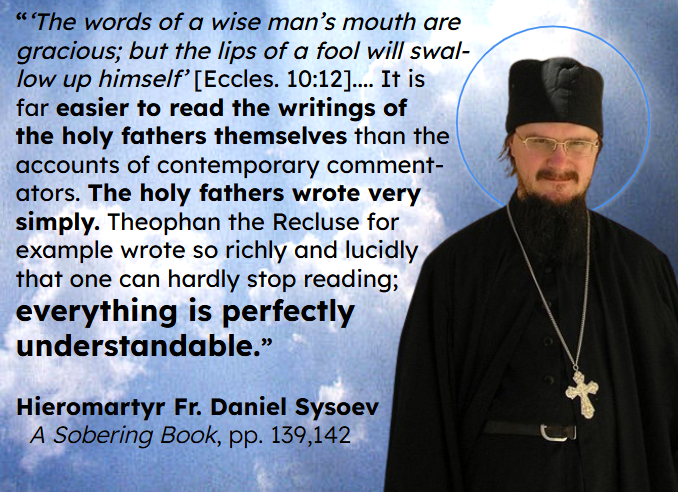
Fr. Daniel Sysoev on the clarity of the Holy Fathers' writings—such as the works of St. Theophan—in contrast to modern people who comment on their words:
Orthodox Ensign ☦️🔄🧎 tweet media
English
3
10
36
1.2K
Dionysius Maurus retweetledi
☘︎ jestergoon ☦︎
☘︎ jestergoon ☦︎@fool2theworld·
Live look at an Orthobro after they’ve blocked everyone who respectfully disagrees with them
☘︎ jestergoon ☦︎ tweet media
English
4
2
22
953