

Daniel Norberg
1.3K posts
Daniel Norberg
@dnorberg
Software engineer at https://t.co/FFQzyWhc2V. previously at https://t.co/EjBbnKeOPg. Performance and scalability fanatic. [email protected]
Stockholm, Sweden Katılım Kasım 2008
204 Takip Edilen396 Takipçiler

All I want to do is parse data files, write queries, build dashboards.
The most satisfying work by far.
English


Daniel Norberg retweetledi


Got all our stuff from Singapore - current status = unpacking 203(!) boxes 😅

English
Very excited about all the hard infra problems we're solving at Modal, and still feels like we're just getting started!
Erik Bernhardsson@bernhardsson
It's true – @modal has raised a $87M Series B at a $1.1B valuation to advance the future of AI infrastructure. Thank you to @Lux_Capital, @Redpoint, @AmplifyPartners, and others. Now more than ever, AI demands a complete reinvention of traditional compute infrastructure
English
@MaximePeabody @bernhardsson We’re actively working on improving Volume scalability.
English

I spent the past week testing modal out on a couple projects - it's nice!
I'm curious, what's the target market?
For side projects it seems great because it's way easier to deploy code to gpus on modal than anything else I've tried, especially AWS/GCP.
But for scale, I noticed that the Volume for example only handles ~50k files, which seems pretty low?
English

Easiest way if people want Modal stock is to join us! jobs.ashbyhq.com/modal
jason liu@jxnlco
How do I buy @modal_labs stock
English
@bernhardsson This is why my next language will have only types, no names or values.
English
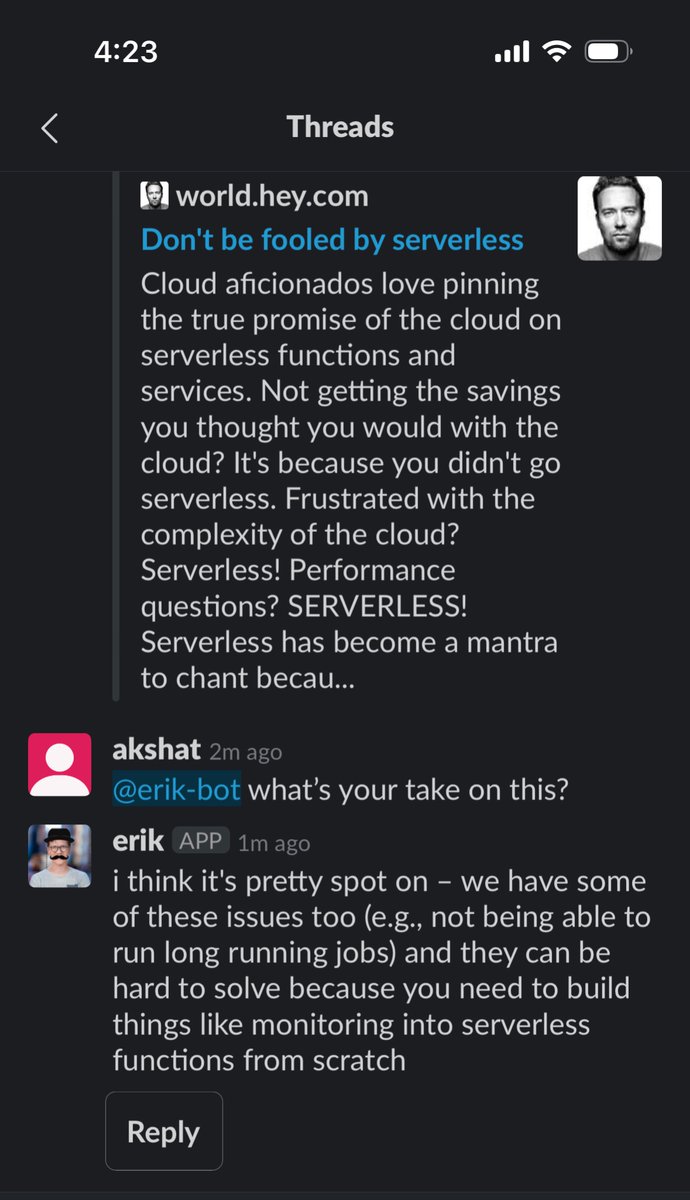
It always felt unsatisfactory to me that the best way to catch a large class of bugs in software is to annotate lots of expressions with types. Like, it works, but what’s the platonic ideal of automated bug catching?
English


English

@bernhardsson @modal_labs Not in rust but I imagine it’s pretty straight forward!
English
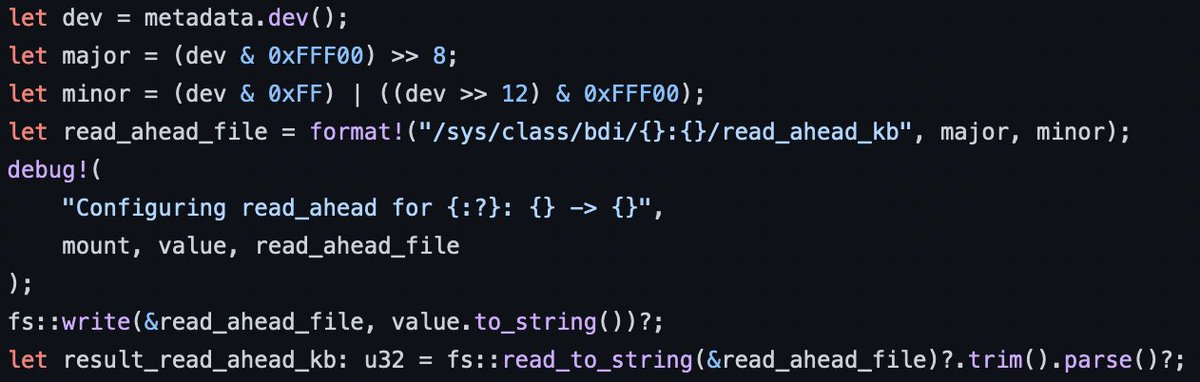
We just spent an engineer-week or two at @modal_labs working on a performance optimization that basically boiled down to a few lines making all file operations 2x faster!
(Deployed on Friday evening so we get a full weekend of data to analyze!)
English
Small thread of non-obvious things I miss in Sweden when in Singapore and vice versa.
1. The different and lighter shades of green and yellow in nature. Singapore is much more dark green and dark brown.
Petter Weiderholm@pweiderholm
I will write a little thread of the non obvious things I miss with Sweden
English
@normanmaurer Will netty 4 and 5 be able to coexist on the classpath?
English

Love that we have the ability to finally break APIs in #netty 5 :) github.com/netty/netty/pu…
English

The ironic thing is that I was giving an impromptu talk about my days of designing atomic clocks approx 19 hours ago, as this email was sent
English
Daniel Norberg retweetledi

Svenska

Sentences I did not expect to use in the year 2022: "The Russians have captured Chernobyl."
English