Sandra O, MBBS, MSc, PhD

977 posts

Sandra O, MBBS, MSc, PhD banner
Sandra O, MBBS, MSc, PhD

Sandra O, MBBS, MSc, PhD

@docSandraO

Mom to 3 amazing humans| Cardiologist| Peri-operative Medicine| PhD Clin Épi @McMasterU| MSc Prev Cardio @imperialcollege| Research #SmokingCessation| 🇳🇬 🇨🇦

Hamilton, Ontario Katılım Aralık 2019
435 Takip Edilen459 Takipçiler
Sabitlenmiş Tweet
Sandra O, MBBS, MSc, PhD
Sandra O, MBBS, MSc, PhD@docSandraO·
Smoking is the leading PREVENTABLE cause of death. ~11% Canadians smoke, with rates 2x higher in hospitalised patients & even more among surgical patients. Upcoming CPU focuses on contemporary approaches for the practicing clinician. Systematic approaches are crucial.
Heart Institute@HeartInstitute

Dr. @docSandraO shares insights from the first panel session on contemporary approaches to smoking cessation.🚭 Learn more about the clinical practice update in this video 👇

English

0
3
7
1.3K
Sandra O, MBBS, MSc, PhD
Reflecting on my PhD defence, the external examiner's kind congratulatory remarks before the very rigorous critique of the thesis was instrumental in how I received and addressed the feedback. Kindness costs nothing but gives everything. I take that with me as an examiner.
English
0
0
2
29
Kevin Pho, M.D.
Kevin Pho, M.D.@kevinmd·
85 to 90 percent of women physicians share ONE surprising childhood trait. They are eldest daughters. Raised to over-function. Expected to carry the burden. Conditioned to never ask for help. Medicine does not just attract this trait. The entire healthcare system secretly relies on it. And it is fast-tracking massive burnout. Are you a doctor because of your training, or because you have been doing it your whole life? Let's talk about the Eldest Daughter Burden. Link to this recent episode is in the comments 👇 #MedTwitter #WomenInMedicine #PhysicianBurnout
Kevin Pho, M.D. tweet media
English
41
78
441
32.4K
Sandra O, MBBS, MSc, PhD
Sandra O, MBBS, MSc, PhD@docSandraO·
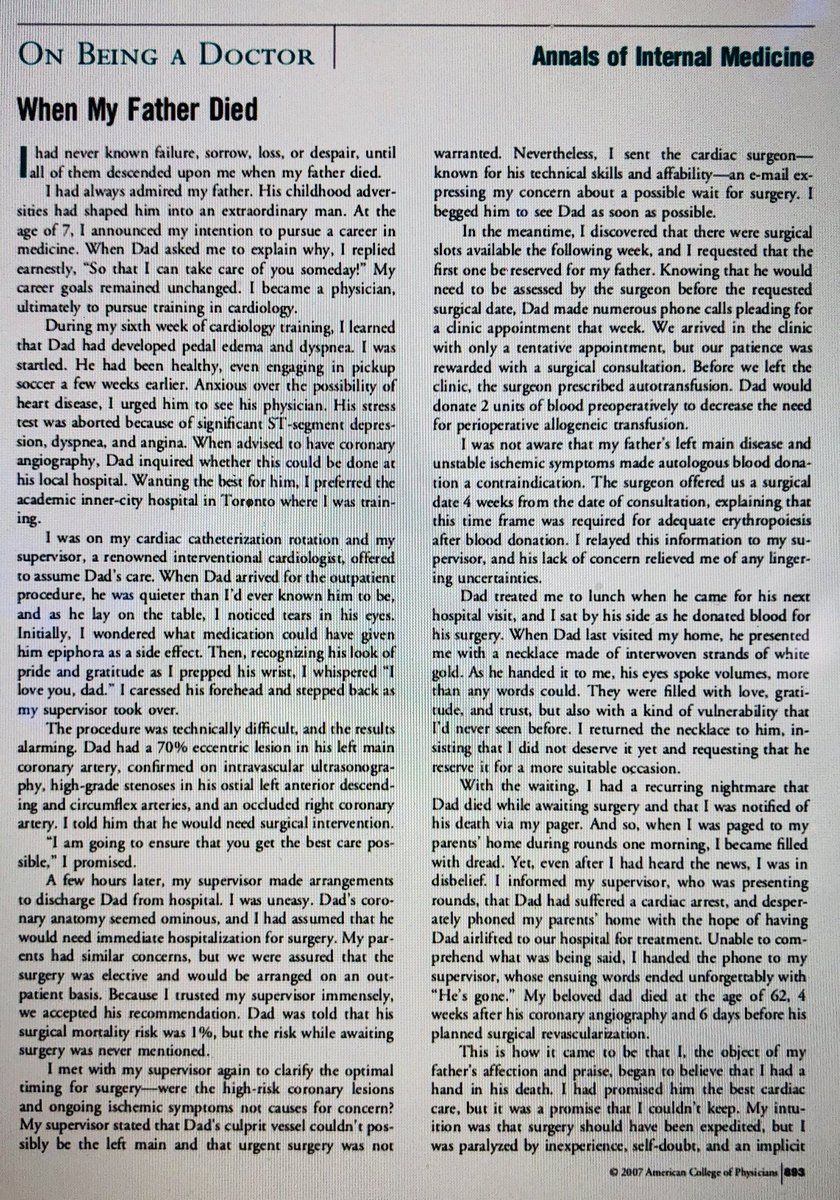
@hvanspall Oh my Harriette, my heart breaks for you as I read the raw emotion in this piece. I know this ache intimately as my own father, a doctor himself, was failed by a healthcare system he had poured his life into. I’m so sorry and that you could forgive speaks to your heart 🫂
English
1
0
2
331
Harriette Van Spall, MD MPH 🇨🇦
He was a mentor But departing from evidence, he had my dad w new angina wait 4wks for CABG: Cath/IVUS had shown 70% LM, tight ostial LAD+LCx lesions, RCA occlusion My beloved dad died before CABG The ensuing silence left me w #lessons I carry everyday1/ acpjournals.org/doi/abs/10.732…
Harriette Van Spall, MD MPH 🇨🇦 tweet media
Subodh Verma@SubodhVermaMD

So much fun, interviewing, Dr. David Latter on his incredible journey over four decades as a heart surgeon, lessons learned and words of wisdom for the future generation. The full video will be posted soon.

English
43
53
284
96.8K
Sandra O, MBBS, MSc, PhD
Sandra O, MBBS, MSc, PhD@docSandraO·
@venkmurthy I submitted a paper Nov 25, 2025. It is March 7, 2026 and they have not been able find reviewers🤦🏽‍♀️ It is never ending.
English
0
0
1
3
Venk Murthy MD PhD
Venk Murthy MD PhD@venkmurthy·
The academic publishing model: * Spend years becoming an expert * Spend ~1-3 years working on a project & writing manuscript * Editor takes weeks to assign reviewers * Most reviewers say no or don't reply to invites * Reviewers eventually get around to it months later * Reviewer reads for 0.5-1.0 hours and says - not interested, not good, not perfect * Spend next 1.5 - 2.0 years addressing reviewers/editors concerns which are often taste or tangential (often shopping across 3+ journals) * Postdoc has moved on, students have moved on
Jake Wintermute 🧬/acc@SynBio1

It took Nature 13 months to publish Evo 2! 13 months! For reference: Opus 4.5 ended software engineering as we know it 4 months ago. ClawdBot added 2 million users in a single week in January. Academic publishing is so cooked it's not even funny nature.com/articles/s4158…

English
11
31
280
63.7K
Sandra O, MBBS, MSc, PhD
Sandra O, MBBS, MSc, PhD@docSandraO·
Completely agree @DrMarthaGulati We need large RCTs in contemporary populations to inform evidence based care for all forms of menopausal hormone replacement therapy.
Dr. Martha Gulati ♥️🫀❤️‍🩹🇨🇦@DrMarthaGulati

Today the Black Box was removed from ALL Menopausal Hormone Therapy (MHT). For transvaginal, I think this is reasonable, but what do we actually know about contemporary doses of transdermal & oral #MHT? I also think the statements being made are doing a huge disservice to women. This is NOT a win for women. A win would be funding a trial that studies women on contemporary doses of transdermal & oral MHT. The statement by Makary that "With the exception of vaccines or antibiotics, there's no medication that can improve the health of women on a population level more than hormone replacement therapy," is not based on fact. We just don’t know and certainly any statement on cardiac safety remains unknown for contemporary doses of transdermal and oral MHT I want to care for women using evidence based treatments. We have seen by many examples of what can happen when we don’t study women. Let’s not do this again. #womenshealth #HormoneTherapy #hearthealth #savingwomenshearts #menopause

English
0
0
2
1K
Vera Ghali, MD
Vera Ghali, MD@veraghali·
Cerebral cryptococcosis, a severe fungal infection caused by infection with Cryptococcus neoformans or C. gattii with increased risk in immunocompromised patients, HIV/AIDS, HSCT and organ transplantation patients, prolonged corticosteroid therapy, and aviculture workers. Causes cough, fever, dyspnea, confusion, headache, nausea and vomiting, and skin nodules. The MRI shows hydrocephalus and miliary nodules, dilated perivascular spaces coalescing to form pseudocysts in the basal ganglia with a "soap bubble" appearance with leptomeningeal enhancement, high signal in subarachnoid space and T2/FLAIR. Ddx. CNS toxoplasmosis, CNS TB, pyogenic abscesses, and primary or secondary lymphoma. Dx. Positive cryptococcal antigen test precedes symptoms by 3 weeks, By CSF culture with elevated lymphocytes abd decreased protein and glucose; lateral flow immunochromatographic assay (LFA), enzyme immunoassay and PCR. Tx. Liposomal Amphotericin B, flucytosine followed by fluconazole; repeated lumbar puncture to decrease elevated intracranial pressure (ICP) lumbar drain and ventriculoperitoneal shunt (VPS).
English
9
16
226
22.2K
Nico Gagelmann
Nico Gagelmann@NicoGagelmann·
Here is an MRI of a patient with persistent headaches. Diagnosis?
Nico Gagelmann tweet media
English
24
87
628
270.5K
Siyab Panhwar, MD
Siyab Panhwar, MD@DrSiyabMD·
I am an interventional cardiologist who treats heart disease for a living, including by putting stents. This is my opinion on my tweet above. This is aimed at the general public. Long but worth the read: First, some basics: Atherosclerosis (plaque formation) is a NATURAL PROCESS of life that begins in childhood. It progresses or can accelerate as you get older - as you live more life, due to genetics, and as you accumulate medical conditions such as high blood pressure, diabetes, live the "American" diet and lifestyle, etc. Just like the plumbing in your home - a brand new house has clean, new pipes. Over 30, 40, 50 years of use, the pipes accumulate junk on the inside and can get clogged over time. EVERYONE has some degree of plaque, some more than others. You cannot STOP the process. The goal of prevention is to find stuff BEFORE it causes problems, and to initiate measures to SLOW progression of plaque and to STABILIZE what you already have so it doesn't cause problems, i.e. a heart attack. The goal is to control it, live a long, good life, and die WITH heart disease and not BECAUSE of it. 1. CAC is a great SCREENING, preventive tool in APPROPRIATE patients to get a sense of how much coronary artery plaque one might have, to then better assess their RISK of future adverse outcomes like a heart attack. The result of this test is NOT USED IN ISOLATION, rather it is used with OTHER tests, clinical history, etc to determine the best strategy to LOWER risk. But in reality, a lot of people do not really *understand* RISK. They use this test, or are told by others to, as a way to "predict" *if* they will have a heart attack. I have lost count of the number of people who tell me "I have a CAC of 0 that means I won't have a heart attack, right?" or "I have a CAC of 1000! I was told I'm at imminent risk of a heart attack and I'm freaking out". NO. There is NO test in the world, and no human being that can tell you, if you are going to have a heart attack tomorrow, next week, next month, etc. Anyone who says they can is lying to you. You can't tell the future. If you want an ETA on if/when, ask God because only God knows. But we CAN do is estimate RISK. A low CAC or CAC of 0 is great, and low risk, but not ZERO risk. A high CAC is indicates higher risk but does not mean 100% probability. Some people with low/Zero CAC have heart attacks and some people with CACs of 1000s never have a heart attack. 2. CAC measures CALCIFIED plaque - the advanced stage of plaque formation by which time plaque tends to become calcified and hard. It does NOT measure soft plaque - young plaque that has not had time to calcify yet. Therefore, while a CAC of 0 is reassuring, it DOES NOT MEAN YOU DON'T HAVE HEART DISEASE OR PLAQUE. Generally, soft plaque can be "unstable" or "vulnerable" plaque which is often responsible for heart attacks, instead of the more stable, calcified type. Carnivore bros in their early 30s and LDLs of 180 will often flaunt their CAC of 0 and say look! I’m good! No. Doing a CAC on an average, healthy 30 year old with no family history is silly because the CAC will LIKELY BE ZERO. THEY HAVE NOT HAD ENOUGH TIME FOR PLAQUE TO CALCIFY YET. In fact, they can be layering soft plaque because of their LDL of 200 and have no clue. It can give people a false sense of security. I have put stents in enough 40 year olds with heart attacks with a 0 CAC score in the past to know this. It would also be silly to think that if you have a CAC of 0 you can continue to smoke and you're good - I don't think anyone thinks that. Which is why when I have 30 year olds in my clinic with uncontrolled lipids, hypertension etc, I don’t do a CAC score. It will likely be 0. But i’m not going to just let them accumulate plaque until they get a CAC years later and finally they have a positive test and then we talk about risk factor control. That’s silly. I aggressively control all these risk factors EARLY in life. 3. The calcification *itself* does not necessarily cause a heart attack or stroke - like I mentioned earlier, these are typically very stable, hard plaques and less likely to cause a heart attack than unstable, vulnerable soft plaque. A CAC is still very useful because it helps you assess overall plaque *burden* and therefore, risk. Compared to someone with a lower CAC score, someone with a higher CAC may have an overall higher BURDEN of atherosclerosis (including both calcified and non calcified). And a higher burden of plaque indicates higher risk. 3. CAC is not always = blocked artery. A common misconception is that if you have a high CAC score that automatically means you have significant percentage blockage (50, 60, 70+ %) in your arteries. No. CAC should be seen as a marker of atherosclerosis and not blockage. A CAC test *cannot* tell you if you have a 70% blockage. You need a coronary CT or a coronary angiogram for that. Plaque can accumulate in many ways, and the arteries of the heart often adapt (“remodeling”) to accommodate that plaque WITHOUT causing a significant obstruction of the actual lumen of the artery, so blood flow is still relatively unimpacted. Obviously this is only to a limit, and eventually the plaque starts to protrude into the lumen and causes a significant blockage. Don’t get me wrong, obviously a high score increases the chances of a significant blockage but this is not gospel. There are people with scores in the 1000s and all their plaque is in the wall of the artery, and the artery itself is wide open - there is no need for a stent or bypass for that. Conversely, people with low scores can have a significant blockage in an artery. Life is unpredictable and bizarre shit happens all the time. 4. A higher CAC does not automatically = further testing or a stent This is another big misconception that people struggle with. For a lot of people who get this test - the average, *asymptomatic* person with a higher CAC score, the answer is to STOP further testing, and just manage risk factors aggressively. That’s it. People say "but doc what if I have a heart attack? Why don't we look for an actual BLOCKAGE?" You don’t typically need a stress test if you are asymptomatic. You don’t need a coronary angiogram or CCTA to look to see if there is a percentage blockage. Why? Because whatever plaque you do have has been ACCUMULATED OVER YOUR LIFETIME and is STABLE. You had it 2 months ago, even 6 months ago. If you are ASYMPTOMATIC, it is just sitting there, NOT CAUSING PROBLEMS (yet). We found it, great, now we do things to reduce the risk that it causes problems 10, 20, 30 years down the line. Again, no one can predict if/when a heart attack happens. You could have had a heart attack months ago, when you had all this plaque but didn't even know about it. Like I said earlier, atherosclerosis is a NATURAL process of life and EVERYONE has some degree of plaque. There are many people in your life, just walking around with severe plaque but they have no idea because it hasn’t caused problems for them, YET. They are at risk, of course. If I did a coronary angiogram procedure for everyone (with or without a positive CAC), I would find some degree of blockage in most people. Even a significant blockage! But if this is STABLE and CHRONIC, generally there is no need to put a stent to open it up. Because in stable heart disease, the heart often adapts in many ways. Stents generally do NOT help you live longer, they do not reduce the chance of a heart attack in the future. They really only just make people FEEL better, IF they have symptoms and IF their symptoms are caused by the blockage. If you’re asymptomatic, a stent is likely not going to do anything for you and you’re probably just incurring the risk of an invasive procedure without any significant meaningful benefit. Opening up a stable blockage won't necessarily stop a heart attack in the future because you may have some soft, vulnerable unstable plaque somewhere else in the arteries that is not causing a significant % blockage in the artery, but decides to act up one day and cause a heart attack. Obviously a heart attack is an acute condition with sudden 100% closure, and stents help save lives, and your heart muscle. But many people with heart attacks ALSO have chronic (even significant %) blockages in other arteries that were just bystanders. These blockages didn't cause problems and were found incidentally. They were present months, years ago, and the person probably didn't even know Consider this analogy: the drain under your kitchen sink. When it clogs, it doesn't happen overnight. It happens over weeks and months. There may be a 50% clog but the drain works fine. But then as the clog progresses, the flow slows down over time and finally stops. That is STABLE. A heart attack is like someone throwing something in to your toilet and now you have a clogged toilet and an emergency. Obviously, there are caveats to this - some people with high CAC need further testing, and may even need bypass surgery, depending on how high the score is, their risk factors, their history, and the type/severity of blockages. But *generally* speaking, this is not true for the AVERAGE person. I have done no further testing for people with high calcium scores, and conversely the full shebang for people with low scores. It depends. All this sounds great in theory, but in practice, reality is very different. Influencers peddling CAC scores have meant that people are now getting these who may not be appropriate for them, and then they are getting a lot of downstream testing and unnecessary procedures (ie stent) that they DO NOT NEED. People also, understandably, have anxiety. It can be hard to accept that they have a high calcium score and I do not recommend any further testing. This is all understandable of course. No one wants to have a heart attack. I obviously think everyone should educate themselves and their loved ones about heart disease and take an active role to prevent disease, but we have to recognize there can be significant harm with indiscriminate, inappropriate use. Bottom line: Prevention is KEY, and we need to do a LOT MORE of it. CAC scores are great tools, but need to be used and interpreted appropriately. Disclaimer: Very simplified explanation, written quickly, educational only, and not medical advice. Discuss your specific case with your doctor. your doctor may disagree with me, and that's fine too! Do what is best for you! Thanks for reading!
English
26
42
211
32.6K
Siyab Panhwar, MD
Siyab Panhwar, MD@DrSiyabMD·
Hot take: The coronary artery calcium (CAC) score test is rapidly becoming the one of the most misused, misinterpreted and misunderstood tests we have. By both patients and other doctors. Sad too, because it's such a good test if used appropriately. A few years from now, studies will be conducted to assess all the unnecessary downstream testing and procedures (and harm) due to rampant, inappropriate CAC testing.
English
36
30
266
94.9K
Raffaele Di Giacomo, PhD
Access to effective CVD prevention measures in low and middle-income countries is indeed crucial, and the disparity in resources can significantly affect outcomes. Did the discussion at the @worldheartfed Heart Cafe bring up any innovative solutions or technologies that might help bridge this gap? Looking forward to hearing more about any proposed strategies. #CardiovascularHealth #PublicHealth For comprehensive reviews on biomedical innovations in CVD and beyond, check out sciqst.com—your one-stop platform for every biomedical question.
English
1
0
0
13
Sandra O, MBBS, MSc, PhD
Sandra O, MBBS, MSc, PhD@docSandraO·
Very inspiring to have these amazing scientists doing impactful work to look up to, and importantly, to work alongside with at the PHRI. Huge congrats to all the recipients 👏🏽
English
0
0
5
207
Sandra O, MBBS, MSc, PhD
Sandra O, MBBS, MSc, PhD@docSandraO·
Scarcity culture forces brilliant people to compete for crumbs and then internalize the result. When you are not "chosen", sometimes it just means there were not enough chairs at the table, not that you don't belong. You are doing the work, and that is enough today.
English
1
0
2
151
Sandra O, MBBS, MSc, PhD retweetledi
Gordon H. Guyatt
Gordon H. Guyatt@GuyattGH·
#GRADE, indeed #EBM, will never be the same. GRADE papers have become too complex and difficult to navigate. The remedy: a series of 7 papers in the #BMJ laying out the essentials of GRADE: Core GRADE. This week, an overview of Core GRADE. bmj.com/content/389/bm…
English
1
90
173
12.6K
Sandra O, MBBS, MSc, PhD
Sandra O, MBBS, MSc, PhD@docSandraO·
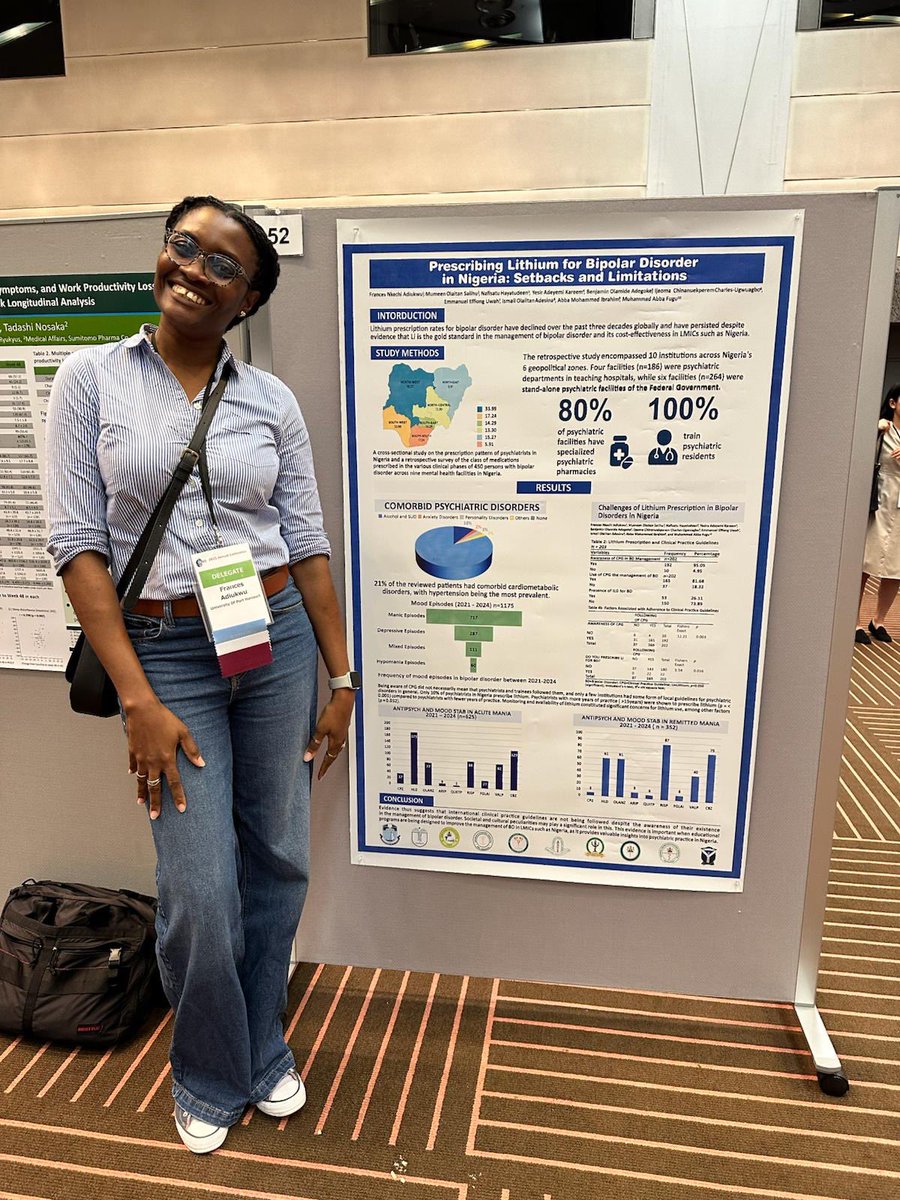
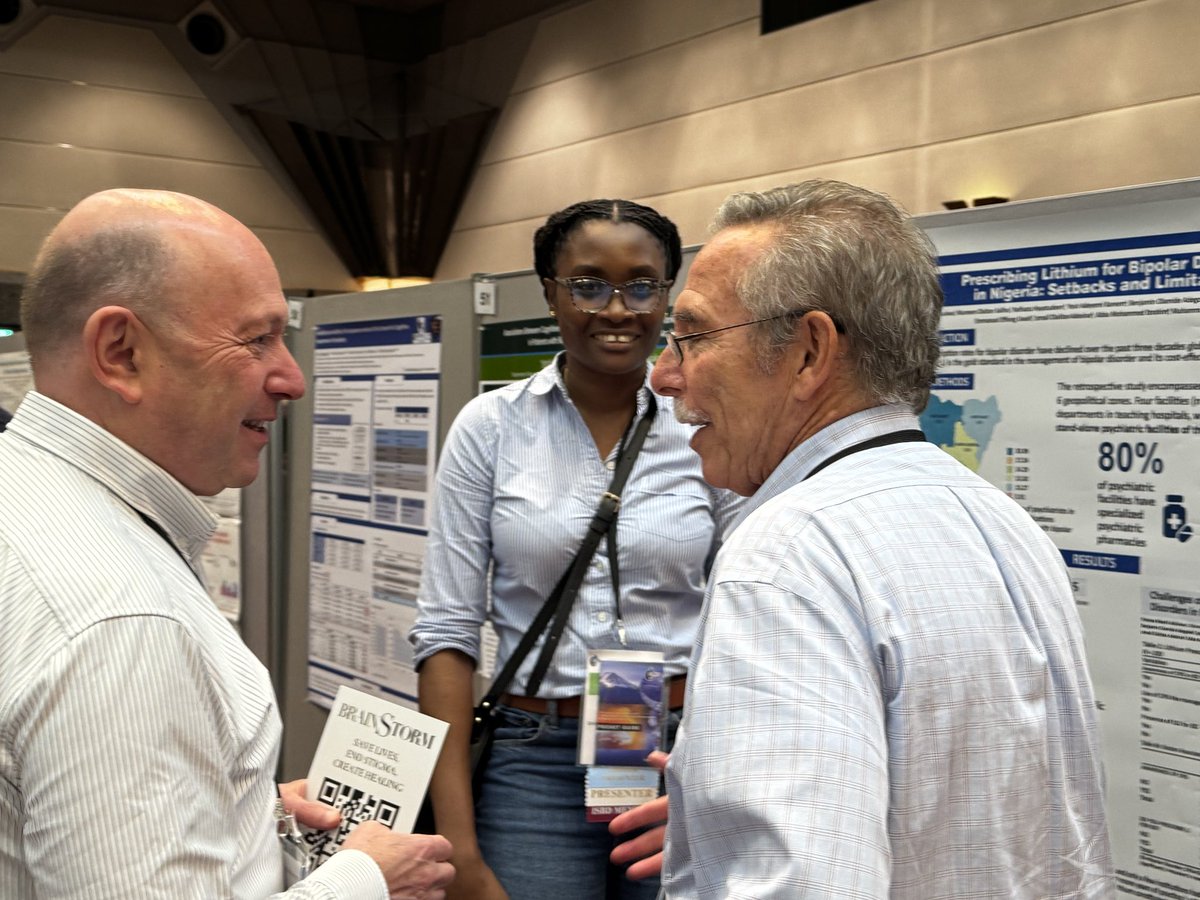
Star early career researcher @franadiukwu is the leading voice in Bipolar research in Nigeria. Working against the odds to obtain funding for bipolar research, creating the first bipolar longitudinal cohort study with a biobank. Proud of you my friend 👏🏽
Dr Frances Adiukwu@franadiukwu

#WBD2025 educating the University of Port Harcourt Teaching Hospital community on bipolar disorder. These conversations need to be heard. It was an enlightening adventure for the mood disorder unit of UPTH. World Bipolar Day 2025 @ISBD4

English
1
0
2
136