
DocXus

4.7K posts

DocXus banner
DocXus

DocXus

@docxusofficial

Connecting Healthcare with Technology | Your Health, Our Priority | Transforming Medical Experiences Digitally | Join the Future of Healthcare with Docxus 🌐

Join thousands of learners → Katılım Ağustos 2023
563 Takip Edilen50.7K Takipçiler
Sabitlenmiş Tweet
DocXus
DocXus@docxusofficial·
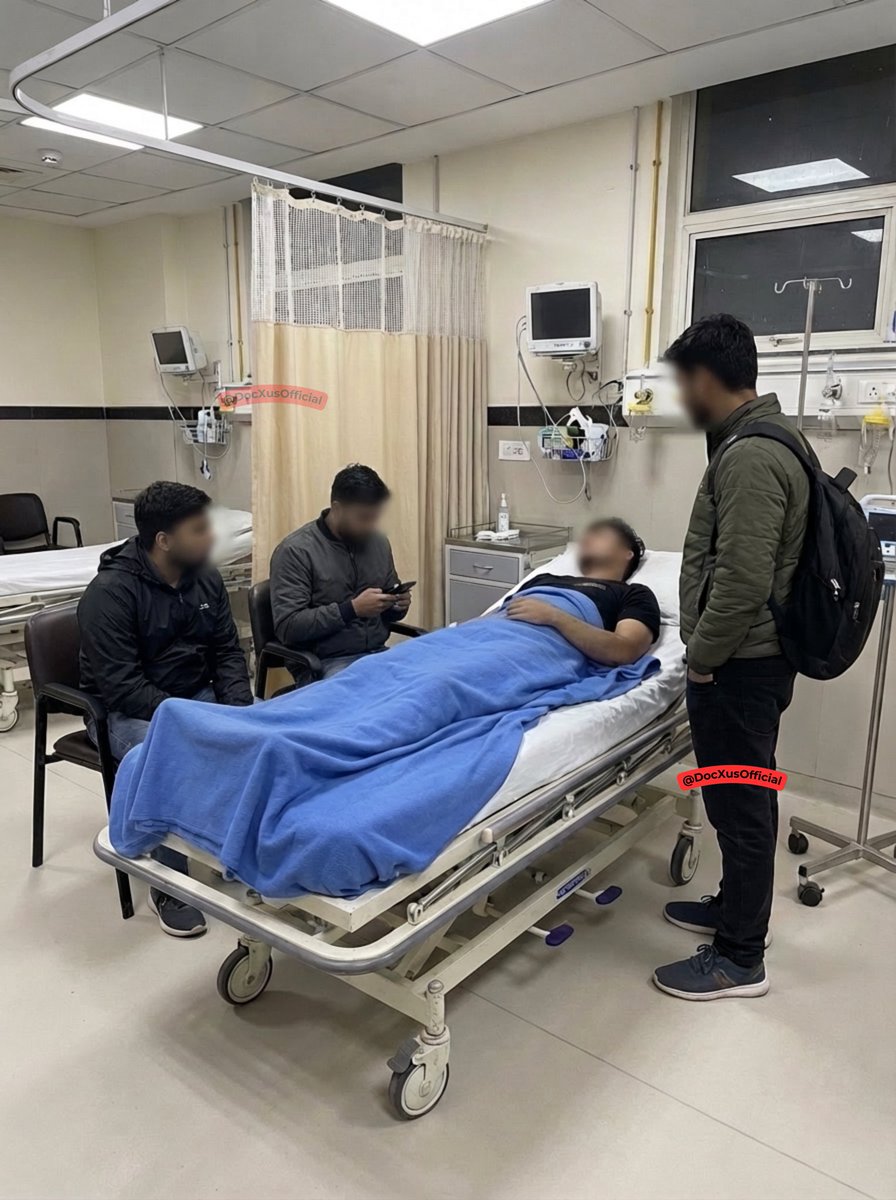
A 24 year old was brought to the ER with a heart rate of 212 His batchmates carried him in from the hostel. Palpitations. Breathlessness. Panic Couldn’t sit still, kept grabbing the bed rail HR 212 on the monitor. Narrow complex tachycardia No prior cardiac history. No previous episodes. Completely healthy till tonight History revealed they’d been drinking. Smoking cigarettes. Normal hostel night Then someone brought a joint. Single joint. Passed around between five of them Four of them were fine Only he ended up here Same alcohol. Same cigarettes. Same joint. Same room So what was different about him? We tried a Valsalva The rhythm broke. He converted back to sinus. Once he settled down, we took the history again. Properly this time Specifically, anything in the last 48 hours. Anything at all. Even something you don’t think counts. He thought for a moment Then he said He had taken one tablet the previous day. Something small. Something he bought over the counter. Something he didn’t mention because it didn’t feel important Fluconazole 150 mg One tablet. Taken for a minor fungal issue. Available without prescription. Forgotten about completely Fluconazole is a potent CYP inhibitor. That’s one of the pathways responsible for clearing THC from the body Block that pathway and THC doesn’t metabolize normally Instead it accumulates as 11-OH-THC, its active metabolite which crosses the blood brain barrier more efficiently than THC itself and produces stronger sympathetic stimulation Fluconazole has a half life of about 30 hours It was still fully active when that joint came around His friends cleared the THC normally His liver couldn’t The same joint effectively became a much larger dose His sympathetic system fired His heart rate hit 212 Same alcohol. Same cigarettes. Same joint But one over the counter tablet had quietly changed the evening Drug interactions don’t care why you took the drug They don’t care that it was just ONE tablet Sometimes the critical detail is the one patients leave out The small thing they thought wasn’t worth mentioning.
DocXus tweet media
English
11
82
543
127.2K
DocXus
DocXus@docxusofficial·
Bradycardia + B/L pitting pedal edema + Raised JVP + Dyspnoea What’s the diagnosis ??
DocXus tweet media
English
4
0
18
2.6K
DocXus
DocXus@docxusofficial·
Which disorder gives this ‘edematous malnutrition’ picture ??
DocXus tweet media
English
3
0
19
2.4K
DocXus
DocXus@docxusofficial·
No fever. No pus Just brutal neuropathic pain and this rash Diagnosis ??
GIF
English
30
5
70
22.8K
DocXus
DocXus@docxusofficial·
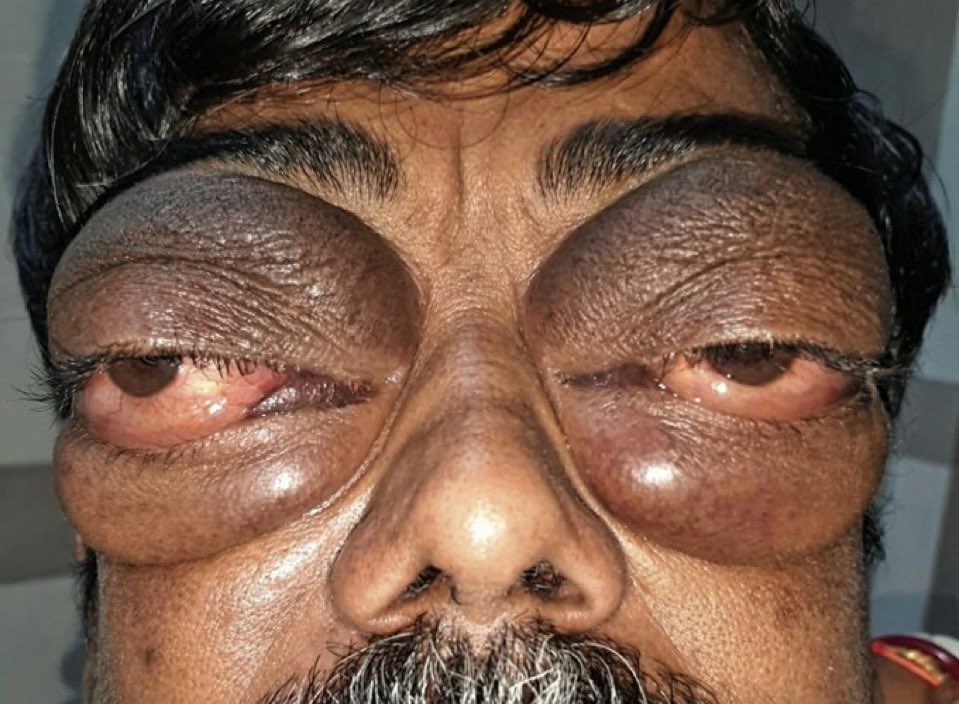
@esanum great breakdown 🙌 classic rhino orbital mucormycosis with that black eschar clue
English
0
0
0
63
esanum
esanum@esanum·
@docxusofficial 🔴 Diagnosis: Rhino-orbital mucormycosis 📍 Black necrotic nasal eschar in a diabetic patient is the key clue 🔷 Angioinvasive fungal infection, classically in uncontrolled diabetes or DKA ⚠️ ENT emergency - needs urgent debridement and amphotericin B
English
2
1
45
6.7K
DocXus
DocXus@docxusofficial·
Diabetic man This isn’t trauma. It’s something far worse What is it ?
DocXus tweet media
English
22
12
132
59K
DocXus
DocXus@docxusofficial·
These PAINLESS bumps appeared after using a common towel Diagnosis ??
DocXus tweet media
English
37
28
300
90.9K
FemVital Hub | Women’s Health
Molluscum contagiosum ✅✅✅with those classic pearly, umbilicated papules 😷 Common after shared towels, close contact or even in adults via skin-to-skin. Usually self-resolves in 6–18 months, but many seek faster clearance (cryo, curettage, etc.). Avoid sharing towels and keep skin dry to prevent spread💧🧼 #WomensHealth #Dermatology
English
1
0
17
9.3K
DocXus
DocXus@docxusofficial·
@llyk176407 great explanation, nice summary of molluscum contagiosum 🙌
English
0
0
1
3.7K
Abdulrahman
Abdulrahman@llyk176407·
المليساء المعدية (Molluscum contagiosum) هي عدوى فيروسية جلدية شائعة تسبب نتوءات صغيرة، لامعة، وغير مؤلمة ذات سرة مركزية، وتنتقل عادةً عبر التلامس المباشر للجلد. تصيب الأطفال غالبًا، وتختفي تلقائيًا خلال 6-18 شهرًا دون علاج. تشمل الوقاية غسل اليدين، وتغطية البثور، وتجنب مشاركة المناشف
العربية
1
0
2
7.2K
DocXus
DocXus@docxusofficial·
@DrsansariOrd excellent summary 👌 covered the key features perfectly
English
1
2
3
7.1K
Haji Siyamuddin ANSARI
Haji Siyamuddin ANSARI@DrsansariOrd·
Most likely diagnosis: Molluscum contagiosum✅ Key clinical features visible in the image Multiple small dome-shaped papules Pearly / flesh-colored appearance Central umbilication (dimple) Clustered distribution around the mouth Painless lesions These findings are classic for molluscum contagiosum, a viral skin infection. Cause Caused by Molluscum contagiosum virus, a poxvirus. Transmission The history in the post strongly supports it: Skin-to-skin contact Shared towels / fomites Autoinoculation (scratching spreads lesions) Typical populations Children Sexually active adults Immunocompromised patients Differential diagnoses (why less likely) Milia → tiny keratin cysts, no central umbilication Viral warts (HPV) → rough hyperkeratotic surface Acne pustules → inflamed and painful Short reply Molluscum contagiosum — pearly dome-shaped papules with central umbilication; spread by skin contact or shared towels. ✅
Haji Siyamuddin ANSARI tweet mediaHaji Siyamuddin ANSARI tweet media
English
2
3
45
13.2K
DocXus
DocXus@docxusofficial·
@deepakdhage111 he converted quickly and was fine within minutes of reaching ER
English
0
0
2
1.4K
DocXus
DocXus@docxusofficial·
A 24 year old was brought to the ER with a heart rate of 212 His batchmates carried him in from the hostel. Palpitations. Breathlessness. Panic Couldn’t sit still, kept grabbing the bed rail HR 212 on the monitor. Narrow complex tachycardia No prior cardiac history. No previous episodes. Completely healthy till tonight History revealed they’d been drinking. Smoking cigarettes. Normal hostel night Then someone brought a joint. Single joint. Passed around between five of them Four of them were fine Only he ended up here Same alcohol. Same cigarettes. Same joint. Same room So what was different about him? We tried a Valsalva The rhythm broke. He converted back to sinus. Once he settled down, we took the history again. Properly this time Specifically, anything in the last 48 hours. Anything at all. Even something you don’t think counts. He thought for a moment Then he said He had taken one tablet the previous day. Something small. Something he bought over the counter. Something he didn’t mention because it didn’t feel important Fluconazole 150 mg One tablet. Taken for a minor fungal issue. Available without prescription. Forgotten about completely Fluconazole is a potent CYP inhibitor. That’s one of the pathways responsible for clearing THC from the body Block that pathway and THC doesn’t metabolize normally Instead it accumulates as 11-OH-THC, its active metabolite which crosses the blood brain barrier more efficiently than THC itself and produces stronger sympathetic stimulation Fluconazole has a half life of about 30 hours It was still fully active when that joint came around His friends cleared the THC normally His liver couldn’t The same joint effectively became a much larger dose His sympathetic system fired His heart rate hit 212 Same alcohol. Same cigarettes. Same joint But one over the counter tablet had quietly changed the evening Drug interactions don’t care why you took the drug They don’t care that it was just ONE tablet Sometimes the critical detail is the one patients leave out The small thing they thought wasn’t worth mentioning.
DocXus tweet media
English
11
82
543
127.2K
DocXus
DocXus@docxusofficial·
@DrsansariOrd valsalva termination suggests AV node dependent SVT, not classic AVNRT and CYP pharmacokinetics aren’t nearly as linear as you’re implying
GIF
English
1
1
5
3.3K
Haji Siyamuddin ANSARI
Haji Siyamuddin ANSARI@DrsansariOrd·
The story is engaging, but the pharmacology explanation given is not accurate. Let’s break it down carefully. 1. What rhythm did the patient likely have? A heart rate of ~212 bpm with narrow complex tachycardia that terminates with Valsalva strongly suggests: Paroxysmal supraventricular tachycardia Most commonly due to: Atrioventricular nodal reentrant tachycardia Atrioventricular reentrant tachycardia Key clue: Vagal manoeuvre (Valsalva) terminating the rhythm → classic for AV node–dependent SVT. 2. Can cannabis trigger SVT? Yes. Tetrahydrocannabinol can cause: Sympathetic stimulation Increased catecholamine release Tachycardia Triggered arrhythmias Cannabis has been associated with: SVT Atrial fibrillation Ventricular arrhythmias (rare) So the joint itself could plausibly trigger SVT, especially in someone with a latent re-entry circuit. 3. The claim about Fluconazole + THC interaction The viral explanation in the post is biochemically questionable. Fluconazole mainly inhibits: CYP2C9 CYP2C19 CYP3A4 (moderate) However THC metabolism is primarily via: CYP2C9 CYP3A4 THC converts to: 11‑hydroxy‑THC Important point: ⚠️ CYP inhibition usually reduces formation of metabolites, rather than increasing them. So the statement: > “Fluconazole causes THC to accumulate as 11-OH-THC” is pharmacokinetically unlikely. Evidence for clinically significant THC–fluconazole interaction causing SVT is very limited. 4. What likely happened clinically More plausible explanations: 1️⃣ Cannabis-induced sympathetic surge THC can cause: Tachycardia Anxiety Catecholamine release Which may trigger AVNRT/AVRT. 2️⃣ Individual susceptibility Only one person developing SVT is common because: Some people have latent accessory pathways Others have dual AV nodal physiology Most people never know until a trigger occurs. 3️⃣ Alcohol + cannabis + nicotine This combination can increase: Sympathetic tone Arrhythmia risk 5. Why Valsalva worked The Valsalva manoeuvre increases vagal tone, which slows AV node conduction. This interrupts the re-entry circuit in AVNRT/AVRT and restores sinus rhythm. 6. Key clinical takeaway The most important teaching point from this case is actually correct: ✔ Always ask about drugs, OTC medications, and substances. Patients frequently omit: OTC antifungals Supplements Recreational substances These can influence drug metabolism or physiology. ✅ Most likely diagnosis Cannabis-triggered paroxysmal supraventricular tachycardia (AVNRT/AVRT). Short reply > HR 212 with narrow-complex tachycardia terminating with Valsalva is classic PSVT (usually AVNRT). Cannabis can trigger sympathetic stimulation and precipitate SVT in susceptible individuals. The proposed fluconazole–THC interaction is pharmacologically unlikely; the arrhythmia was more likely cannabis-triggered re-entry.
English
5
3
27
5.9K
DocXus retweetledi
DocXus
DocXus@docxusofficial·
What is the name of this test ? Diagnosis?
DocXus tweet media
English
23
40
434
123K
DocXus
DocXus@docxusofficial·
@esanum Not Thompson, this checks knee height difference (Galeazzi)
English
0
0
2
1.3K
esanum
esanum@esanum·
🔴 Diagnosis: Thompson test (Simmonds–Thompson test) - Achilles tendon rupture 📍 Test: Patient lies prone with feet hanging off the table; squeezing the calf should cause plantar flexion ⚡️ Absence of plantar flexion → positive Thompson test 🧠 Indicates rupture of the Achilles tendon (loss of gastrocnemius–soleus tendon continuity)
English
4
3
59
12.4K
DocXus
DocXus@docxusofficial·
@DrsansariOrd This is Galeazzi. Ortolani involves a different movement
English
1
0
7
1.8K
Haji Siyamuddin ANSARI
Haji Siyamuddin ANSARI@DrsansariOrd·
The maneuver shown corresponds to the Ortolani Maneuver, which is used to detect Developmental Dysplasia of the Hip (DDH). 1. Name of the Test ✅Ortolani Maneuver It is a screening test performed in newborns and infants to identify a dislocated but reducible hip. 2. How the Ortolani Test Is Performed 1. The infant lies supine. 2. Both hips and knees are flexed to about 90°. 3. The examiner places fingers over the greater trochanters. 4. Gentle abduction of the hips with anterior lifting pressure is applied. Positive Ortolani Sign A palpable or audible “clunk” is felt. This indicates the femoral head relocating into the acetabulum. This confirms a dislocated hip that is reducible. 3. Diagnosis The maneuver screens for Developmental Dysplasia of the Hip (DDH). DDH represents a spectrum of abnormalities including: Hip instability Subluxation Complete dislocation of the femoral head. It occurs in approximately 1–3 per 1000 newborns (higher in certain populations). 4. Risk Factors for DDH Common risk factors include: Breech presentation Female sex Family history First-born infants Oligohydramnios 5. Management if Detected Early Early treatment is highly effective. First-line therapy: Pavlik Harness This device keeps the hips in flexion and abduction, allowing proper acetabular development. If untreated, DDH may lead to: Limb length discrepancy Abnormal gait Early hip osteoarthritis. ✅ Summary ItemAnswer TestOrtolani Maneuver DetectsReducible hip dislocation DiagnosisDevelopmental Dysplasia of the Hip (DDH) Early treatmentPavlik Harness
English
1
2
72
14.6K
DocXus
DocXus@docxusofficial·
Identify the PENTAD
DocXus tweet media
English
21
17
164
26.9K