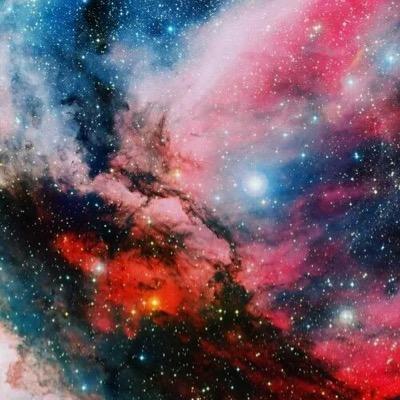
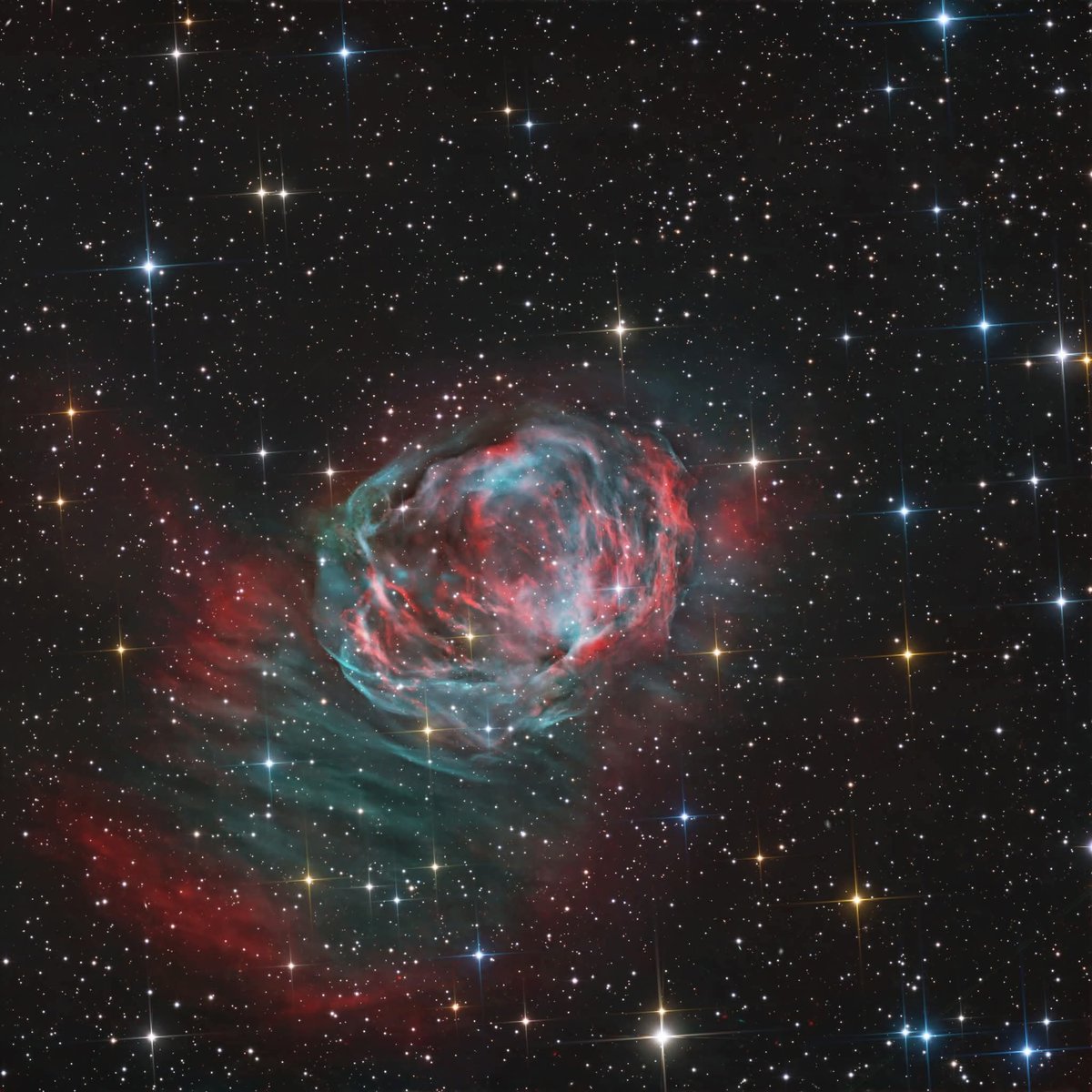
A spectacular view of DG121, a so called 'H II region' (a cloud of ionized hydrogen) located in the constellation of Puppis
H II regions are created when young, massive stars release enough ultraviolet energy to ionize the surrounding gas clouds.
(Credit: ESO)
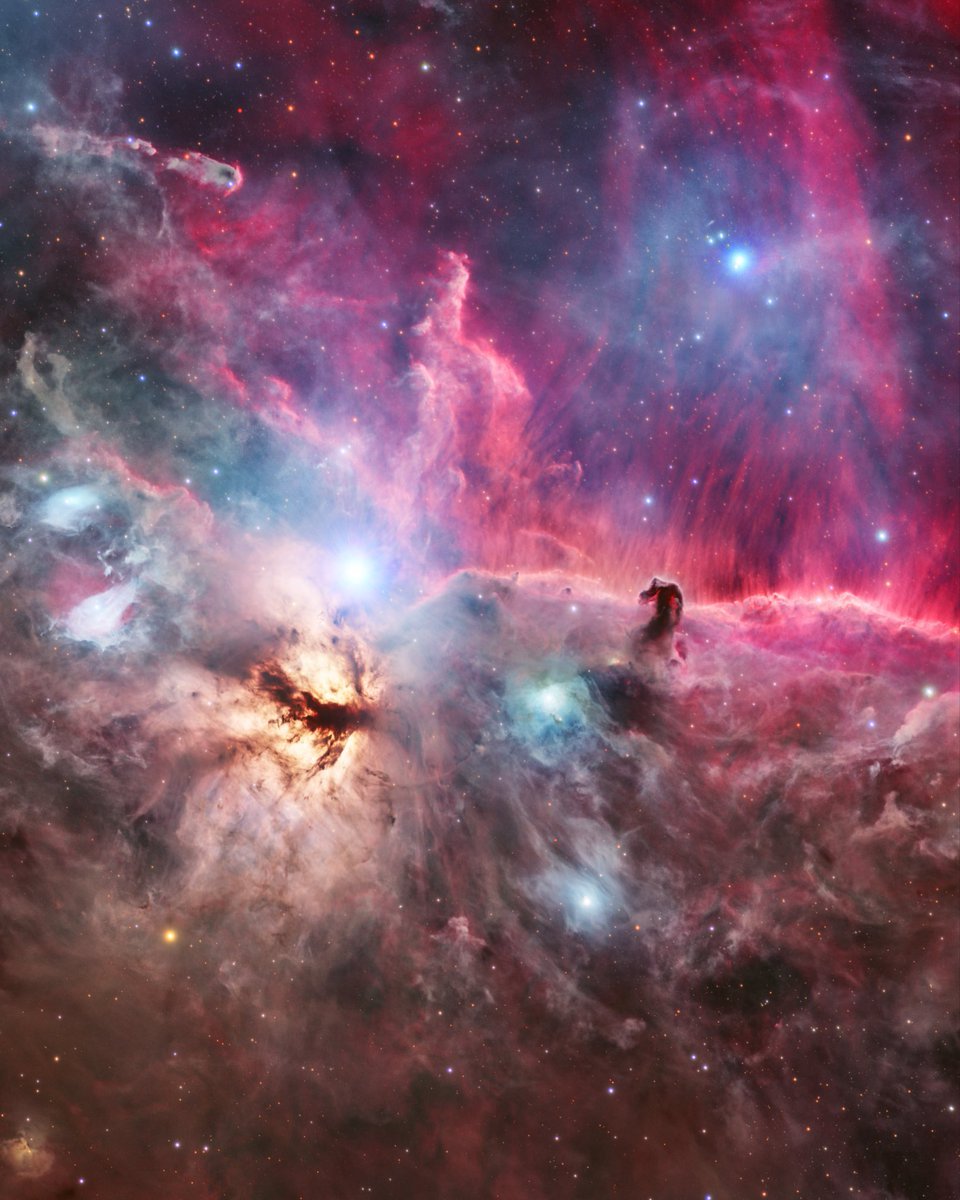
Orion Nebula as captured by the Hubble Telescope, showcasing newborn stars HOPS 150 and HOPS 153 amidst gas jets and dusty discs. Located just 1,300 light-years away, this nebula is visible to the naked eye beneath the three stars of Orion’s Belt...
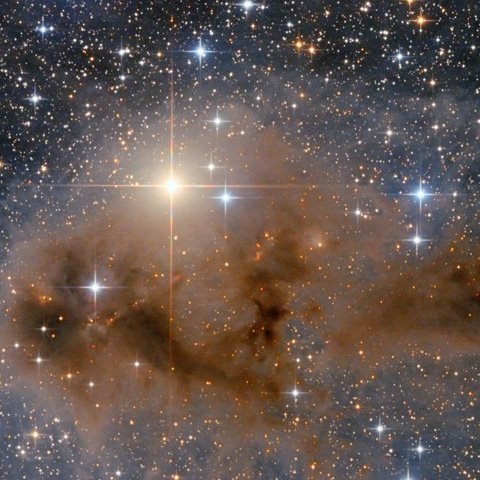
Another look at the Rotten Fish Nebula (LDN 1251) a complex star-bearing molecular cloud about 1,000 light years from Earth in Cepheus the King. Residing in a gorgeous starfield, this dense cloud of gas and dust is located quite close to our Solar System. 📷 ESO #LDN1251
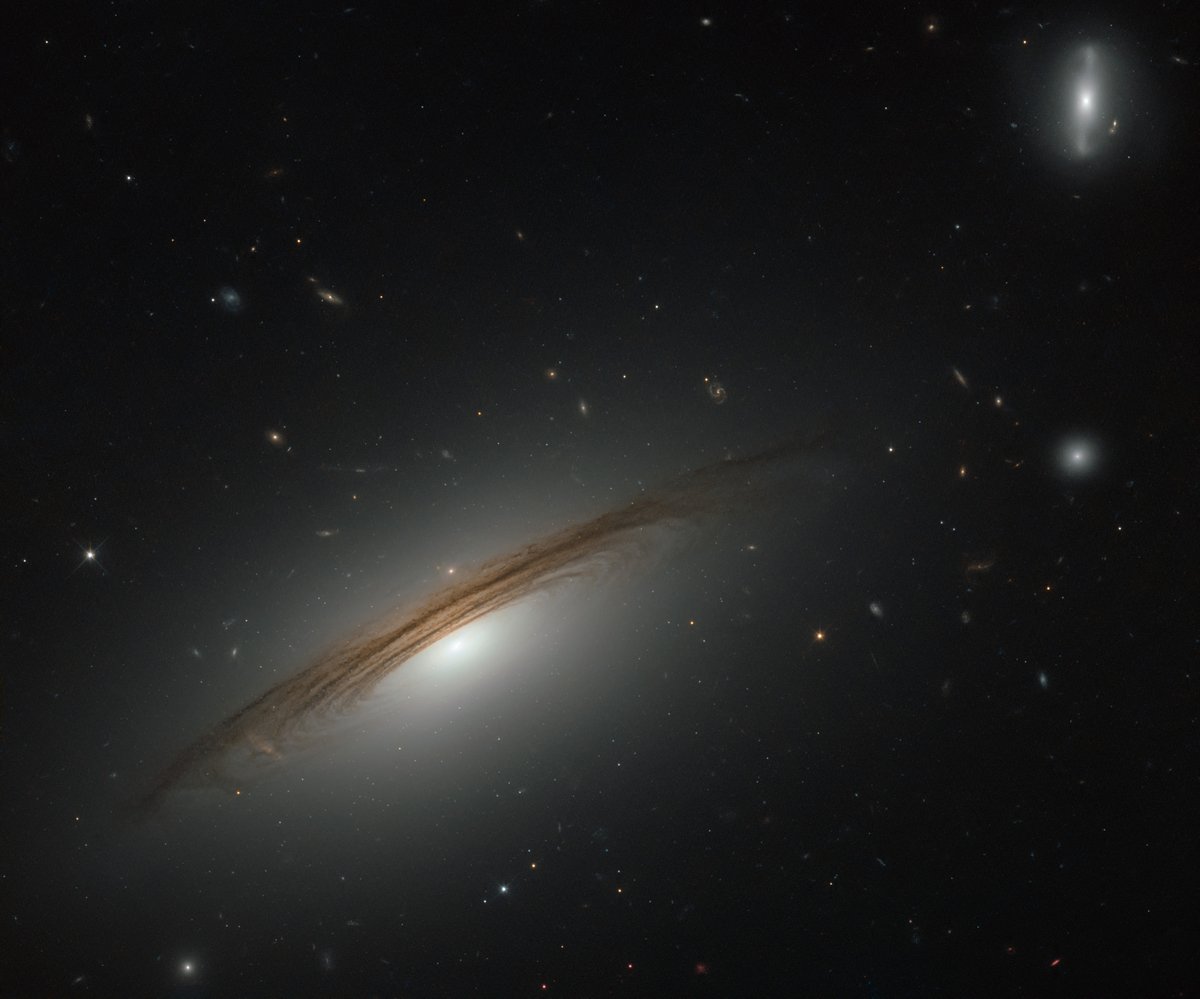
Behold UGC 12591, a giant S0/Sa galaxy 400 million light-years distant in the Pisces–Perseus Supercluster. Holding hundreds of billions of suns (~4x the Milky Way), it whirls at 1.8 million km/h!
(Credit: ESA/Hubble & NASA)
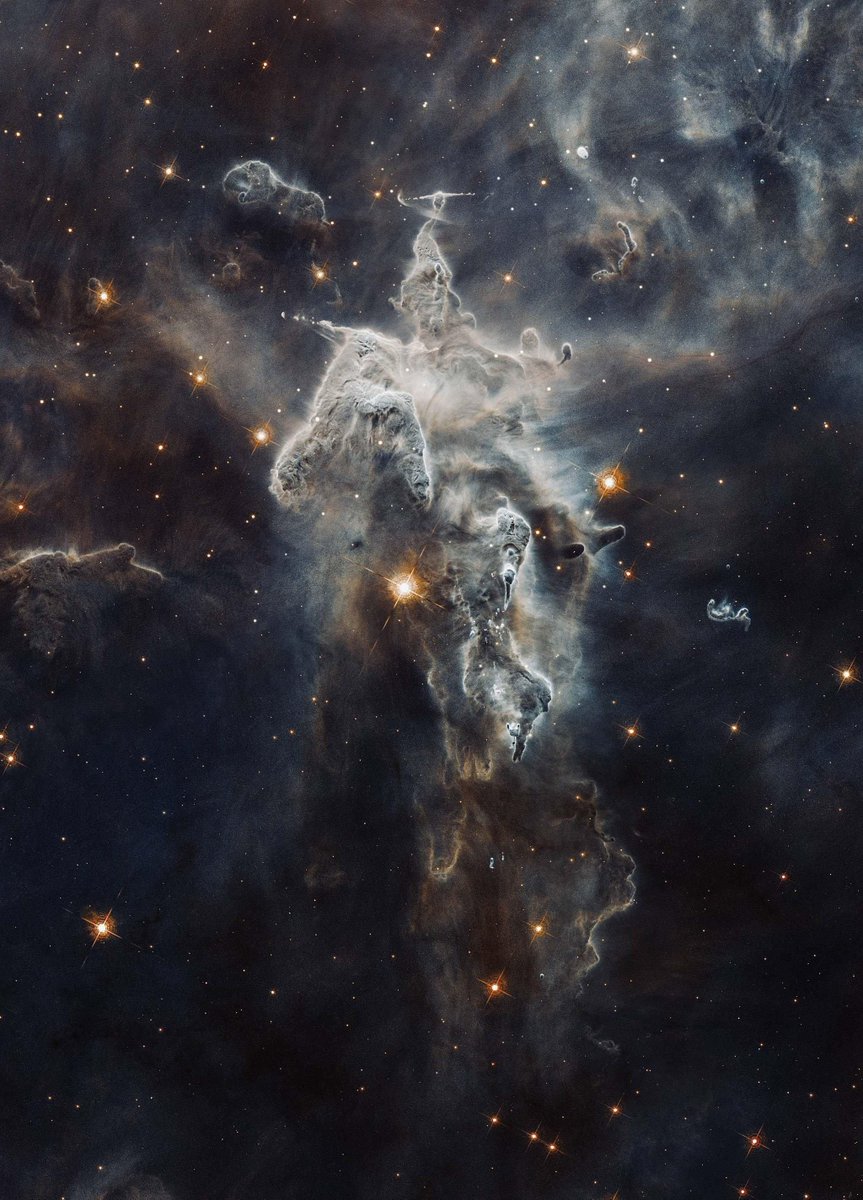
This is one of the best space images ever.
You are staring at the Carina Nebula.
This entire structure is three light-years tall.
7,500 light-years away from us.
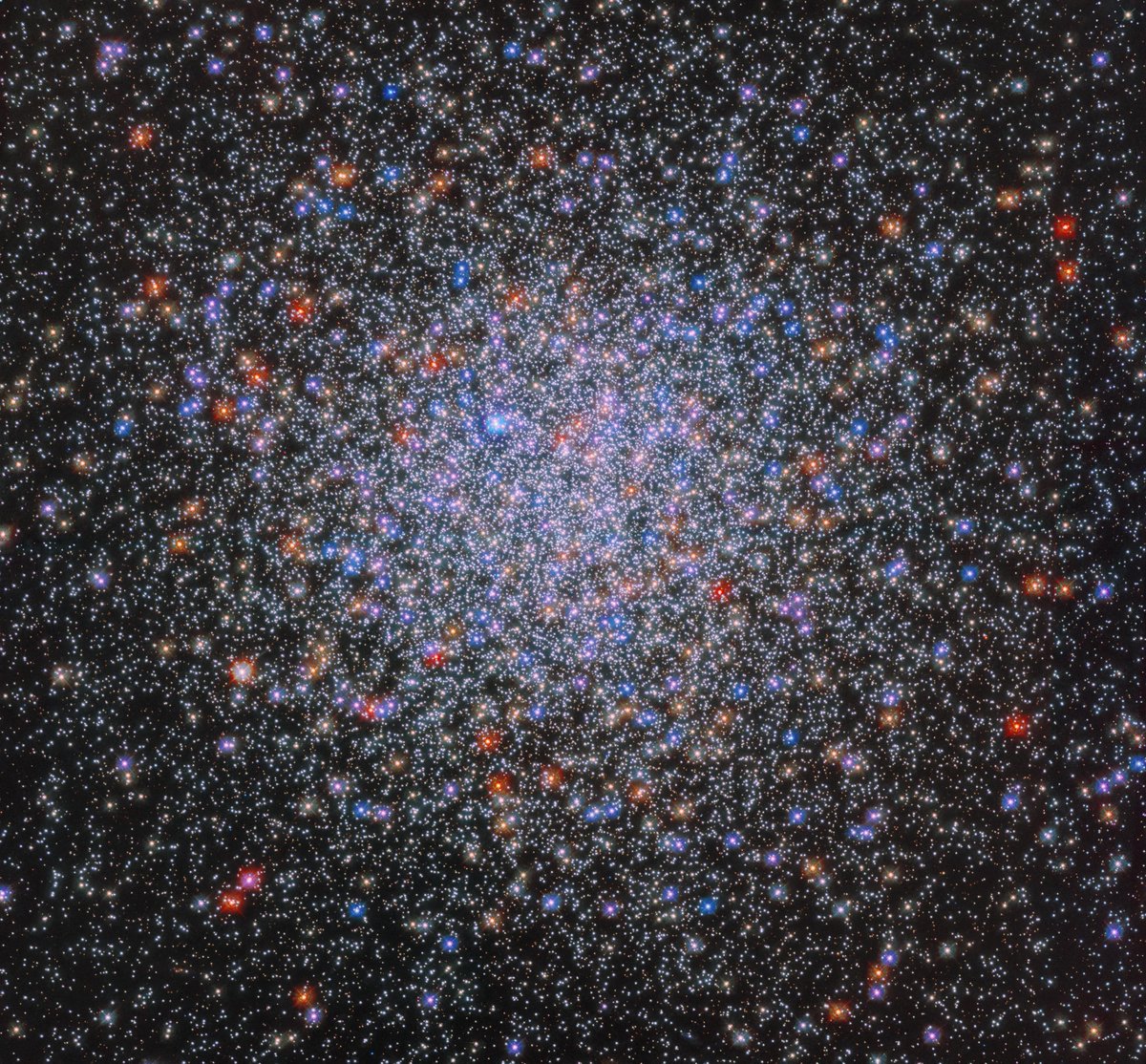
We'd rate Messier 5 five stars.
Though it certainly contains a lot more of them: over 100,000!
This new image showcases the star cluster in ultraviolet light, a capability unique to Hubble: go.nasa.gov/41nxi0Z
Marine Le Pen branded “Islamophobic” for her plan to combat Islamic terrorism: shut down mosques and deport jihad-preaching Imams.
Do you back her anti-Islam policies?
A. Yes
B. No
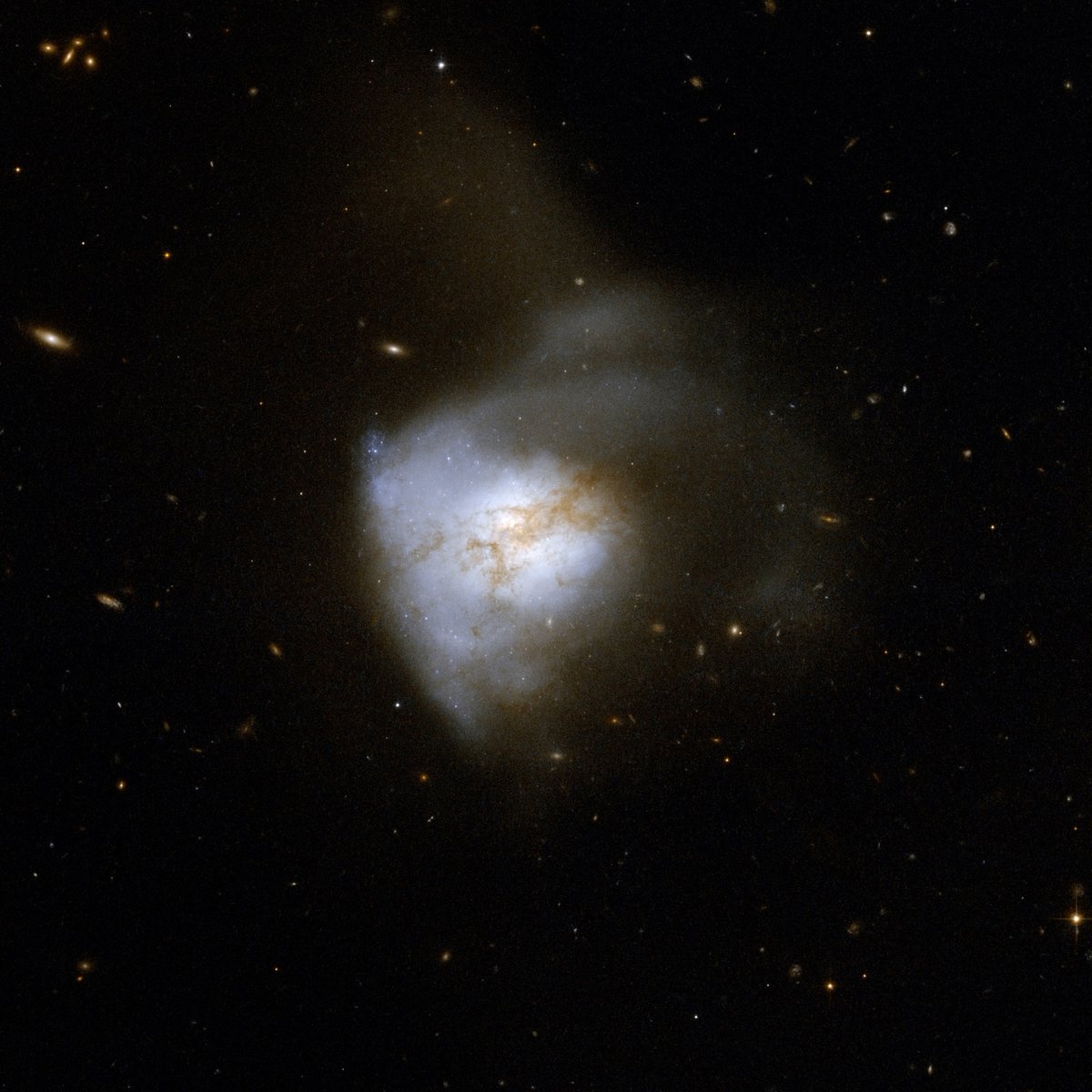
Fascinating: Arp 220 is the closest Ultraluminous Infrared Galaxy (ULIRG) to Earth! This galaxy is the product of a collision and merging process between two galaxies.
(Credit: NASA, ESA, the Hubble Heritage (STScI/AURA)-ESA/Hubble Collaboration, and A. Evans)
A remarkable view of N159, one of the largest star-forming cloud complexes in the LMC, a dwarf galaxy that orbits the Milky Way.
Only a fraction of the region is shown here, as the full N159 complex extends over 150 light-years.
(Credit: ESA/Hubble & NASA, R. Indebetouw)
If you could be genuinely happy but completely unknown, unrecognized, and ordinary in the eyes of the world — no fame, no admiration, no proof to others that you “made it” — would that quiet happiness be enough for you, or would part of you still crave to be seen and validated?