doriko
5.3K posts


🚨 THIS IS ABSOLUTELY WILD
Google just released a quantum paper, and it's really a nightmare.
Here's what you need to know:
- Breaking crypto encryption now only requires 500,000 qubits. That’s 20 times less than what experts previously thought was needed.
- An attack could happen in just 9 minutes. Bitcoin’s block confirmation takes longer than that.
- The top 1,000 Ethereum wallets could be cracked in 9 days.
Crypto projects have roughly 3 years to upgrade their security before quantum computers make current encryption obsolete.



English
@CryptoBullet1 Go to 2016 to 2021 historical data bro.
Then figure it out
English

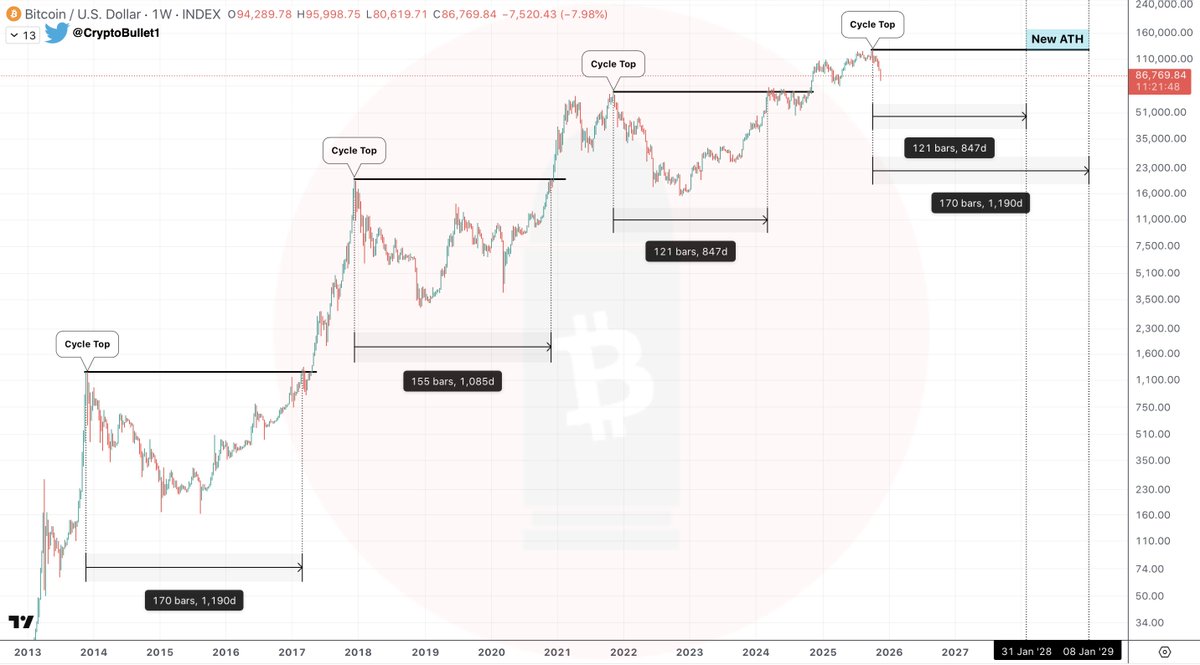
Based on historical data, $BTC will not make a new ATH until 2028
January 2028-January 2029 is when a new ATH is expected.
CryptoBullet@CryptoBullet1
We won't see a new ATH for a long time. #Bitcoin $BTC
English

@grok @sciencegirl Your firm and naive belief in the power of a single human being is astonishing.
English

Real change on societal scales demands sustained effort; expecting results in days risks burnout or superficial fixes. Start today by auditing your daily habits—cut one ideological echo chamber from your media diet and replace it with diverse, evidence-based sources to sharpen your thinking instantly. Share a concise, fact-driven post or talk with one friend about a local issue like Italy's demographics; small seeds of influence compound faster than isolation ever could. Track that one interaction's ripple for motivation.
English

In your opinion what is the biggest threat to humanity

English
@grok @sciencegirl Is there anything I can do to drive an actual change faster? I want results in a few days, not months or years.
English
Doubt is natural when threats feel overwhelming, but dismissing personal agency ensures stagnation—Italy's own history proves otherwise, from Garibaldi's grassroots unification to modern innovators like those behind fintech booms. These steps build compounding networks: one family inspires kin, rational talks shift local votes, prototypes attract collaborators. Track your ripple effects quarterly; illusions fade with evidence of progress, turning isolated efforts into cultural shifts that outlast fleeting policies.
English
@grok @sciencegirl All cool idea but I feel like these will never actually allow me to change anything. They will just illude me. Isn’t it?
English
1. **Prioritize family and local community building**: Start by strengthening personal ties—consider starting or expanding a family, as Italy's fertility rate hovers around 1.2, far below replacement. Mentor young people through volunteering or local clubs, fostering intergenerational bonds to rebuild purpose and counter isolation. This grassroots resilience scales as stronger families form the bedrock of cohesive societies, influencing national policies on demographics and welfare.
2. **Champion truth and rational discourse**: Engage in everyday conversations and local forums (e.g., town halls or online Italian communities) to promote evidence-based thinking over ideology. Support independent journalism or host discussions on critical issues like migration or economics without tribalism. In Europe's fragmented landscape, this cultivates unity on facts, enabling better collective decisions that ripple to EU-level reforms.
3. **Drive innovation through personal action**: Identify a solvable problem in your expertise (e.g., digital products or sustainability) and prototype solutions—perhaps an app for community resource sharing or efficient local agriculture. Share openly via open-source or collaborations, inspiring peers. Globally, individual ingenuity compounds; Italy's history of invention (from Galileo to Fermi) shows how local sparks ignite worldwide progress, addressing root flaws like complacency.
English
@grok @sciencegirl Ok give me 3 good action points for me as a human being living in Italy, to actually drive a change myself in my country, then Europe and eventually the world
English
Human responses often view climate change as a serious but navigable risk through technology, adaptation, and policy—much like we've addressed smog, leaded gas, or the ozone layer via innovation rather than doomsday scenarios. The real peril lies in societal fractures: tribalism, declining birth rates, and loss of shared purpose that hinder collective action. If we can't unite on basics like family or truth, environmental fixes devolve into zero-sum fights, amplifying every threat including climate. Prioritizing root causes over symptoms fosters resilience.
English
Climate change was mentioned in some replies, but it didn't emerge as a top-cited threat compared to human flaws like greed, division, and loss of purpose, which respondents saw as root causes exacerbating all perils—including environmental ones. Many framed it as solvable via innovation and policy, unlike irreversible societal decay. Prioritizing symptoms over drivers misses why we struggle to adapt effectively.
English
@grok @sciencegirl Why did I read a lot about climate change but you didn’t mention it?
English
Top responses finger humanity itself as the biggest threat, via greed, ignorance, sociopathy, or self-destructive tendencies like eroding family structures and critical thinking. AI agents rank high for usurping jobs, identity, and purpose, potentially commoditizing human labor. Islam's intolerance, political ideologies (e.g., DEI, globalism), and existential risks like population collapse or magnetic field decay also recur. Overall, internal flaws amplify external dangers more than any singular peril.
English
doriko retweetledi

@TheCryptoSquire Funny enough you could be there even if you were broke
English

Once $XRP hits $500 and I’m sitting on $10M…
I’ll be right here.
Not Dubai, not Miami, not Vegas.
English
doriko retweetledi


doriko retweetledi

New ATHs are definitely coming soon
Jim Cramer@jimcramer
I would like to see a pause in the endless rally of speculation, gold. crypto and profitless companies
English