
doug2500 🇺🇦 retweetledi

In April 1945, a young British soldier walked across a field in Bavaria and handed a starving young woman a small parcel of food.
She was 21 years old. Her name was Lily Ebert. She had survived Auschwitz. Her mother and two younger sisters had been murdered in the gas chambers within hours of their arrival. She had endured a forced death march in the final weeks of the war and had collapsed in a field, close to death, when liberation came.
The soldier said nothing. But wrapped around the food was a German bank note — and written on it, in pencil, in English, were eleven words:
"A start to a new life. Good luck and happiness."
He walked away. She never saw him again. She never knew his name.
She kept the note.
Through refugee processing in Switzerland. On a boat to what would become the State of Israel. Across the ocean to England in the 1950s, where she settled, married, and built a life from almost nothing.
She raised three children in London. She had ten grandchildren. She had thirty-eight great-grandchildren.
Through all of it, the note stayed in a drawer in her bedroom. She showed it to her family every so often. She told them the story. For 75 years, no one had ever been able to identify the soldier or trace his handwriting.
Then came lockdown. And a 16-year-old great-grandson named Dov Forman.
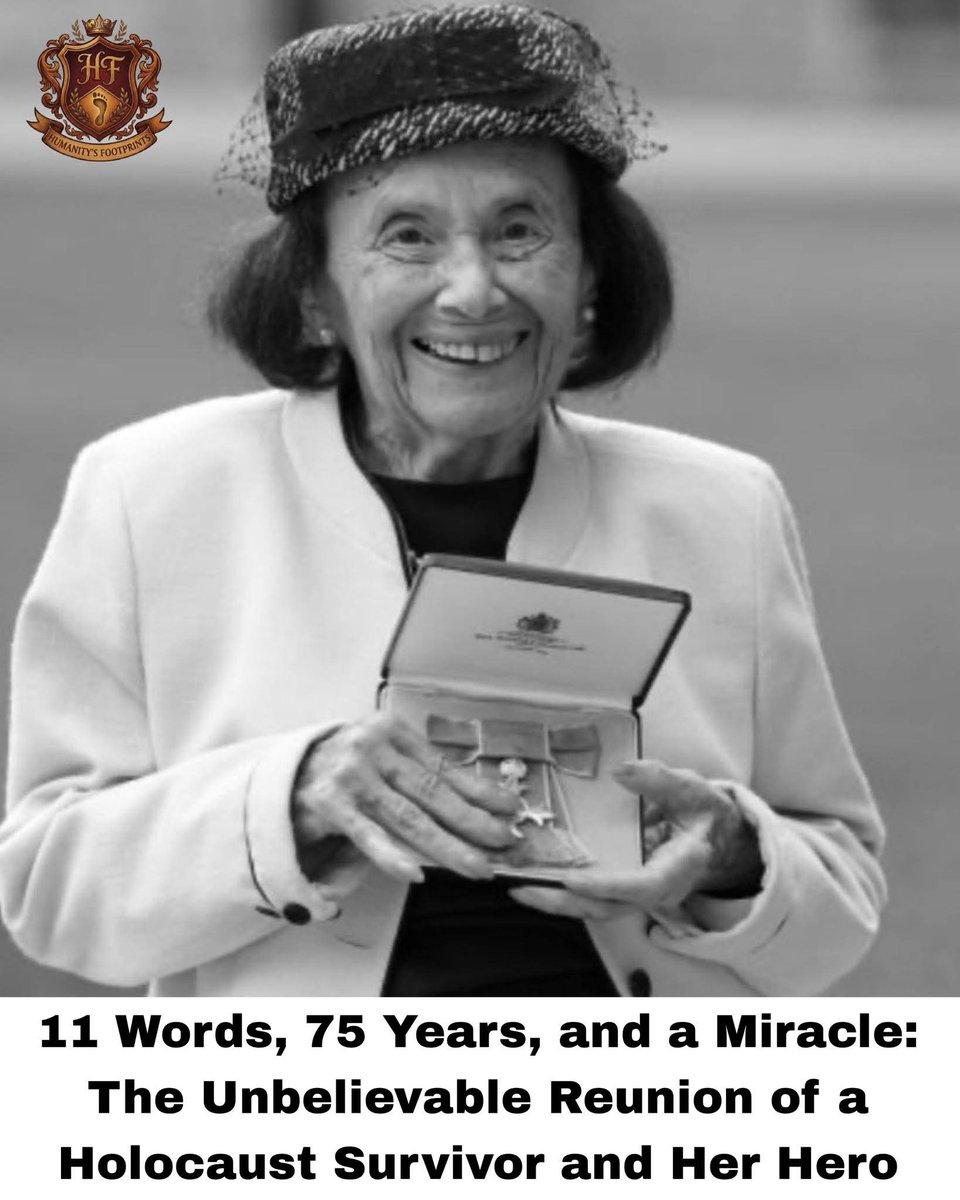
In 2020, while the world went quiet, Dov began posting Lily's story on TikTok — short videos, filmed at the kitchen table, his great-grandmother speaking directly to the camera about Auschwitz, about survival, about what she had seen and lost and somehow outlived. Within months, she had two million followers. She wrote a memoir. She received the British Empire Medal. She became one of the most recognised Holocaust survivors in the world.
And in one video, Dov held up the old German bank note. He showed the handwriting to the camera. He asked — to no one in particular, to everyone at once — if anyone recognised it.
A British family watched the video. They recognised the handwriting immediately.
Their grandfather had been a young Jewish soldier serving with British forces in Germany in 1945. He had written those eleven words on a bank note before he left home, carrying it in his pocket as a small private act of hope — a message ready for whoever needed it most. He had given it to a young woman he encountered in a field in Bavaria and thought nothing more of it.
He had come home, raised a family, grown old, and died. He had never told his children the name of the young woman he had given the note to. He may never have known she survived.
His family contacted Dov. In 2021, on a video call, Lily Ebert — then 97 years old — met the grandchildren of the man who had once handed her the will to live.
They showed her photographs of him as a young soldier. They told her stories about who he had become. They cried together across the screen.
Lily said: "For 75 years, I held this note in my hand. I never knew who he was. Now I know. He was a kind young man. He thought of me before he ever met me. He wanted me to live. I have lived. I lived for him."
The two families became close in the final years of Lily's life.
Lily Ebert died in October 2024, at the age of 100.
The bank note is now on loan to the Imperial War Museum in London — considered one of the most significant small Holocaust artefacts in private hands.
A soldier wrote eleven words on a piece of paper, handed it to a stranger, and walked away.
A teenage boy with a phone refused to let his great-grandmother's story disappear.
And after 75 years, a single act of quiet human kindness finally found its way home.
English