

Dhaval Patel (Codebasics)
30 posts
Dhaval Patel (Codebasics)
@dpcodebasics
Building @codebasics & @AtliQ Teaching AI & Technology Exploring technology, startups & meaning in life
Katılım Şubat 2026
23 Takip Edilen51 Takipçiler

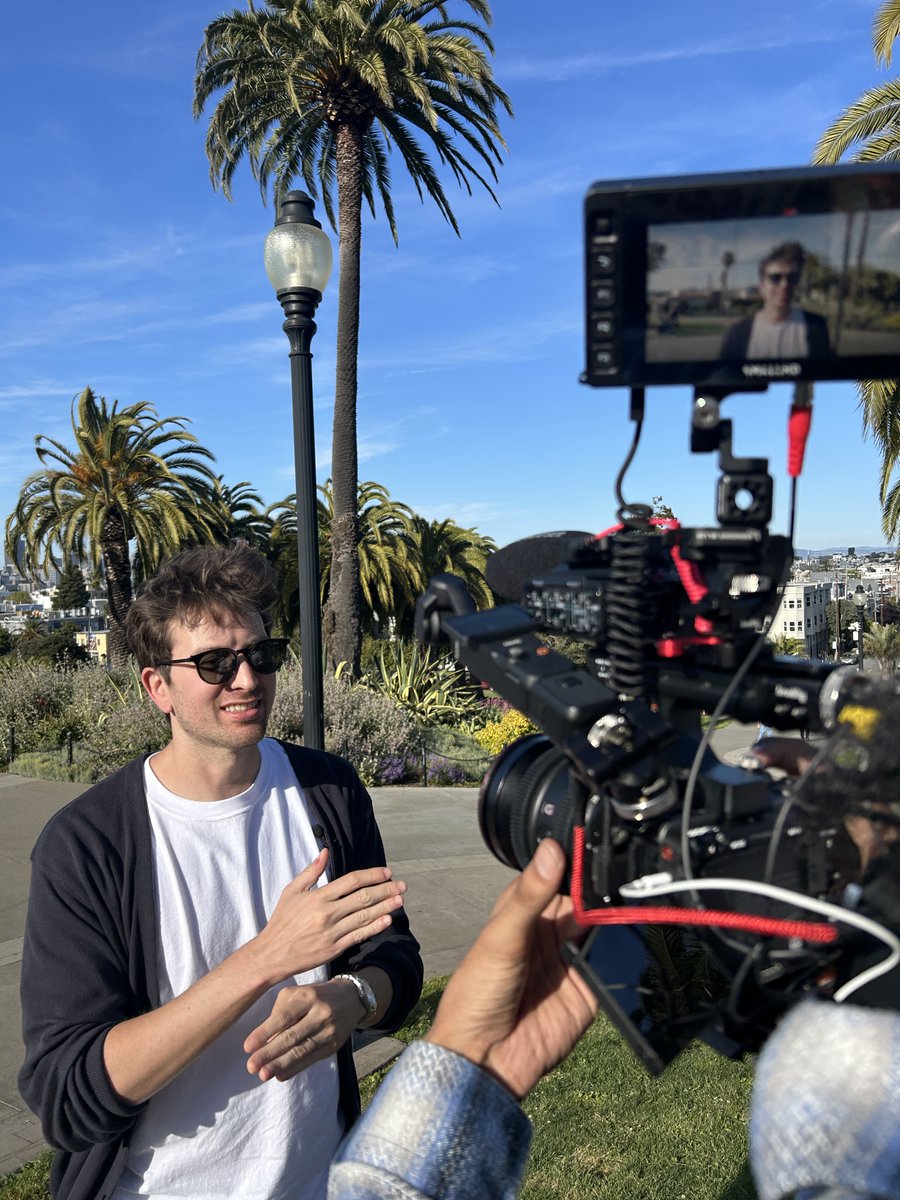
I just got back from SF and I FEEL INSPIRED.
I spent 5 days with frontier AI model teams, AI startup founders, and 3 billionaires.
My takeaways:
1. I had lunch with 3 billionaires. All of them are buying SaaS companies and rebuilding them agent-first. They were deeply inspired by Bending Spoons and Ryan Cohen's eBay deal. Buy the company, cut the headcount, rebuild the tech, add agents, add features, make more valuable experience, raise prices.
2. The frontier model companies are hungry for usage data from the field. They can see API calls and token counts. They can't see the actual workflows. If you're deep in a niche using these models in ways the model companies haven't seen, that understanding is incredibly valuable. Usage intelligence is the new alpha.
3. Consumer AI is massively underbuilt. Every billboard in SF is either B2B inference infrastructure or vertical agent companies. The entire city is optimized for enterprise. Meanwhile you have companies like Cal AI doing $50M ARR in 18 months as a consumer app. I met with a cool few teams doing consumer AI (@paulscherer / @ekuyda)
4. MCP came up in literally every conversation. The companies exposing their product as MCP endpoints are getting pulled into deals they never pitched for. The ones that aren't are becoming invisible to agents. This is the new SEO. If agents can't find you, you don't exist. Building products for agents is the new zeitgeist in general.
5. Not uncommon for hot seed rounds to be $25-50 million valuations. I saw a Series A at $450 million
6. If I had a dollar every time someone mentioned "forward-deployed engineer" this trip I could have funded a seed round. It's the hottest role in SF right now. The person who sits between the agent and the customer, making sure everything actually works.
7. The mood around open source shifted. A year ago it felt like open source was chasing the frontier models. Now founders are telling me Gemma and DeepSeek are good enough for 80% of what they need at a fraction of the cost. The "which model do you use" conversation is being replaced by "which model for which task." Model loyalty kinda feels dead.
8. Voice agents came up more than I expected. Multiple founders told me voice is the interface for the next billion users. The billion people who will never type a prompt will absolutely talk to one.
9. The Obsidian community in SF is weirdly intense. Multiple founders showed me their vaults unprompted. Like showing someone your home gym. It's a flex now. The quality of your knowledge base (second brain?) is becoming a status symbol among builders.
10. Maybe it was just the people I met but the age of the founders is shifting. I met more founders over 40 this trip than any trip before and more founders under age 21 than ever before. Founders getting older and younger at the same time.
11. I spoke to a lot of fast-growing startups, VCs and frontier models who are hiring content creators right now.
12. The restaurant scene in SF is actually better than it's been in years. Founders are going out more. Alcohol is out, not surprisingly.
13. SF doesn't feel like the only place anymore. We all have access to the same frontier models. We all read the same X feed. A founder in NYC or Lagos is calling the same APIs as a founder in SoMa. So in the past it felt like SF was always lightyears ahead, doesn't feel that way anymore. It's okay not to live in SF and have BIG DREAMS.
14. The coworking spaces in SF are half empty but the coffee shops are packed. People want to be around people. I had a few startup ideas here....
15. Walking around the Mission I noticed something: the street-level businesses, the taquerias, the barbershops, the laundromats, none of them use any AI at all.
16. I heard the phrase "agent debt" for the first time. Like technical debt but for agents. When you hack together an agent workflow fast and never clean it up, the system prompts conflict, the memory gets polluted, the tools overlap. 6 months later the agent is doing weird things and nobody knows why lol.
17. Met a few people who carry two phones now. One for personal. One that's basically an agent terminal running Telegram or iMessage connections to their agent fleet.
It's always amazing to get that dose of inspiration in SF. I FEEL INSPIRED.
But I'm so happy to be back home, locked in and building.
We're 12-18 months into a shift that will take 15 years to play out. The urgency in every conversation was real.
What an incredible time to be building.
English

Did you know Korea sells “one-a-day” banana packs?
Instead of every banana ripening at once, each one is at a different stage.
One is ready today.
The next one is ready tomorrow.
The last one is still spiritually in college, “experimenting.”
Simple. Genius. Solves the entire banana problem.
What do you think?
Would you prefer your bananas this way?

English
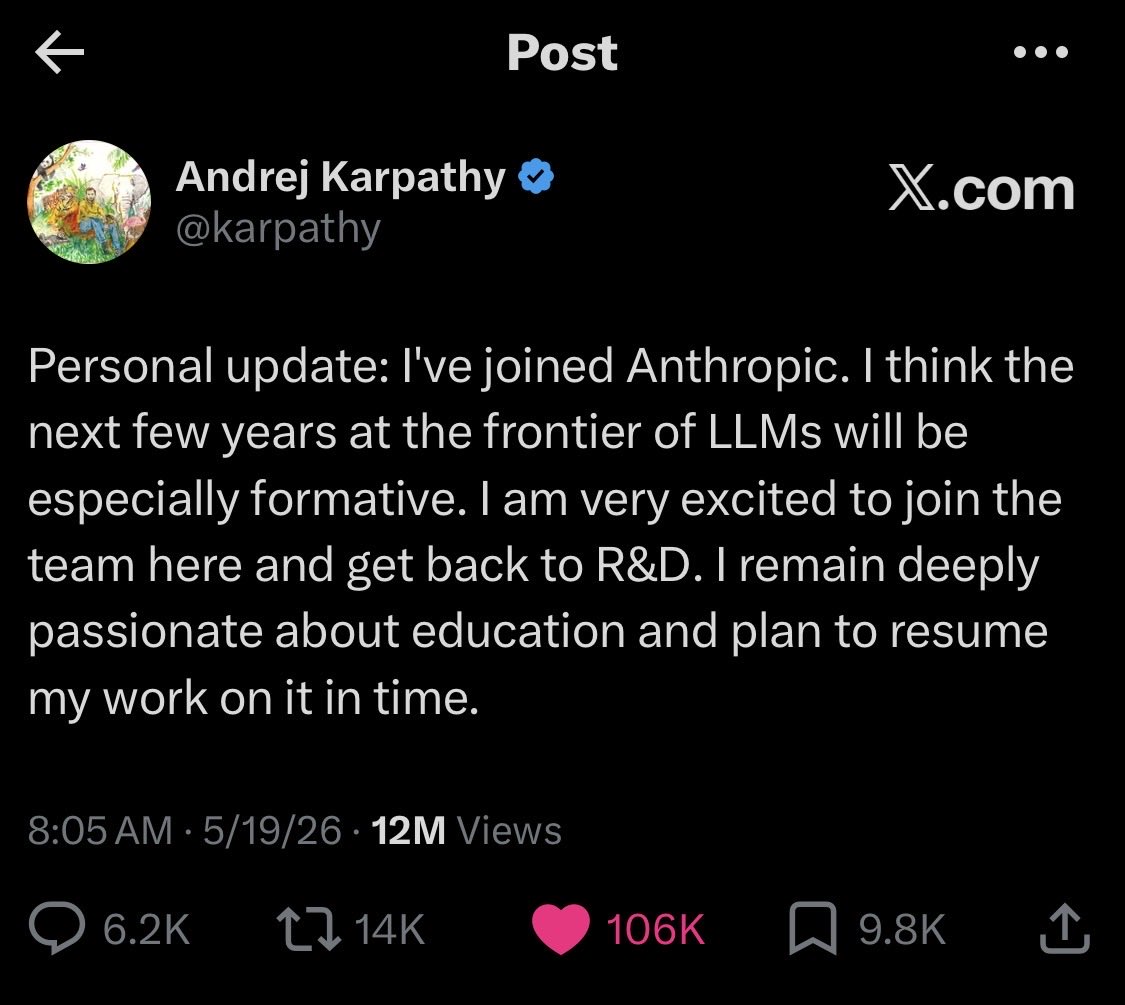
Me waiting for Claude Code to come back up 👀
GIF
English
This reminds me of ghost movies I used to watch as a kid where someone invisible would be driving a car. Unbelievable that it has become a reality now.
Elon Musk@elonmusk
Tesla driving itself around LA
English
Startups building managed agents need emergency meeting now.
Claude@claudeai
Introducing Claude Managed Agents: everything you need to build and deploy agents at scale. It pairs an agent harness tuned for performance with production infrastructure, so you can go from prototype to launch in days. Now in public beta on the Claude Platform.
English
Coding is dead.
Google search is dead.
Data analysis is dead.
Video editing is dead.
SORA is dead.
RAG is dead.
What else died this week?
English
@JonhernandezIA How about we find the cure for autoimmune conditions using AGI? Thousands (including myself) will benefit from this. Super excited about the future 🥳
English

📁 Demis Hassabis says AGI won’t improve science.
It will unlock it.
One breakthrough…and entire industries appear.
The limit was never ideas.
It was unlocking them.
English
Do not give your past the power to define your future.
English

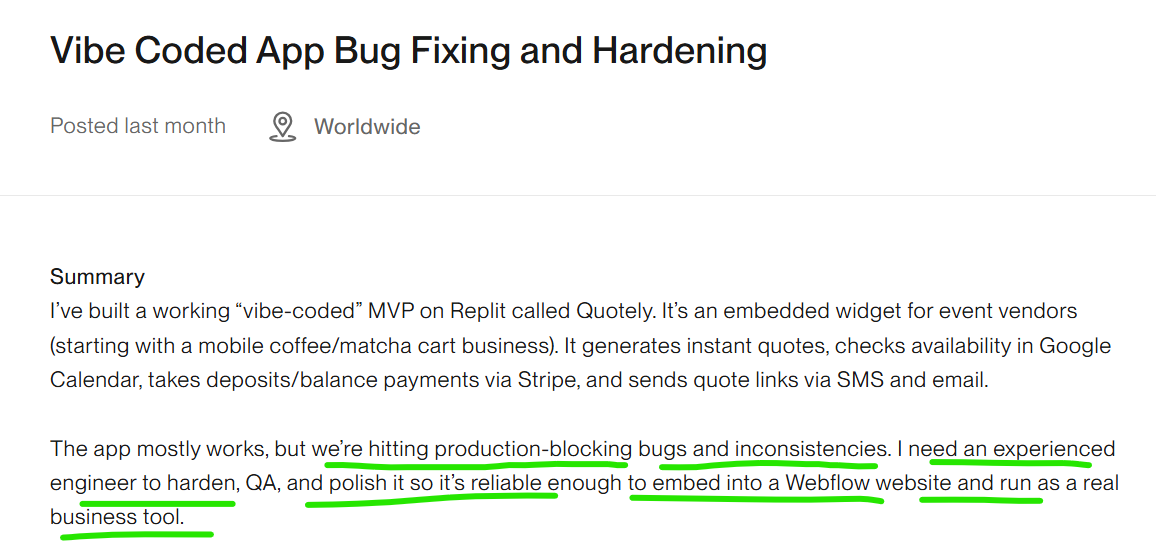
Freelancers must be charging a premium for such jobs. I am seeing more Upwork jobs where someone vibe-codes an app, then gets stuck — deployment issues, scaling problems, nasty bugs.
Then they hire an experienced engineer to make the code sane again 🤔
English
"Do not use AI for coding." We hear this from ~50% of our clients at AtliQ. They don’t want product ideas, algorithms, or sensitive data going to external model providers. As of now, manual coding still has a real use case — when privacy matters more than speed.

English

Software horror: litellm PyPI supply chain attack.
Simple `pip install litellm` was enough to exfiltrate SSH keys, AWS/GCP/Azure creds, Kubernetes configs, git credentials, env vars (all your API keys), shell history, crypto wallets, SSL private keys, CI/CD secrets, database passwords.
LiteLLM itself has 97 million downloads per month which is already terrible, but much worse, the contagion spreads to any project that depends on litellm. For example, if you did `pip install dspy` (which depended on litellm>=1.64.0), you'd also be pwnd. Same for any other large project that depended on litellm.
Afaict the poisoned version was up for only less than ~1 hour. The attack had a bug which led to its discovery - Callum McMahon was using an MCP plugin inside Cursor that pulled in litellm as a transitive dependency. When litellm 1.82.8 installed, their machine ran out of RAM and crashed. So if the attacker didn't vibe code this attack it could have been undetected for many days or weeks.
Supply chain attacks like this are basically the scariest thing imaginable in modern software. Every time you install any depedency you could be pulling in a poisoned package anywhere deep inside its entire depedency tree. This is especially risky with large projects that might have lots and lots of dependencies. The credentials that do get stolen in each attack can then be used to take over more accounts and compromise more packages.
Classical software engineering would have you believe that dependencies are good (we're building pyramids from bricks), but imo this has to be re-evaluated, and it's why I've been so growingly averse to them, preferring to use LLMs to "yoink" functionality when it's simple enough and possible.
Daniel Hnyk@hnykda
LiteLLM HAS BEEN COMPROMISED, DO NOT UPDATE. We just discovered that LiteLLM pypi release 1.82.8. It has been compromised, it contains litellm_init.pth with base64 encoded instructions to send all the credentials it can find to remote server + self-replicate. link below
English
I am on WFF right now.
Work from farm 😊
Yesterday morning, I went to a farm, nice breeze was flowing, so I decided to do my work (posting social media content, attending meetings), and it was the best experience.

English
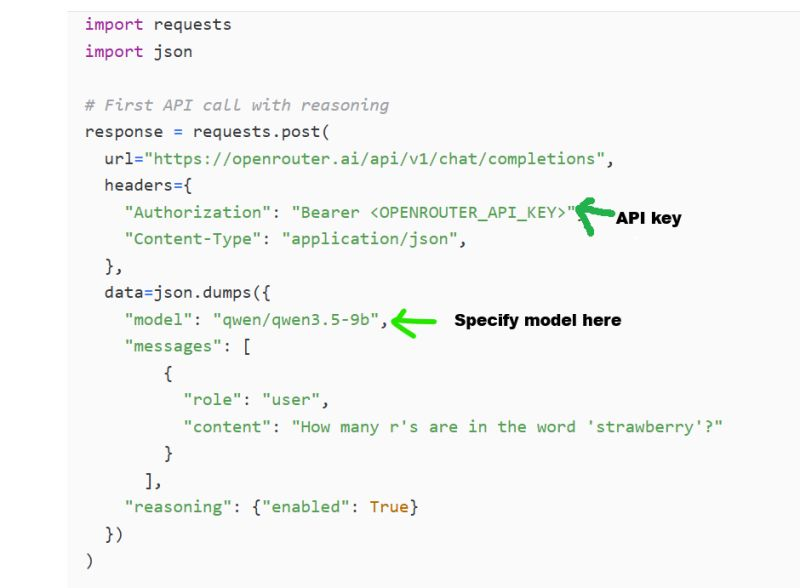
OpenRouter is like a Zomato for LLMs.
Imagine you have your 3 favourite restaurants in town and you order food via 3 different mobile apps (one for each restaurant). That would be too much work, right? Now, with Zomato, you can browse hundreds of restaurants and order food using a single auth and payment method.
In the same way, OpenRouter provides access to GPT, Claude, Gemini, and many other models. While building an app, you only need to specify a single OpenRouter API key (instead of one key for each model you use). For anyone building AI projects, the great news is that it comes with tons of free models. Students who are learning AI will find this very useful.
What your take on openrouter?
English
The remarkable benefits of 5 min per day of meditation. Which is simply, sitting quietly and observing your own thoughts, stress, etc. not clearing the mind etc.
As explained by @RichieJDavidson on the Huberman Lab podcast out now.
English