Dr Thomas Keeble

1.7K posts

Dr Thomas Keeble banner
Dr Thomas Keeble

Dr Thomas Keeble

@DrKeeble

Cardiologist, Essex Cardiothoracic centre, Professor of Cardiology ARU School of medicine. Passionate about improving cardiac arrest care, & coronary physiology

London Katılım Temmuz 2019
262 Takip Edilen1.8K Takipçiler
Dr Thomas Keeble retweetledi
Circulation
Circulation@CircAHA·
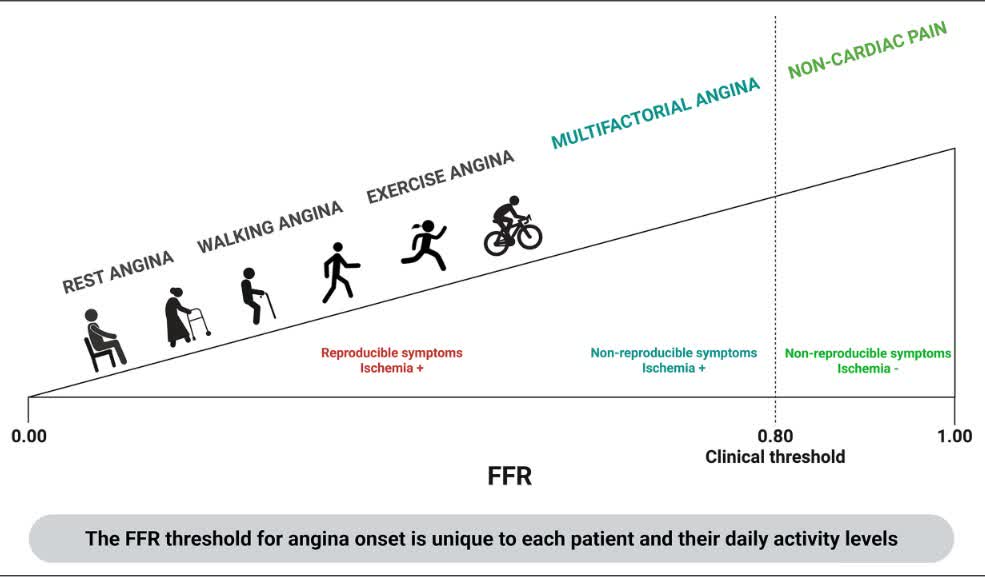
ORBITA-FIRE suggests universal Ischemia-based thresholds for FFR and non-hyperemic pressure ratio should be interpreted with caution: Integrating symptom-linked physiology may refine PCI selection and improve symptomatic response.ahajrnls.org/3R6AzQD
Circulation tweet media
English

1
18
45
22.8K
Dr Thomas Keeble
Dr Thomas Keeble@DrKeeble·
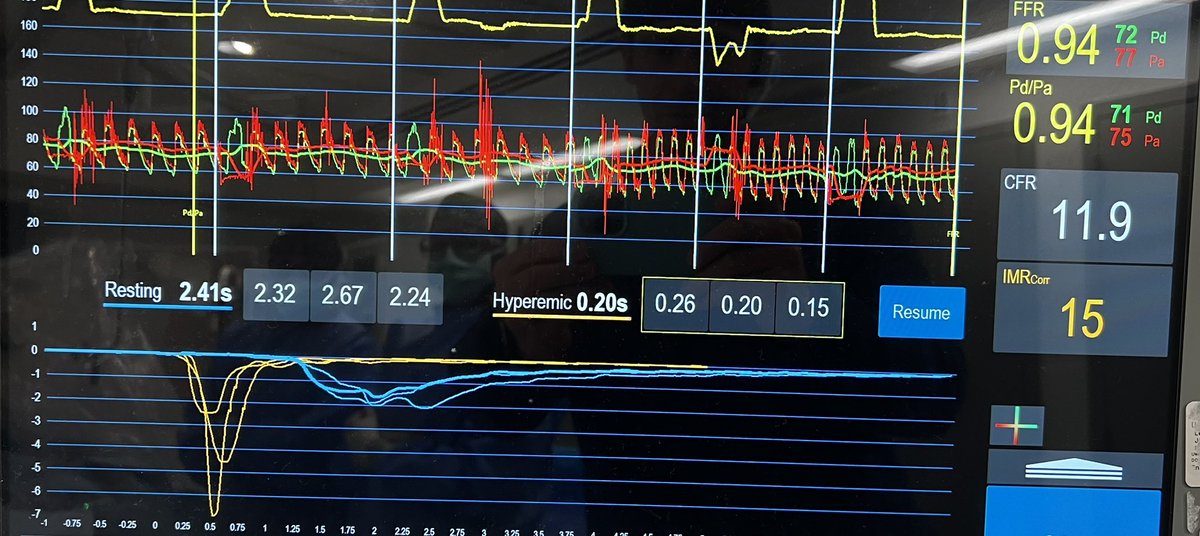
@LAzzaliniMD Nice work! clearly a slow resting transit time, but do you really believe a CFR of 12?
English
0
0
0
90
Lorenzo Azzalini
Lorenzo Azzalini@LAzzaliniMD·
Coronary slow flow is not diagnostic of microvascular dysfunction in patients with angina and unobstructed coronary arteries. Coronary physiology interrogation has debunked one of the fallacies of the last decades.
Lorenzo Azzalini tweet mediaLorenzo Azzalini tweet mediaLorenzo Azzalini tweet media
English
6
33
109
11.5K
Dr Thomas Keeble retweetledi
BCIS-4 Trial
BCIS-4 Trial@BCIS4Trial·
Breaking 🚨: Essex Cardiothoracic Centre have randomised their first participant - bringing the study total to 96! 🎉 Great teamwork 🥳🥳 #BCIS4 #ClinicalTrials @MSEHospitals
English
0
1
3
149
Dr Thomas Keeble
Dr Thomas Keeble@DrKeeble·
@Hragy No conflict of interest, but you need iortus a digital virtual hospital
English
0
0
1
187
Hany Ragy
Hany Ragy@Hragy·
I have a profound heart failure patient that I am treating at home based on their request, in the absence of HF nurses in Egypt I phone the patient myself daily to assess weight, and symptoms, we are doing well, but I cannot cope! I wish there was a structured help system.
English
5
5
29
6.3K
Dr Thomas Keeble retweetledi
Bernard De Bruyne
Bernard De Bruyne@BernardBruyne·
TPC (The Physiology Course) for the first time at EuroPCR 🫀 Following the renowned applied coronary physiology courses at the ESC Heart House in Sophia Antipolis, TPC has become the reference in applied coronary physiology 🚀 For the first time, TPC arrives at EuroPCR.
Bernard De Bruyne tweet media
English
3
10
20
2K
Dr Thomas Keeble
Dr Thomas Keeble@DrKeeble·
@ACSCardiology @AnasNomanMD Penumbra are a massive company worth billions. They dont want to do trials as they are selling devices and proper trial data is only a risk to them.
English
0
0
0
15
Anjan Gupta
Anjan Gupta@ACSCardiology·
@AnasNomanMD Can’t agree more. Unfortunately FDA wanted a large number of patients for the Prospective trial which was not financially viable for Penumbra
English
1
0
2
102
Anas T. Noman
Anas T. Noman@AnasNomanMD·
Aspiration thrombectomy in STEMI with a heavy thrombus burden, maybe it’s time to take another look? Had a 37F with a huge RCA thrombus. Did 6 Penumbra aspiration runs and pulled out a large amount of clot. Hard to see how this would’ve resolved. Cases like this make you wonder… is it time for a TOTAL trial 2.0? @6ayyeboon @AlkashkariWail @mirvatalasnag @BinAbdulHak_A @amrmohsen213 @MarwanSaadMD @aelsab @MusaSharkawi @djc795 @MohammedQintar @mhammadah @kalazizimd @AdamGreenbaumMD @AlhijjiM @EmoryUniversity @JDDCFratti @acamajmd @crfheart @djc795 @mmamas1973 @TCT_ME_ @crfheart @BakhshiHooman @Almanfi_Cardio @Dr_ibrahimHarbi
Anas T. Noman tweet media
English
8
16
76
18.6K
Dr Thomas Keeble
Dr Thomas Keeble@DrKeeble·
@stefano_garzon @JACCJournals Superb overview. Thank you. IMR is the most validated tool we currently have, until continuous MRR is validated in as many patients. It is all coming and at least we have a more reproducible "gold standard" to act as a comparator.
English
0
0
1
60
Stefano Garzon, MD
Stefano Garzon, MD@stefano_garzon·
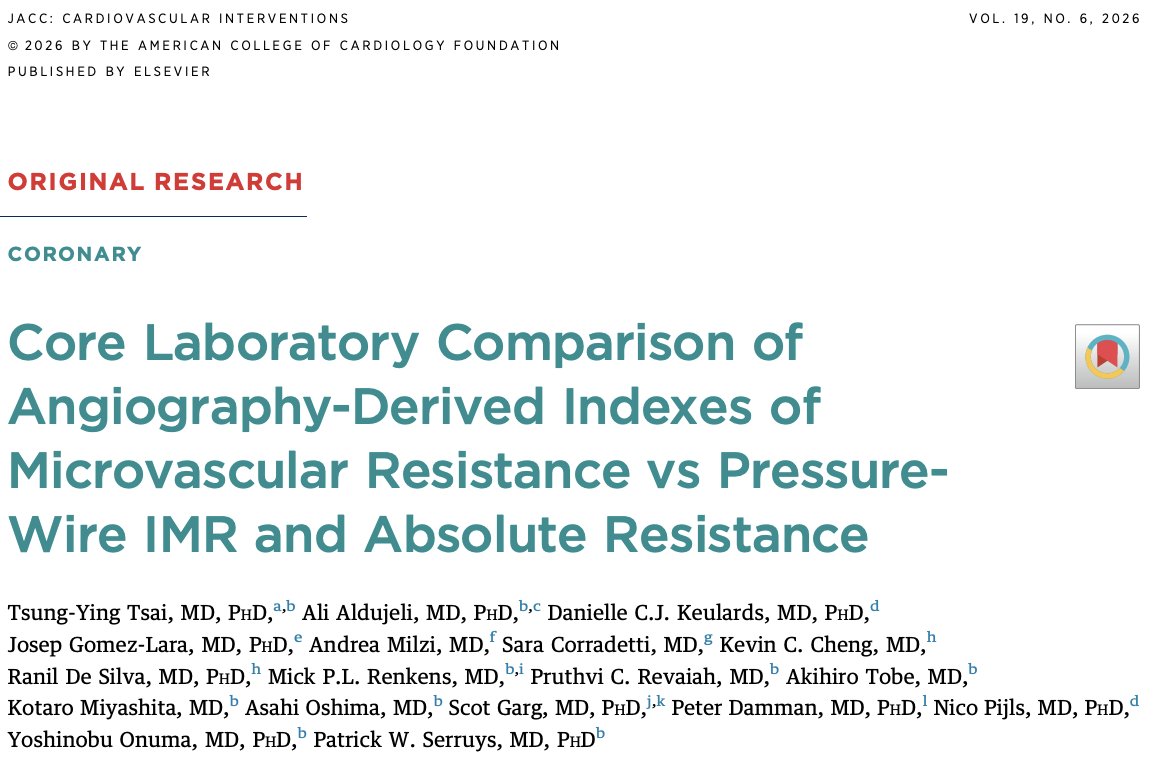
Tsai et al. just published a very elegant core lab comparison of 5 angio-IMR methods against pressure wire IMR and continuous thermodilution Rmicro in JACC Interventions (@JACCJournals). The results were perhaps a bit disappointing: all 5 methods performed poorly — AUCs of 0.53–0.58 against PW-IMR ≥25. Essentially coin-flip territory. I guess everyone’s natural reaction is to blame angio-IMR. But maybe the real story here goes a bit deeper. So, before we condemn the index test, I wanted to look into the ruler. Tsai et al. compared 5 angio-IMR formulas from 3 software platforms (QAngio XA 3D, FlashAngio, AngioPlus Core) against PW-IMR in 274 vessels and Rmicro in 109 vessels, all analyzed by an independent core lab (CORRIB, Galway) with rigorous blinding. Three independent analysts, anonymized software, a dedicated matcher investigator selecting frames. Methodologically, this is as clean as it gets. The results well, were not good: correlations between angio-IMR and PW-IMR ranged from r = 0.04 to 0.12. Three methods massively overestimated IMR (mean bias –20 to –26 units). None discriminated PW-IMR ≥25 better than chance. Against Rmicro, three methods did somewhat better (AUC 0.68–0.70), but still clinically inadequate. IMR was introduced by Fearon et al. in 2003, validated in a porcine model where microspheres obliterated the microcirculation. The logic is Ohm's law: resistance = pressure / flow. Since flow ∝1/mean transit time, IMR = distal pressure × transit time during hyperemia. It was then tested in STEMI patients, where it correlated with infarct size (biomarkers, PET, CMR) and predicted mortality. In a registry of 253 patients, IMR >40 post-primary PCI was the only independent predictor of death or heart failure readmission at 1 year. From there, IMR became a widespread measurement method for microvascular resistance. But notice the leap: it was validated in extreme microvascular destruction. But what about other populations, including ANOCA where the measured differences might be more subtle? Gallinoro et al. (EuroIntervention 2023) performed duplicate bolus thermodilution measurements in 102 ANOCA patients. The test-retest variability of IMR was 24.2 ± 19.3%. What does that mean clinically? If a patient's true IMR is 22 (just below the threshold of 25), the 95% range on a repeat measurement spans roughly 17–27. That patient has about a 30% chance of being classified as "abnormal" on any given measurement. Conversely, a true IMR of 28 spans ~21 to 35 — roughly 25–30% chance of being called "normal." In STEMI, this noise actually doesn't matter as much. I mean, if your true IMR is 70, the 95% range is ~53–87. So the chance of this case be misclassified is very low. The signal (IMR values of 60–100 vs. 10–20) overwhelms the noise, with a very strong signal-to-noise ratio (3:1 to 10:1). In ANOCA, the population clusters right on the threshold. Median PW-IMR in Tsai et al. was 19.02, IQR 12.79–28.08. The "abnormal" ANOCA patients sit at ~28–40 and the "normal" ones at ~12–22. The between-group gap is 10–20 units. Apply 24% noise and the signal-to-noise ratio drops to ~1:1. Your discriminatory capacity shrinks considerably. When continuous thermodilution came along — validated against ¹⁵O-H₂O PET (the closest thing we have to a true gold standard for myocardial flow) — it provided absolute volumetric flow and resistance. It is in fact more reproducible: variability of ~12% vs. ~24% for bolus thermodilution. Now, here’s the thing: IMR does not correlate with absolute hyperemic microvascular resistance (Rμ-hyper) derived from continuous thermodilution. r = 0.06, P = 0.425 (Gallinoro et al., JACC Intv 2023). From another Gallinoro paper, published in EuroIntervention in 2023, reproducibility paper (n=102, ANOCA), in which they explicitly report reclassification rates for CFR, the percentage of disagreement between CFRcont and CFRbolus was 35.3%. So at the standard CFR ≤ 2.5 cutoff, the two methods disagree on classification in over a third of patients. For IMR vs. MRR specifically, the correlation was essentially zero (r = 0.1, P = 0.305), meaning binary agreement can't be much better. An article by Fawaz et al. (IJC Heart Vasc 2024, 96 patients, 116 vessels post-revascularization) confirmed this in a different population: when assessed at CFR cut-off values of 2.0 and 2.5, the methods disagreed in 35% and 39% of cases, respectively. An article by Jansen et al., published in the JAHA in 2023 (n=246 ANOCA) is explicit about the overall picture, finding a relatively high amount of classification disagreement between bolus and continuous thermodilution measurements, of which the pathophysiological meaning is unknown. The Jansen et al. paper adds something else. CFR and IMR from bolus thermodilution did not correlate with anginal symptoms, while continuous thermodilution-derived parameters did. The Stanford transplant study (Circ Cardiovasc Interv 2025) added even more confusion, since in 20 transplant patients, IMR had excellent reproducibility (ICC 0.95) — far better than in ANOCA. So it appears that IMR behaves differently depending on the population. Now, I wanted to take a moment to think about the validation of IMR. To me, there’s some circular reasoning here, because the validation chain went something like this: 1. Tested in large microvascular destruction (animal models, acute STEMI) → IMR was able to differentiate injured from intact microvascular circulation in these very extreme scenarios. 2. Therefore, we assumed that IMR measures microvascular resistance accurately. 3. So, we assumed we can correctly measure & classify patients in other clinical settings. 4. So, we used it to measure other tools against because IMR works in all scenarios because it worked in extreme ones. I mean, to me it seems that we might be saying something like: I have this thermometer that can correctly tell ice from boiling water (it is). But I can’t say it's accurate at distinguishing 36.8°C from 37.2°C. Now let’s place angio-IMR in this context. It compounds multiple noisy inputs: contrast flow velocity from TIMI frame counts (which correlates poorly with true hyperemic velocity: r = 0.17–0.26 in Tsai et al.), angiographic contour detection (with known inaccuracies that get squared when converting diameter to area), estimated hyperemic pressure, and angio-FFR itself (which had only modest correlation with PW-FFR in this study: r = 0.33–0.38). Each error source multiplies through the formula. It's not surprising that the output is noisy. Maybe we’re measuring noise vs noise. The theoretical maximum AUC that any index test (even a perfect one) could achieve against PW-IMR ≥25, given PW-IMR's own ~25% misclassification rate around the threshold, is probably 0.80–0.85. The observed 0.53–0.58 is still below that ceiling (yes), so it appears that angio-IMR as a whole has real problems beyond reference noise. But the gap to "perfection" is much narrower than it looks at first glance. Now, someone might say: "But CorMicA proved IMR-guided therapy works in ANOCA." True, so true — randomized, stratified treatment based on IMR/CFR improved angina & quality of life at 1 year. But to me it seems that IMR probably works as a crude triage tool, not as a precise diagnostic test. You don't need a calibrated thermometer to know someone with a fever should take antipyretics — a hand on the forehead often suffices. CorMicA proved the hand-on-the-forehead approach to CMD management is better than guessing. It didn't prove the thermometer reads accurately. Now, where do we stand? Regardless of all of that, what Tsai et al. proves: → Current angio-IMR methods cannot replace invasive PW-IMR at the individual patient level. → The compounding of errors in frame-count-based formulas degrades signal below clinical utility. What Tsai et al. does NOT prove: → That angio-IMR is clinically useless. Prognostic value ≠ diagnostic accuracy. A noisy estimate that correlates with outcomes may still have clinical value as a screening or stratification tool, even if it can't match the absolute number. What I think is reasonable: → PW-IMR is not the stable, precise reference standard we treat it as. Its validation was built in high-signal environments and extrapolated without verification to low-signal ones. → Continuous thermodilution (Rmicro, MRR) is more reproducible and correlates with symptoms, but isn't widely available and has its own limitations. → We may be trying to reduce a complex, multidimensional pathophysiology (structural vs. functional vs. vasospastic CMD) to a single number. What should come next: → Validate angio-IMR (and any future wire-free tool) against Rmicro as the primary reference, not PW-IMR. → Prospective studies in pure ANOCA cohorts with full endotyping (including acetylcholine) and sufficient power. → Move from single-frame CFD equations to complete cine-run analysis with machine learning — the data is there in every angiogram, we're just not extracting it yet. → Accept that the microcirculation may require multiple measurements, not a single index. The story of angio-IMR isn't a story of failure. The same goes for IMR. It's a story of a field trying to measure something very subtle, very fragile, very complex. And to me this disposition to distill the complex interplay of cardiac disease and willingness to go deep into problems is something we should be proud of. #CardiologyX #InterventionalCardiology #IMR #JACC #angioIMR
Stefano Garzon, MD tweet media
English
2
6
15
1.8K
Dr Thomas Keeble retweetledi
Stefano Garzon, MD
Stefano Garzon, MD@stefano_garzon·
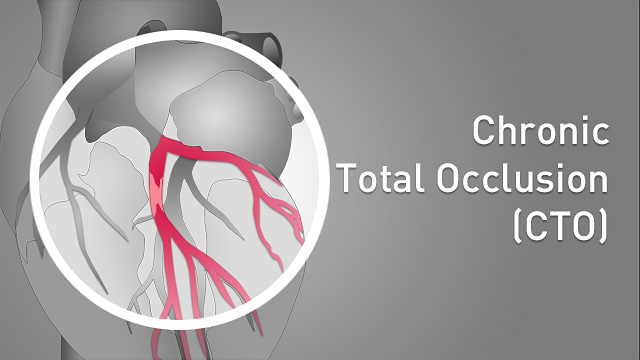
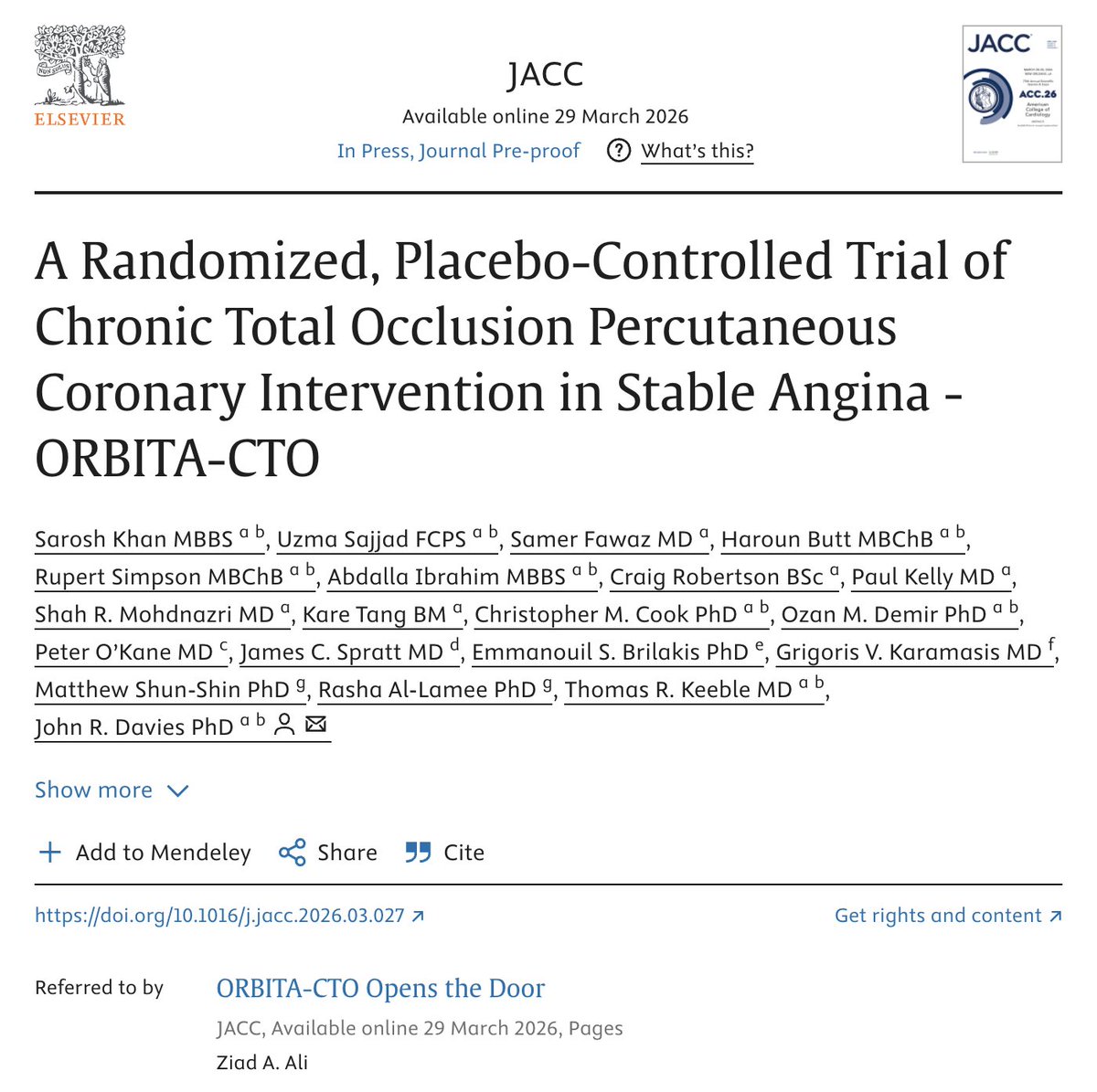
🧵 ORBITA-CTO Seeing a study like ORBITA-CTO being published — regardless of its results — is a beautiful thing. This level of commitment to producing high-quality, as-unbiased-as-possible evidence in interventional cardiology should be praised. It took 4 years to randomize 50 patients. That's dedication. Think about what this team had to do: Noise-cancelling headphones, deep sedation, clocks removed from every room, scripted handovers, overnight admission for both arms, dual-operator procedures lasting 3+ hours — all to protect the blinding. Bang blinding index ≈ 0. It worked. Design: 50 patients, single-vessel CTO, confirmed ischemia + viability, J-CTO ≤3, no bystander disease. 1:1 to CTO PCI or placebo after dual-injection angiography. All anti-anginals stopped at randomization. Daily symptom tracking via ORBITA-app for 6 months. Patient-initiated re-titration only. Primary endpoint: angina symptom score (Bayesian ordinal MOST model, daily repeated measures). CTO PCI vs placebo: OR 4.38 (95% CrI 1.57–12.69) Pr(Benefit) = 0.996 Driven by angina frequency: OR 4.38 (95% CrI 1.55–11.78) Pr(Benefit) = 0.997 In patient-centered terms: CTO PCI yielded ~31 additional angina-free days over 6 months vs placebo. 95% CrI: 11.1–50.7 Pr(Benefit) > 0.999 That's roughly 5 extra angina-free days per month. SAQ domains were consistent: Angina frequency: +10.7 (CrI 1.4–20.2) Physical limitation: +13.5 (CrI 4.5–22.3) Quality of life: +18.2 (CrI 5.4–30.5) Summary score: +13.7 (CrI 4.2–23.2) All Pr(Benefit) ≥ 0.988. CCS class also improved. Dyspnea and EQ-5D did not separate. Procedural quality was outstanding: 96% technical success, 92% IVUS-guided, experienced dual-operator teams. One failed PCI case — averaging 6 angina episodes/day — was included in ITT. This biased against the PCI arm. But the treatment effect survived it. Why does this matter so much? EuroCTO (Werner et al.) showed CTO PCI improved symptoms vs OMT at 1 year, sustained at 3 years. But it was open-label, with 17.5% crossover from OMT to PCI. Without blinding, the placebo contribution to symptom relief was unknown. ORBITA-CTO quantified it. Both arms improved — so yes, the placebo response was substantial. But the PCI effect was immediate and sustained. The placebo group progressively needed more anti-anginals. Now, what ORBITA-CTO does NOT prove: 1. Benefit in multivessel disease or high-complexity CTOs (J-CTO 4–5) 2. Prognostic benefit (not designed for hard endpoints) 3. Generalizability beyond expert centers with 96% success rates 4. Benefit on dyspnea or generic quality of life I know. N=50 is small. Credible intervals are wide. This was an expert-center study with carefully selected lesions. Noted. But 8,631 follow-up days of daily symptom data, a Bayesian framework designed for this exact scenario, and verified blinding give it far more inferential weight than sample size alone suggests. For years, CTO PCI skeptics had a legitimate point: no blinded evidence. That point is now addressed. CTO PCI relieves angina beyond placebo — in well-selected patients, at experienced centers. Agreed. Hats off to the ORBITA-CTO team for doing this the hard way. Our field is better for it. And by the way, this is not me celebrating the results. I don't do CTO. But it makes me happy to see good medical science being made. #ORBITACTO #CardiologyX #InterventionalCardiology #ACC26 @JACCJournals
English
5
17
64
5K
Dr Thomas Keeble retweetledi
Davide Capodanno
Davide Capodanno@DFCapodanno·
Finally, a sham-controlled CTO PCI trial—and it delivers. ORBITA-CTO: small (n=50), but rigor where it matters—blinding, placebo control, symptom-level data. CTO PCI improves angina beyond placebo, with a clear reduction in episodes and more angina-free days. Not prognosis, not hard endpoints, but real symptom benefit—properly measured. #acc26 jacc.org/doi/10.1016/j.…
Davide Capodanno tweet media
English
6
110
322
33.5K
Dr Thomas Keeble retweetledi
Hany Ragy
Hany Ragy@Hragy·
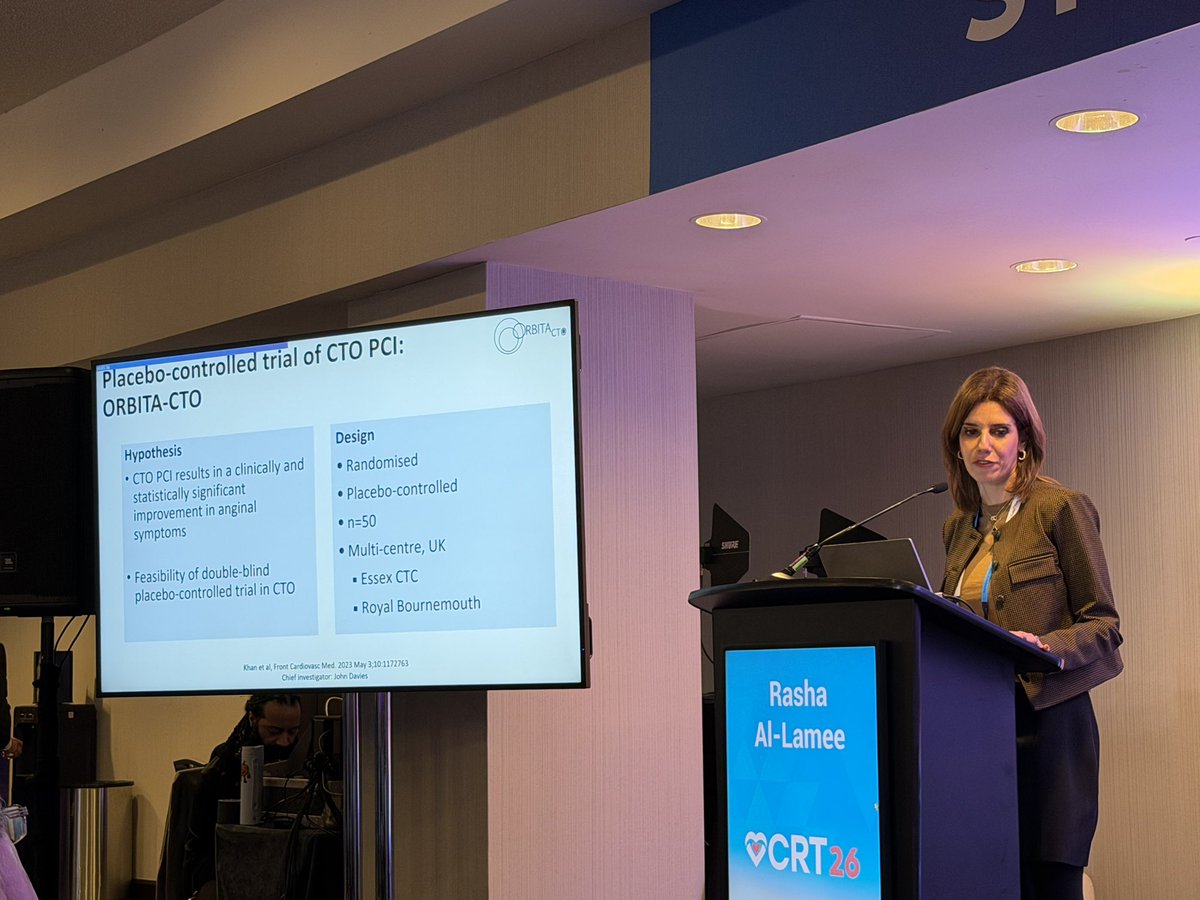
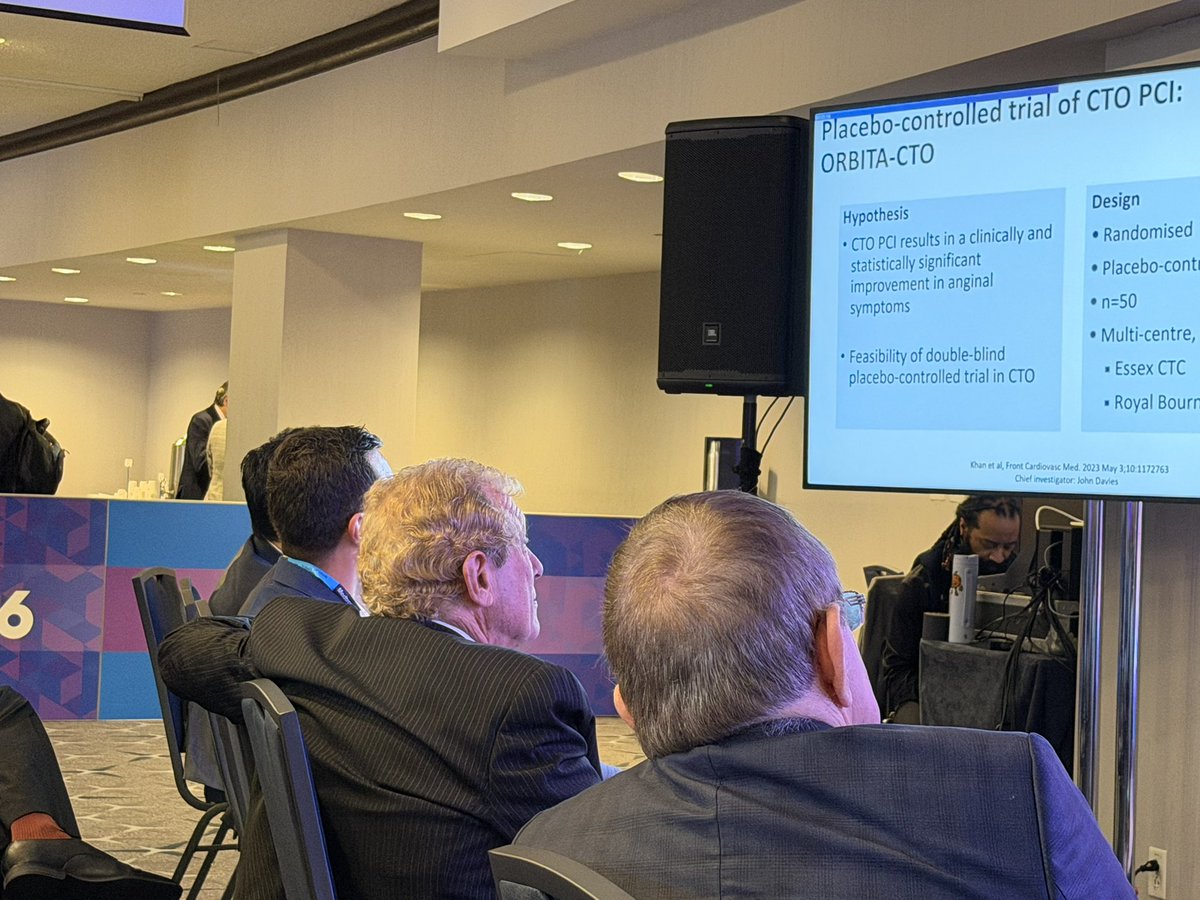
Probably the most important talk at @CRT_meeting #CRT2026 with Jeff Moses and Antonio Colombo in audience , Gregg Stone on Podium @rallamee and her group’s brilliant science again!
Hany Ragy tweet mediaHany Ragy tweet mediaHany Ragy tweet mediaHany Ragy tweet media
English
1
4
16
1.9K
Dr Thomas Keeble
Dr Thomas Keeble@DrKeeble·
@Hragy A superb interventional centre with an amazingly skilled team and latest physiology and imaging guidance. Really enjoyed my visit.
English
0
1
0
302
Hany Ragy
Hany Ragy@Hragy·
At #EHS26 the group of Al Qassimi hospital in Sharjah who are not only personal friends but some of the most able Coronary and structural operators in the Middle East with state of the art imaging equipment have prepared an amazing course! Keep an eye on the program as i post it
Hany Ragy tweet mediaHany Ragy tweet mediaHany Ragy tweet mediaHany Ragy tweet media
English
2
2
7
718