Langston Blues

124.8K posts

Langston Blues banner
Langston Blues

Langston Blues

@dradambanks

Committed teacher. Midnight believer. Slow Jam in a HipHop world. Defender of ButterPecan, DS9 and Futurama. Duly elected president of #UncleTwitter. Solo soul.

Cleveland + Bay Area Katılım Aralık 2011
2.7K Takip Edilen4K Takipçiler
Sabitlenmiş Tweet
Langston Blues
Langston Blues@dradambanks·
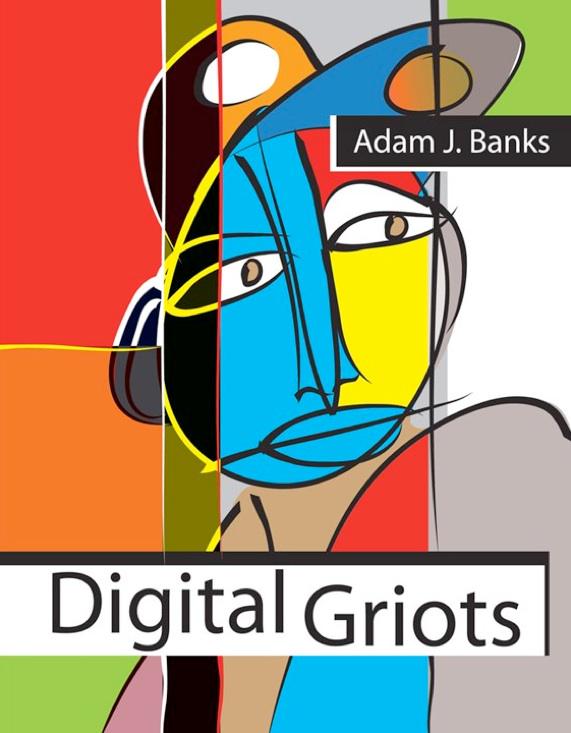
Last one from the Digital Griots limited edition covers by @upfromsumdirt
Langston Blues tweet media
English
8
28
174
0
Langston Blues retweetledi
Masu Zafi 🔥🔥
Masu Zafi 🔥🔥@masuzafi·
Zohran Mamdani just did what most Democrats are too gutless to do. He looked straight into the camera and said the quiet part out loud: Republicans called Obama a socialist every single day for 8 years. It didn’t stop him. Now they’re trying the same tired red-baiting on anyone who wants a New Deal instead of the raw deal working people have been force-fed for decades. People are hungry for something real. Not more corporate welfare dressed up as “moderation.” Not more “public-private partnerships” that somehow always privatize the profits and socialize the losses. Mamdani is right. The socialist smear is a dead tactic. The only question left is whether the Democratic Party has the spine to actually deliver for the people who keep electing them… or if they’ll keep protecting the same donors who’ve been extracting wealth from this country for 40 years. Keep going, Mayor. The old guard is terrified for a reason.
Washington, DC 🇺🇸 English
818
3.4K
15.7K
556.1K
Langston Blues retweetledi
The Fairy Wildflower
The Fairy Wildflower@ErikasAwesome·
I think Stevie Wonder's Overjoyed may be one of the greatest songs ever. I say that a lot but still.
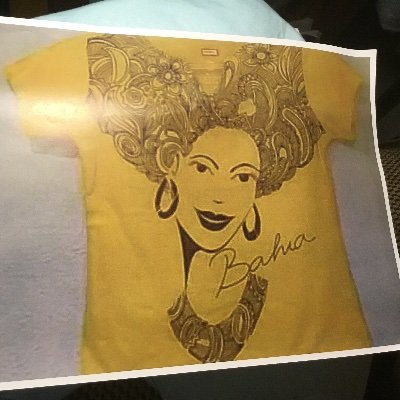
The Fairy Wildflower tweet media
English
0
2
4
132
Langston Blues retweetledi
Todd McShay
Todd McShay@McShay13·
Not invested. Just pointing out the obvious—laying someone off mid-show, clipping his take from said show, then going a step further by posting it on your official account is either diabolical or incompetent. This was never about Ryan Clark or his take. Ironically, it was pointed out to me tonight that I’m still listed as the host of ESPN’s First Draft pod… which has me leaning toward incompetence.
ball don’t lie@waksmaina

@McShay13 Why are you invested in @Realrclark25 getting fired?

English
135
342
4.9K
1.1M
Randi
Randi@TheRandiSavage·
Randi tweet media
ZXX
2
0
9
236
Langston Blues
Langston Blues@dradambanks·
@DocDre My man, I appreciate you so much. You’ve always dapped me up in these convos, even as you’ve taken the work further and higher than I could have. #salute
GIF
English
1
0
1
64
thot leedurr
thot leedurr@DocDre·
who remain content to point out the supposed theoretical shortcomings of people and movements; content to debate endless complexities never connected to a project to improve anything in the real or virtual worlds” - Adam Banks RRT p.5 2/2
English
1
1
2
181
thot leedurr
thot leedurr@DocDre·
@dradambanks has always led the way “I choose to honor people who labored under the constant threats of surveillance, suppression, poverty, ostracism, and death instead of those post-everything navel-gazers 1/2
English
1
1
3
347
Langston Blues retweetledi
Cheo Hodari Coker
Cheo Hodari Coker@cheo_coker·
Movie.
Millie Marconi@MillieMarconnni

A Japanese engineer invented the QR code for one job, tracking car parts on a Toyota line, then his company chose to give the patent away for free, which is the only reason it ended up on every restaurant table on Earth. His name is Masahiro Hara. The company was Denso Wave, a parts supplier owned by Toyota. In 1992 the problem landed on his desk, and it was not glamorous. Workers on the factory floor were drowning. Every car part had a barcode, but a barcode can only hold about twenty characters, so to track one component they had to stick five or ten barcodes on it. A worker would stand there scanning a single part ten times in a row. Some of them were scanning close to a thousand barcodes a day. The job had stopped being about building cars and turned into pointing a scanner at stickers all day long. And there was a second problem nobody upstairs cared about. This was a factory. Oil got on everything. A smudge of grease across a barcode and the whole thing became unreadable, and the line stopped. Hara was asked to make the scanner faster. He looked at it for a while and realized the scanner was not the problem. The barcode itself was the ceiling. A line of black bars can only hold information going one direction, left to right. He decided to build something that held information in two directions, up and down as well as across, so it could store hundreds of times more in the same little square. Then came the part that sounds made up but is not. Hara played Go on his lunch breaks, the old board game with black and white stones sitting on a grid. He was staring at the board one day and it clicked. The grid of black and white stones was already a way to store information in two directions. That was the shape of his code. But building the code was the easy half. The hard problem was speed, because the whole point was to be fast, and a scanner wastes most of its time just trying to figure out where the code is and which way it is turned. The fix came to him on a train. He was looking out the window at buildings, and one building stood out from all the others because of its shape against the sky. That was the idea. He put three little square targets in three corners of the code. The moment a scanner sees those three squares, it knows instantly where the code is and how it is rotated, even upside down, even at an angle. Now here is the detail that shows how far he was willing to go. Those three corner squares only work if nothing else on the page looks like them. If a magazine ad or a cardboard box happened to have the same black and white pattern nearby, the scanner would get confused and grab the wrong thing. So Hara and his tiny two-person team went and surveyed printed material. Magazines. Flyers. Cardboard boxes. Piles of it, for days, reducing every picture down to its ratio of black to white area, hunting for the one ratio that almost never shows up in print anywhere. They found it. One to one to three to one to one. That exact rhythm of black and white is baked into every corner square of every QR code on Earth, and it is there because it is the pattern the printed world almost never produces by accident. Then he solved the oil. He built the code so it carries a backup of its own information, spread mathematically across the whole square. You can tear off, smudge, or scratch out up to thirty percent of a QR code and it still scans perfectly, because the code rebuilds the missing piece from the copy it kept of itself. A worker could get grease on a third of the label and the line would keep moving. This is the same math that lets a scratched CD still play and lets a spacecraft send data back across the solar system without asking to repeat itself. He finished in 1994. He named it Quick Response, after what it does for the person using it, not after what it is. And then Denso made the decision that actually mattered. They held the patent. They could have charged a fee on every single scan, and given how many billions happen now, that would have made someone unimaginably rich. Instead they announced they would not enforce their rights to collect royalties, and they published the specification openly so anyone could use it. Hara later said it was not even a big argument inside the company. That one choice is the whole story. A code that costs nothing to use is a code everyone builds on. Airlines put it on tickets. Phone makers built readers into cameras. Then a pandemic hit and the world needed a way to hand someone information without touching anything, and the free little square that a Toyota engineer built for greasy factory workers was suddenly on every menu, every payment, every door. Hara still works there. He has said, more than once, that he never imagined it would spread this far, and that the part he is proudest of is that it got used to keep people safe. The man built it to survive oil on a factory floor. It ended up surviving everything else too. You have scanned his work a hundred times this year. Now you know whose it was.

English
3
9
68
5.2K
Langston Blues retweetledi
Brandon Ousley
Brandon Ousley@brandonousley·
Album of the day. 1971 ought to go down as the high point for American Black electric music. Looking at the flurry of landmark releases from that year, there's Miles Davis' Live-Evil, Shuggie Otis' Freedom Flight, Sly & the Family Stone's There's a Riot Goin' On, Curtis Mayfield's Roots, and Funkadelic's Maggot Brain, which was released 55 years ago today. Everybody knows the famous backstory behind the album's towering title track, where George Clinton and Eddie Hazel were tripping on LSD when Clinton instructed him to imagine that his mother had just died. What emerged was Hazel delivering a ten-minute display of transcendent Stratocaster mastery, with little wisps of the other instruments drifting at the edges of the Echoplex-soaked mix. It's deeper than just a guitar solo—it's a sonic lament, where Hazel constructs an emotionally devastating narrative without uttering a single word, moving through an entire spectrum of feeling, from grief and despair to acceptance and spiritual release. This classic also contains some of their hardest-hitting rock workouts, including the swaggering "Hit It and Quit It"—which also doubles as one of their nastiest funk grooves—and the blistering junkie tale "Super Stupid," a proto-Black rock blueprint that echoed through the work of later innovators like Living Colour, Fishbone, and Lenny Kravitz. Elsewhere, the band tips its hat to its gospel-fueled, doo-wop roots on the radiant "Can You Get to That," while the satirical "You and Your Folks, Me and My Folks" and the closing freakout "Wars of Armageddon" reveal that they were equally capable of blending social commentary, communal funk, and sprawling psychedelic experimentation. More than five decades later, Maggot Brain still feels like a transmission from another dimension. It fused rock, funk, gospel, blues, and psychedelia into something that remains impossible to categorize, and in the process cemented Funkadelic as one of the most fearless and visionary bands in American music.
Brandon Ousley tweet media
English
7
19
112
4.1K
Langston Blues retweetledi
Brandon Ousley
Brandon Ousley@brandonousley·
Album of the day. Admittedly, it's been a while since I last gave this one a spin, but you can never go wrong with a Patrice Rushen album. Recorded just a month before her 21st birthday, Rushen's second album as a leader, 1975's Before the Dawn, is an early-career triumph that captures her operating at an astonishing level, showcasing the pianistic brilliance, compositional maturity, and fluid jazz instincts that established her as a prodigy long before her celebrated pivot into glossy R&B and disco during the late '70s and early '80s. There are several masterful grooves here, including the one-two punch funk of "Kickin' Back" and "What's the Story," the Latin jazz-inflected "Jubilation," and my personal favorite, the title track—a serene beauty where Rushen layers exquisite Fender Rhodes and synthesizer textures over a mellow, hypnotic groove. Then there's the exploratory jazz-rock fusion stunner "Razzia," which features some of the most dazzling musical interplay committed to wax. The supporting cast of players here is every bit as formidable as the music itself, with Leon "Ndugu" Chancler and Harvey Mason splitting drum duties, Lee Ritenour delivering fiery guitar work, Hubert Laws lending his signature flute, and a brass section anchored by Oscar Brashear on trumpet and George Bohanon on trombone. Like the rest of Patrice Rushen's stellar Prestige recordings, Before the Dawn deserves a second look.
Brandon Ousley tweet media
English
6
13
47
1.8K
Langston Blues retweetledi
dank
dank@cptdankkk·
Jaylen Brown says 60% of NBA players lose most of their wealth because the agency model broken “I hope I ruffle all the motherfucking feathers. The agency model isn't working. It's a bunch of players going broke when they retire. It's like 60% of players within the first 10 years are losing majority of their wealth after making millions of dollars. Living check to check. You can blame the athlete, maybe they living expenses, but they was 18 or 19 when they came into wealth and the people that represented them didn't help them handle that in no capacity or care to. After they get you and they get in your pocket, they just go get the next one and get in his pocket” “This is what I'mma stand on. And this could be controversial, but I don't care. If you can't help me at 18 or 19 to maintain my wealth, build a legacy, and keep what I'm earning and be able to influence me on my decision making, you shouldn't be representing me in the first place. Shouldn't even be allowed to walk into my house. But we allow this agency model. They keep coming in and they keep stripping everything and we giving it right back to the same people that was giving it to us in the first place. Giving it right back” “Something got to change. There's been people taking advantage of these 18, 19 young kids, and nobody says nothing. I think that's a part of the problem where we don't say that and we just allow that to be normalized. No, that shit ain't normal. You get millions of dollars and now you broke. And the people that's representing you can't even pick up the phone now. These people have continued to do that and they're gonna continue to do it because they see it as business and economic opportunity”
English
798
2.7K
17.4K
2.5M
Langston Blues
Langston Blues@dradambanks·
What it do late shift? Peeking in on y'all
English
0
1
4
327
Langston Blues retweetledi
Nneka Samuel
Nneka Samuel@NeekNique·
Did Mitch go to the bad place or not? The people need to know.
English
0
1
1
159
Langston Blues
Langston Blues@dradambanks·
He really did his thing in the later rounds tho. Big congrats
English
0
0
0
163