Alison Fox-Robichaud, MD

14.6K posts

Alison Fox-Robichaud, MD banner
Alison Fox-Robichaud, MD

Alison Fox-Robichaud, MD

@drfoxrob

Prof @McMasterU @MacDeptMed #CCM Scientific Director @SepsisCanada @CanSepsisFdn, 2018 GSA award, HEWS Lead, Dir of #MedEd @HamHealthSci, Chair @WCICC2025

Hamilton, Ontario Katılım Aralık 2016
3.3K Takip Edilen3K Takipçiler
Alison Fox-Robichaud, MD retweetledi
Just Dave now
Just Dave now@justdavenow89·
If you took the covid jab and are alive with no side effects at all please like and repost want to prove something to some accounts on here :)
English
943
5K
10.6K
115.2K
Dr. Chacón-Lozsán F .'.
Dr. Chacón-Lozsán F .'.@franciscojlk·
🧬 Sepsis biomarkers: are we finally moving beyond CRP and PCT? Sepsis is not just infection. It is a dysregulated host response leading to multi-organ dysfunction. And yet… 👉 Our diagnostic tools are still slow 👉 Our biomarkers are still imperfect 🧠 The current reality We rely on: • CRP → sensitive but non-specific • PCT → better for bacterial infection, useful for antibiotic guidance • Lactate → cornerstone for perfusion and prognosis ➡️ But none of them truly capture the complex biology of sepsis 📊 What is changing? New biomarkers are emerging across multiple domains: 🔥 Inflammatory markers • IL-6 → correlates with severity and mortality • IL-10 → reflects immunosuppression • TNF-α → early hyperinflammatory signal ⚙️ Immune cell markers • CD64 → helps differentiate bacterial infection • Presepsin → early diagnostic and prognostic potential 🧪 Metabolic markers • Lactate kinetics still critical • Metabolomics → early prediction of shock progression 🧬 The real revolution: multi-omics + AI 👉 Transcriptomics 👉 Proteomics 👉 Metabolomics Combined with: 🤖 Machine learning ➡️ Allowing: • Sepsis phenotyping (endotypes) • Hyperinflammatory vs immunosuppressed states • Personalized risk stratification 🚨 Critical insight Sepsis is: ❌ Not one disease ❌ Not one pathway ❌ Not one biomarker ➡️ It is a dynamic, evolving biological network ⚠️ Why biomarkers still fail in real life • Heterogeneity between patients • Variable kinetics over time • Lack of standardized thresholds • Overreliance without clinical context ➡️ Biomarkers alone will NEVER replace clinical reasoning 🔥 Take-home message The future is not: 👉 “Which biomarker is best?” The future is: ➡️ Integrated biomarker panels + physiology ....+ AI? 📚 Zheng X. et al. (2026) Frontiers in Immunology doi.org/10.3389/fimmu.…
Dr. Chacón-Lozsán F .'. tweet media
English
1
54
174
8.2K
Alison Fox-Robichaud, MD retweetledi
LifTING & Sepsis Canada Research Training Program
Hi everyone! We’re excited to host our 4th Annual Symposium, taking place May 22–24 in Toronto! This event will bring together trainees, mentors, faculty, and alumni for three days of networking, knowledge-sharing, and engaging discussions!
LifTING & Sepsis Canada Research Training Program tweet media
English
1
2
2
139
Alison Fox-Robichaud, MD retweetledi
ActionOnSepsis
ActionOnSepsis@ActionOnSepsis·
It's National Immunization Awareness Week! Learn about the importance of vaccinations to protect against sepsis and the work being done by the Vaccine Evaluation Centre in BC @VEC_ubc ➡️ bcchr.ca/vec🔬 #NIAW2026
ActionOnSepsis tweet media
English
0
2
2
97
Alison Fox-Robichaud, MD retweetledi
Ihtesham Ali
Ihtesham Ali@ihtesham2005·
A mathematician who shared an office with Claude Shannon at Bell Labs gave one lecture in 1986 that explains why some people win Nobel Prizes and other equally smart people spend their whole lives doing forgettable work. His name was Richard Hamming. He won the Turing Award. He invented error-correcting codes that made modern computing possible. And he spent 30 years at Bell Labs sitting in a cafeteria at lunch watching which scientists became legendary and which ones faded into nothing. In March 1986, he walked into a Bellcore auditorium in front of 200 researchers and told them exactly what he had seen. Here's the framework that has been quoted by every serious scientist for the last 40 years. His opening line landed like a punch. He said most scientists he worked with at Bell Labs were just as smart as the Nobel Prize winners. Just as hardworking. Just as credentialed. And yet at the end of a 40-year career, one group had changed entire fields and the other group was forgotten by the time they retired. He wanted to know what the difference actually was. And he said it wasn't luck. It wasn't IQ. It was a specific set of habits that almost nobody is willing to follow. The first habit was the one that hurts the most to hear. He said most scientists deliberately avoid the most important problem in their field because the odds of failure are too high. They pick a safe adjacent problem, solve it cleanly, publish it, and move on. And because they never swing at the hard problem, they never hit it. He said if you do not work on an important problem, it is unlikely you will do important work. That is not a motivational line. That is a logical one. The second habit was about doors. Literal doors. He noticed that the scientists at Bell Labs who kept their office doors closed got more done in the short term because they had no interruptions. But the scientists who kept their doors open got more done over a career. The open-door scientists were interrupted constantly. They also absorbed every new idea passing through the hallway. Ten years in, they were working on problems the closed-door scientists did not even know existed. The third habit was inversion. When Bell Labs refused to give him the team of programmers he wanted, Hamming sat with the rejection for weeks. Then he flipped the question. Instead of asking for programmers to write the programs, he asked why machines could not write the programs themselves. That single inversion pushed him into the frontier of computer science. He said the pattern repeats everywhere. What looks like a defect, if you flip it correctly, becomes the exact thing that pushes you ahead of everyone else. The fourth habit was the one that hit me the hardest. He said knowledge and productivity compound like interest. Someone who works 10 percent harder than you does not produce 10 percent more over a career. They produce twice as much. The gap doesn't add. It multiplies. And it compounds silently for years before anyone notices. He finished the lecture with a line I have never been able to shake. He said Pasteur's famous quote is right. Luck favors the prepared mind. But he meant it literally. You don't hope for luck. You engineer the conditions where luck can land on you. Open doors. Important problems. Inverted questions. Compounded hours. Those are not traits. Those are choices you make every single day. The transcript has been sitting on the University of Virginia's computer science website for almost 30 years. The video is free on YouTube. Stripe Press reprinted the full lectures as a book in 2020 and Bret Victor wrote the foreword. Hamming died in 1998. He gave his final lecture a few weeks before. He was 82. The lecture that explains why some careers become legendary and others disappear is still free. Most people who could benefit from it will never open it.
Ihtesham Ali tweet media
English
146
1.9K
8.2K
1.2M
Alison Fox-Robichaud, MD retweetledi
Prof Daryl Jones
Prof Daryl Jones@jones_daza·
Join this Brazilian webinar on RRS Registration details and program below @Int_SRRS
Prof Daryl Jones tweet media
English
0
1
1
86
Alison Fox-Robichaud, MD retweetledi
Karen E. A. Burns
Karen E. A. Burns@KarenBurnsk·
This unique study used rigorous international Delphi methodology (12-member steering committee, 46 global experts) to establish expert consensus (43/57 statements) on gender equality and equity in 10 domains of intensive care professional life. link.springer.com/article/10.100…
English
0
6
10
976
Alison Fox-Robichaud, MD retweetledi
Nursing in Critical Care Journal
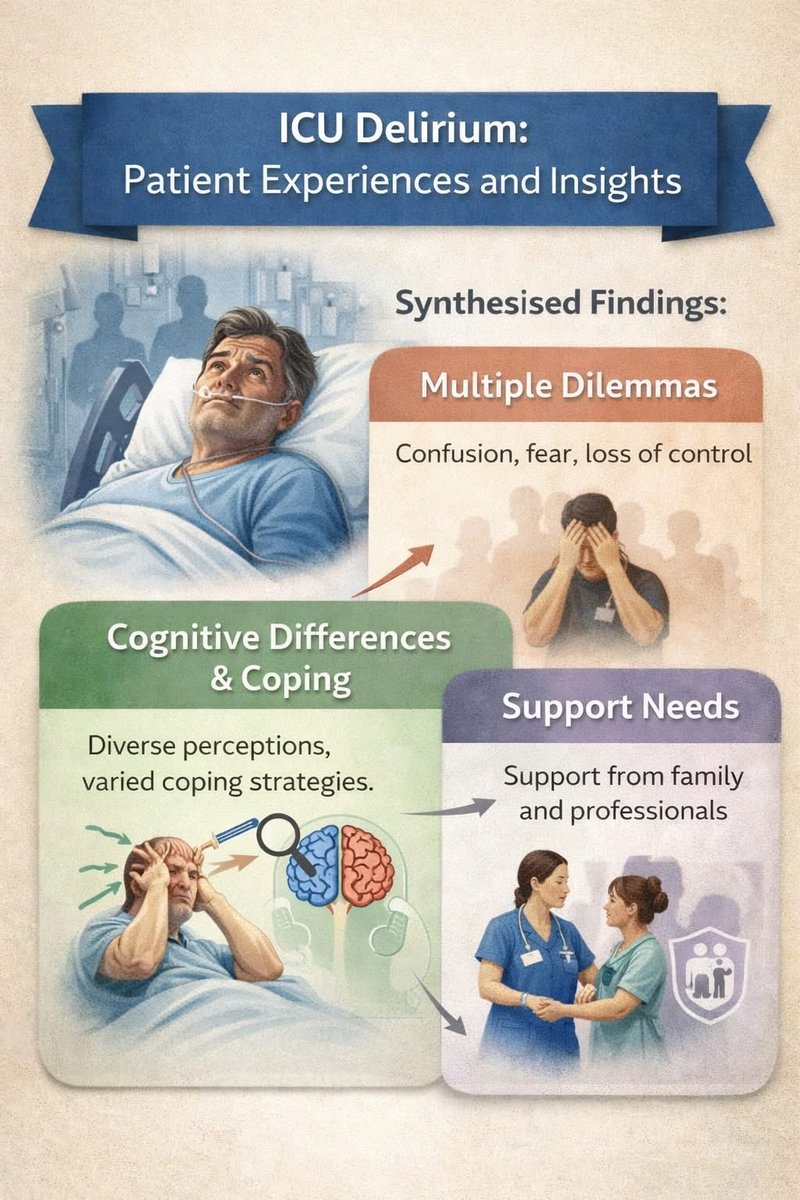
Waiting in ICU isn’t passive. Families are navigating systems, managing uncertainty, and carrying emotional and ethical weight. The waiting room is part of care — design it that way. 🔗 doi.org/10.1111/nicc.7…
Nursing in Critical Care Journal tweet media
English
1
8
23
1.4K
Alison Fox-Robichaud, MD retweetledi
Craig Baird - Canadian History Ehx
Harriet Brooks was one of Canada's first female nuclear physicists. Sir Ernest Rutherford said she was an equal of Marie Curie. She co-discovered radon and helped lay the foundations of nuclear science. Then she left her career when she was 29. This is her story. 🧵 1/12
Craig Baird - Canadian History Ehx tweet media
English
3
46
209
5.4K
Alison Fox-Robichaud, MD retweetledi
Craig Baird - Canadian History Ehx
On April 12, 1980, Terry Fox, accompanied by his friend Doug Alward, dipped his right leg into the Atlantic Ocean at St. John's, Newfoundland and Labrador. It began the Marathon of Hope and turned Fox into a Canadian hero and icon. This is the story. 🧵 1/15
Craig Baird - Canadian History Ehx tweet media
English
14
405
1.6K
31.1K
Alison Fox-Robichaud, MD retweetledi
Prof Daryl Jones
Prof Daryl Jones@jones_daza·
Our free RRT handbook has been translated into several languages It has now had more than 89,000 downloads Please share rrthandbook.org
English
0
8
16
2.6K
Alison Fox-Robichaud, MD retweetledi
ActionOnSepsis
ActionOnSepsis@ActionOnSepsis·
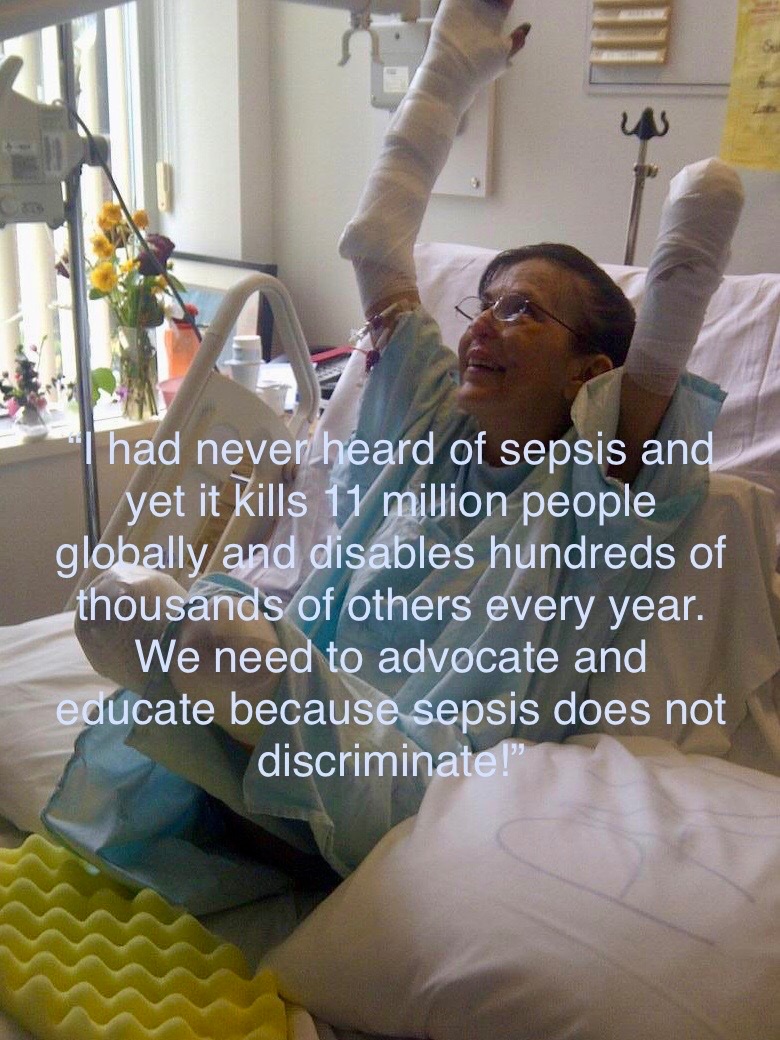
See our disability application guide for sepsis survivors and their families in BC! This guide includes tips from our patient partners & resources from @DisabAllianceBC. 🔗View here: shorturl.at/pI2Zy
ActionOnSepsis tweet media
English
0
2
2
107
Alison Fox-Robichaud, MD retweetledi
Hopkins ICU Rehab
Hopkins ICU Rehab@icurehab·
Remimazolam Besylate Versus Dexmedetomidine As a Sedative in ICU Patients Undergoing Mechanical Ventilation: A Multicenter, Single-blinded, Randomized, Noninferiority Trial tinyurl.com/4k3h5ssk #icurehab #A2Fbundle
English
0
6
10
1.2K
Alison Fox-Robichaud, MD retweetledi
Craig Baird - Canadian History Ehx
Every province and territory has a national park. In all, there are 37 national parks and 11 national park reserves covering 343,377 sq-km equaling 3.3% of Canada's total land area. But what was the first park in each province and territory? 🧵 1/15
Craig Baird - Canadian History Ehx tweet media
English
7
54
320
16.7K