

Christopher Porter
1.4K posts
Christopher Porter
@DrPorter
Former National Intelligence Officer for Cyber under @realDonaldTrump and @JoeBiden. Personal account full of personal hot takes—can’t stress that enough.
Washington, DC Katılım Haziran 2012
468 Takip Edilen11K Takipçiler

Imagine if there was an LLM trained on the millions of pages classified and unclassified Russiagate and Ukraine impeachment hoax documents. Many new connections would be surfaced that even the most determined researchers and analysts haven’t discovered yet.
English
Christopher Porter retweetledi

NEW: WHISTLEBLOWER 2019 TRUMP IMPEACHMENT
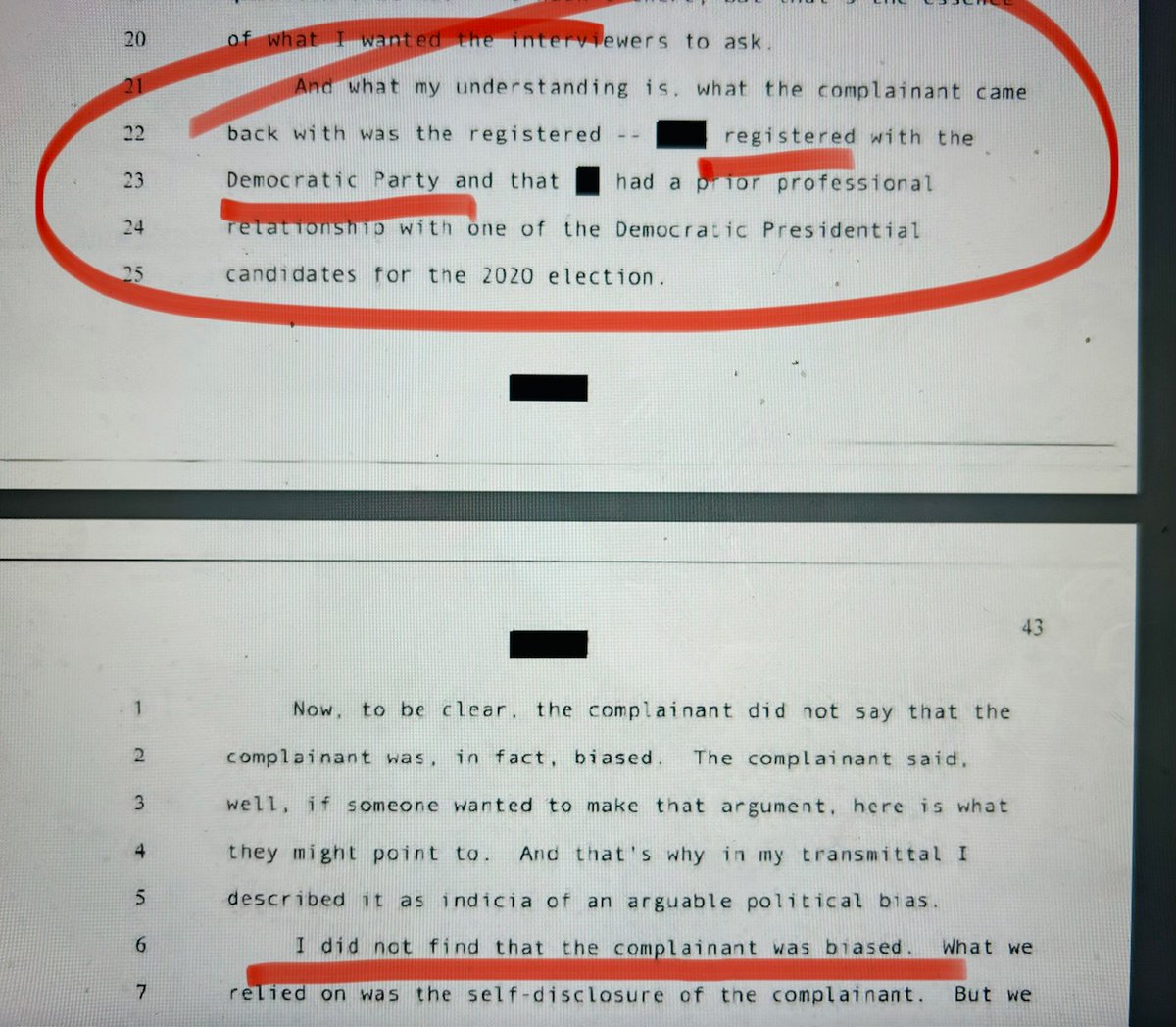
- Registered Democrat
- "had a prior professional relationship with one of the Democratic Presidential candidates," according to newly released transcripts from the Intelligence Community watchdog Michael Atkinson.
In a 2019 briefing to the house intelligence committee, Atkinson added, "I did not find the complainant (whistleblower) was biased."
After seven years, the Atkinson records have been finally released @DNIGabbard @RepRickCrawford
Catherine Herridge@C__Herridge
NEW RECORDS VIA @DNIGabbard @RepRickCrawford ATKINSON TRANSCRIPTS - First Trump Impeachment + Whistleblower Motive Whistleblower met with Democrats on House Intelligence Committee (then led by Adam Schiff) BEFORE reporting his allegations to the Intelligence Community Inspector General. October 2019: then Congressman now @CIADirector Ratcliffe nailed the timeline in a closed door briefing with Intelligence Community Watchdog Michael Atkinson. - Trump/Zelensky call July 25th 2019 - Whistleblower complaint filed August 12th - Ratcliffe questioned what happened during those 18 days. Ratcliffe: The whistleblower did not disclose to you that he or she had contact with HPSCI (House Intelligence Committee)? Atkinson: The answer to that is yes. The answer to that is yes. Atkinson: On the urgent disclosure form, there's a question that the complainant is asked about who they have reported the violation to...and one of the boxes is the congressional intelligence committees. The complainant did not check that box.
English
Christopher Porter retweetledi

@DNIGabbard has significantly changed the historical record of the 2019 impeachment by declassifying this as well as the soon to be released Atkinson transcript. If this were a criminal case, a judge would have declared a mistrial for cheating. justthenews.com/accountability…
English
Christopher Porter retweetledi

Why did Tolkien call death a gift?
In The Silmarillion, he writes death is an exclusive gift given to mankind by God. All other creatures envy this gift, including the immortal elves:
Mankind alone, through death, is granted union with the divine.
Tolkien's point is that immortality in a fallen world is not a blessing, nor man's actual purpose. To live forever in a world marred by corruption, vice, and decay is to be trapped with no escape.
Death, then, is not a tragic ending, but a release — a return of creation to its creator. The humility of mortal man leads to a glory far greater than immortality.
In other words, man was made for something greater than earthly pleasure. Death is the preparation for eternity.
Today we tend to see this backwards. We treat death as the ultimate evil, and endless life as the ultimate good, no matter the cost. We try to preserve life indefinitely, and in doing so, lose sight of what life is actually for.
Tolkien's final insight is simple:
A man who refuses to die for anything will one day find he has nothing worth living for.
A world that fears death above all else will never reach the highest good, for life truly begins when you discover a love greater than life itself.

English
Christopher Porter retweetledi

Christopher Porter retweetledi

so Lockheed's Skunkworks lab created a quantum sensing device made from diamonds that can isolate the magnetic signals in a heartbeat from miles away, and it was employed in the airman rescue
this is your reminder to read Ben Rich's incredible book on Skunkworks and the development of the F-117 Nighthawk and the SR-71 Blackbird. you will not regret
amazon.com/Skunk-Works-Pe…
English
Christopher Porter retweetledi

Every security flaw discovered by AI was there before AI, waiting to be discovered either by people or by AI. The world has never been good at securing computer systems; finally with AI we are going to get good.
English
Christopher Porter retweetledi

$GOOGL's Sundar: "These models are definitely really going to break pretty much all software out there".
I think the new sets of AI models from these AI labs that are coming out will be a real challenge for existing cybersecurity companies. Either their software holds up, or all these AI labs are going to put their own versions of cybersecurity software out there alongside the AI models they release to protect the world.
We are facing another big leap in model capabilities.
English
Christopher Porter retweetledi

🦞Ollama's cloud is one of the best places to run OpenClaw.
$20 plan is enough for most day to day OpenClaw usage with open models!
To make the switch, all you need is to open the terminal and type:
ollama launch openclaw
Choose a model:
kimi-k2.5:cloud
glm-5:cloud
minimax-m2.7:cloud
❤️ Ollama
Marc Andreessen 🇺🇸@pmarca
Magical OpenClaw experiences that use frontier models cost $300-1,000/day today, heading to $10,000/day and more. The future shape of the entire technology industry will be how to drive that to $20/month.
English
Christopher Porter retweetledi

.@CIADirector John Ratcliffe: "Following the successful exfiltration on Saturday night, our intelligence reflects that the Iranians were embarrassed and ultimately humiliated by the success of this audacious rescue mission."
English
Christopher Porter retweetledi

SITREP: Iranian Military Doctrine and the Nature of this War
As we approach what appears to be another phase of the war in the Middle East pairing the United States, Israel, and certain other allies and partners against Iran, China and Russia, it is imperative for readers to understand enemy doctrine and methods for warfighting.
Iran relies on lessons learned from forty plus years of manning, training preparing, and equipping itself while simultaneously fighting using proxies as well as its eight (8) year war with Iraq and participating in the US wars in Iraq and Afghanistan. They have paid close attention and although they have massive weaknesses in their strategic air defense umbrella, a deeply flawed counterintelligence system and, at times, what appears to be a rigid decision making hierarchy, the Iranian military has created a “MOSAIC” type doctrine for such a time as this. It is referred to as … “MOSAIC DEFENSE.”
A key and very specific component of Iran’s military doctrine, especially for the IRGC, is what is called a "decentralized mosaic defense".
This doctrine was introduced around 2005, it emphasizes a flexible, layered, decentralized command structure that divides forces into semi-independent regional units. The goal is resilience against decapitation strikes or invasions: even if central leadership or key infrastructure is hit. It applies dispersed forces (regular military, IRGC, Basij militias, and locals), this doctrine can continue using guerrilla-style operations, attrition warfare, and territorial defense in depth.
It draws key and several lessons from U.S. operations in Iraq and Afghanistan, focusing on survivability, mobilization of the population (keep in mind that not all of the 90M Iranian population is pro-America), and turning Iran's geography into a "mosaic" of resistance rather than a centralized target.
The doctrine prioritizes regime survival, deterrence, and asymmetric advantages over symmetric conventional matchups. It has a hybrid nature applying western-influenced concepts mixed with revolutionary ideology, martyrdom culture, and self-reliance.
In recent times, Iranian officials have explicitly referenced the decentralized “mosaic” approach as enabling prolonged resistance.
Lesson for the day as we head into a very challenging phase of this war.
God Bless America! 🙏🏼🇺🇸
English
Christopher Porter retweetledi

Gemma 4 can run on phones without an internet connection! 🤯
It can perform local agentic tasks, such as logging and analyzing trends. When connected, it can also make API calls.
Want to try it yourself? Get the Google AI Edge App on iOS or Android. (🔊 Sound on for the demo!)
English
Christopher Porter retweetledi

Christopher Porter retweetledi

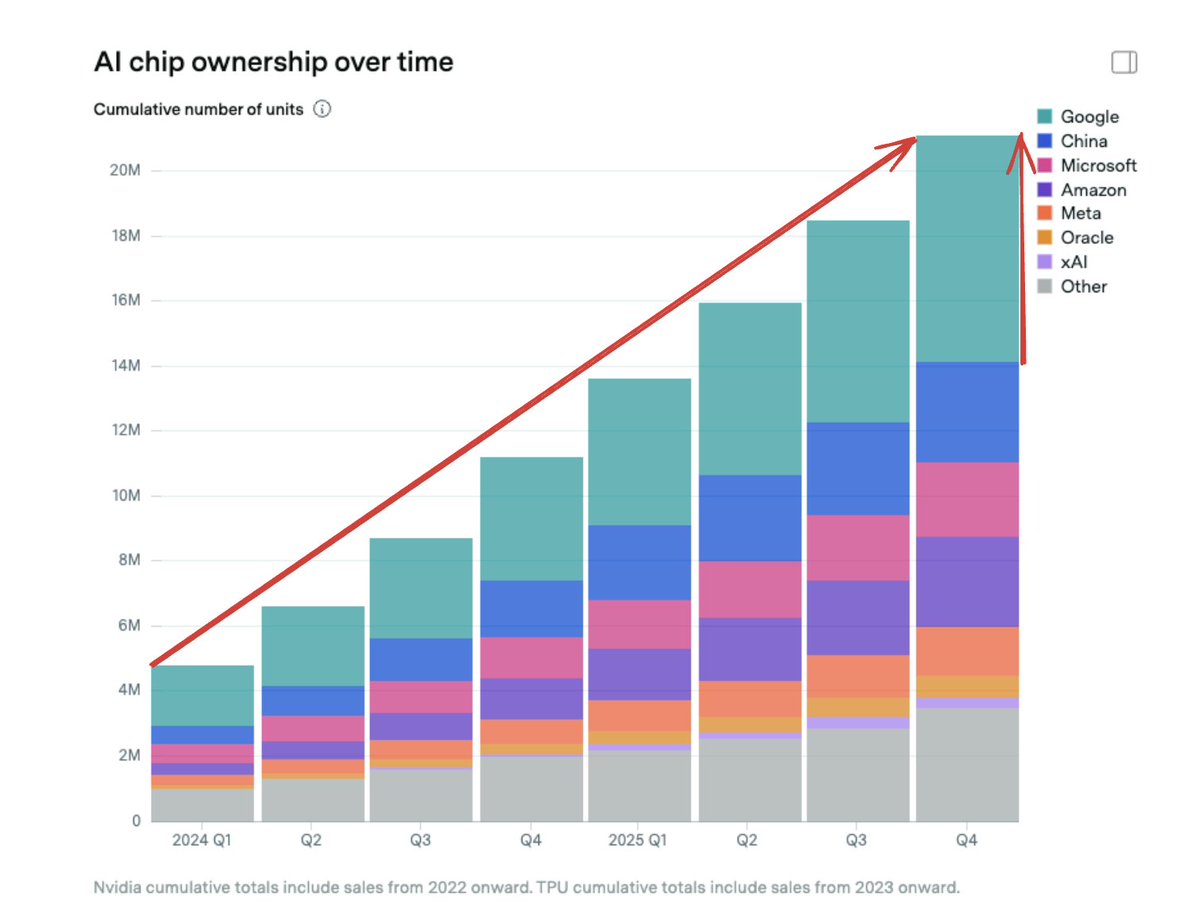
Google is destined to win and its going to be decade for Deepmind and efforts towards AI for Science.
Probably only company that controls the full stack. chips + data centers + models + distribution (search, android, youtube, workspace).
+ anthropic signed up for a million TPUs over a GW of compute in 2026. meta is in talks to rent and then buy. openai hasn't even deployed TPUs yet. insane W.
Epoch AI@EpochAIResearch
Compute may be the most important input to AI. So who owns the world’s AI compute? Introducing our new AI Chip Owners explorer, showing our analysis of how leading AI chips are distributed among hyperscalers and other major players, broken down by chip type over time.
English
Christopher Porter retweetledi

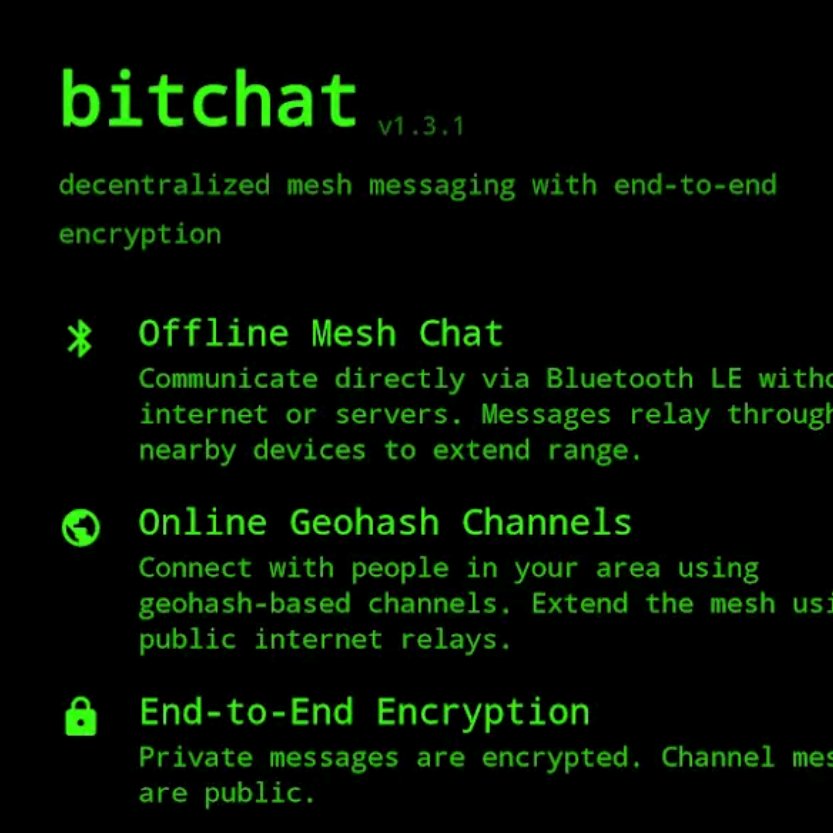
BREAKING: China has ordered Apple to remove Bitchat, a messaging app developed by Jack Dorsey, from the China App Store.
The order was issued by Chinese regulators citing rules that require apps capable of enabling large scale communication or social mobilization to undergo a security review before distribution.
Bitchat operates differently from traditional messaging apps.
It uses Bluetooth and mesh networking to send messages directly between nearby devices, allowing communication without internet access, SIM cards, or centralized servers.
Because of this design:
• Messages can be relayed across multiple devices.
• The system does not rely on telecom networks.
• There is no central server infrastructure.
Apple has previously removed apps from the China App Store following regulatory requirements, including VPN and encrypted messaging services.
English
Christopher Porter retweetledi

Christopher Porter retweetledi

Here we have George Yeo, the former foreign minister of Singapore.
He demonstrates a far deeper grasp of European history and its conflicts than most Western politicians will ever have.
It's rare to find a current high-ranking official who can speak with such depth,clarity and insight in an interview.
English
Christopher Porter retweetledi

LLM Knowledge Bases
Something I'm finding very useful recently: using LLMs to build personal knowledge bases for various topics of research interest. In this way, a large fraction of my recent token throughput is going less into manipulating code, and more into manipulating knowledge (stored as markdown and images). The latest LLMs are quite good at it. So:
Data ingest:
I index source documents (articles, papers, repos, datasets, images, etc.) into a raw/ directory, then I use an LLM to incrementally "compile" a wiki, which is just a collection of .md files in a directory structure. The wiki includes summaries of all the data in raw/, backlinks, and then it categorizes data into concepts, writes articles for them, and links them all. To convert web articles into .md files I like to use the Obsidian Web Clipper extension, and then I also use a hotkey to download all the related images to local so that my LLM can easily reference them.
IDE:
I use Obsidian as the IDE "frontend" where I can view the raw data, the the compiled wiki, and the derived visualizations. Important to note that the LLM writes and maintains all of the data of the wiki, I rarely touch it directly. I've played with a few Obsidian plugins to render and view data in other ways (e.g. Marp for slides).
Q&A:
Where things get interesting is that once your wiki is big enough (e.g. mine on some recent research is ~100 articles and ~400K words), you can ask your LLM agent all kinds of complex questions against the wiki, and it will go off, research the answers, etc. I thought I had to reach for fancy RAG, but the LLM has been pretty good about auto-maintaining index files and brief summaries of all the documents and it reads all the important related data fairly easily at this ~small scale.
Output:
Instead of getting answers in text/terminal, I like to have it render markdown files for me, or slide shows (Marp format), or matplotlib images, all of which I then view again in Obsidian. You can imagine many other visual output formats depending on the query. Often, I end up "filing" the outputs back into the wiki to enhance it for further queries. So my own explorations and queries always "add up" in the knowledge base.
Linting:
I've run some LLM "health checks" over the wiki to e.g. find inconsistent data, impute missing data (with web searchers), find interesting connections for new article candidates, etc., to incrementally clean up the wiki and enhance its overall data integrity. The LLMs are quite good at suggesting further questions to ask and look into.
Extra tools:
I find myself developing additional tools to process the data, e.g. I vibe coded a small and naive search engine over the wiki, which I both use directly (in a web ui), but more often I want to hand it off to an LLM via CLI as a tool for larger queries.
Further explorations:
As the repo grows, the natural desire is to also think about synthetic data generation + finetuning to have your LLM "know" the data in its weights instead of just context windows.
TLDR: raw data from a given number of sources is collected, then compiled by an LLM into a .md wiki, then operated on by various CLIs by the LLM to do Q&A and to incrementally enhance the wiki, and all of it viewable in Obsidian. You rarely ever write or edit the wiki manually, it's the domain of the LLM. I think there is room here for an incredible new product instead of a hacky collection of scripts.
English
Christopher Porter retweetledi
$MU Micron signed its first-ever 5-year Strategic Customer Agreement, moving well beyond the typical one-year deal.
Ignore the FUD
Trade Whisperer@TradexWhisperer
🚨 $MU Huge News for the Memory Industry Micron signed its first-ever 5-year Strategic Customer Agreement, moving well beyond the typical one-year deal. Samsung and SK Hynix are following suit, pursuing 3 to 5 year contracts with major tech firms. Longer commitments mean smoother cycles, better visibility, and critically a path toward PE expansion as the PEG ratio moves closer to 1.0. For decades, memory has been defined by cycles but this may finally be changing. Multi-year commitments create revenue visibility that one-year deals simply can't. It marks a fundamental change in how memory is sold. Unlike traditional one-year arrangements, these multi-year commitments bring predictable revenue, improved operational stability, and a structural dampening of the boom-bust cycles that have historically kept PE multiples compressed. It has begun
English
Christopher Porter retweetledi
Something I've been thinking about - I am bullish on people (empowered by AI) increasing the visibility, legibility and accountability of their governments.
Historically, it is the governments that act to make society legible (e.g. "Seeing like a state" is the common reference), but with AI, society can dramatically improve its ability to do this in reverse. Government accountability has not been constrained by access (the various branches of government publish an enormous amount of data), it has been constrained by intelligence - the ability to process a lot of raw data, combine it with domain expertise and derive insights. As an example, the 4000-page omnibus bill is "transparent" in principle and in a legal sense, but certainly not in a practical sense for most people. There's a lot more like it: laws, spending bills, federal budgets, freedom of information act responses, lobbying disclosures... Only a few highly trained professionals (investigative journalists) could historically process this information. This bottleneck might dissolve - not only are the professionals further empowered, but a lot more people can participate.
Some examples to be precise: Detailed accounting of spending and budgets, diff tracking of legislation, individual voting trends w.r.t. stated positions or speeches, lobbying and influence (e.g. graph of lobbyist -> firm -> client -> legislator -> committee -> vote -> regulation), procurement and contracting, regulatory capture warning lights, judicial and legal patterns, campaign finance... Local governments might be even more interesting because the governed population is smaller so there is less national coverage: city council meetings, decisions around zoning, policing, schools, utilities...
Certainly, the same tools can easily cut the other way and it's worth being very mindful of that, but I lean optimistic overall that added participation, transparency and accountability will improve democratic, free societies.
(the quoted tweet is half-ish related, but inspired me to post some recent thoughts)
Harry Rushworth@Hrushworth
The British Government is a complicated beast. Dozens of departments, hundreds of public bodies, more corporations than one can count... Such is its complexity that there isn't an org chart for it. Well, there wasn't... Introducing ⚙️Machinery of Government⚙️
English