Daniel Tabuenca

195 posts

Daniel Tabuenca

Daniel Tabuenca

@dtabuenc

Austin, TX Katılım Ocak 2009
448 Takip Edilen92 Takipçiler
Daniel Tabuenca
Daniel Tabuenca@dtabuenc·
It's difficult because the socket is still probably providing the required power and amps, it's just heating up over time. It doesn't dissapate the heat well so I he plastic starts burning up and eventually plastic can accumulate where it shouldn't and catch fire. The commercial sockets are much heavier and dissapate heat better as well as probably having less internal resistance. It's probable that Tesla at some point Tesla would detect some voltage drop that it could act on, but not necessarily. I caugh the issue before the socket had caught fire, but it was melted and I couldn't even unplug it without destroying it. It was physically very hot but still working, looked very similar to the picture in the OP. The new commercial grade socket doesn't get warm at all.
English
0
0
0
3
Fabian
Fabian@ffaebi·
@dtabuenc @TechOperator Makes me surprised, wouldn't the burning affect the voltage hence Tesla would reduce it?
English
2
0
0
10
TechOperator
TechOperator@TechOperator·
This is what can happen over time when you plug an EV charger into a non-commercial-grade plug.
TechOperator tweet mediaTechOperator tweet mediaTechOperator tweet media
TechOperator@TechOperator

Considering installing an RV outlet for EV charging? There are important points to consider. 1) Avoid "residential-grade" models, as shown here, based on the distance between the housing and faceplate mounting screws. These have a 2-1/8" diameter housing. "Industrial-grade" receptacles have a 2-1/2" housing, so clearance between housing and screws is less. 2) Hubbell makes an industrial-grade receptacle suitable for EV charging. The model number is 9450A. The same receptacle is sold at a lower price under another Hubbell brand, Bryant, as model 9450FR. Both 9450A and 9450FR are made in the same US factory with the same high-quality materials. The only difference is branding. There is no reason to buy the more expensive 9450A over the 9450FR. 3) Hubbell and Bryant also sell a residential-grade NEMA 14-50 receptacle. The model number is RR450F. I've heard people brag about having a Hubbell receptacle, only to find out it was a residential-grade model that's not suitable for EV charging. 4) I recommend purchasing supplies like this from reputable sellers such as Grainger. The risk of receiving counterfeit receptacles from sellers like Amazon or eBay is too high. 5) There are no regulations for "EV-rated" receptacles. The green EV logo is a recent addition that some manufacturers print on receptacles they market as suitable for EV charging. Sometimes they are right, sometimes wrong, but nothing prevents anyone from including this logo on any receptacle. It is strictly voluntary and unregulated. For best results, wall-mount a dedicated EV charger with proper wiring and breakers.

English
109
22
366
95.8K
Daniel Tabuenca
Daniel Tabuenca@dtabuenc·
It's not the charger that's the problem it's the flimsy non-commercial socket that can't handle full current for extended periods. Mine burned up as well and melted and it was using a Tesla mobile charger. After replacing the socket with a commercial grade one there hasn't been a problem .
English
1
0
1
13
BWT Alpine Formula One Team
BWT Alpine Formula One Team@AlpineF1Team·
Vamos Nene 🇦🇷 @FranColapinto completes our 2026 driver line-up, bringing further stability and continuity to the team for the new regulation era.
BWT Alpine Formula One Team tweet media
English
1.8K
10.4K
47.1K
1.4M
Daniel Tabuenca
Daniel Tabuenca@dtabuenc·
@scotthannen @developfwd This is a very important question. I see a lot of the "separation" effort from developers focuses on isolating technologies within the boundaries of a business capability. As you mention though, the independence BETWEEN business capabilities is much more important.
English
0
0
2
19
Extinguished Engineer
Extinguished Engineer@ExtinguishedEng·
@developfwd That works for me at the code level. Another answer: Can we innovatively change the process by which we execute some business capability? Can we do so with minimal unnecessary disruption to other processes?
English
1
0
2
37
Extinguished Engineer
Extinguished Engineer@ExtinguishedEng·
Microservices vs monoliths vs modular monoliths is similar to data layers vs business layers. We split things up and say, "Good job, we kept them separate." Maybe it is good. But do we really understand what we're keeping separate and why it's beneficial?
English
5
0
9
805
Daniel Tabuenca
Daniel Tabuenca@dtabuenc·
@scotthannen I like to tell developers to focus on what things should go together, rather than what should be separated. Focusing on separation tends to create artificial seams. By focusing on cohesion, the natural seams emerge.
English
0
0
4
42
Daniel Tabuenca
Daniel Tabuenca@dtabuenc·
Right, but the problem here is that whatever type you created for "theDate" variable is incorrect. C# would do the same problem for example if you create a class that had "customerId" of type "Guid" but the incoming JSON has a "customerId" of type "number"... it would throw a runtime error during deserialization because the class you defined incorrectly described the json payload. This is exactly what is happening in the typescript case. In C# you are usually using a deserialization library like Newtonsoft or System.Text.Json to possibly take the limited types available in json and implicitly convert them to other types in .NET In javascript, you typically skip this step, and so you lose that ability to implicitly convert valid date strings to date objects. Like I mentioned though, there are libraries that can do this "deserialization" or implicit conversion for you if you want that ability.
English
0
0
0
18
Extinguished Engineer
Extinguished Engineer@ExtinguishedEng·
@dtabuenc It's okay if it doesn't convert things for me. In C# if I try to assign a string to DateTime it won't convert it. That's okay. If it says, "Okay, I'll assign a string to your DateTime variable" and then fails at runtime when I try to use it as a DateTime, that's not good.
English
1
0
0
28
Extinguished Engineer
Extinguished Engineer@ExtinguishedEng·
Why is does this TypeScript code take a Date and make a new date? const someDate = new Date(theDate); That's dumb. I'll take it out. Why is the type of my variable a Date when I run it, JS says it's a string? 1/3
English
3
1
1
715
Daniel Tabuenca
Daniel Tabuenca@dtabuenc·
@scotthannen Because somewhere in your code you incorrectly typed "theDate" as a Date.. when it's actually a string.
English
0
0
0
23
Daniel Tabuenca
Daniel Tabuenca@dtabuenc·
@scotthannen I'm not sure I understand your complaint. Typescript is not a library, it's not converting things for you, it's simply describing the type of things. There are plenty of libraries that can do this sort of thing for you (like superstruct) and play very nicely with typescript.
English
1
0
0
14
Extinguished Engineer
Extinguished Engineer@ExtinguishedEng·
If it's not a valid date, why doesn't it throw an error instead of assigning a string to a Date? Isn't the whole point of TypeScript that if I declare a Date variable I don't have to worry about it being some other type at runtime? Thank you TypeScript. 3/3
English
2
0
0
67
Daniel Tabuenca
Daniel Tabuenca@dtabuenc·
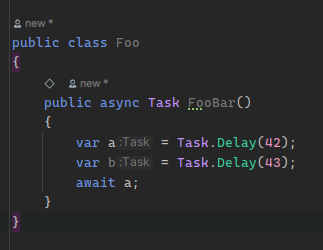
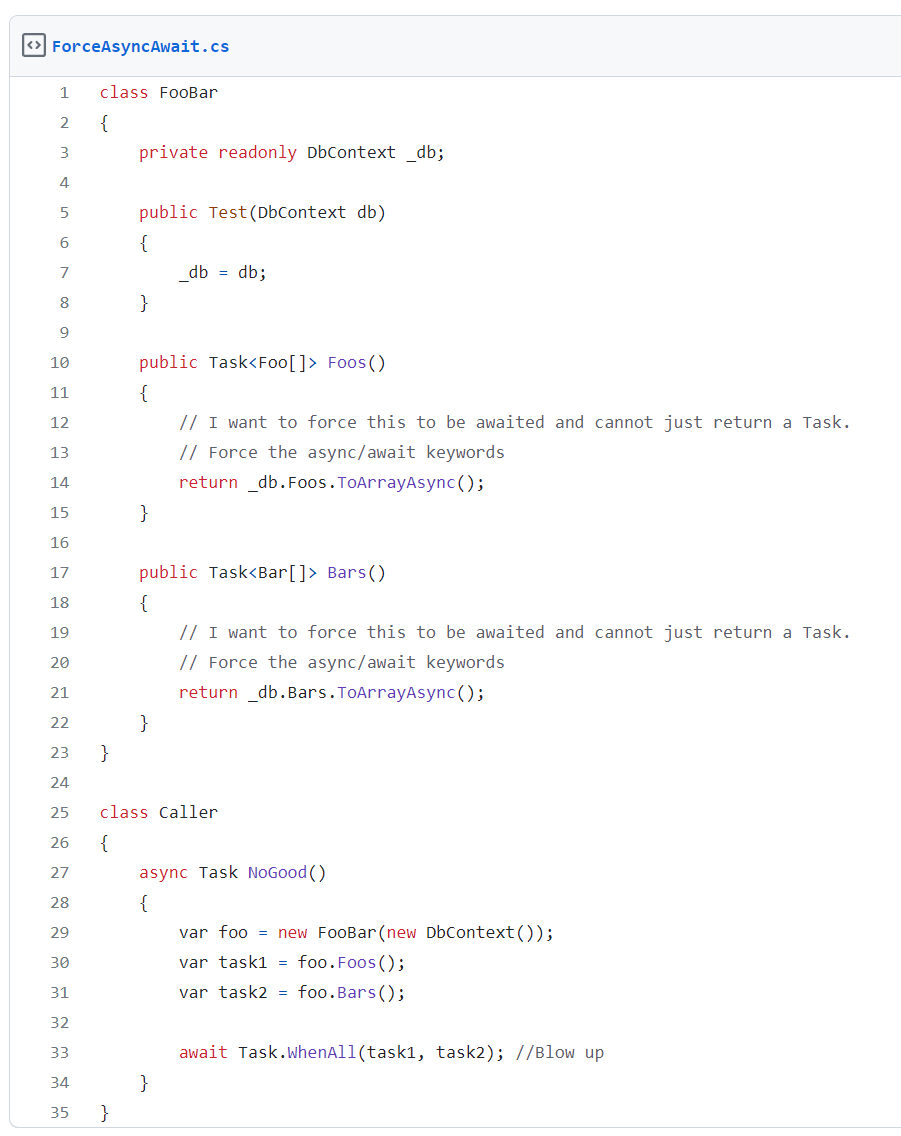
The way the question is presented is a bit confusing. When you say "cannot just return a Task" this does not make sense, an awaited task inside the method, still becomes an un-awaited task to the caller. I assume what you really want is to force the await the calls from the NoGood() method. I've also wanted something like this a and went as far as to attempt writing my own analyzer. However, I was not successful. Essentially you would have to trace the usage and flow of any created task in your application to ensure that it is ultimately awaited somewhere. In your example it's even harder, because the task IS ultimately awaited, but you chose to await them non-sequentially. In this case, I don't think it makes any sense to have an analyzer "catch" this for you, since Task.WhenAll() shows clear intent from the developer that they wanted and expected for these tasks to be potentially concurrent. I think it may be possible to write an analyzer limited to a particular method to ensure all created tasks are awaited, but it isn't as trivial as one thinks it should be. Here's the simplest code I could come up with that demonstrates the problem of forgetting to await a task, but no warning:
Daniel Tabuenca tweet media
English
0
0
1
161
Daniel Tabuenca
Daniel Tabuenca@dtabuenc·
TPL/Parallel.invoke is almost never the right approach to an I/O bound problem. If all the requests are going to the same server, it will just increase the contention and locking between the transaction and decrease overall throughput. Only parallelize things when you are CPU-bound or when each parallel request can go to a different server.
English
0
0
0
8
Omid Eidivandi
Omid Eidivandi@Eidivandi·
@robconery But if you have enough resources and you master how the database will behave, Parallel.invoke, Actually take care of dbcontext lock , as two use of dbcontext just raise an exception,
English
1
0
0
27
Daniel Tabuenca
Daniel Tabuenca@dtabuenc·
@robconery Unless your database is sharded, parallelization won't help you much, your bottleneck on an insert like this is going to be I/O not CPU. You will be limited by the disk I/O available on your database server. Multiple threads will not usually speed things up.
English
1
0
5
817
Daniel Tabuenca retweetledi
Damian Płaza
Damian Płaza@raimeyuu·
Damian Płaza tweet media
ZXX
3
18
79
6.8K
Daniel Tabuenca
Daniel Tabuenca@dtabuenc·
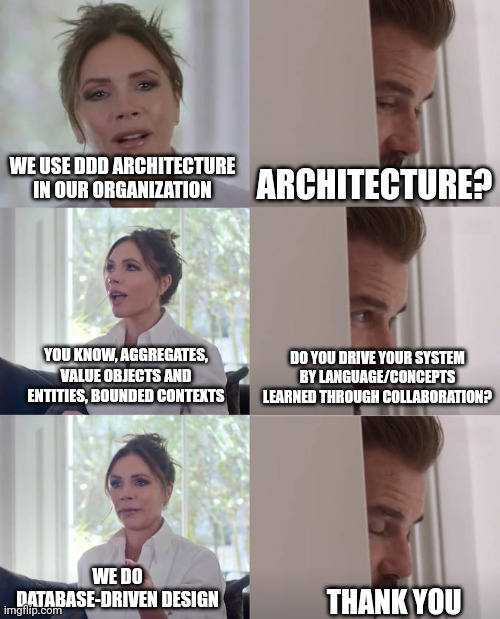
A recent post by @codeopinion made me realize that DDDers often miss the point . The key goal is to bring solutions in harmony with the problem domain. Instead, they twist the problem domain to conform to a handful of predetermined implementation patterns. #DDD
English
0
0
2
159
Daniel Tabuenca
Daniel Tabuenca@dtabuenc·
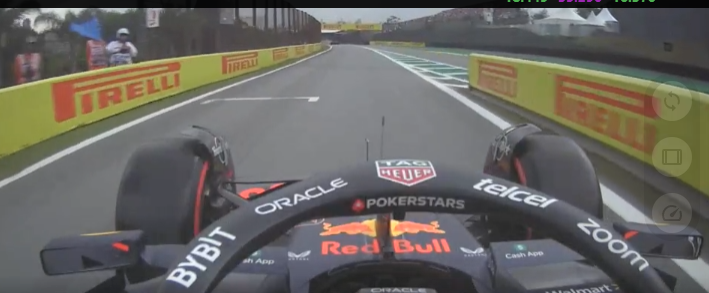
Is it just me or does watching the #VegasGP practices feel a lot like riding space mountain with the lights on?
English
0
0
0
306
Daniel Tabuenca
Daniel Tabuenca@dtabuenc·
I think the problem with the tesla was really mostly the driver not picking the right lines or having good off-road throttle control. Tesla can help on the software end help give the most torque without spinning the wheel (simulating high gear ratio). Once tuned, it could be a traction beast!
English
0
0
1
1.7K
Daniel Tabuenca
Daniel Tabuenca@dtabuenc·
@limpektokcock @CS67719431 The speed he was going was like 50-60MPH. These are the some of the best drivers in the world routinely handling speeds passing each other at 200MPH+. The only way there's a crash here is if the other cars pull off to the grass suddenly without checking mirrors.
English
1
0
1
30
Petai
Petai@petaitoksf1·
@CS67719431 Yeah that speed he was going was bad. What if he caused a crash? Even if it would be the first car’s fault but he is the culprit that caused it. Very irresponsible. No wonder his supporters are all so demoralized
English
2
0
2
1.1K
Petai
Petai@petaitoksf1·
I’m not gonna hold back on this This is so wrong by Max from all angles/ aspects That’s fuccen dangerous and irresponsible driving This is the kinda attitude FIA shaped over the course of time F1 with him breaking all the rules is a joke
English
651
199
2.9K
901.5K
Daniel Tabuenca
Daniel Tabuenca@dtabuenc·
@omg_tesla I'm sorry, but the kind of trails that would require large approach/departure angles you are just not going to ever be able to do in a long wheel-base truck or SUV with independent suspension.
English
0
0
1
467
OMG_RIVIAN
OMG_RIVIAN@omg_tesla·
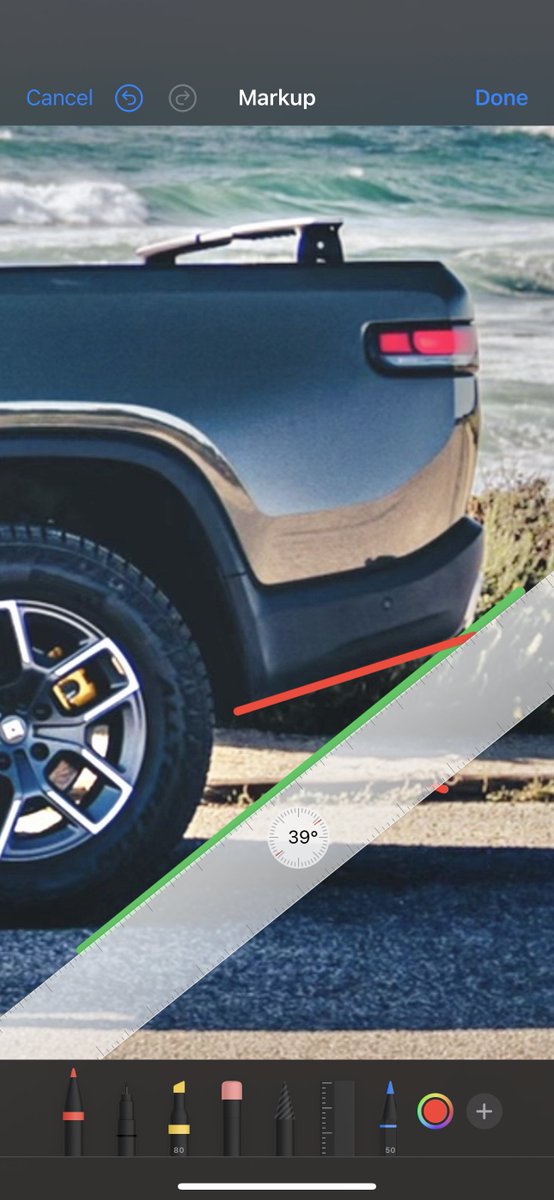
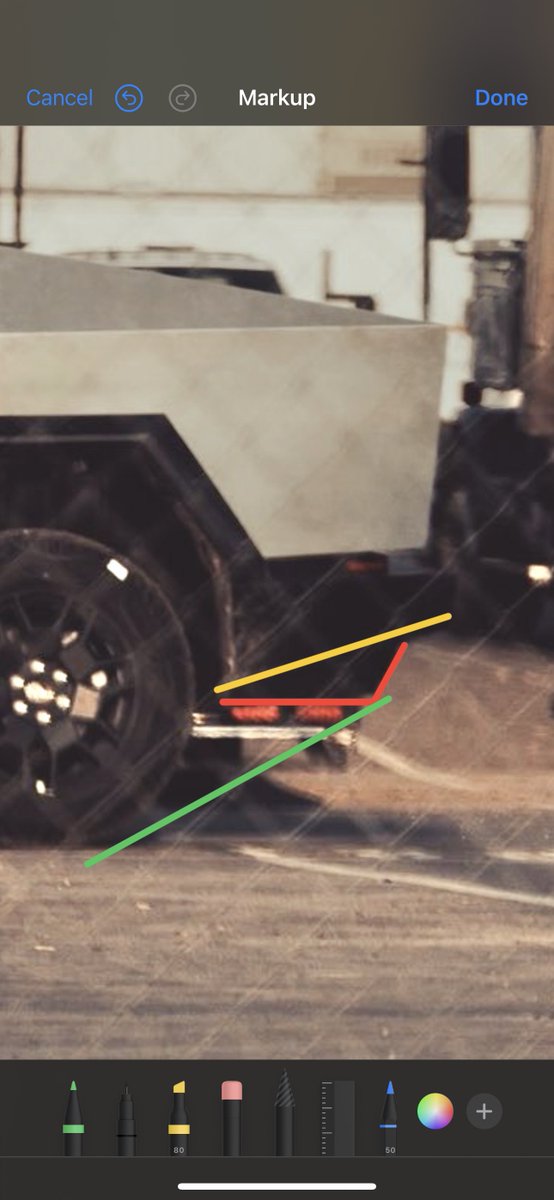
Let’s quick talk about departure angle as this seems to be a very important part when off roading. It is important to have a high angle because the lowest part of the rear bumper is what’s going to strike the ground when you are climbing up or departing from an obstacle. Here is an illustration of the Cybertruck and a Rivian Red is what the ground is going to make contact with, Green being the ground. This is worse case scenario. As you can see from the illustration if Yellow was the case on the Cybertruck, that is better than Red on the Cybertruck if the red was removeable. Still not the best, but the Rivian R1T has a higher angle than the Cybertruck in the highest settings. The Rivian however is only sitting on High not highest (if my memory serves me correctly) Suspension Height doesn’t change much of the angle, the length of where the end of the tire and body of the vehicle matters. R1S has a higher angle than the R1T. This is a good video that goes in depth about Approach, Break over, and departure angle 📐
OMG_RIVIAN tweet mediaOMG_RIVIAN tweet mediaOMG_RIVIAN tweet mediaOMG_RIVIAN tweet media
ALilofThisnThat@ALilofThisnTha1

@omg_tesla 🤔...the #Rivian is great offroad, unfortunately the #Tesla #Cybertruck would damage its front and rear bumpers even at its highest suspension setting

English
21
5
64
143.8K
Daniel Tabuenca
Daniel Tabuenca@dtabuenc·
You have to be really careful, a lot of the time you are simply creating the illusion of lose coupling by just adding layers of indirection. Often this makes you actually more coupled, having to propagate changes across many layers. Mediatr does not reduce coupling it just adds one additional layer. I urge developers to stop putting so much emphasis on lose coupling, because most developers don't fully grasp the true value of lose copuling. The way I like to think about it is that you can't really reduce coupling, and most attempts that focus on reducing coupling create artificial layers, projects, interfaces, indirection, etc... while still being completely coupled top to bottom across them. If you want to really improve your architecture design focus on organizing your coupling. The more coupled things are to each other the more they belong close together, (same class, same module, same project etc....). The less coupled they are, the further apart they can be. This concept is "cohesion" and in my opinion is the more important side of "lose coupling, high cohesion" best practice. What I see most people do is destroy cohesion, by taking things that are highly coupled and trying to put them as far apart as possible (through adding layers, mediatr handlers, separate projects, separate microservices etc....). This often produces low cohesion while actually increasing coupling in practice. This is the opposite of what you want to go for.
English
0
0
0
27