Sabitlenmiş Tweet
Brad Lamphere
2.7K posts
Brad Lamphere
@dumbfish_blam
Trying to convince talented biology undergrads to make an economically irrational decision

Katılım Ocak 2014
336 Takip Edilen165 Takipçiler
Brad Lamphere retweetledi

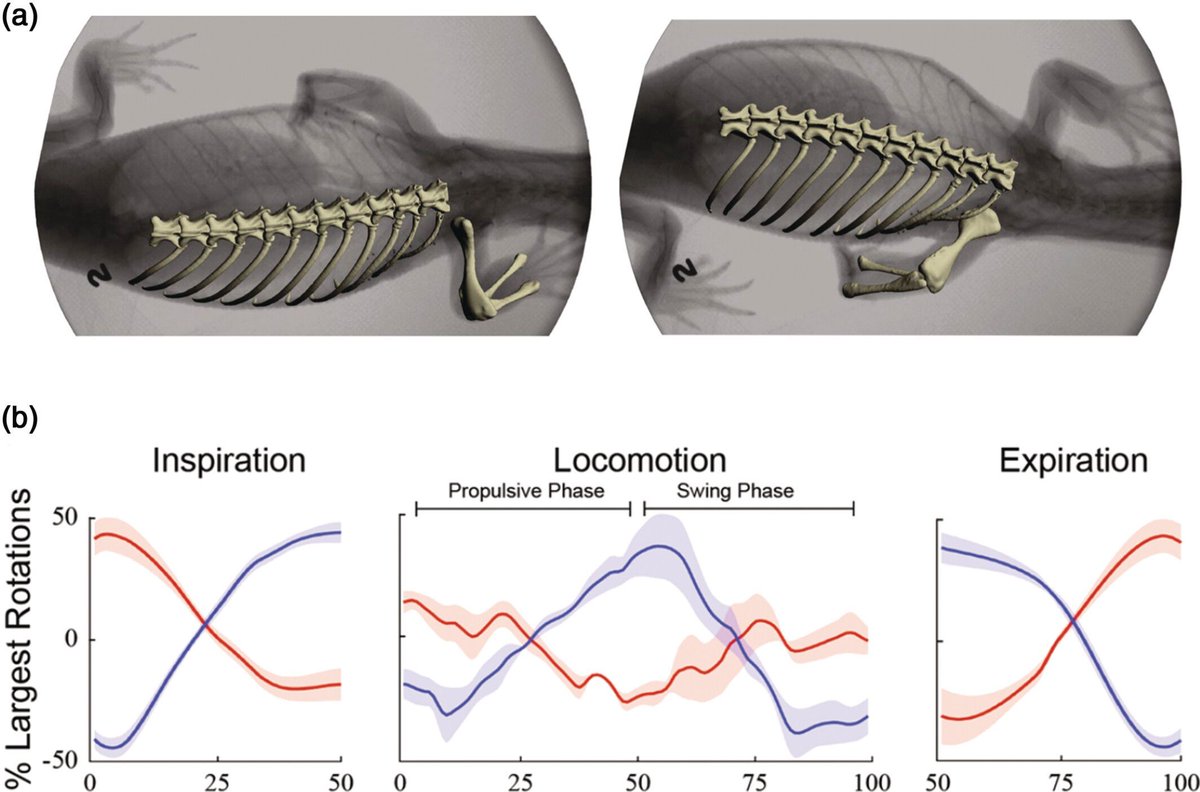
New hypothesis suggests costal breathing in amniotes evolved gradually as buccal pumping waned—driven by shifts in terrestrial feeding. A fresh take on how early amniotes learned to breathe.
Elizabeth Brainerd: anatomypubs.onlinelibrary.wiley.com/doi/10.1002/ar…

English
Brad Lamphere retweetledi

Our new paper is out today.
Perfect mimics (Aspidontus taeniatus) approached prey targets at very close distance "sneaky tactics", whereas non-mimics (Plagiotremus tapeinosoma) rapidly attacked from a long distance "hit-and-run tactics."
…lpublications.onlinelibrary.wiley.com/doi/10.1111/jz…

English
Brad Lamphere retweetledi

In what may be one of Earth’s craziest forms of mimicry, researchers in 2023 reported a species of rove beetle that grows a termite puppet on its back to fool real termites into feeding it.
Learn more during #InsectWeek: scim.ag/40kQtbI

English
Brad Lamphere retweetledi

"Adaptive radiations" are almost always complicated, often involving introgression from external lineages. Case in point: Malawi cichlids.
researchgate.net/publication/39…

Fish in the News@FishInTheNews
Just published - Researchers have discovered that five large chromosomal inversions contributed to Lake Malawi cichlid diversity, akin to finding Mother Nature's cookbook for a "Quick Colourful Fish Salad!" 🔒 science.org/doi/10.1126/sc… Sci-comm post - myscience.org/en/news/2025/h…
English
Brad Lamphere retweetledi

Link to the program, which aired this morning!
bbc.co.uk/programmes/m00…
English
Brad Lamphere retweetledi

Underwater kelp forests are losing a turf war nature.com/articles/d4158…
English
Brad Lamphere retweetledi

Brad Lamphere retweetledi

Amazing figure made with the help of #Rstats #phytools in "Adaptations to marine environments and the evolution of slow-paced life histories in endotherms" by Sol et al. in @NatureComms: doi.org/10.1038/s41467….

English
Brad Lamphere retweetledi

New paper from the lab: Our teeth arose as sensory organs on the outside of the body of ancient jawless fish.!! Congrats to Yara Haridy and the team!
Open Access Paper: nature.com/articles/s4158…
News and Views: nature.com/articles/d4158…
Background and video: phys.org/news/2025-05-t…
English

@JoeViturbo @SandyofCthulhu To my knowledge, the reason it’s not used much by ecologists today is that too many species, like oak trees in the thread, don’t fit either strategy. Fast- slow life histories work better as a framework.
English

@SandyofCthulhu The last time I brought up r/K selection theory I was informed that it is an old theory that is no longer supported by many people.
I was taught r/K- and I don't know what the replacement is supposed to be or how it is any better
English

Here's why dinosaurs would be a real problem for us today if they got loose. Note that the following facts are not what was emphasized in the Jurassic Park movies. Dinosaurs have a completely different ecology from large mammals.
Mammals in general, particularly large mammals, are what we call K strategists. They breed quite slowly but have intensive parental care and live a long time. Take a hippo for example - it only has 1 baby at a time, usually every other year. But imagine trying to get to that hippo calf to eat it!! Once it grows up, that hippo lives 40-50 years. We think of this as the "normal" situation, because it's what we are too - we are in a sense the ultimate K strategist in nature.
1/

English
Brad Lamphere retweetledi

Neat! The article by @AbbyGraceDrake, @JLosos, et al. (and in which I played a very small role) made the cover of @PNASNews! "Copy-cat evolution: Divergence and convergence within and between cat and dog breeds." doi.org/10.1073/pnas.2…

English
Brad Lamphere retweetledi

#ActNow: Tell Virginia decision-makers to ensure a strong and healthy future for the Rappahannock River by implementing smart, science-based water management solutions. ⬇️ act.americanrivers.org/page/81916/act…
English
Brad Lamphere retweetledi

The species-area relationship explained: why does the species area relationship exhibits three phases across spatial scales? Our paper solving this decades old mistery is out in @NatureComms. A thread👇1/#

English
Brad Lamphere retweetledi

An essential paper, one that will guide conservation and restoration for landscape connectivity at local to global scales. #body-ref-R17" target="_blank" rel="nofollow noopener">science.org/doi/10.1126/sc…
English
Brad Lamphere retweetledi

The sensory neurons of touch are a quirky cast of characters. The neuroscientist David Ginty, the “emperor of touch,” has gotten to know our tactile neurons better than anyone else ever has. quantamagazine.org/touch-our-most…

English
Brad Lamphere retweetledi

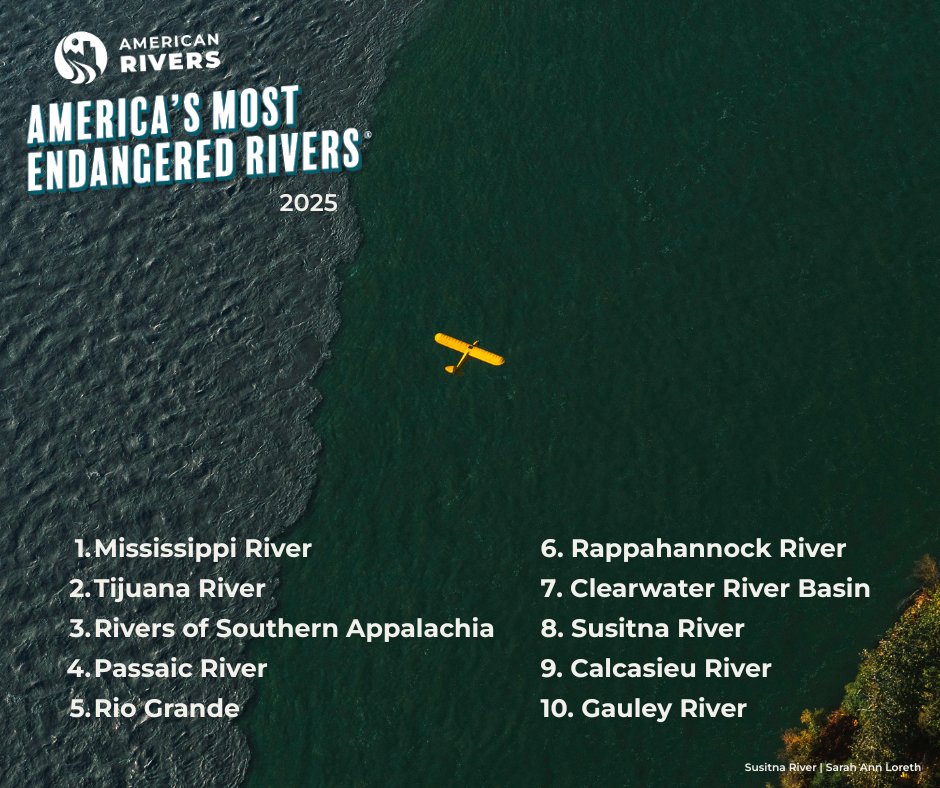
🔊 America’s Most Endangered Rivers® of 2025 report is here!
From Alaska to New Jersey, whether threatened by drought, mining, logging, or flooding, these 10 rivers all have one thing in common: they are all at a tipping point, facing an urgent decision in the coming months.
Take action below and speak up for greater investment in rivers! mostendangeredrivers.org/?utm_campaign=…

English
Brad Lamphere retweetledi