Duncan Webb

362 posts

Duncan Webb banner
Duncan Webb

Duncan Webb

@dunc_webb

Development economist interested in discrimination, human capital, social change | @PSEinfo ⇒ @PrincetonEcon ⇒ @NovaSBE

Katılım Ocak 2012
490 Takip Edilen829 Takipçiler
Sabitlenmiş Tweet
Duncan Webb
Duncan Webb@dunc_webb·
Excited to present my JMP: Silence to Solidarity My job market paper studies whether communication between discriminatory people can lead to large reductions in discrimination 🔗 bit.ly/webbjmp 👇for more
Duncan Webb tweet media
English
2
53
228
79.1K
Duncan Webb
Duncan Webb@dunc_webb·
@aniketapanjwani OK I'm sold that I should migrate to Codex - but it's hard to do given all my custom skills and agents that use the language of Claude (the tools, the agent swarms, etc.) Is there a way to ease this process? And to easily switch back? Beyond using Claude Code to do it ofc
English
1
0
0
118
Aniket Panjwani
Aniket Panjwani@aniketapanjwani·
If you feel “late” to agentic coding bc you haven’t yet used Claude Code, you can now leapfrog every CC user with high switching costs by picking up Codex Imo gpt 5.4 is to opus 4.6 as opus 4.6 is to opus 4.1 (not 4.5) It’s a big difference
English
7
4
62
10K
Duncan Webb retweetledi
D. Yanagizawa-Drott
D. Yanagizawa-Drott@YanagizawaD·
We should celebrate this kind of public good provision by @GoogleResearch 🙌 It’s a private company after all. Not @ERC_Research… not @USAID… not @WorldBank… not @Sida, etc. These orgs are not investing massively into LLM-complementary projects. There’s a scenario where Africa gets left in the dust. Rich countries enter escape velocity. Because of the LLM-complementary stuff (data, infra) is in Global North. As someone who is trying to build and experiment with LLM-based solutions for social impact in places like Ghana and Kenya, the “language constraint” is massive. So, sadly, you end up building for English or French speaking populations, mostly in Urban areas.
English
1
15
117
13.5K
Duncan Webb retweetledi
Ryan Briggs
Ryan Briggs@ryancbriggs·
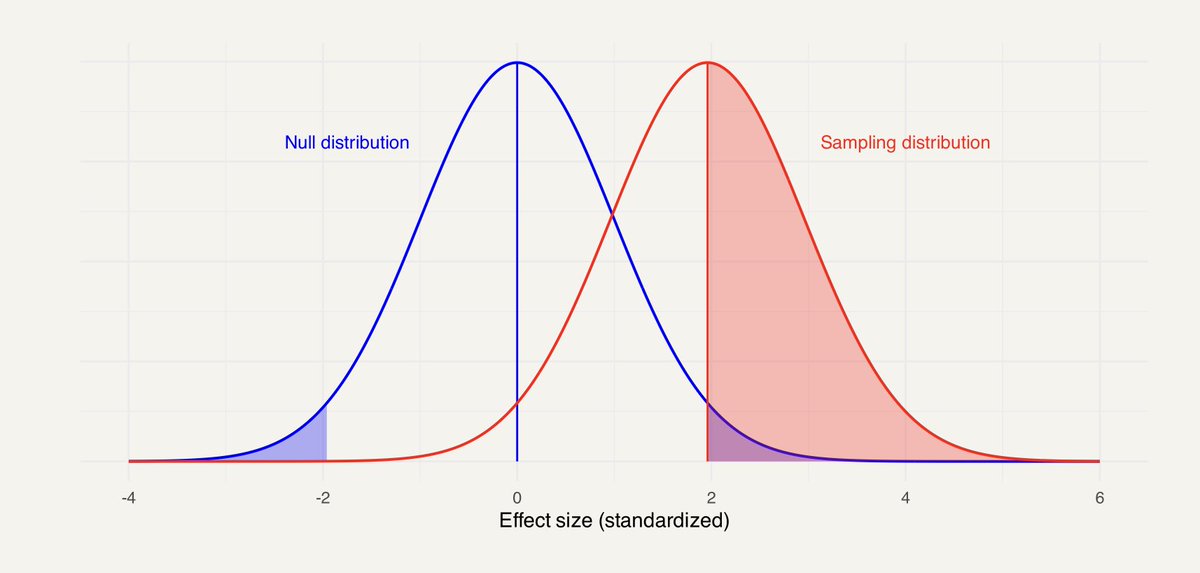
I wrote a short blog post that describes selection on significance in plain language and then proposes and criticizes two alternatives (selection on precision and registered reports). ryancbriggs.net/blog/the-probl…
Ryan Briggs tweet media
English
2
12
51
4.6K
Duncan Webb
Duncan Webb@dunc_webb·
This is (provisionally) amazing news, and could save many lives
Duncan Webb tweet media
English
1
0
0
43
Duncan Webb retweetledi
Paul Novosad
Paul Novosad@paulnovosad·
I wrote a decent paper with AI. It took me about 3 hours from start to finish, including an interactive choose-your-own-border-RD-adventure, it’s a what are we even doing here kind of day.
Paul Novosad@paulnovosad

I was writing about land reform in West Bengal last night and was curious if it had persistent effects on the ownership distribution. So I did what anyone would do, I* wrote an academic paper on it Turns out — yes! 1/

English
26
75
555
202.4K
Duncan Webb retweetledi
Paul Novosad
Paul Novosad@paulnovosad·
Convergence between rich and poor countries has stopped. Poor countries are no longer catching up. A sea change. from @JustinSandefur
Paul Novosad tweet media
English
16
57
191
34.2K
Duncan Webb retweetledi
Saloni
Saloni@salonium·
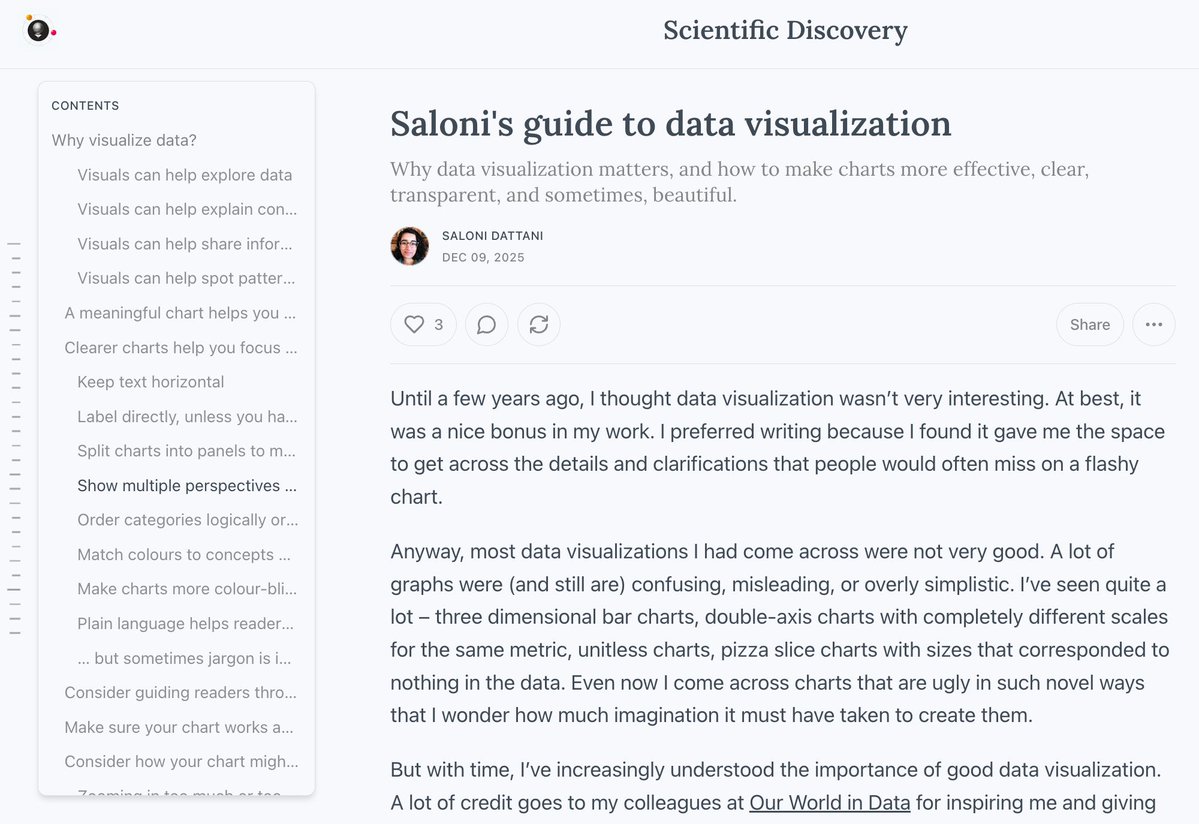
Big new blogpost! My guide to data visualization, which includes a very long table of contents, tons of charts, and more. --> Why data visualization matters and how to make charts more effective, clear, transparent, and sometimes, beautiful. scientificdiscovery.dev/p/salonis-guid…
Saloni tweet media
English
15
208
1.3K
213.5K
Duncan Webb retweetledi
Econometrica
Econometrica@ecmaEditors·
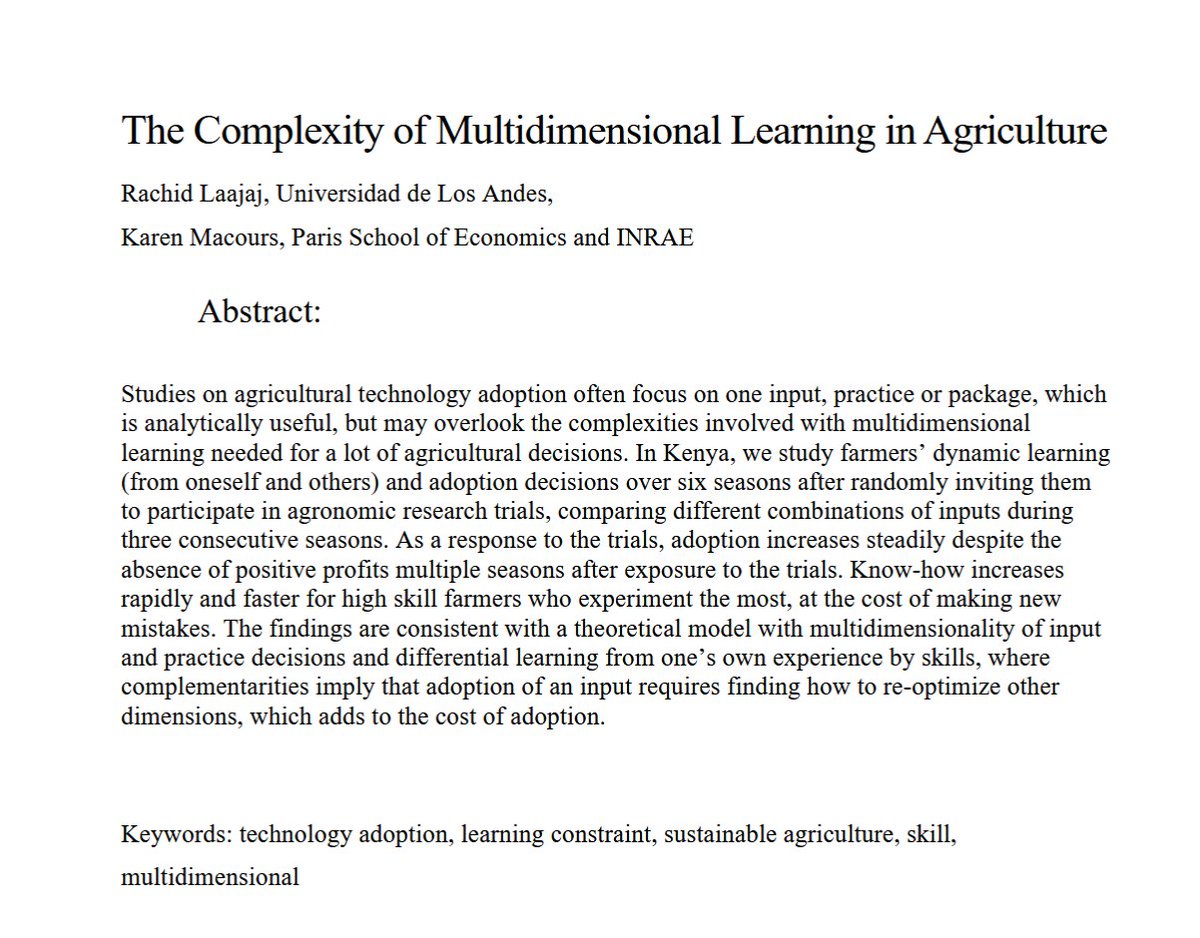
Using random assignment to agronomic trials and six seasons to study dynamic learning, this paper shows how multidimensionality of farming decisions - and differential learning from own experience by skill - led to costly re-optimization and slow adoption. econometricsociety.org/publications/e…
Econometrica tweet media
English
1
25
80
13.4K
Duncan Webb
Duncan Webb@dunc_webb·
🔥Very cool paper showing that women in India are way more likely to take up a job (↑29%) in a female-only workplace, and that this can be explained by husbands' jealousy/desire for control. These are massive effects, equivalent to 2.5x increases in wage
Kailash Rajah@krajah123

Excited to post the latest version of my JMP: The female labor supply constraints of spousal jealousy bit.ly/4nn9apn I use two field experiments to study the role of spousal jealousy in constraining married women’s employment. More below 👇

English
0
1
6
701
Duncan Webb retweetledi
Kailash Rajah
Kailash Rajah@krajah123·
Excited to post the latest version of my JMP: The female labor supply constraints of spousal jealousy bit.ly/4nn9apn I use two field experiments to study the role of spousal jealousy in constraining married women’s employment. More below 👇

Kailash Rajah tweet media
English
7
59
218
121.2K
Duncan Webb retweetledi
Our World in Data
Our World in Data@OurWorldInData·
In the last decades, the world has made fantastic progress against extreme poverty. In 1990, 2.3 billion people lived in extreme poverty. Since then, the number of extremely poor people has declined by 1.5 *billion* people. This means on any average day in the last 35 years, about 115,000 people left extreme poverty behind. Leaving the very worst poverty behind doesn’t mean a life free of want, but it does mean a big change. Additional income matters most for those who have the least. It means having the chance to leave hunger behind, to gain access to clean water, to access better healthcare, and to have at least some electricity — for light at night and perhaps even to cook and heat. Can we expect this rapid progress to continue? Unfortunately, we cannot. Based on current trends, progress against extreme poverty will come to a halt. As you can see in the chart, the number of people in extreme poverty is projected to decline, from 831 million people in 2025 to 793 million people in 2030. After 2030, the number of extremely poor people is expected to increase. To understand why the rapid progress against deep poverty will not continue into the future, we need to know why the world made progress in the past. Extreme poverty declined in the last three decades because, back in the 1990s, the majority of the poorest people on the planet lived in countries that subsequently achieved very fast economic growth. In Indonesia and China, more than two-thirds of the population lived in extreme poverty. But these economies then grew rapidly, so that by today, the share has declined to less than 10%. Other large Asian countries — including India, Pakistan, Bangladesh, and the Philippines — also achieved strong growth, and as a consequence, the share living in extreme poverty declined rapidly. Much of the progress happened in Asia, but conditions in other regions improved too: the share living in extreme poverty also declined in Ghana, Cape Verde, Cameroon, Panama, Bolivia, Mexico, Brazil, and many other countries. What is different today is that the majority of the world’s poorest people are stuck in economies that have been stagnating for a long time. Unless the poorest economies start growing, this period of progress against the worst form of poverty is over.
Our World in Data tweet media
English
40
205
786
300.3K
Duncan Webb retweetledi
Jordan Dworkin
Jordan Dworkin@jddwor·
RFK Jr. has proposed directing 20% of the NIH’s budget to replication. That would be orders of magnitude more than we’ve ever allocated to biomedical replication. How much should we actually spend? And how do we ensure the money is well spent? With @IFP, I investigated the ROI of replication and found the optimal level is much lower: 1.4% The basic case for replication is simple: science advances when researchers build on each other’s work. But if 10+% of studies are unreliable, we’ll waste vital resources building on shaky foundations and slow progress towards new cures and innovation. Replication is valuable — but to avoid pulling money away from frontier research, we need to know how valuable it is, and under what circumstances. Our analysis shows that replicating the median paper has negative ROI compared to funding new research. But replications of recent, influential, high-uncertainty studies can provide large returns, sometimes paying for themselves many times over. Applying this model to NIH’s portfolio suggests that ~1.4% of the agency’s budget could be productively spent on well-targeted replications, before hitting negative returns relative to new science. That’s a massive increase from current levels, but far below some proposals. To get this right, mechanism design will be critical. If the agency wants a replication program to provide value, it will need to efficiently identify recent, influential studies; tap into scientists’ intuition about questionable findings; and get money out the door quickly to qualified labs. Early efforts didn’t meet this bar, but there’s reason for optimism: NIH recently launched a replication prize program focused on identifying influential targets and designing strategies for integrating replication into workflows. Replication is a tool for steering effort, not a rival to new discovery. A well-sized and well-scoped program could shore up the foundations of biomedical science and accelerate progress along the field’s most promising paths.
Jordan Dworkin tweet media
English
11
39
150
63K