

dusty71
3.4K posts

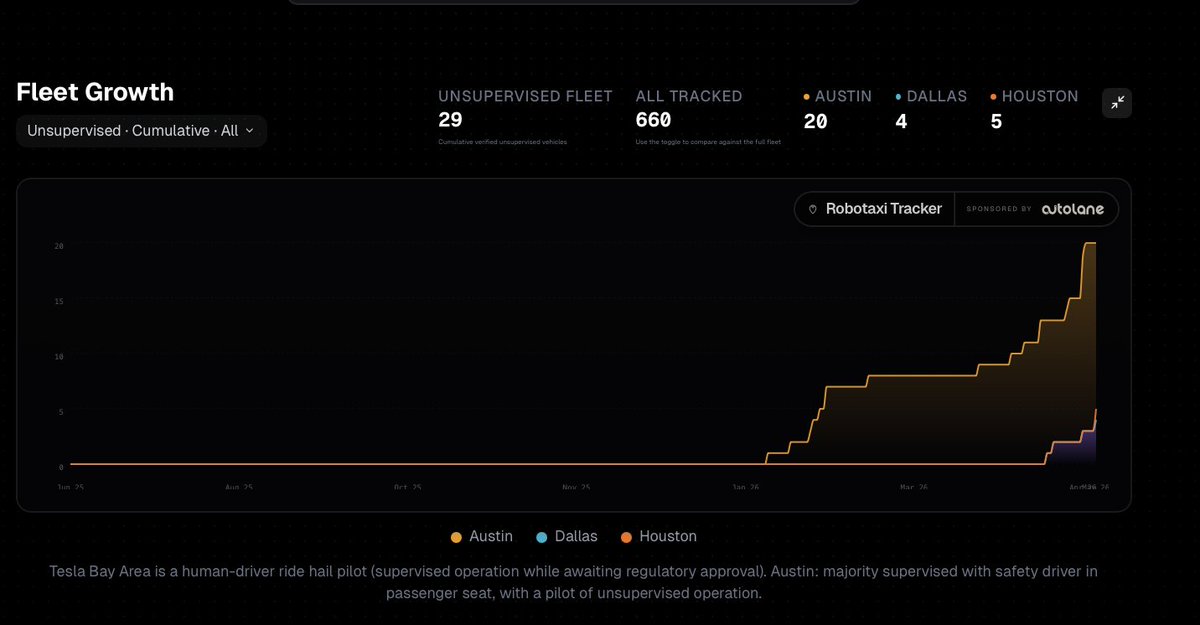
It's confirmed, the third one is Unsupervised. That brings Tesla's total Unsupervised Model Y robotaxi fleet to 29 (from 26).
• Austin: 20
• Houston: 5
• Dallas: 4
(via @RtaxiTracker)
Sawyer Merritt@SawyerMerritt
Another day, another Robotaxi. Tesla has two new Unsupervised Model Y robotaxis to its fleet, one in Dallas and this in Houston. There might be a third as well, in Houston, just need to confirm it's Unsupervised (it likely is).
English
@charlesalexg Prix similaire aux Bolt, EV4, EV5 Leaf etc. Une vidéo pour nous mettre à jour sur les véhicules abordables avant l'arrivée des constructeurs chinois. Ton opinion, sont-ils tous profitables à ces prix?
Français


@TeslaSARA @DriveTeslaca if you don't need the hatch, interior space or towing, get the M3.
English


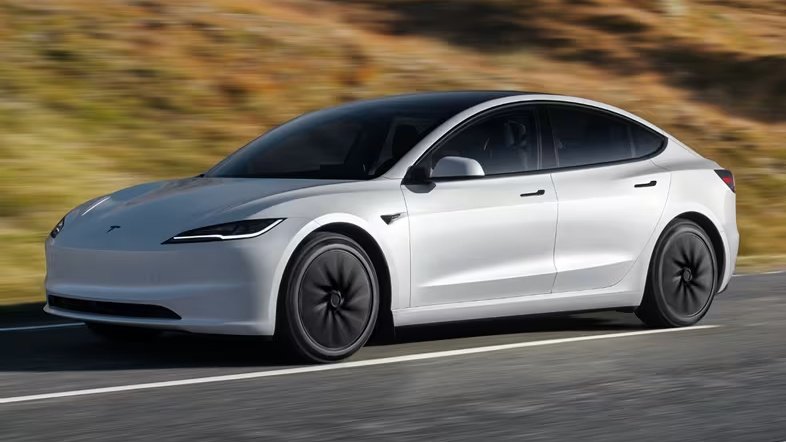
Tesla has updated the 0-100km/h for the new Model 3 Premium RWD in Canada 🇨🇦
Last night it was 4.2s (left), today it is 5.2s (right). Nothing else appears to have changed.


English


@geraldfillion @RadioCanadaInfo C'est fou tous les bienfaits que l'élection de cet homme a sur l'humanité.
Français

Trump aurait-il déclenché une révolution verte malgré lui? via @RadioCanadaInfo ici.radio-canada.ca/nouvelle/22507…
Français



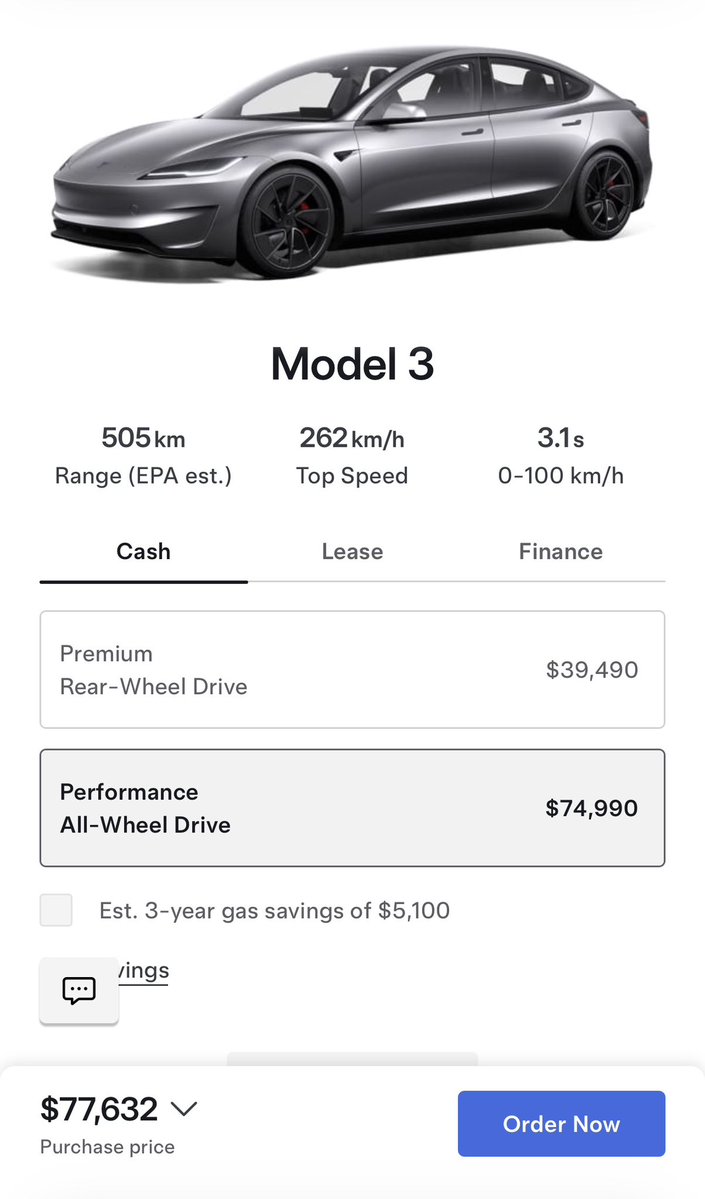
GOOD NEWS 📰 Tesla also slashed the price of the Model 3 Performance in Canada by a massive 17%, dropping it from $89,990 CAD down to a much more competitive $74,990 CAD 🔥
This shift is a direct result of Tesla moving its Canadian supply chain from Fremont to Giga Shanghai. By leveraging lower manufacturing costs and a favorable 6.1% import tariff, Tesla is passing those savings straight to the buyer and completely resetting the value proposition for the M3P.
🔥 The financial breakdown
💰 $15,000 flat savings off the MSRP compared to the previous Fremont-sourced models.
📉 16.6% total reduction in base price, making the top-tier trim significantly more accessible.
🛡️ $25,010 buffer now exists below the $100,000 Federal Luxury Tax threshold, allowing for full options without extra tax penalties.
🔥 Why the supply chain move matters
🌍 Giga Shanghai production offers higher manufacturing efficiency and lower labor costs than the Fremont factory.
📑 6.1% MFN tariff rate is being utilized instead of the standard 100% surtax, likely due to specific trade quotas or regional manufacturing credits.
💵 Direct cost pass-through means the logistics savings are being used to capture market share rather than just padding margins.
🔥 This move effectively ends the era of the "luxury-priced" M3P in Canada, positioning it as a high-value performance option that undercuts almost every rival in its class.
Ming@tslaming
GOOD NEWS 🇨🇦 Tesla just quietly dropped a bombshell on the North American auto market: a brand new Model 3 Premium RWD in Canada starting at just $39,490 CAD (under $29,000 USD) 🔥 That immediately makes it the most affordable new vehicle Tesla has ever sold in the region. And Tesla didn't strip out the features to hit that number. It still comes fully equipped with the Premium interior. This forces a completely new conversation when you compare it to traditional legacy options. The sticker price is only half the story, because the sheer operational efficiency of the Model 3 makes it significantly cheaper to own over a standard five-year window. Here is how the exact math breaks down for a typical driver covering 20,000 kilometers a year: 🏷️ The upfront gap: The base 2026 Toyota Camry Hybrid SE FWD starts just over $38,100 CAD. The Model 3 is barely $1,300 more off the lot. ⛽ Annual gas cost: That Camry Hybrid will cost you roughly $1,650 CAD at the pump every year. ⚡ Annual charging cost: Charging the Model 3 at home on a standard rate costs just $330 CAD, giving you an immediate energy savings of over $1,300 CAD annually. 🔧 Maintenance savings: Eliminating oil changes, spark plugs, and brake pad wear keeps an extra $300 CAD in your pocket every single year. 📈 The 5-year winner: Factoring in the $1,600 in annual operational savings and subtracting the slight MSRP difference, the Model 3 undercuts the Camry Hybrid by nearly $6,700 CAD in total cost of ownership. We are finally witnessing genuine EV price parity achieved through pure manufacturing scale and supply chain efficiency. It will be fascinating to watch how fast legacy hybrid buyers pivot, and whether this Giga Shanghai pricing strategy eventually finds a path into the US market.
English
@snapshotcapital @WallStreetMav They elected Karen Bass, that's pretty dumb.
English

@WallStreetMav Oh yeah the corny dude cosplaying as a poor person “living in an airstreamer” bc his expensive house got burned down in the rich town he was living in 🤡🤡. People can’t be that dumb and fall for this nonsense
English

I never thought I would write this post.
I hope Spencer Pratt wins and becomes mayor of Los Angeles.
He has totally rebuilt his reputation from his days on reality TV.
English
English

@wholemars @TeslaCharging My wife has occasionally had to use a men’s room because the women’s is to crowded or closed, and she says that at least in bathrooms women are the real pigs, not men. Her words, not mine.
English

@Polymarket You were laughing when Tesla or SpaceX had Ford Lighting and Connect as company trucks. Nothing wrong with them being Cybertrucks. Are you upset when Rivian sells half it's production to Amazon.
English

JUST IN: Tesla reportedly made $573 million from selling products to SpaceX & xAI last year.
English
@michaelsin3000 @DriveTeslaca @DevinOlsenn @SDembraski It should have all the recent upgrades. Autopilot does not do laine keep assist anymore. Get FSD.
English

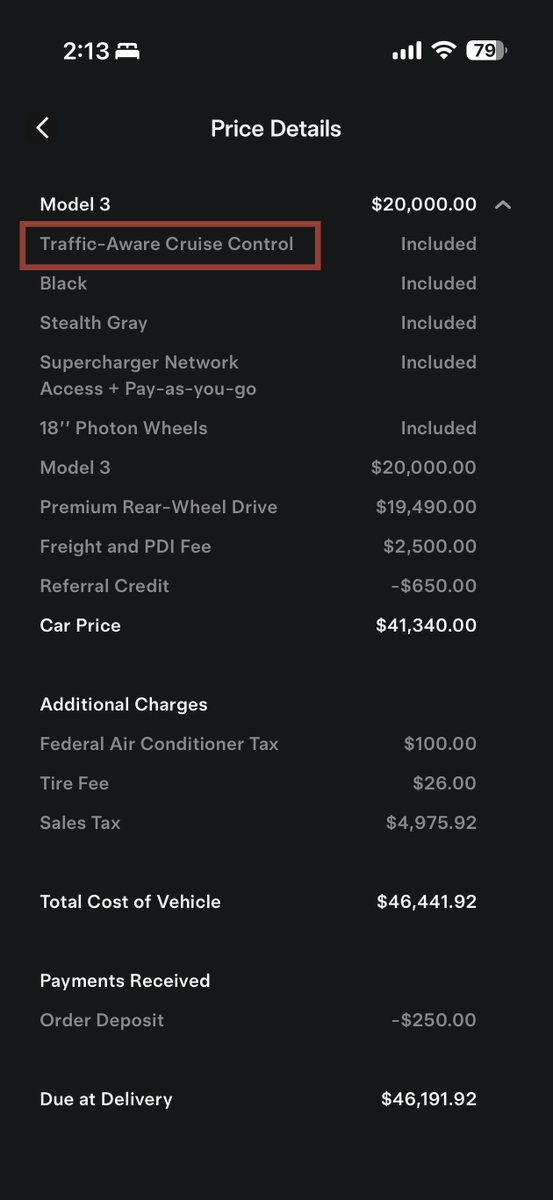
Ordered the $39K🇨🇦 Model 3. I still it’s still an upgrade from my legacy HW4 2024 MY RWD? Seems like there’s no autopilot and only TAAC? Wish I knew before placing the order. Also no idea if it has front bumper camera and black headlines?
@DriveTeslaca @DevinOlsenn @SDembraski @Tesla
English
@JackBeTrader @SawyerMerritt What do you think your grandfather drove back in the day. And the tires were rock hard.
English

@SawyerMerritt RWD. Fuck that in snow. It snows here. Every year. Everywhere
English
Tesla has launched a new Model 3 lineup in Canada, introducing the Model 3 Premium RWD starting at $39,490 CAD (that converts to just $29,000 USD!).
Tesla has also cut the Model 3 Performance price by 17% to $74,990 CAD (from $89,990).
The Model 3 Premium RWD trim is about 50% cheaper than the previously lowest-priced Model 3 Long Range ($79,990 CAD) in Canada, which has just been discontinued. The price to get into a Tesla just got a lot more affordable in Canada!

English
@coldenvy @SawyerMerritt because only cars manufactured in countries which have a free trade agreement with Canada are eligible to the subsidy.
English

@SawyerMerritt Anyone knows why it doesn't qualify for the federal rebate?
English
@TeslaLoverGirls and unlike many other EVs you can maintain highway speeds.
English

@michaelsin3000 @DevinOlsenn Federal 5k subsidy is only available for cars manufactured in countries with which Canada has a free trade agreement. No free trade with China.
English

New Model 3 Lineup Available in Canada!
These look to be the tariff free imports from China
Premium RWD is $39,490
Performance AWD is $74,990
Anyone here going to get a new Model 3 now?

English

@DevinOlsenn Why is Canada getting cars from china instead of gigatexas?
English
@LimitingThe @grok The vast majority of groceries stores where I deliver, the dock is only open from 7h00 to 17h00. So most trucks are idle at night.
English

What proportion of Semis are idle for at least 6-8 hours per day @grok?
Tesla Charging@TeslaCharging
Our new 125 kW Basecharger is designed for longer dwell times and overnight charging of Semis. It's the "home charging" for heavy-duty fleets. It features a fully integrated design that eliminates the need for a separate AC-to-DC cabinet, simplifying installation. The 6 meter cable offers layout flexibility for all depots. Up to 3 Basechargers can be daisy-chained on a single breaker (sharing 125 kVA) to further reduce installation and operational costs.
English
@FrostedComedian @TeslaCharging But you can only drive 750 miles per day, and to achieve that you must driving has on a highway at 80 mph out west. Then you must stop for 10 hours. On the east cost or if you make a few stops you will do much less before your 10 hours are up.
English

@TeslaCharging so a diesel semi can travel for 1,200-2,000 miles on a full tank ... you are asking to give that up for a 500 mile range AND we have to makw more stops AND businesses will run those stops so I now have to pay them ... the math and incentives do not add up
GIF
English

Businesses can purchase and install Semi chargers, powering electric trucking
- 1.2 MW Megacharger for quick stops
- 125 kW Basecharger for longer stays
Learn more about Semi Charging for Business and pricing: tesla.com/semi-charging-…
English

🇩🇪 VW ID.Polo vs Tesla Model 3 au même prix : le massacre.
🔍 L’ID.Polo électrique coûte aujourd’hui aussi cher que la Tesla Model 3, mais voici la réalité :
• -80 km d’autonomie
• -70 ch de puissance
• -40 km/h de vitesse maximale
• Un petit compact face à une vraie berline familiale
⚠️ En bonus : un entonnoir à 7,90 € pour remplir le lave-glace.
😱 Pendant ce temps, Tesla continue d’améliorer ses voitures par mises à jour logicielles gratuites.
Question simple : qui, en 2026, choisit encore consciemment le VW ?
#Electromobilite #Tesla #VW #Automobile


Français
@EFIEBER_ANDRE Is it compatible with Starlink antennas? Or do I have to purchase new hardware?
English

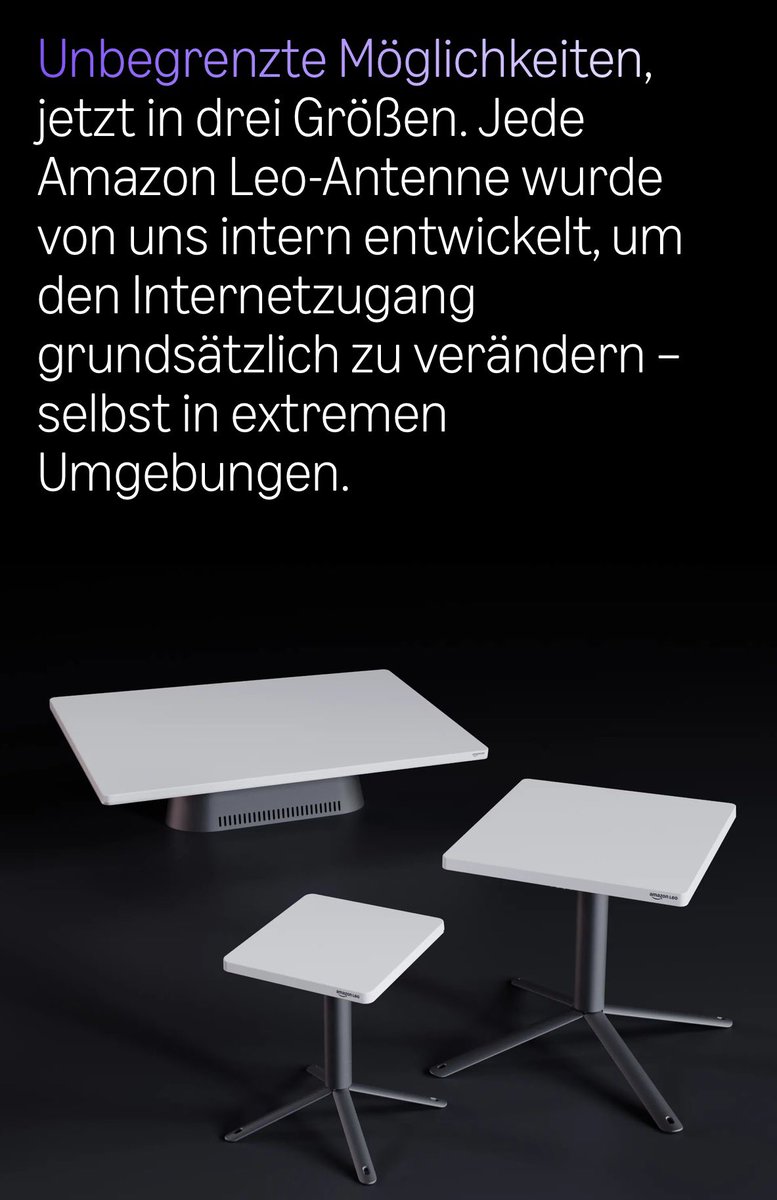
Amazon Leo greift Starlink an.
Aus „Project Kuiper“ wird Amazons eigenes Satelliteninternet in niedriger Erdumlaufbahn.
Geplant sind über 3.000 Satelliten, mehr als 300 sind bereits im All. Der kommerzielle Start wird aktuell für Mitte 2026 erwartet.
Es wird drei Dishes geben:
📡 Nano: kompakt, mobil, bis 100 Mbit/s
📡 Pro: für Haushalte & Unternehmen, bis 400 Mbit/s
📡 Ultra: High-End, bis 1 Gbit/s
Starlink ist weit vorne.
Die Zukunft wird sehr spannend!



Deutsch