Dylan Tull

282 posts

Dylan Tull banner
Dylan Tull

Dylan Tull

@dylantull

𝔠𝔯𝔢𝔞𝔱𝔦𝔳𝔢 𝔰𝔱𝔯𝔞𝔱𝔢𝔤𝔦𝔰𝔱 ⸻ 𝔱𝔥𝔢𝔬𝔯𝔦𝔰𝔱 ⸻ 𝔴𝔥𝔬𝔩𝔢-𝔰𝔶𝔰𝔱𝔢𝔪𝔰 𝔡𝔢𝔰𝔦𝔤𝔫𝔢𝔯

Northern Michigan Katılım Temmuz 2010
1.1K Takip Edilen268 Takipçiler
Sabitlenmiş Tweet
Dylan Tull
Dylan Tull@dylantull·
My first time putting out anything like this, hopefully someone gets some value from it. medium.com/p/d6816bc86ece
English
0
1
5
493
Dylan Tull retweetledi
Grant Kot
Grant Kot@kotsoft·
Orbits from n-body simulation Added sliders for G and softening (so planets don't collapse too easily).
English
8
46
474
35.9K
Dylan Tull retweetledi
Faire-soi-meme
Faire-soi-meme@faire_soi_meme·
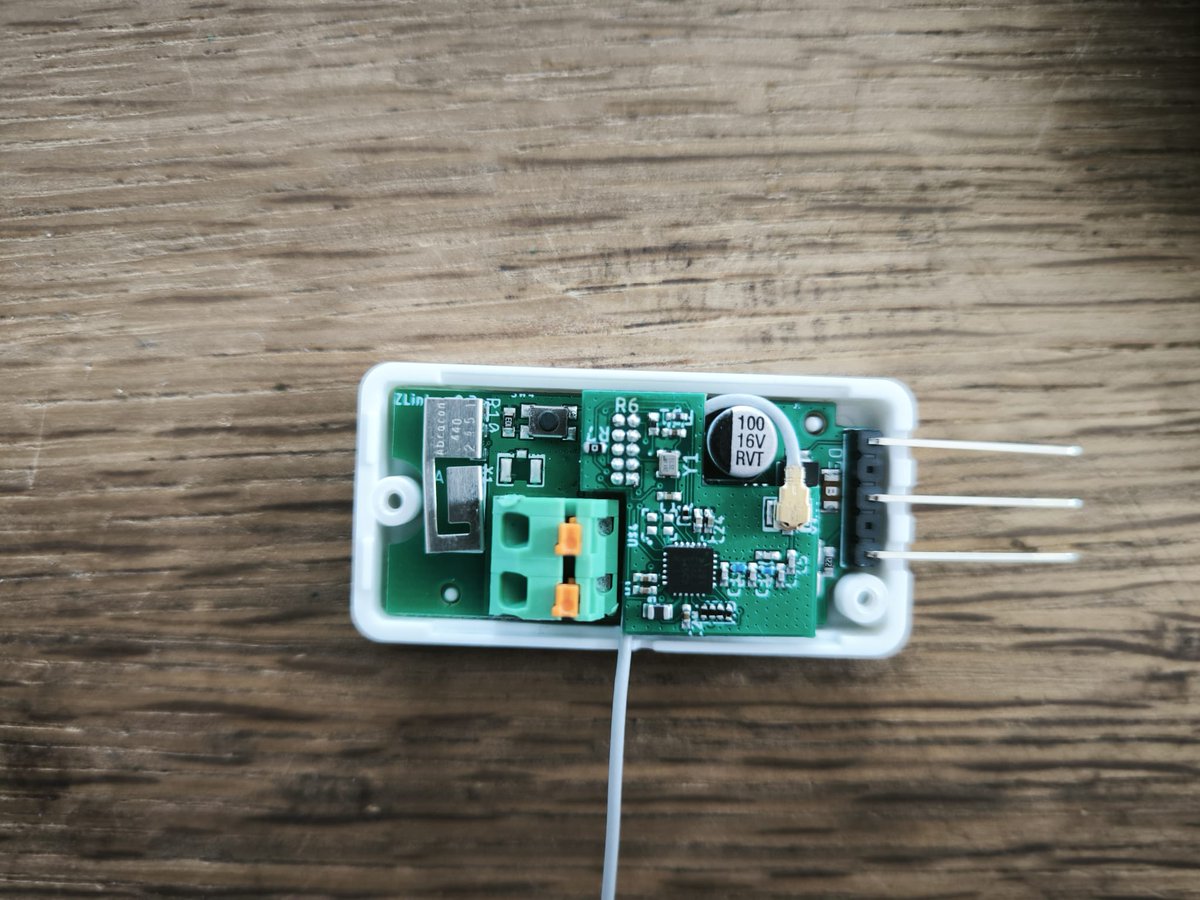
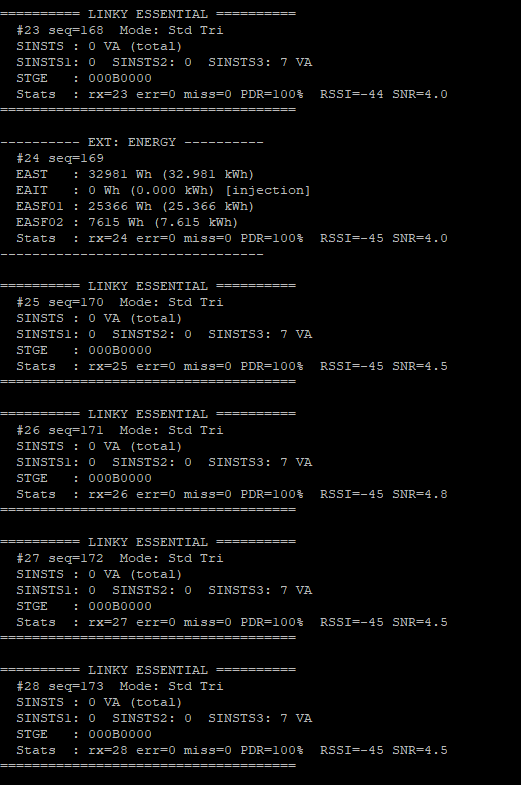
🚀 ZLinky longue distance : nouvelle étape franchie ! Notre prototype LoRa 2.4 GHz vient d'atteindre 200 m de portée en milieu semi-urbain — à travers murs, étages et obstacles 🏠🌳 Et le tout sans pile, sans alim externe 🔋 Le module se contente de l'énergie fournie par la TIC du compteur Linky pour fonctionner ET transmettre ⚡ 📶 Pourquoi LoRa 2.4 GHz et pas le 868 MHz classique ? Parce qu'à 2.4 GHz il n'y a aucune restriction de duty cycle : on transmet aussi souvent qu'on veut, là où le 868 MHz est plafonné à 1 % du temps. Résultat → suivi quasi temps réel, et pas quelques trames par heure. 📊 Ce qui remonte côté box : ⏱️ Toutes les 2 sec → puissance instantanée, mode (mono/tri, historique/standard), alertes du compteur (dépassements ADPS, contacts secs, état STGE…) 🔁 En cycle complémentaire → index d'énergie par tarif (soutirée & injectée), courants & tensions par phase, puissances max du jour, énergies journalières, pointe mobile, configuration tarifaire… 🎯 Il ne reste plus qu'à finaliser le récepteur côté box pour que la solution complète soit prête à l'usage. Stay tuned 👀 #ZLinky #Lixée #Linky #LoRa #LoRa24GHz #IoT #SmartEnergy #SmartMeter #MadeInFrance #ÉnergieConnectée #Innovation
Faire-soi-meme tweet mediaFaire-soi-meme tweet media
Français
14
56
413
25.9K
Dylan Tull retweetledi
Mathelirium
Mathelirium@mathelirium·
A Neural Network Can Grow New Neurons Where It Is Confused? In 1994, Bernd Fritzke published A Growing Neural Gas Network Learns Topologies. He introduced a network that starts small, follows incoming data, and inserts new neurons where its error is highest. In the animation, the fog is the drifting data. The glowing nodes are neurons. The fibers are learned connections. The network grows into a living skeleton of the manifold.
English
22
70
419
37.9K
Dylan Tull retweetledi
Dave Jeffery
Dave Jeffery@DaveJ·
Ask Claude to document and describe the main flows in your app and output in a single page html + json data file. Incredibly useful for humans and the JSON file is very useful for explaining the flow to the LLM when working on new features/bugfixes.
English
133
385
6.1K
476.8K
Dylan Tull retweetledi
Grant Kot
Grant Kot@kotsoft·
having fun with my mini shai-huluds
Socket@SocketSecurity

🚨 UPDATE: Mini Shai-Hulud has crossed from @npmjs into @pypi and is still spreading. Newly confirmed compromised artifacts: @​opensearch-project/opensearch: 3.5.3, 3.6.2, 3.7.0, 3.8.0 (1.3M weekly downloads) mistralai: 2.4.6 on PyPI guardrails-ai: 0.10.1 on PyPI additional @​squawk/* packages on npm guardrails-ai 0.10.1 executes malicious code on import. On Linux, it downloads git-tanstack[.]com/transformers.​pyz, writes it to /tmp/transformers.​pyz, and runs it with python3 without integrity verification. The git-tanstack.​com domain displayed a message signed “With Love TeamPCP,” along with: “We've been online over 2 hours now stealing creds Regardless I just came to say hello :^)” The page also linked to a YouTube video and you can probably guess which one.

English
5
6
95
8K
Dylan Tull retweetledi
CopyRebeldia
CopyRebeldia@CopyRebeldia·
La biología en PDF acaba de morir. Un tío hizo una app donde exploras estructuras 3D como un videojuego. UI: GPT Images 2. Código: Gemini 3.1 Pro. Los libros de texto ya no sirven.
Español
193
1.9K
10.5K
770.9K
Dylan Tull retweetledi
Goodfire
Goodfire@GoodfireAI·
Neural networks might speak English, but they think in shapes. Understanding their rich *neural geometry* is key to understanding how they work – and to debugging and controlling them with precision. Starting today, we’re releasing a series of posts on this research agenda. 🧵
English
306
1.7K
11.1K
3.1M
Dylan Tull retweetledi
Ryan sikorski
Ryan sikorski@Ryansikorski10·
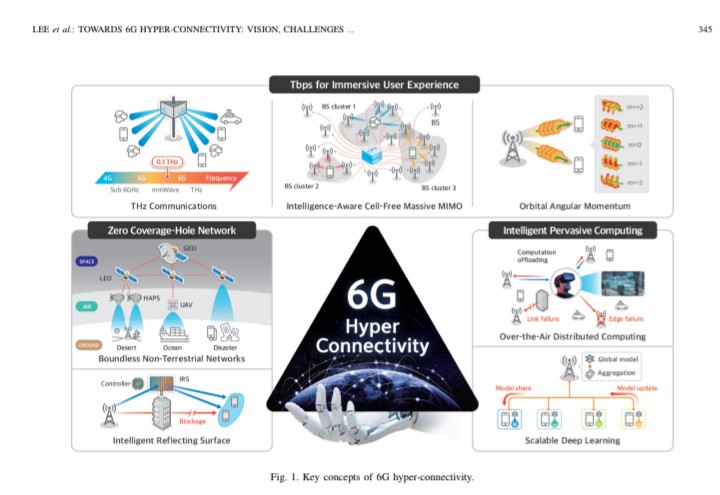
Intelligent holographic radio (IHR) 6gsummit.com/wp-content/upl… Intelligent holographic radio (IHR), a key enabler for 6G, uses reconfigurable holographic surfaces (RHS) and holographic MIMO (HMIMO) to create a smart, programmable wireless environment. By using densely packed, sub-wavelength metamaterial elements, these surfaces manipulate electromagnetic waves to achieve high-capacity, low-latency, and energy-efficient communications, acting as an advanced alternative to traditional, power-hungry phased arrays. researchgate.net/publication/37… Core Components: 1. Metasurfaces Sub-wavelength scattering particles that enable fine-grained manipulation of electromagnetic waves. encyclopedia.pub/entry/21383 2. Digital Coding Algorithms that control the surface in real time to adapt to dynamic environments. pmc.ncbi.nlm.nih.gov/articles/PMC11… 3. Near-field Communication Holographic multiple input multiple output (HMIMO) is particularly useful for capitalizing on near-field propagation characteristics. pmc.ncbi.nlm.nih.gov/articles/PMC11… Key Aspects of Intelligent Holographic Radio: 🔸Programmable Holographic Surfaces (RHS) These are ultra-thin, lightweight, and low-cost surfaces comprising metamaterials that can record and reconstruct electromagnetic fields to shape, steer, and focus signals in real time. arxiv.org/pdf/2212.13666 🔸Holographic MIMO (HMIMO) Unlike conventional MIMO with discrete antennas, HMIMO uses almost continuous surfaces to leverage "ultra-massive" MIMO capabilities, significantly increasing spatial diversity and spectral efficiency. arxiv.org/pdf/1911.12296 🔸Smart Radio Environment (SRE) The technology transforms the wireless channel from a passive, unpredictable medium into a controllable, deterministic environment, enhancing signal propagation and mitigating blockage issues, especially in high-frequency bands like mmWave. link.springer.com/content/pdf/10… Intelligent Omni-Surfaces (IOS) Intelligent holographic radio evolves by integrating Intelligent Omni-Surfaces (IOS) to create hyperspace environments—seamless 360-degree smart radio zones that eliminate coverage dead spots.hal.science/hal-03838247/d… While standard holographic MIMO surfaces are often reflective, IOS-enabled systems simultaneously reflect and refract signals to serve users on both sides of a surface. scispace.com/pdf/intelligen… Full-Dimensional Coverage with Intelligent Omni-Surfaces (IOS): 🔸360-Degree Connectivity By using metasurfaces that support simultaneous refraction and reflection, Intelligent Omni-Surfaces (IOS) ensures full-dimensional coverage, making it possible to provide high-quality signals to indoor and outdoor users concurrently. researchgate.net/publication/37… 🔸Joint Beamforming Intelligent Omni-Surfaces (IOS) works with base stations to perform joint active and passive beamforming. 🔸Holographic Assisted Sensing Researchers highlight that these surfaces don't just communicate; they enable integrated multi-target sensing and localization across a full 360-degree range. arxiv.org/pdf/2307.06605 Hyperspace Environments in 6G: The combination of Holographic MIMO Communications and Intelligent Omni-Surfaces (IOS) facilitates "hyperspace environments," where the physical world is saturated with intelligent, hyper-connected radio waves. ieeexplore.ieee.org/ielx7/5449605/… 🔸Hyper-Connectivity This vision aims for zero-coverage-hole networks where data rates have virtually no constraints. 🔸Programmable Space In a hyperspace environment, every surface (walls, windows, furniture) can potentially act as an IOS, transforming a passive room into a programmable radio space that actively steers energy toward devices. microsoft.com/en-us/research… 🔸Omni-Surface Integration These surfaces are integrated into cell-free massive MIMO systems to manage interference in ultra-dense 6G deployments.
Ryan sikorski tweet mediaRyan sikorski tweet media
English
6
33
81
2.2K
Dylan Tull retweetledi
Praphakan 🗼
Praphakan 🗼@Plaphakan·
🚀Découvrez WhisperOS : le firmware alternatif à MeshCore qui rend vos petites radios LoRa vraiment intuitives et user-friendly ! WhisperOS repose entièrement sur le protocole MeshCore (Powered by MeshCore), mais il apporte une interface moderne, fluide et pensée pour l’utilisateur final🚨🏕️ 🔥 Points FORTS : - Messages ultra-rapides⚡️ : envoi/réception quasi-instantanés sur le mesh, liste de contacts avec « last seen » (ex. « il y a 5 min ») - Clavier virtuel intelligent + prédictif (anglais + chinois) pour taper vite même sur petit écran⌨️ - Dashboard hyper clair : messages non lus, batterie, uptime et statut Bluetooth d’un coup d’œil📊 Notifications personnalisables (bip, LED, vibreur, Do Not Disturb) 🛎️📳 - Gestion batterie excellente : jusqu’à 5 jours sur Heltec V3/V4 grâce à l’auto-sleep et monitoring précis🔋 - Écrans toujours allumés sympas (horloge binaire, animaux mignons…) + mode nuit🌙 - Outils radio : graphe RSSI en temps réel, gestion WiFi/Bluetooth directement sur l’appareil📡 Compatible Heltec V3/V4/T114, GAT562, Wio Tracker L1, MeshTiny et bien d’autres ! Tout ça 100 % hors-ligne et privé. 🔒 ⚠️ Point FAIBLE : La version de base est gratuite et déjà très agréable... Mais pour débloquer TOUTES les options premium (clavier prédictif complet, fonctions GPS avancées, modes repeater, diagnostics radio approfondis, etc.) il faut une clé premium payante💸 (pack 3 achetées = 1 gratuite !) Bref : WhisperOS = MeshCore en beaucoup plus simple et beau à utiliser. Idéal si tu veux une expérience fluide tout en gardant la puissance du protocole MeshCore. Dev by : @tsaokoming
Français
2
35
261
17.7K
Dylan Tull retweetledi
MACBETH
MACBETH@macbethAI·
morning Touch+Hermes experiment
English
6
6
76
3K
Dylan Tull retweetledi
Reza Bayat
Reza Bayat@reza_byt·
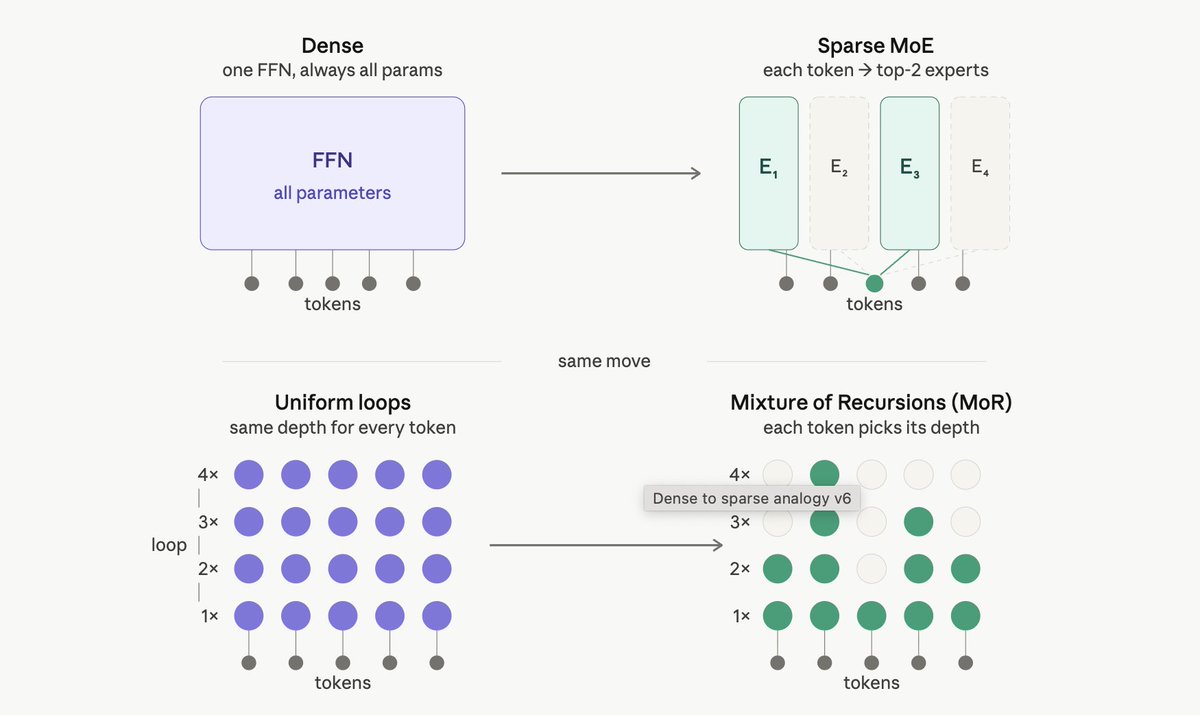
Mythos is a looped transformer!? 😳 Should be a Mixture-of-Recursions (MoR) — 2× faster, controlled effort. Dense → sparse MoE was the efficiency unlock of 2023. Uniform loops → MoR is the same move for recursive transformers. Paper reading list below. 🧵
Reza Bayat tweet media
English
14
141
1.1K
101.5K
Dylan Tull retweetledi
Vaishnavi
Vaishnavi@_vmlops·
THE TOOL EVERY EMBEDDED DEV NEEDS TO KNOW ABOUT no components. no wiring. no setup → wokwi.com/arduino wokwi is a browser simulator for arduino, esp32, and stm32 & it actually works drop in sensors, hook up a display, add servos. run your code instantly...everything happens in the browser 1.7M+ projects built by the community, a simon says game, pong on a nano, a 32x32 LED tunnel... all simulated... all shareable learning embedded systems or just need to prototype without touching hardware this is your shortcut
English
14
135
687
34.2K
Dylan Tull retweetledi
Matt DesLauriers
Matt DesLauriers@mattdesl·
2,500 named colour terms, organised by their CLIP embeddings—
English
3
9
117
7.4K
Dylan Tull retweetledi
Varun
Varun@varun_mathur·
Introducing Pods Hyperspace Pods lets a small group of people - a family, a startup, a few friends, to pool their laptops and desktops into one AI cluster. Everyone installs the CLI, someone creates a pod, shares an invite link, and the machines form a mesh. Models like Qwen 3.5 32B or GLM-5 Turbo that need more memory than any single laptop has get automatically sharded across the group's devices - layers split proportionally, inference pipelined through the ring. From the outside it looks like one OpenAI-compatible API endpoint with a pk_* key that drops straight into your AI tools and products. No configuration beyond pasting the key and changing the base URL. A team of five paying for cloud AI burns $500–2,000 a month on API calls. The same team's existing machines can serve Qwen 3.5 (competitive on SWE-bench) and GLM-5 Turbo (#1 on BrowseComp for tool-calling and web research) for free - the hardware is already on their desks. When a query genuinely needs a frontier model nobody has locally, the pod falls back to cloud at wholesale rates from a shared treasury. But for the daily work - code reviews, refactors, research, drafting - local models handle it and nobody gets billed. And when it is idle, you can rent out your pod on the compute marketplace, with fine-grained permissions for access management. There's no central server involved in inference. Prompts go from your machine to your pod members' machines and back: all of this enabled by the fully peer-to-peer Hyperspace network. Pod state - who's a member, which API keys are valid, how much treasury is left - is replicated across members with consensus, so the whole thing works on a local network. Members behind home routers don't need port forwarding either. The practical setup for most pods is three models covering different jobs: Qwen 3.5 32B for code and reasoning, GLM-5 Turbo for browsing and research, Gemma 4 for fast lightweight tasks. All running on hardware you already own. Pods ship today in Hyperspace v5.19. Model sharding, API keys, treasury, and Raft coordinator are all live. What Makes This Different - No middleman. Your prompts travel from your IDE to your pod members' hardware and back. There is no server in between reading your data. - No vendor lock-in. Pod membership, API keys, and treasury are replicated across your own machines using Raft consensus. If the internet goes down, your local network keeps working. There is no database in someone else's cloud that your pod depends on. - Automatic sharding. You don't configure layer ranges or calculate VRAM budgets. Tell the pod which model you want. It figures out how to split it across whatever hardware is online. - Real NAT traversal. Your friend behind a home router with a dynamic IP? Works. No VPN, no Tailscale, no port forwarding. The nodes handle it. - Free when local. This is the part that matters most. Cloud AI bills scale with usage. Pod inference on local hardware scales with nothing. The marginal cost of your 10,000th prompt is the electricity your laptop was already using. Coming soon: - Pod federation: pods form alliances with other pods. - Marketplace: pods with spare capacity can sell inference to other pods.
English
186
295
3.1K
301.7K
Dylan Tull retweetledi
Andrej Karpathy
Andrej Karpathy@karpathy·
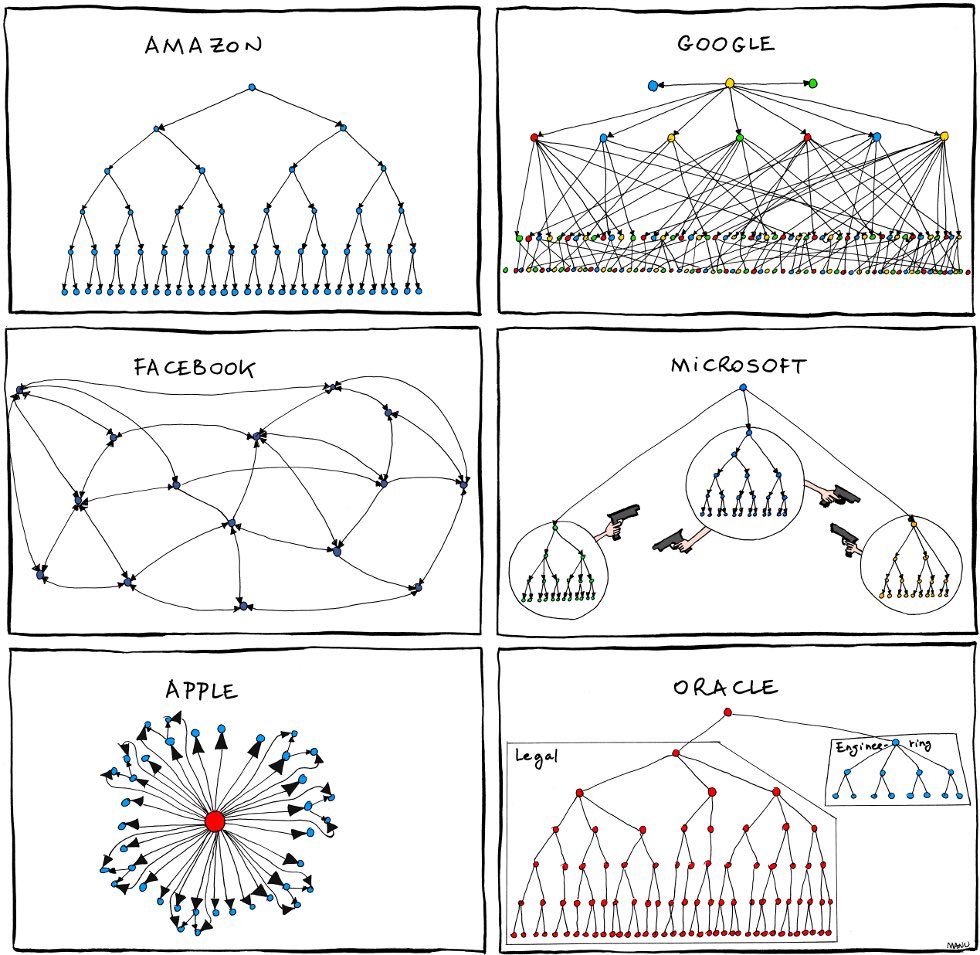
All of these patterns as an example are just matters of “org code”. The IDE helps you build, run, manage them. You can’t fork classical orgs (eg Microsoft) but you’ll be able to fork agentic orgs.
Andrej Karpathy tweet media
English
173
278
3.8K
501.9K