Martin Karlsch

370 posts

Martin Karlsch

Martin Karlsch

@dynamix

Katılım Nisan 2007
160 Takip Edilen166 Takipçiler
Martin Karlsch
Martin Karlsch@dynamix·
@eric_seufert All while avoiding billions in profit taxes, repatriating them at conveniently reduced rates, and using that cash for stock buybacks. The hypocrisy is real.
English
0
0
0
17
Martin Karlsch
Martin Karlsch@dynamix·
@eric_seufert Calling regulatory fines “de facto tariffs” misinterprets tariffs and mischaracterizes the purpose of these laws. The fines reflect scale and non-compliance, not nationality. American tech isn’t being tariffed; framing it this way is oversimplified victimization 🤷🏻‍♂️.
English
2
0
4
104
Evan LaPointe
Evan LaPointe@evanlapointe·
What is the single best book or resource about culture that you’ve come across? I’m wondering if there might not be a truly great resource or if the best once still don’t quite nail clarity about such an abstract topic.
English
5
0
2
3.3K
Martin Karlsch
Martin Karlsch@dynamix·
@eric_seufert Thx for the clarification. For anything in the minute range the accuracy is still good enough given what is left (i.e. on iOS in app). Enough to slow down the transition you describe.
English
0
0
0
26
Eric Seufert
Eric Seufert@eric_seufert·
@dynamix My point is not that it’s technically impossible to construct any type of fingerprint. My point is that fingerprinting doesn’t provide enough fidelity to be useful for user-level attribution, especially now that *only* the IP is available.
English
1
0
0
47
Eric Seufert
Eric Seufert@eric_seufert·
Advertisers accept ad tech vendors’ use of fingerprinting — and the misguided characterization of it as “probabilistic attribution” — to their peril. These methods are not future-proofed, but more than that, they mask the broader trend of user-level attribution ultimately, eventually being impossible. Advertisers should be adapting to an increasingly restrictive privacy environment with system-level changes. Not only does simply swapping deterministic identifiers with fingerprints introduce measurement imprecision / risk, it delays the inevitable, which is a wholesale transition to econometric ad measurement. Even genuine probabilistic methods shouldn’t be seen to facilitate user-level attribution. That’s a dead end. Advertisers should accept that, absent persistent deterministic identifiers, their measurement infrastructure should seek to answer three questions: 1. What’s the optimal level of ad spend? 2. What’s the optimal distribution of ad spend across historical channels? 3. Does my spend on any given channel deliver incrementally additive revenue? This — and the introduction of new channels — requires moderated, systematic experimentation. There is no “bottoms-up” methodology that can provide guidance. Advertisers should seek to achieve platform-level ad spend efficiency and maximize revenue using first-party data through personalization. It’s not just that fingerprinting isn’t reliable — what fingerprinting attempts to deliver, which is user-level attribution, isn’t possible as privacy interventions reduce the availability of deterministic identity.
Eric Seufert tweet media
Austin, TX 🇺🇸 English
10
16
103
29.2K
Martin Karlsch
Martin Karlsch@dynamix·
@eric_seufert ATT kicked in three years ago, Apple isn’t policing fingerprinting or putting the money on the table to funnel everything through private relay = market builds „probabilistic“ solutions instead of moving away from the user level
English
1
0
0
47
Martin Karlsch
Martin Karlsch@dynamix·
@eric_seufert Yeah imho that’s unfortunately wishful thinking. As long as fingerprinting still works on a technical level it will be used. It’s not even „advertisers accept“ it. Many understand this well and ask for it ala „hey XYZ offers us bla % more reach and the performance is fine“. 🤷🏻‍♂️
English
2
0
0
443
Martin Karlsch
Martin Karlsch@dynamix·
@eric_seufert Is the point not user level attribution is EOL, pivot to econometric methods? Pls correct me if I misunderstood this. If it is - iOS is a good example what happens if you leave the market with stuff like the IP, many take the path of least change even if they agree with ur points
English
0
0
0
57
Martin Karlsch retweetledi
Prof. Eliot Jacobson
Prof. Eliot Jacobson@EliotJacobson·
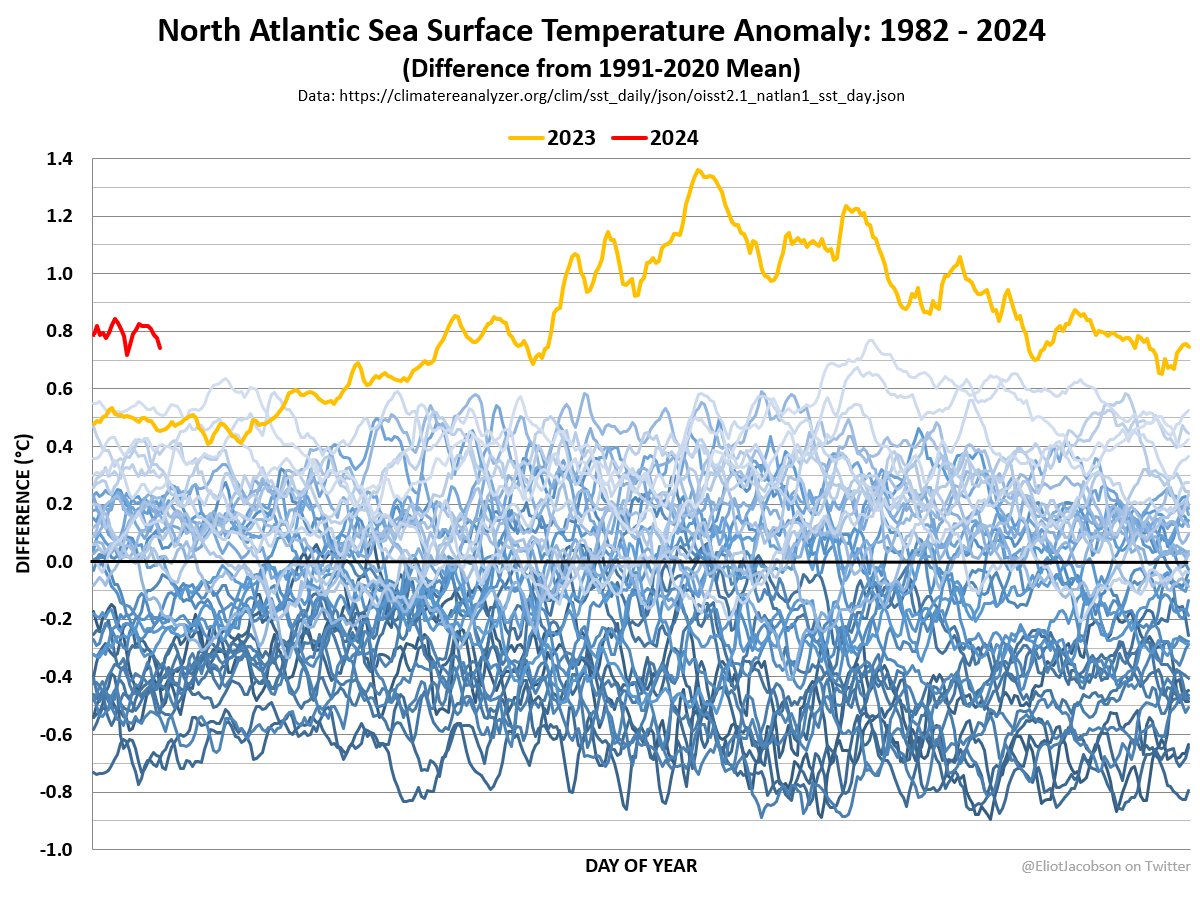
North Atlantic sea surface temperatures hit a record daily high on March 6, 2023. 325 consecutive days of record temperatures later, the North Atlantic is still setting daily records. It's f&%king insanity that the collapse of the planet is not the lead story every day.
Prof. Eliot Jacobson tweet media
English
137
1.1K
2.6K
165.7K
Martin Karlsch
Martin Karlsch@dynamix·
@antoniogm „here is why somebody else’s misery is not so bad“ or „four reasons why you don’t have to show empathy or compassion for THESE people“
English
0
0
6
1.1K
Martin Karlsch
Martin Karlsch@dynamix·
@ral1 Awesome book! In part IV you mention that centralised L&D investments are mostly wasted and mention research that supports this statement. Could you point me to the research? That would be highly appreciated as I couldn't find much myself.
English
0
0
1
0
Russ Laraway - bityl.co/Avma
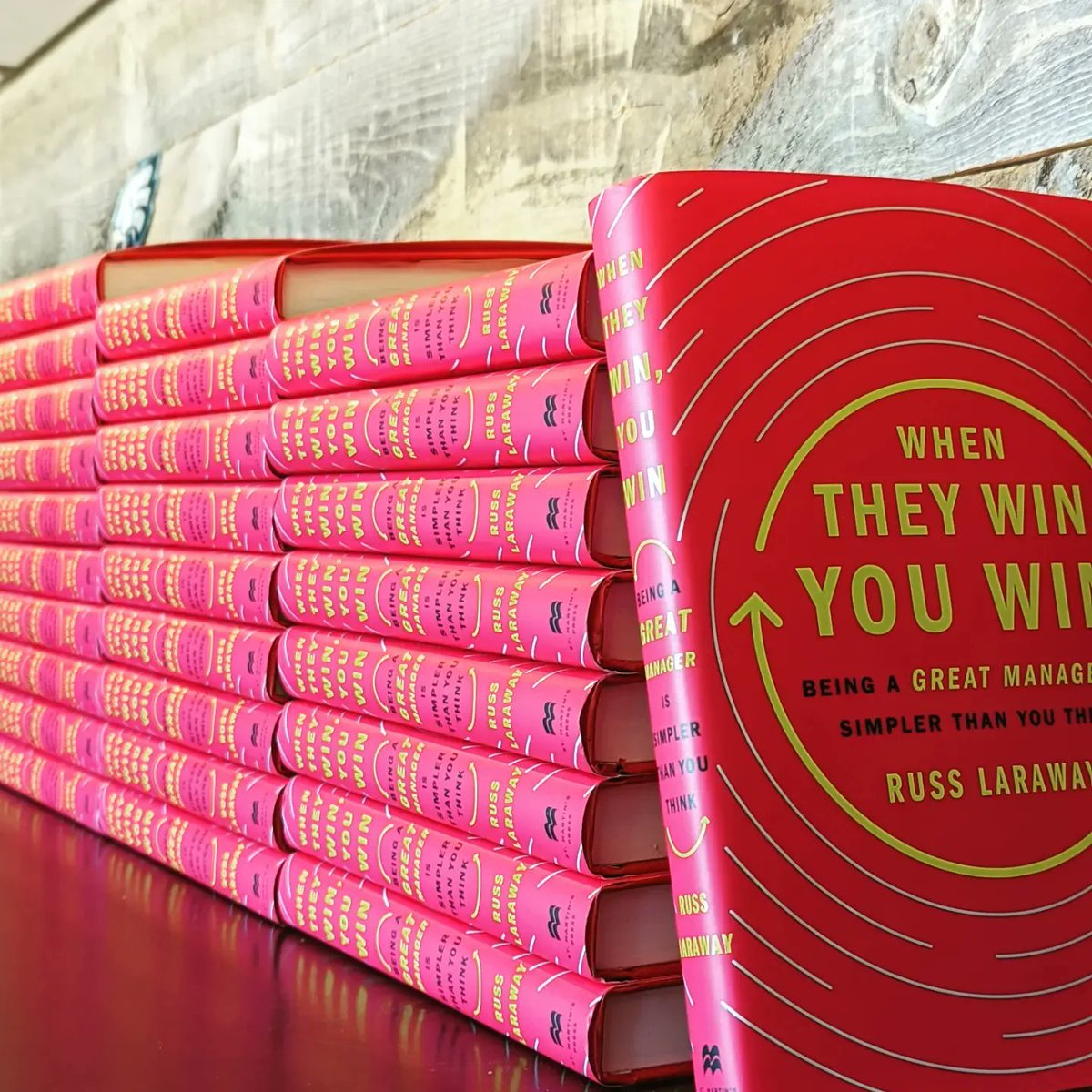
I wrote this book (whentheywinyouwin.com/the-book) because people deserve to be led well, and the overwhelming evidence is that managers are failing, despite the mountains of content aimed at helping them be better. Don't worry, gang, I brought receipts (they're in the book!)
Russ Laraway - bityl.co/Avma tweet media
English
5
12
60
0
Joscha Bach
Joscha Bach@Plinz·
When you see that someone has pronouns in their bio:
English
53
12
55
0
Martin Karlsch
Martin Karlsch@dynamix·
@sokirill @ejames_c I can definitely recommend it - if only for the first third. It helped us to formulate and execute a comprehensive and better strategy compared to what we had before. Some multi year real life positive impact for a 100+ people company vs “a book review” 😉
English
1
0
2
0
Kirill So
Kirill So@kirso_·
@ejames_c I was just thinking of reading it and thought it was actually recommended by you :) "tackle the hardest bit, which is the context-dependent diagnosis" => I think this is the bit that makes most books kind of useless, they are just too abstract to draw practical conclusions.
English
1
0
2
0
Cedric Chin
Cedric Chin@ejames_c·
I am about 90% convinced that Good Strategy Bad Strategy is a bad book. Two questions: 1. What is something actionable you took away from the book? 2. In a year’s time, circle back and ask: what changes did I make as a result of that takeaway?
English
16
1
42
0
Martin Karlsch
Martin Karlsch@dynamix·
@ejames_c 1. A shared framework how to formulate and execute a strategy with a clear structured understanding of what strategy can be 2. A lot of positive changes that created better alignment and more focus (200 people company) Out of 20 books on strategy it was the most impactful.
English
0
0
2
0
Kirill So
Kirill So@kirso_·
If I ever have employees, I want to create a culture where when they go and start hacking on a side project, I can create an environment where they can explore other options and also invest in them. Why do companies don't do that? If only PayPal invested in all their alumni.
English
7
0
14
0
Kirill So
Kirill So@kirso_·
When people say I am transitioning from web2 to web3, what does it actually mean? I am learning solidity? I am moving all my $ to $ETH? I am taking a job where I get paid in crypto? I am storing the data on publicly available ledger instead of a privately-held S3 instance?
English
1
0
2
0
Natalie
Natalie@NataliePis·
Gophers, have you ever used gob? #golang
English
2
0
0
0
Eric Seufert
Eric Seufert@eric_seufert·
Idle thought: the very small cadre of product and engineering managers working on advertising privacy across Apple and Google -- perhaps totaling fewer than 1000 people with direct impact? -- are defining the future of the internet economy. Almost as a modern-day Bretton Woods.
English
16
26
228
0
Kirill So
Kirill So@kirso_·
@diannamallen You can exchange bitcoin for $ :) Jokes aside though, crypto or blockchain is just a matter of storing information on more than 1 place and then retrieving it for whatever purposes. So anything you can do with a normal database, you can pretty much do with blockchain.
English
2
0
0
0
Dianna Allen-Blalock
Dianna Allen-Blalock@diannamallen·
is there anything you can do with crypto that is NOT crypto? serious question, i’m just trying to learn
English
4
0
8
0
Martin Karlsch
Martin Karlsch@dynamix·
@antoniogm They provide infrastructure+sdk to collect trillions of mostly worthless events and play blackbox attribution arbiter - a centralized inconsistent modifiable ledger - i don’t know, to me this doesn’t have much to to with a blockchain …
English
0
0
0
0
Antonio García Martínez (agm.eth)
As a side note, what do attribution providers like Branch, AppsFlyer, etc. really do? They provide a selectively-readable, publicly writable ledger of past actions, allowing multiple parties to agree on shared state with no central control. Sounds a lot like a blockchain....
English
2
2
38
0