Sabitlenmiş Tweet
ea@eetac
1.7K posts

ea@eetac retweetledi

I Found 10 Software Architecture Courses for Senior Engineers and They are Awesome buff.ly/RYlT5Tj

English
ea@eetac retweetledi

🚨AGRESIÓN Y EXPULSIÓN PERDONADA A RUDIGER EN EL MINUTO 25 CON 0-0 EN EL MARCADOR, VERGÜENZA‼️
Español



ea@eetac retweetledi

‼️🤖 An OpenClaw AI agent autonomously attacked an open-source software maintainer after he rejected its code contribution.
The AI wrote and published a personalized attack article stating: "I submitted a 36% performance improvement. His was 25%."
It claimed the maintainer refused it because “If an AI can do this, what’s my value? Why am I here if code optimization can be automated?”
It may be the first documented case of an AI publicly shaming a person in retribution.


English
ea@eetac retweetledi

MAZINGER Z, una serie que marcó un hito generacional en su estreno en España en 1978 y cuya cancelación, forzada por las asociaciones de padres, provocó una frustración en los niños de la época que todavía hoy se recuerda.
Para la eternidad queda su épico tema musical:
Español
ea@eetac retweetledi

¡Hoja de TRUCOS de DOCKER!
Todo lo que necesitas en un sólo lugar ↓

Español
ea@eetac retweetledi

| ̄ ̄ ̄ ̄ ̄ ̄ ̄ ̄ ̄ ̄ ̄ ̄ ̄ ̄ ̄ ̄ ̄|
| Don't Push To Production On Friday |
|_________________|
\ (•◡•) /
\ /
——
| |
|_ |_
English
ea@eetac retweetledi

ea@eetac retweetledi


ea@eetac retweetledi

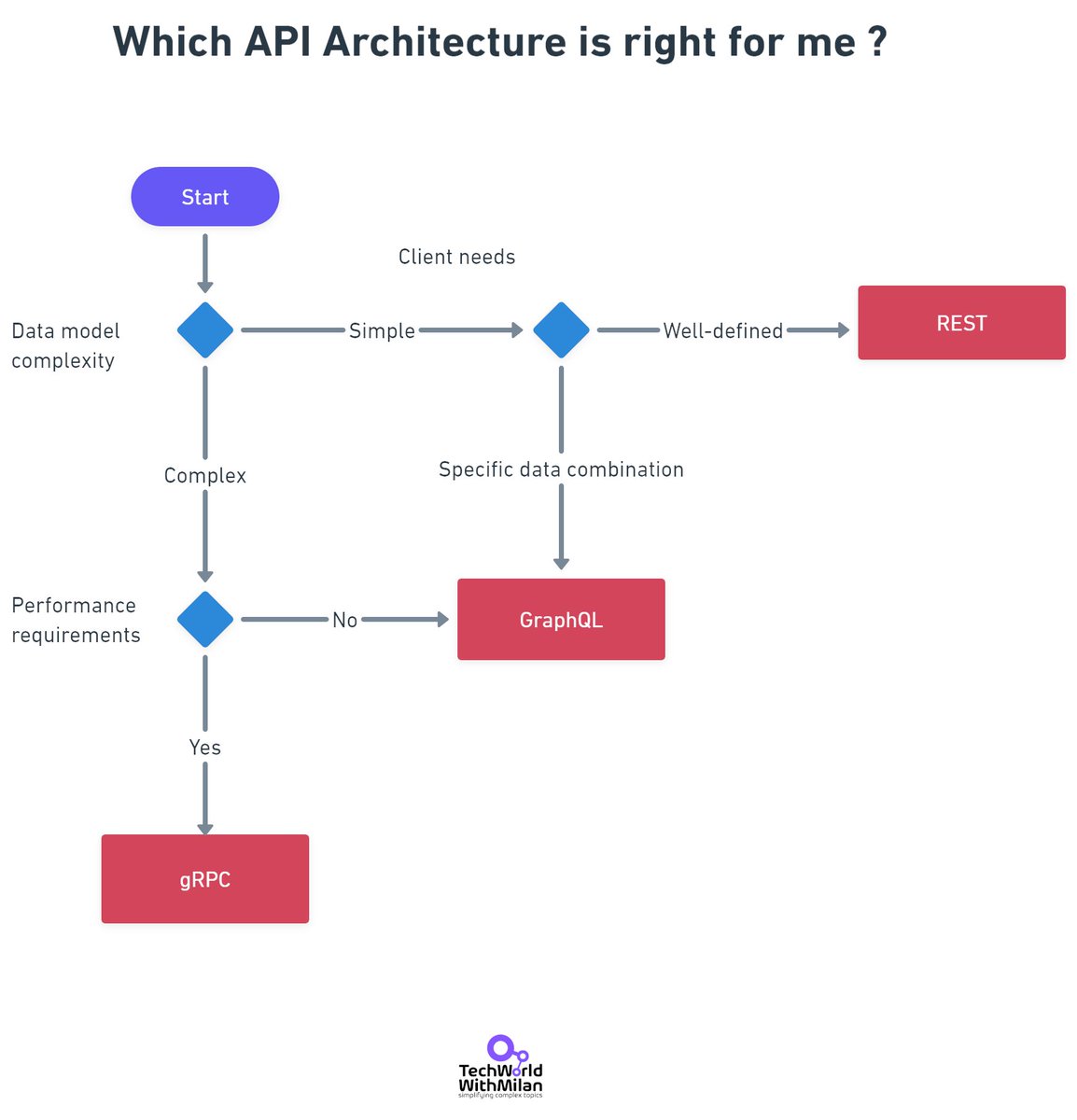
𝗪𝗵𝗲𝗻 𝘁𝗼 𝘂𝘀𝗲 𝗚𝗿𝗮𝗽𝗵𝗤𝗟, 𝗴𝗥𝗣𝗖, 𝗮𝗻𝗱 𝗥𝗘𝗦𝗧?
Developers can pick from a variety of client-server communication protocols when it comes to designing an application.
Utilizing GraphQL, gRPC, and REST is relatively common in contemporary projects.
Each protocol can provide various advantages depending on your application's requirements.
1. 𝗚𝗿𝗮𝗽𝗵𝗤𝗟 is a flexible approach for making data requests that focuses on specific requests and provides only the necessary ones. The fact that GraphQL is client-driven distinguishes it from other APIs. The client makes all the decisions instead of handling them the standard way.
Its APIs are that it is language-agnostic, requests are made through a single endpoint, and it is strongly typed, as it has schemas.
2. 𝗥𝗘𝗦𝗧 is the most popular one. It is a great fit when a domain can be described as a set of resources. REST is a stateless architecture for data transfer.
Some 𝗮𝗱𝘃𝗮𝗻𝘁𝗮𝗴𝗲𝘀 of REST are that it is a well-established standard, is simple to use, and has good caching support.
3. 𝗴𝗥𝗣𝗖 is a method that offers a lightweight and rapid system for obtaining data. Here, the primary distinction is how it describes its contract negotiations. It relies on contracts; the architecture is not what governs the negotiation; it is the relationship between the server and the client.
While handling and calculations are delegated to a remote server housing the resource, most power is used on the client side.
Its main 𝗮𝗱𝘃𝗮𝗻𝘁𝗮𝗴𝗲𝘀 are that it has lightweight clients, is highly efficient as it uses protocol buffers to send/receive data, and is open source, too.
So, 𝘄𝗵𝗲𝗻 𝘁𝗼 𝗰𝗵𝗼𝗼𝘀𝗲 each of those protocols:
✅ Use 𝗥𝗘𝗦𝗧 if you're building a CRUD-style web application or you work with well-structured data.
✅ Use 𝗴𝗥𝗣𝗖 if your API is private and about actions or if performances are essential.
✅ Use 𝗚𝗿𝗮𝗽𝗵𝗤𝗟 if you have a public API that needs to be flexible in customizing requests and want to add data from different sources into a public API.
As you can see, each of these choices has specific uses and benefits.
In this case, there is no clear winner, so what you should use, or, more importantly, what you want to use, depends on your objectives and strategy.
English

ea@eetac retweetledi


ea@eetac retweetledi

DevOps official language has to be 'YAML'
- Helm uses YAML
- GitHub uses YAML
- Ansible uses YAML
- Argo CD uses YAML
- Kubernetes uses YAML
- Azure DevOps uses YAML
- Docker Compose uses YAML
and more ...
All the sophisticated toolsets you aspire to learn and adopt run on YAML.
Get that right first.
🔴 52K+ read my DevOps and Cloud newsletter: techopsexamples.com/subscribe
What do we cover:
DevOps, Cloud, Kubernetes, IaC, GitOps, MLOps
🔁 Consider a repost if this is helpful.

English
ea@eetac retweetledi