
Sabitlenmiş Tweet
EBENEZER
3K posts


EBENEZER
@ebenezerox
Guiding you through the world of DeFi, memes and undiluted alphas. Ghostwriter & SMM
Katılım Mart 2010
426 Takip Edilen880 Takipçiler

@Yulancrypto @dropee_app It is turning Telegram itself into a real creator economy
English

What makes @dropee_app hit differently is that it is not just building another Telegram app ecosystem.
It is turning Telegram itself into a real creator economy.
Instead of forcing creators through traditional growth funnels filled with ad spend, algorithm battles, and long monetization timelines, Dropee is building a system where creation, distribution, and monetization happen almost instantly inside existing communities.
So why is the model gaining attention?
1/ Creators can launch Telegram mini-apps within seconds using AI-powered infrastructure
2/ Apps can be distributed directly into communities and chats where users already exist
3/ $DROPEE connects engagement, participation, and monetization into one ecosystem layer
The workflow becomes radically simpler:
Build → Ship → Earn
No massive development team.
No waiting months for monetization approval.
No dependence on expensive advertising funnels.
Instead, creators can focus on launching lightweight products directly into communities that already align with their audience and interests.
That changes the economics of creation entirely.
Historically, creators needed to first capture attention, then slowly convert audiences into monetizable traffic. Dropee compresses that cycle by embedding monetization and distribution directly into Telegram-native interactions.
As more mini-apps launch through Dropee Create, every creator-built experience potentially strengthens the broader ecosystem through engagement loops, rewards, and shared utility powered by $DROPEE.
From a broader perspective, this reflects a major shift happening across digital ecosystems:
1/ AI dramatically lowers the barrier to building products
2/ Community distribution becomes more powerful than traditional advertising
3/ Tokenized ecosystems allow participation and monetization to happen simultaneously
The result is a creator economy built around speed, accessibility, and network effects rather than centralized platform dependency.
This is not just about launching apps faster.
It is about turning communities themselves into scalable economic infrastructure.
And that is why $DROPEE feels different. 🚀

English

𝗧𝗥𝗢𝗡 𝗚𝗮𝘀𝗙𝗿𝗲𝗲 𝗥𝗲𝗱𝗲𝗳𝗶𝗻𝗲𝘀 𝗕𝗹𝗼𝗰𝗸𝗰𝗵𝗮𝗶𝗻 𝗣𝗮𝘆𝗺𝗲𝗻𝘁𝘀 𝗯𝘆 𝗥𝗲𝗺𝗼𝘃𝗶𝗻𝗴 𝘁𝗵𝗲 𝗟𝗮𝘀𝘁 𝗨𝘀𝗲𝗿 𝗕𝗮𝗿𝗿𝗶𝗲𝗿
As blockchain moves closer to real world adoption, the challenge has been gas fees and the complexity of managing native tokens.
TRON’s GasFree model is designed to remove that friction entirely.
And it’s more than a feature, It’s a shift in how on-chain payments work.
GasFree is a decentralized gas abstraction protocol on TRON, led by JustLend DAO and integrated into wallets like TronLink.
It allows users to:
• send TRC20 tokens • interact with smart contracts
without holding TRX for gas.
Traditionally:
• users need TRX to pay fees • or must stake resources beforehand
With GasFree:
• users simply sign the transaction • service providers cover energy and bandwidth • fees are deducted directly from the transferred token
This introduces a key concept:
fees are paid using the asset being sent.
Everything settles in a single atomic transaction.
How the No TRX Experience Works
1. Separate Wallet Design GasFree wallets share the same mnemonic but generate a separate address. Activation (~1 USDT) is automatically handled on first use.
2. Permit + Relay Execution • users sign a message (similar to EIP-712) • relay nodes submit the transaction • smart contracts handle settlement and fee deduction
No private key exposure. No TRX required.
3. Cost Efficiency • ~0.8–1 USDT per transfer • over 60% cost reduction vs traditional methods
Enabled by:
• protocol subsidies • JustLend DAO energy rental
4. Security and Transparency • fully decentralized design • no single intermediary • multi-signature support • all transactions verifiable on TRONSCAN
📱 Simple User Flow (TronLink Example)
Upgrade TronLink (v4.15+)
Activate GasFree wallet on first use
Send tokens → sign transaction
Track activity directly in wallet history
Advanced users can combine this with Energy Rental to further reduce DeFi costs.
From my perspective, GasFree addresses one of the biggest barriers in crypto:
user friction.
It enables:
• onboarding without needing TRX • stablecoin payments as simple as messaging • smoother DeFi interactions
Real Adoption So Far
• 3M+ transactions processed • $55B+ transaction volume • ~$4M saved in fees
This isn’t theoretical.
It’s already being used at scale.
While others focus on scaling layers
TRON is simplifying the user experience directly: resource abstraction + token-based settlement
This creates a new model for blockchain payments.
GasFree is evolving beyond a wallet feature into core infrastructure:
• multi-chain stablecoin payments • seamless NFT and gaming interactions • AI-driven payment routing.
Blockchain adoption doesn’t just depend on technology.
It depends on simplicity.
And when users can send assets without worrying about gas, that’s when real usage begins.
@DeFi_JUST @justinsuntron
#TRONEcoStar

English
@skinnydefi @BNBCHAIN @yzilabs the next phase of AI may not be defined by systems that only generate responses
English
𝐄𝐱𝐩𝐥𝐨𝐫𝐢𝐧𝐠 𝐭𝐡𝐞 𝐅𝐮𝐭𝐮𝐫𝐞 𝐨𝐟 𝐀𝐮𝐭𝐨𝐧𝐨𝐦𝐨𝐮𝐬 𝐀𝐈 𝐄𝐜𝐨𝐧𝐨𝐦𝐢𝐞𝐬 𝐰𝐢𝐭𝐡 B.AI
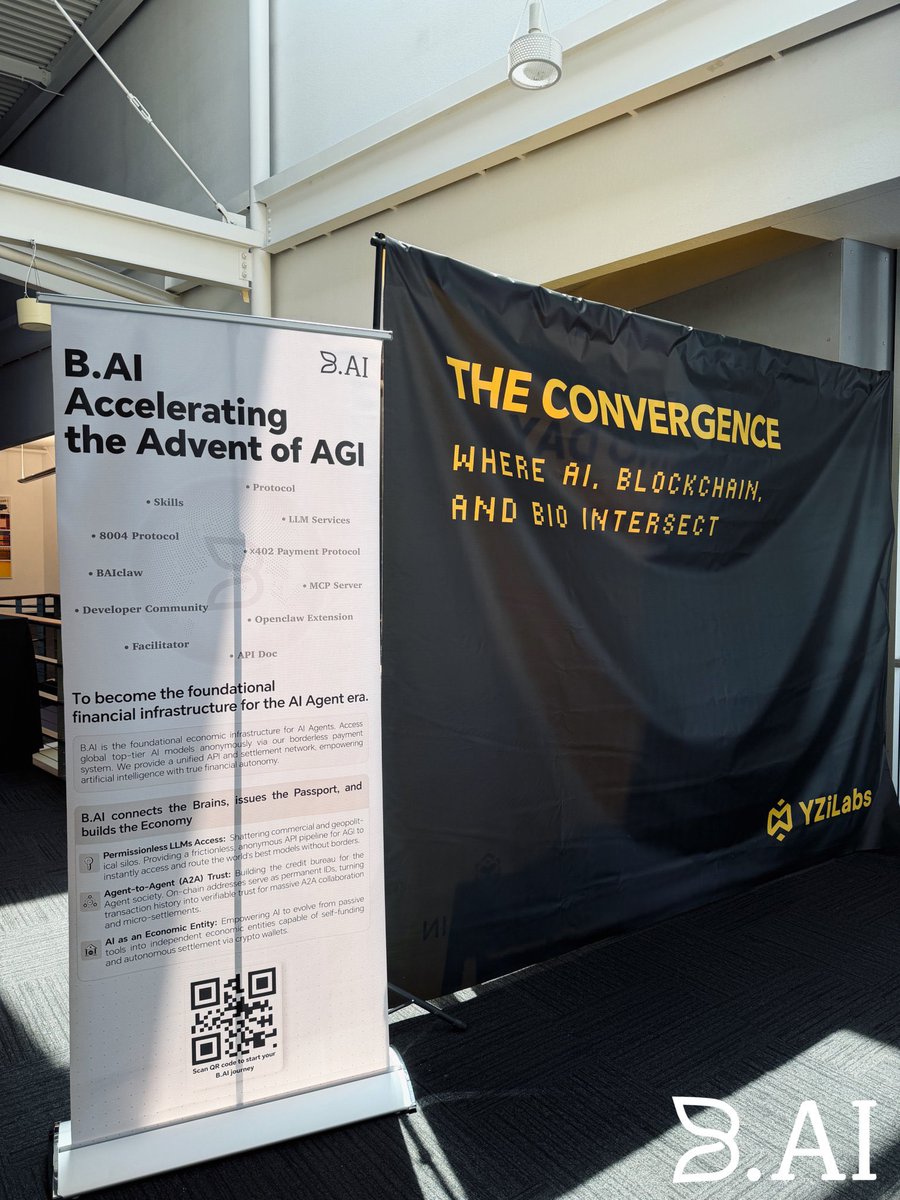
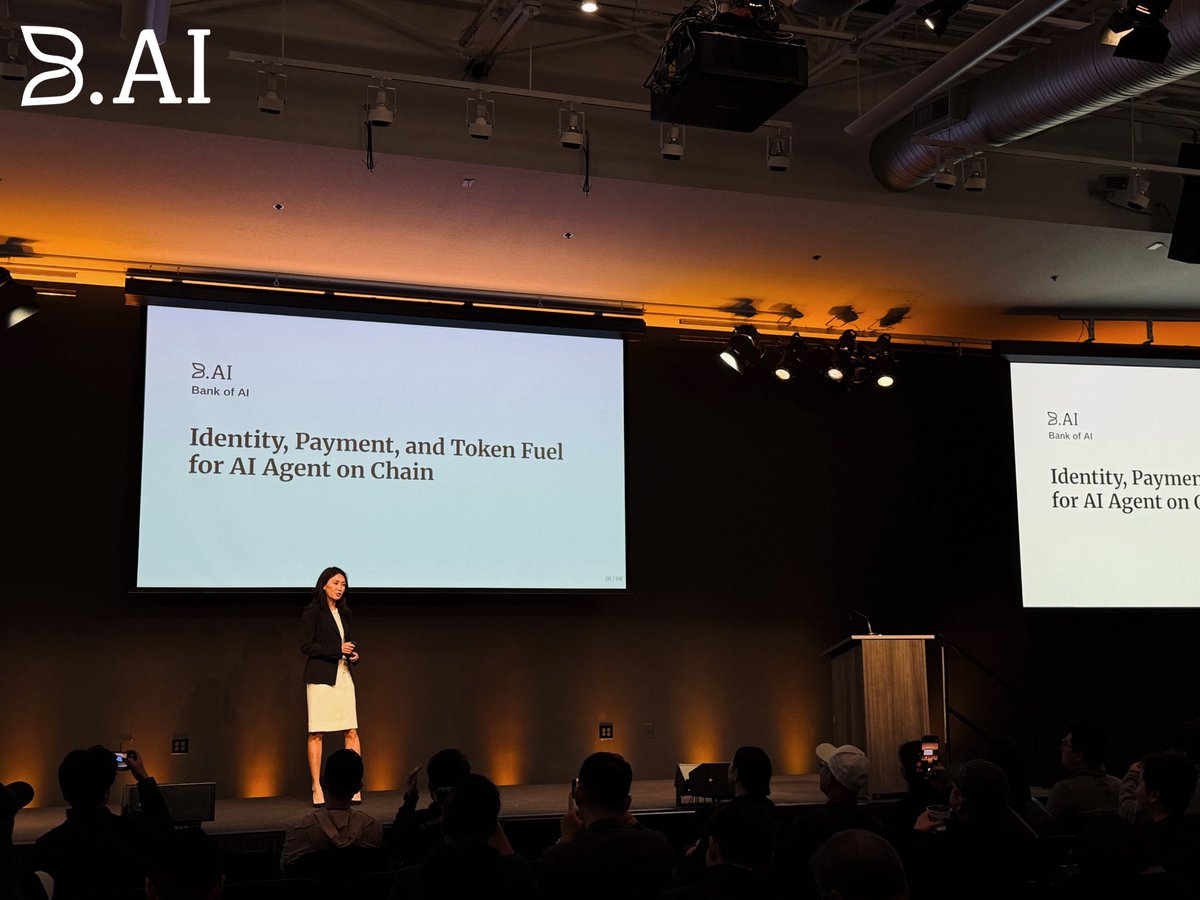
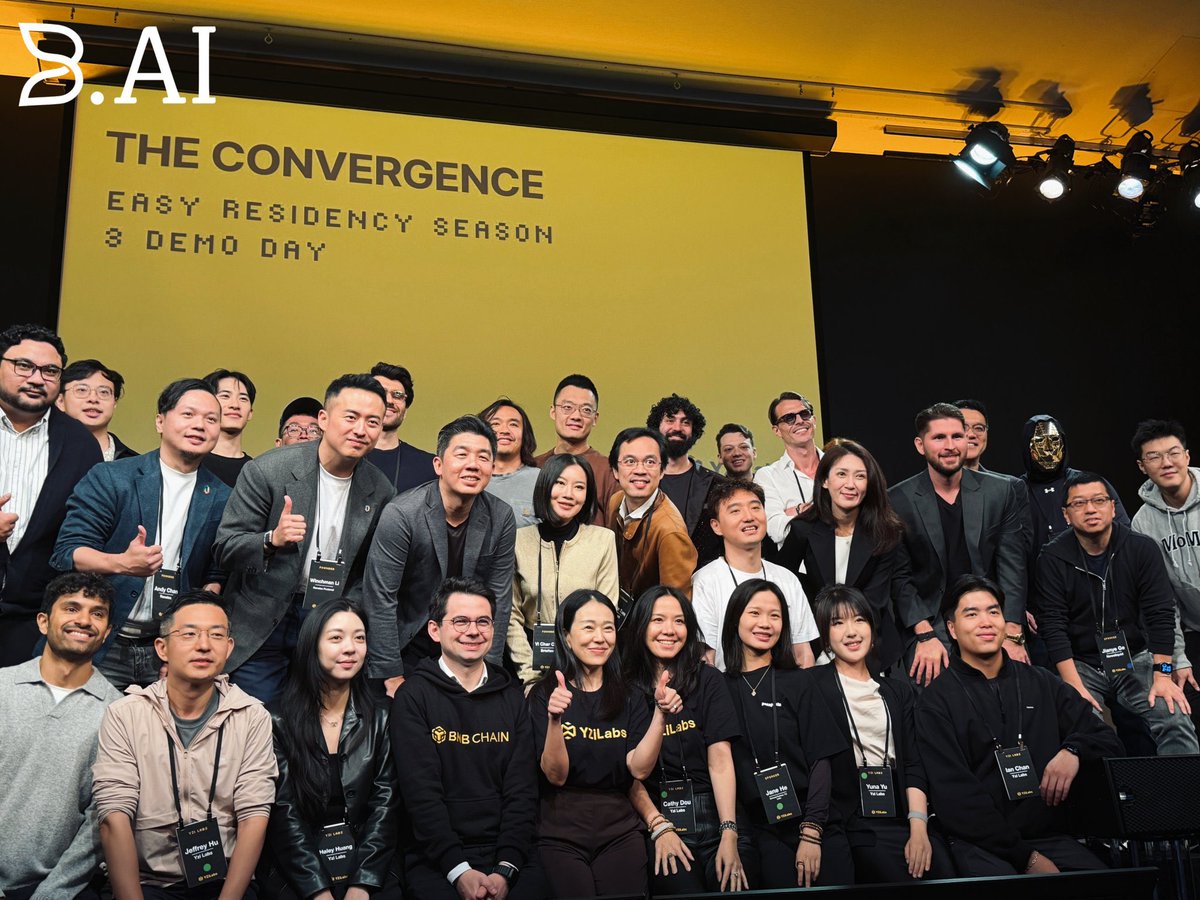
At the @BNBCHAIN and @yzilabs Demo Day in San Francisco, B.AI alongside BANKOFAI shared a vision that extends far beyond traditional AI tools and chat interfaces.
The focus was not simply smarter models.
It was infrastructure.
Because the next phase of AI may not be defined by systems that only generate responses, but by autonomous agents capable of operating independently across digital economies, coordinating resources, managing payments, accessing compute, and interacting continuously without direct human intervention.
As artificial intelligence continues advancing rapidly, one challenge is becoming increasingly clear: intelligence alone is not enough. AI agents still require the surrounding infrastructure that allows them to function as active participants inside decentralized systems, and that includes identity frameworks, payment rails, tokenized coordination mechanisms, compute access, and reliable execution environments that can operate globally and permissionlessly.
This was one of the core ideas highlighted during the presentation:
🔥 “Identity, Payment, and Token Fuel for AI Agents On-Chain.”
The concept reflects a broader shift already beginning across the AI and blockchain industries, where developers are moving beyond isolated AI applications and starting to build the economic infrastructure necessary for autonomous agent ecosystems to emerge at scale.
The discussion emphasized two major themes:
▪️ AI Agent Autonomy
▪️ On-Chain Financial Coordination
Together, these layers represent the early foundation of what could eventually become a fully autonomous AI economy.
B.AI explained that future AI systems will require multiple interconnected infrastructure components operating together:
→ Identity systems for verifiable agent coordination
→ Payment infrastructure for autonomous transactions
→ Compute access for scalable execution
→ Tokenized systems for resource allocation
→ Continuous on-chain interaction across ecosystems
Without these layers, even highly advanced AI systems remain limited in practical autonomy.
That’s where blockchain infrastructure becomes increasingly important.
Decentralized systems naturally provide many of the components autonomous agents will eventually require:
◆ Permissionless payments
◆ Programmable financial coordination
◆ Transparent execution
◆ Cross-platform interoperability
◆ Persistent operational environments
And importantly, the vision presented by B.AI goes beyond simply routing users between AI models.
The larger objective is building infrastructure capable of supporting:
• Autonomous AI economies
• Agent-to-agent coordination
• Decentralized financial interaction
• Continuous compute access
• Scalable AI-native applications
at production scale.
This reflects a major evolution happening across the industry itself.
For years, the AI race focused primarily on model capability:
→ Better reasoning
→ Faster inference
→ Larger context windows
→ More multimodal functionality
But as intelligence improves, the bottleneck increasingly shifts toward coordination and infrastructure.
Because intelligent agents still need systems allowing them to:
◆ Access resources
◆ Verify identity
◆ Execute transactions
◆ Operate independently
◆ Coordinate economically with other agents
That convergence between AI and blockchain infrastructure is becoming increasingly natural.
Still building alongside the broader AI community and the BNB Chain ecosystem as the next infrastructure layer for autonomous intelligence continues taking shape.
@AINFTcom @justinsuntron #TRONEcoStar

English
@skinnydefi @justinsuntron companies rarely build digital asset reserves through isolated transactions alone.
English
Another day, another increase in TRX reserves.
But what’s becoming interesting is no longer the individual purchase itself.
It’s the consistency behind the strategy. 👇
📈 Tron Inc. (NASDAQ: TRON) acquired:
▪️ 141,323 TRX
▪️ At an average price of $0.3538
This brings the company’s total treasury holdings to:
🔥 More than 696.1 million TRX
At first glance, daily accumulation may look routine.
But repeated treasury expansion over time usually signals something deeper:
Long-term positioning.
Because companies rarely build digital asset reserves through isolated transactions alone.
They build them through systematic accumulation strategies designed around conviction, infrastructure exposure, and future ecosystem growth.
And Tron Inc. continues making its direction increasingly clear:
The company intends to further grow its Tron DAT holdings as part of a broader strategy aimed at enhancing long-term shareholder value.
That matters because the relationship between public companies and blockchain infrastructure is evolving rapidly.
In earlier market cycles, crypto treasury exposure was often viewed as speculative.
Today, the conversation is shifting toward something more structural:
Digital assets as operational treasury infrastructure.
And assets like TRX introduce characteristics traditional reserve systems cannot easily replicate.
Unlike idle balance sheet assets, TRX integrates directly into: → staking systems
→ on-chain financial infrastructure
→ network participation
→ yield-generating ecosystems
→ blockchain-native coordination layers
That creates a fundamentally different treasury model.
And importantly, the scale of the TRON ecosystem itself continues expanding underneath that strategy.
The network already supports massive activity across: ◆ stablecoin settlement
◆ global payments
◆ DeFi infrastructure
◆ cross-border liquidity movement
◆ high daily transaction throughput
Meaning treasury exposure increasingly reflects participation in an actively used financial infrastructure network rather than passive speculative positioning alone.
Transparency is another important layer here.
The designated treasury wallet remains publicly visible on-chain through Tronscan.
That means: ✔ holdings remain independently verifiable
✔ accumulation can be tracked in real time
✔ treasury growth stays fully transparent
This level of visibility is still relatively unique compared to traditional corporate treasury systems.
And over time, transparent blockchain-based reserve strategies may become increasingly common as institutional adoption matures.
The broader shift is becoming difficult to ignore:
Public market structures and blockchain infrastructure are gradually converging.
And treasury strategies built around digital assets are increasingly moving from experimentation toward long-term operational positioning.
For now, Tron Inc.’s approach remains simple:
Steady accumulation.
Transparent execution.
Long-term ecosystem exposure.
And consistency itself often becomes one of the strongest signals in the market.
🔎 Live treasury updates: tronscan.org/#/address/TEyS…
@trondao @justinsuntron #TRONEcoStar


English
89 BILLION USDT on TRON. 🚀
At some point, stablecoin growth stops looking like a crypto metric and starts looking like global financial infrastructure.
TRON’s USDT circulating supply has now officially surpassed:
🔥 89,000,000,000 USDT
That number is massive. But the bigger story is what it represents.
Because USDT on TRON is no longer just fueling crypto trading.
It’s powering: → global transfers
→ remittances
→ on-chain payments
→ DeFi liquidity
→ cross-border movement
→ everyday digital finance for millions of users
And that changes the conversation completely.
Stablecoins matter because they bridge two worlds: traditional finance and blockchain infrastructure.
They make value movement:
⚡ faster
⚡ cheaper
⚡ more accessible
⚡ more global
And when stablecoin supply reaches this scale, it signals something important:
People are actively using blockchain networks for real financial activity, not just speculation.
That’s where TRON continues standing out.
The ecosystem has quietly become one of the most efficient rails for stablecoin movement globally: ◆ low friction
◆ fast settlement
◆ deep liquidity
◆ massive transaction volume
Infrastructure compounds quietly before most people notice it.
And 89B USDT circulating on TRON is one of the clearest signals yet that stablecoins are evolving beyond crypto tools into real digital financial infrastructure.
@justinsuntron @trondao #TRONEcoStar

English
@skinnydefi @justinsuntron Policymakers are placing greater focus on reserves, transparency, and issuer oversight
English
Stablecoins are no longer just a crypto product they are rapidly becoming the next layer of global financial infrastructure.
What began as a mechanism for moving digital dollars within crypto markets has evolved into one of the industry’s clearest real-world use cases: instant settlement, low-cost transfers, and always-on global liquidity operating 24/7.
The shift is now large enough that regulators and policymakers can no longer treat stablecoins as a niche segment of digital assets.
In a recent discussion, DSA Managing Director @AdrianWall8395 outlined why stablecoins are increasingly moving to the center of financial policy conversations worldwide.
The acceleration in regulatory attention is not difficult to understand.
1/ Stablecoins now sit directly at the intersection of payment infrastructure, dollar dominance, and financial stability
2/ Policymakers are placing greater focus on reserves, transparency, and issuer oversight
3/ Regulators are attempting to preserve innovation while reducing systemic risk and illicit finance exposure
The momentum is no longer theoretical.
Thursday’s markup could move the CLARITY Act materially closer to reality — a development that may represent a defining turning point for digital asset regulation in the United States.
Behind the urgency is a much larger structural shift.
Stablecoins are quietly redefining how value moves across the internet. They enable dollars to settle globally in seconds rather than days, while reducing friction across commerce, remittances, trading, and digital services.
This is where technology begins to converge with monetary strategy.
For governments, the conversation is now far broader than crypto markets alone. Stablecoins increasingly influence payment competitiveness, cross-border settlement efficiency, and the future global reach of the U.S. dollar in a digitally native economy.
At the same time, regulators face a delicate balancing act.
➝ Strengthening transparency without restricting innovation
➝ Building safeguards without slowing infrastructure growth
➝ Reducing systemic vulnerabilities while preserving open financial access
➝ Establishing clear frameworks that encourage institutional participation
Taken together, the direction is becoming increasingly clear.
The next phase of adoption will likely belong to the networks and jurisdictions capable of combining speed, trust, compliance, and scalability at global scale.
The rules of the road are no longer optional.
They are becoming foundational infrastructure for the future of digital dollars.
@justinsuntron @trondao
#TRONEcoStar

English
@skinnydefi one of the most important developments is how the network is being utilized.
English
TRON just surpassed 14 billion on-chain transactions and that milestone says far more about the future of blockchain infrastructure than headline numbers alone.
Most blockchain ecosystems continue to focus on theoretical scalability.
Very few have demonstrated the ability to operate consistently at global transaction scale while maintaining reliability under sustained usage.
@trondao has now processed more than 14 BILLION transactions on-chain.
This is not simply a growth metric.
It reflects the emergence of blockchain networks as operational financial infrastructure capable of supporting continuous global economic activity.
The distinction matters.
As adoption expands, scale only becomes meaningful if it remains stable, efficient, and reliable over time.
TRON’s infrastructure has increasingly demonstrated that combination through:
➝ high transaction throughput
➝ continuous network uptime
➝ low-cost execution
➝ scalable performance under persistent demand
Processing billions of transactions is not only about speed.
It is about maintaining operational consistency while facilitating value transfer at global scale.
This is where infrastructure begins to separate itself from narrative.
At the same time, one of the most important developments is how the network is being utilized.
TRON’s activity increasingly reflects real-world financial behavior rather than purely speculative cycles.
Network usage now heavily centers around:
➝ stablecoin settlement
➝ cross-border payments
➝ liquidity distribution
➝ digital dollar transfers
➝ global value movement
Taken together, these trends point toward a network functioning less like an experimental blockchain and more like a scalable settlement layer.
Stablecoins remain a major driver behind that growth.
And that is significant because stablecoins represent one of the clearest examples of blockchain product-market fit operating at scale today.
Large-scale stablecoin infrastructure requires:
➝ fast execution
➝ deep liquidity
➝ low transaction costs
➝ reliable throughput
➝ uninterrupted network performance
TRON’s ability to support continuous stablecoin movement increasingly positions the network as a critical infrastructure layer for digital payments globally.
This broader shift is becoming increasingly important.
As blockchain adoption matures, ecosystems will likely be evaluated less by market narratives and more by operational performance.
That includes:
➝ transaction capacity
➝ execution efficiency
➝ settlement scalability
➝ infrastructure reliability
➝ sustained network utilization
Because moving trillions in digital value will require networks that have already proven they can process billions of transactions consistently.
Infrastructure maturity becomes the real differentiator.
And this is what 14 billion transactions ultimately represents.
Not just scale.
But sustained adoption, growing utility, and increasing demand for blockchain systems capable of supporting economic activity in real time.
The trend is becoming increasingly clear.
Blockchain networks are gradually transitioning from speculative technology platforms into operational financial infrastructure.
And the ecosystems that combine:
➝ throughput
➝ reliability
➝ liquidity
➝ low-cost execution
will likely become the foundational settlement layers of the digital economy.
Moving trillions begins with networks already capable of processing billions.
That is what makes TRON’s scale increasingly difficult to ignore.
@justinsuntron @trondao
#TRONEcoStar


English
The T3 Financial Crime Unit (T3 FCU) a joint initiative between @trondao, @tether, and @trmlabs continues to strengthen the integrity of the digital asset ecosystem through coordinated action against illicit activity involving USDT on TRON.
What began as a collaborative enforcement initiative has rapidly evolved into a working model for how blockchain infrastructure, intelligence, and compliance coordination can operate at global scale.
The significance of that evolution is becoming increasingly clear.
As digital asset adoption accelerates, ecosystems are no longer evaluated solely by growth metrics or transaction volume.
They are increasingly judged by their ability to support transparency, security, and responsible infrastructure development simultaneously.
Since launch, T3 FCU has delivered measurable global impact.
➝ Supported investigations across five continents since September 2024
➝ Helped freeze more than $450M in illicit assets connected to criminal activity
➝ Expanded enforcement coordination through the growing T3+ collaboration network
These are not isolated enforcement actions.
They reflect the emergence of a more mature framework for cooperation between blockchain networks, intelligence providers, exchanges, and law enforcement agencies.
One of the earliest joint operations involving @Binance resulted in nearly $6M in illicit assets being frozen — demonstrating how coordinated blockchain intelligence can generate rapid real-world outcomes across jurisdictions.
At the same time, international recognition continues to validate the broader importance of the initiative.
@FATFNews described T3 FCU as an “invaluable resource for law enforcement agencies worldwide,” underscoring the increasing role of public-private collaboration in digital asset oversight.
This is where blockchain transparency begins to demonstrate its strategic advantage.
Unlike traditional financial systems that often rely on fragmented visibility, blockchain infrastructure enables real-time monitoring, traceability, and coordinated enforcement capabilities at scale.
Taken together, T3 FCU highlights how transparency and innovation do not need to exist in opposition.
They can reinforce one another.
As adoption expands globally, the need for:
➝ cross-platform coordination
➝ compliance infrastructure
➝ transaction monitoring
➝ enforcement collaboration
➝ user protection mechanisms
will only continue to increase.
From a broader ecosystem perspective, initiatives like T3 FCU reinforce a critical point:
Scalable blockchain networks can support both innovation and compliance simultaneously.
The collaboration between TRON, Tether, TRM Labs, exchanges, and enforcement agencies reflects a more advanced phase of digital asset infrastructure development — one where security, transparency, and scalability increasingly operate together rather than separately.
This is where execution matters most.
Building trusted infrastructure requires more than growth alone.
It requires systems capable of protecting users while supporting the long-term expansion of digital finance.
The direction is becoming increasingly evident.
The next generation of blockchain infrastructure will likely be defined not only by speed and scale but also by accountability, coordination, and resilience.
Protect users. Fight crimes.
@trondao @justinsuntron
#TRONEcoStar

English
@skinnydefi The mechanics are straightforward but strategically significant.
English
B.AI is accelerating AI accessibility with the launch of its 100B Token Subsidy initiative a large-scale incentive program designed to reduce execution costs for advanced AI workloads.
At a time when demand for high-performance models continues to rise, infrastructure efficiency and affordability are becoming increasingly important for both developers and everyday users.
This campaign directly addresses that challenge.
Through a limited-time subsidy structure, B.AI is effectively lowering the barrier to deploying powerful AI agents and production-grade workflows at scale.
The mechanics are straightforward but strategically significant.
➝ Every deposit now receives a 1:1 Credit match instantly doubling available usage capacity.
➝ Users can unlock up to $100 in cumulative bonus Credits during the campaign period.
➝ A $10,000 daily subsidy pool resets every day at 00:00 SGT, operating on a first-come, first-served basis.
This creates a full-subsidy execution environment designed to encourage broader experimentation, deployment, and scaling of AI-native applications.
The impact is particularly notable for users running compute-intensive workflows.
With reduced operational costs, developers and teams can access top-tier frontier models including GPT-5.5, Claude Opus 4.7, and DeepSeek V4 at significantly lower spend while maintaining production-level performance.
This is not simply a promotional event.
It reflects a broader strategy around AI infrastructure accessibility.
As competition across the AI sector intensifies, platforms that successfully optimize both usability and execution cost will likely capture stronger long-term adoption.
B.AI appears to be positioning directly within that trend.
At the same time, onboarding incentives remain aggressive.
➝ New users receive 500,000 free Credits instantly, enabling immediate access to advanced AI tooling without upfront friction.
➝ Lower execution costs allow users to run larger workflows, deploy more capable agents, and iterate faster across real-world applications.
Together, these incentives reinforce a clear objective:
Expand AI participation by making high-performance intelligence infrastructure materially more affordable.
This is where scalability meets accessibility.
And it reflects an increasingly important shift across the industry moving advanced AI capabilities from premium-only environments toward broader, production-ready adoption.
The direction is becoming evident.
B.AI is not only building AI infrastructure it is actively reducing the cost of intelligence at scale.
@BAI_AGI @justinsuntron
#TRONEcoStar

English
@skinnydefi bringing China’s mainstream payment infrastructure directly into the platform.
English
Most people think AI adoption is limited by the models.
But often, the real barrier is access.
Complicated onboarding, unfamiliar payment systems, and extra setup steps quietly slow down adoption before users even experience the product.
That’s why B.AI’s latest integration matters.
B.AI now officially supports:
• WeChat Pay
• Alipay
• UnionPay
bringing China’s mainstream payment infrastructure directly into the platform.
This means users can:
• top up instantly
• access advanced AI models faster
• interact with AI agents seamlessly
• stay inside familiar payment ecosystems
No unnecessary friction. No onboarding complexity. No barriers between users and AI access.
And that shift is bigger than it seems.
Because the future of AI won’t just depend on how powerful the models become.
It will depend on how easily people can access and use them.
Simple access drives adoption.
👉 b.ai
@BAI_AGI @justinsuntron
#TRONEcoStar

English
@skinnydefi @Unibase_AI B.AI and Unibase are positioning themselves at the center of this emerging architecture.
English
The evolution of autonomous AI agents is rapidly moving beyond simple execution toward systems capable of memory, coordination, and adaptive collaboration.
This is precisely the direction behind the new partnership between B.AI and @Unibase_AI.
Together, both ecosystems are working to build foundational infrastructure for the next generation of self-evolving AI agents within an increasingly composable Open Agent Internet.
The significance of this collaboration extends beyond a standard integration.
It reflects a broader industry shift:
AI agents are becoming persistent digital entities requiring identity, interoperability, decentralized memory, and financial coordination to operate effectively at scale.
By combining complementary infrastructure layers, B.AI and Unibase are positioning themselves at the center of this emerging architecture.
➝ B.AI contributes AI-native DeFi infrastructure, payment rails, and identity capabilities enabling agents to transact, coordinate, and interact economically.
➝ Unibase provides a decentralized memory layer designed to support persistent context, long-term learning, and cross-agent continuity.
➝ The integration of AIP 2.0-powered BitAgent ERC-8183 Marketplace infrastructure introduces additional composability for agent discovery, deployment, and collaboration.
Together, these components help establish a framework where autonomous agents can evolve beyond isolated execution environments into interconnected and interoperable systems.
This matters because memory and coordination are becoming critical bottlenecks in agent development.
Without persistent state and collaborative infrastructure, agents remain limited in their ability to adapt, retain context, or participate meaningfully within larger decentralized ecosystems.
The partnership directly addresses these limitations.
By aligning decentralized AI infrastructure with programmable financial systems, both projects are helping advance a future where agents can:
➝ Maintain persistent identity and memory
➝ Coordinate autonomously across networks
➝ Access native financial infrastructure
➝ Interact through interoperable marketplaces
➝ Continuously evolve through decentralized collaboration
This is where AI infrastructure begins transitioning from isolated tooling toward fully networked digital intelligence systems.
And it highlights an increasingly important trend:
The future of AI agents will depend not only on model capability but on the infrastructure enabling agents to persist, collaborate, transact, and scale autonomously.
The direction is becoming increasingly clear.
B.AI and @Unibase_AI are not simply building AI applications they are contributing to the foundational architecture of the Open Agent Internet.
@BAI_AGI @justinsuntron
#TRONEcoStar

English

𝐖𝐞𝐛𝟑 𝐃𝐨𝐞𝐬𝐧’𝐭 𝐍𝐞𝐞𝐝 𝐌𝐨𝐫𝐞 𝐂𝐡𝐚𝐢𝐧𝐬.
𝐈𝐭 𝐍𝐞𝐞𝐝𝐬 𝐁𝐞𝐭𝐭𝐞𝐫 𝐂𝐨𝐧𝐧𝐞𝐜𝐭𝐢𝐨𝐧𝐬.
One of the quiet realities of crypto today is this:
Most users are no longer struggling to access blockchain ecosystems.
They’re struggling to move between them efficiently.
Because the moment assets need to travel across networks, the experience often becomes complicated fast.
Wrong chains.
Missing gas fees.
Confusing interfaces.
Delayed confirmations.
Irreversible mistakes.
And for newer users, that friction can completely kill confidence.
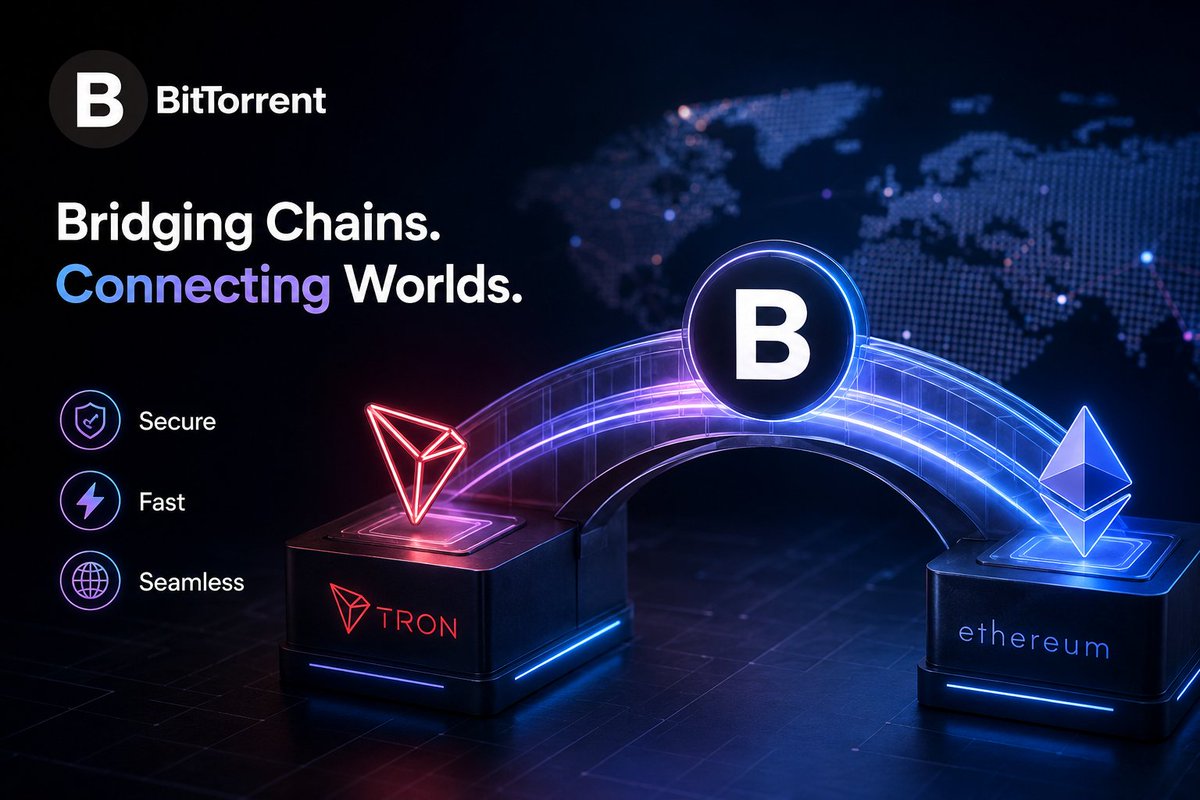
That’s why infrastructure like BitTorrent Bridge is becoming increasingly important inside the evolving Web3 landscape.
Not because cross-chain technology is new,
but because usability is finally becoming a priority.
The future of Web3 won’t be built on isolated ecosystems competing for attention.
It will be built on networks that can coordinate smoothly behind the scenes while users move freely between them.
That’s the real value of modern bridge infrastructure.
🔹 Connecting ecosystems without making users feel lost.
With BitTorrent Bridge, the process becomes far more practical:
▪ Connect wallets across supported ecosystems
▪ Select the correct transfer route
▪ Review estimated outputs and fees clearly
▪ Choose how assets are received
▪ Track progress directly through bridge history
Small details like Auto Receive and destination gas top-up may seem simple on the surface — but they solve one of the biggest hidden problems in cross-chain activity:
Arriving on a new chain with no gas to continue.
That single improvement dramatically reduces friction for everyday users.
But even with better infrastructure, one thing still matters most:
𝐏𝐫𝐞𝐜𝐢𝐬𝐢𝐨𝐧.
Because bridges execute exactly what users approve.
Which means good habits remain essential:
🔸 Double-check destination networks
🔸 Verify wallet compatibility
🔸 Start with smaller test transactions
🔸 Understand that confirmations take time
🔸 Never rush cross-chain transfers
The strongest infrastructure doesn’t remove responsibility.
It simply makes coordination feel less stressful.
And that’s exactly where Web3 is heading:
Toward ecosystems that feel connected instead of fragmented.
BitTorrent Bridge is helping make that transition feel far more usable for the next wave of users entering decentralized finance.
@BitTorrent @justinsuntron #TRONEcoStar
English
@DPtylex_Gmi interact with decentralized infrastructure autonomously
English
𝐀𝐈 𝐢𝐬𝐧’𝐭 𝐣𝐮𝐬𝐭 𝐚𝐛𝐨𝐮𝐭 𝐢𝐧𝐭𝐞𝐥𝐥𝐢𝐠𝐞𝐧𝐜𝐞 𝐚𝐧𝐲𝐦𝐨𝐫𝐞.
𝐈𝐭’𝐬 𝐚𝐛𝐨𝐮𝐭 𝐞𝐜𝐨𝐧𝐨𝐦𝐢𝐜 𝐚𝐛𝐢𝐥𝐢𝐭𝐲.
Right now, AI can generate content, automate workflows, and make decisions faster than ever before.
But there’s still one major limitation:
AI systems still rely on humans to function economically.
They can process information…
Yet they can’t independently:
🔹 pay for services
🔹 manage resources
🔹 build financial reputation
🔹 coordinate across ecosystems
🔹 interact with decentralized infrastructure autonomously
That’s the gap preventing AI from evolving beyond “tools.”
And this is where the bigger infrastructure conversation begins.
Instead of focusing only on building smarter models, 𝐁.𝐀𝐈 is exploring something much deeper:
How do AI agents become active participants in a digital economy?
Because the future of AI won’t just depend on intelligence.
It will depend on whether AI can:
▪ access value
▪ exchange value
▪ verify identity
▪ coordinate with other systems
▪ operate continuously without human approval at every step
That requires an entirely different layer of infrastructure.
𝗧𝗵𝐞 𝐅𝐢𝐧𝐚𝐧𝐜𝐢𝐚𝐥 𝐋𝐚𝐲𝐞𝐫 → BANK OF AI
This is where AI moves from passive execution to economic interaction.
With on-chain financial infrastructure, agents can potentially:
🔸 establish verifiable identity
🔸 manage payments autonomously
🔸 interact with DeFi protocols
🔸 access liquidity across ecosystems
🔸 build persistent reputation over time
And because the infrastructure is multi-chain, the system isn’t restricted to a single environment.
That flexibility matters for scalable AI economies.
𝗧𝗵𝐞 𝐀𝐜𝐜𝐞𝐬𝐬 𝐋𝐚𝐲𝐞𝐫 → AINFT
Financial capability alone isn’t enough.
AI also needs frictionless access to models, compute, and tools.
That’s where the access layer becomes important.
Through wallet-based accessibility and permissionless interaction:
▪ users can interact with AI models seamlessly
▪ agents can access compute resources dynamically
▪ coordination between services becomes more efficient
The result is a more connected AI environment rather than isolated applications.
And that changes the direction of the industry entirely.
Because the next stage of AI growth may not be defined by who has the smartest model.
It may be defined by who builds the strongest infrastructure for:
🔹 coordination
🔹 payments
🔹 identity
🔹 interoperability
🔹 autonomous economic activity
The AI era is gradually shifting from standalone software → to self-operating digital systems.
And systems need economies to scale.
That’s why the infrastructure layer matters more than most people realize.
@BAI_AGI @justinsuntron @bankofai_io @AINFTcom #TRONEcoStar

English
@DPtylex_Gmi Repeat the cycle again later
That approach worked when on-chain activity was lighter.
English
Energy Efficiency Is Becoming The New Competitive Edge On TRON
Most TRON users still think transaction costs are only about fees.
But experienced users are starting to realize something bigger:
The real optimization layer is Energy management itself.
For years, the standard process looked familiar:
🔹 Freeze TRX
🔹 Wait for Energy allocation
🔹 Slowly consume available resources
🔹 Repeat the cycle again later
That approach worked when on-chain activity was lighter.
But today’s TRON ecosystem moves much faster.
Between DeFi activity, lending, swaps, transfers, and automated strategies, locking capital for Energy increasingly feels inefficient for active users.
And that’s exactly why Energy Rental is gaining momentum across the ecosystem.
The Shift Happening Inside TRON
Instead of permanently freezing TRX, users can now access Energy only when needed.
That changes the experience completely.
Rather than sacrificing liquidity, users maintain flexibility while still reducing transaction costs.
This is where JustLend DAO has quietly become one of the most important infrastructure layers within TRON.
By enabling on-demand Energy access, the platform helps users optimize two things simultaneously:
◆ Lower execution costs
◆ Better capital efficiency
And over time, that combination matters a lot.
Why Active Users Prefer Energy Rental
The difference becomes obvious during periods of heavy activity.
Traditional Energy management can create:
🔸 Idle capital
🔸 Reduced flexibility
🔸 Slower portfolio movement
🔸 Higher opportunity costs
But Energy Rental introduces a more dynamic model.
Users can:
✅ Rent Energy instantly
✅ Avoid long-term TRX lockups
✅ Keep assets liquid
✅ Reduce direct TRX burn costs
✅ Send Energy support to another wallet
For traders, DeFi users, builders, and high-frequency participants, these small efficiencies compound very quickly.
TRON Infrastructure Is Becoming More Practical
What’s interesting is that this reflects a larger evolution happening across blockchain infrastructure.
The ecosystem is gradually moving toward:
→ On-demand resources
→ Flexible execution systems
→ Lower-friction user experience
→ Smarter capital allocation
And that shift makes blockchain interaction feel less resource-heavy and far more scalable.
TRON already offers:
⚡ Fast settlement
⚡ High throughput
⚡ Low transaction fees
Now the next layer of optimization is emerging:
Efficient Energy access.
Simplicity Matters Too
One reason adoption continues growing is because the process itself is straightforward.
Users simply connect a wallet, choose the Energy amount needed, confirm the transaction, and receive Energy almost immediately.
No complicated setup.
No permanent capital commitment.
Just flexible access when activity increases.
Security Still Comes First
As Energy Rental becomes more popular, phishing attempts are also increasing across the ecosystem.
Always verify links carefully before connecting wallets.
Use only official JustLend DAO platforms and trusted ecosystem sources.
Because in crypto, efficiency matters, but security matters even more.
The Bigger Picture
The most advanced blockchain users no longer optimize only for speed.
They optimize for sustainability of execution.
That means preserving liquidity while reducing operational costs wherever possible.
And on TRON, Energy Rental is increasingly becoming part of that strategy.
Because over time:
⚡ Lower resource costs
⚡ Better liquidity preservation
⚡ Faster execution
⚡ Simpler operations
all compound into a significant advantage.
@justinsuntron #TRONEcoStar #JustLendDAO @DeFi_JUST
English
𝗪𝗵𝗮𝘁 𝗠𝗮𝗸𝗲𝘀 𝗦𝗺𝗮𝗿𝘁 𝗖𝗼𝗻𝘁𝗿𝗮𝗰𝘁𝘀 𝗔𝗰𝘁𝘂𝗮𝗹𝗹𝘆 “𝗦𝗺𝗮𝗿𝘁”?
Most people focus on the contract itself.
But the real difference is often the quality of the data behind it.
A smart contract can execute perfectly and still produce the wrong outcome if the information it receives is flawed.
Because blockchain logic is deterministic.
It only knows what it’s given.
If inaccurate data enters the system, the execution will still happen, just with inaccurate results.
That’s why the oracle layer matters far more than most people realize.
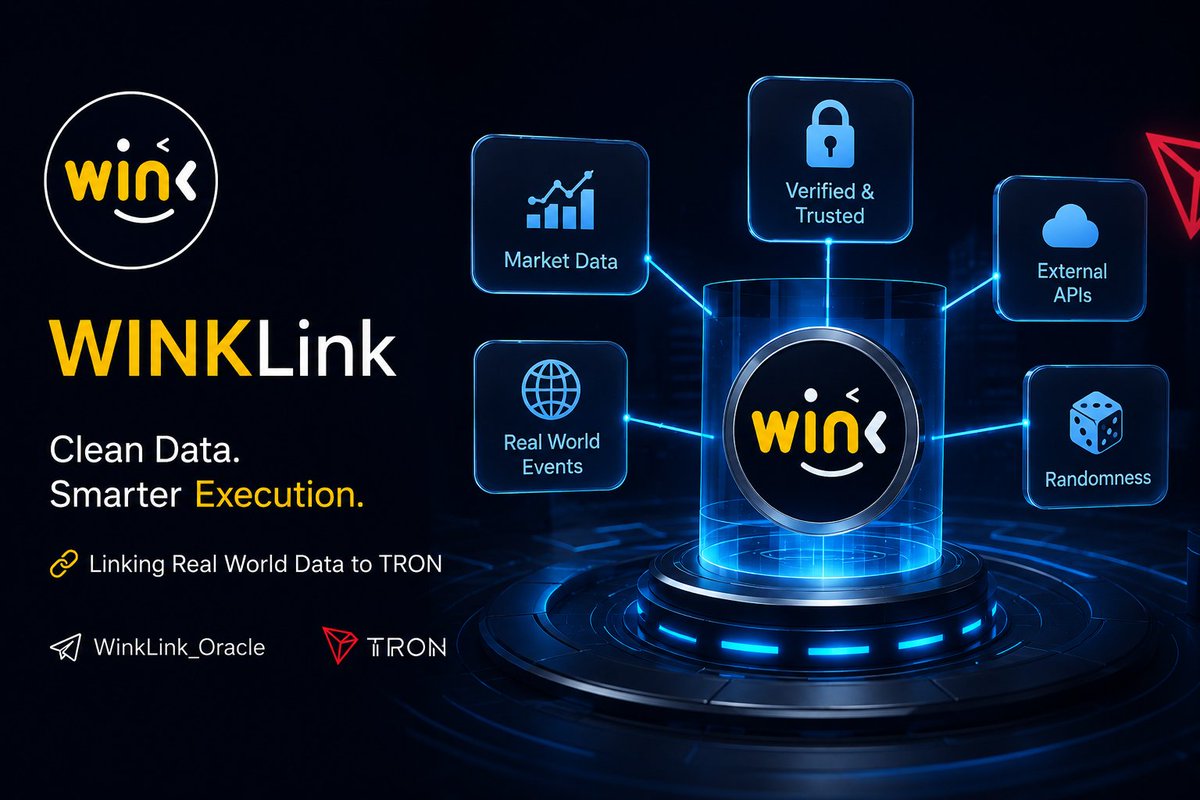
𝗕𝗹𝗼𝗰𝗸𝗰𝗵𝗮𝗶𝗻𝘀 𝗖𝗮𝗻’𝘁 𝗦𝗲𝗲 𝗧𝗵𝗲 𝗥𝗲𝗮𝗹 𝗪𝗼𝗿𝗹𝗱
Smart contracts cannot independently access:
🔹 Live market prices
🔹 Real-world events
🔹 API information
🔹 Randomized outcomes
🔹 External system data
They operate inside isolated environments.
To interact with reality, they need trusted infrastructure that can securely bridge off-chain information onto the blockchain.
That infrastructure is the oracle layer.
𝗪𝗵𝘆 𝗪𝗶𝗻𝗸𝗟𝗶𝗻𝗸 𝗠𝗮𝘁𝘁𝗲𝗿𝘀 𝗢𝗻 𝗧𝗥𝗢𝗡
This is where @WinkLink_Oracle plays a critical role within the TRON ecosystem.
Instead of simply passing raw information through, WinkLink focuses on delivering:
▪ Verified data
▪ Reliable price feeds
▪ Trusted external inputs
▪ Secure randomness
▪ Consistent execution support
The goal isn’t just automation.
It’s dependable automation.
Because in Web3, reliability begins before execution ever starts.
𝗔𝗜 + 𝗢𝗿𝗮𝗰𝗹𝗲𝘀 = 𝗦𝗺𝗮𝗿𝘁𝗲𝗿 𝗦𝘆𝘀𝘁𝗲𝗺𝘀
AI can analyze patterns.
Smart contracts can execute logic.
But oracles provide the verified truth connecting both worlds.
Without clean inputs:
🔸 AI loses accuracy
🔸 Automation loses trust
🔸 Smart contracts lose reliability
When accurate data flows into the system, everything downstream becomes stronger.
That’s what makes infrastructure projects like WinkLink so important for scalable blockchain ecosystems.
On TRON, the input layer is becoming just as important as the execution layer itself.
And as decentralized systems evolve, trusted data won’t be an advantage anymore, it will be a requirement.
@WinkLink_Oracle @justinsuntron #TRONEcoStar
English
@DPtylex_Gmi It’s about creating systems that remain available regardless of borders, downtime, or centralized restrictions.
English
𝗧𝗵𝗲 𝗜𝗻𝘁𝗲𝗿𝗻𝗲𝘁 𝗜𝘀 𝗘𝘃𝗼𝗹𝘃𝗶𝗻𝗴 𝗕𝗲𝘆𝗼𝗻𝗱 𝗖𝗲𝗻𝘁𝗿𝗮𝗹𝗶𝘇𝗲𝗱 𝗖𝗼𝗻𝘁𝗿𝗼𝗹
The internet was designed to connect people.
What many didn’t expect was that it would also evolve into something incredibly difficult to silence.
That’s the power of decentralized infrastructure.
Unlike traditional systems that rely on a single authority, centralized server, or one point of control, distributed networks are built differently. They survive pressure, adapt to disruption, and continue functioning even when parts of the system go offline.
This is why decentralized technology continues to matter far beyond crypto conversations.
It’s not only about transactions.
It’s about resilience.
It’s about accessibility.
It’s about creating systems that remain available regardless of borders, downtime, or centralized restrictions.
BitTorrent became one of the earliest real-world demonstrations of this idea at scale.
Instead of depending on a single location to deliver data, the network distributes files across countless participants globally. Every participant contributes to the strength of the ecosystem, making the network more durable, more scalable, and harder to interrupt.
That model quietly influenced the future of Web3 long before the term became mainstream.
Today, the same philosophy is shaping decentralized finance, AI infrastructure, storage protocols, creator economies, and cross-chain ecosystems.
The shift is becoming clearer:
🔹 Ownership is becoming more distributed
🔹 Infrastructure is becoming more community-powered
🔹 Data flow is becoming more censorship-resistant
🔹 Networks are becoming increasingly borderless
🔹 Participation is no longer limited to large institutions
And the most interesting part is that this evolution is still in its early stages.
The next generation of internet infrastructure will likely be built on systems that don’t rely on a single switch, company, or centralized point of failure. Instead, they will depend on collaboration between millions of connected users, nodes, and autonomous systems working together in real time.
That’s what makes decentralized ecosystems powerful.
Not because they are impossible to challenge, but because they are designed to continue evolving even under pressure.
The distributed web is no longer just an experiment.
It is gradually becoming a foundational layer for how digital interaction, finance, storage, and coordination may operate in the future.
And projects that understood this early are still influencing the direction of the internet today.
@BitTorrent @justinsuntron #TRONEcoStar

English
The Final Countdown Begins…
In just 1 day, the JUST 6th Anniversary × GasFree Super Carnival officially kicks off, and the excitement around the TRON ecosystem is already building rapidly
What makes this event interesting isn’t only the celebration itself, but what it represents for the future of blockchain accessibility and user experience.
For years, one of the biggest barriers in crypto adoption has been transaction friction:
▪ High fees
▪ Complicated onboarding
▪ Expensive network activity
▪ Limited accessibility for smaller users
But initiatives like #JUSTGasFree are helping push the ecosystem in a different direction, one where users can interact with blockchain applications more freely, more efficiently, and with far less cost overhead.
The idea of 0-Gas transfers may sound simple on the surface, but its impact can be massive.
When transaction costs become less of a burden:
🔹 More users participate
🔹 DeFi activity becomes smoother
🔹 On-chain interactions increase
🔹 Developers can design better user experiences
🔹 Communities become more active and scalable
And historically, ecosystems that reduce friction tend to attract stronger long-term engagement.
The 10,000 USDT prize pool adds even more excitement to the celebration, but beyond the rewards, this event highlights how fast the TRON ecosystem continues evolving toward practical, real-world usability
The next phase of Web3 will likely be driven by platforms that make blockchain feel seamless instead of complicated.
That’s why moments like this matter.
They show how infrastructure, incentives, and community growth can come together to create stronger adoption and better participation opportunities for everyone involved.
Tomorrow the carnival begins
And the energy around JUST is only getting bigger
@DeFi_JUST @justinsuntron #TRONEcoStar

JUST DAO@DeFi_JUST
⏳1 day to go! The JUST 6th Anniversary × GasFree Super Carnival Month officially kicks off tomorrow at 17:00 (SGT). Ready to enjoy 0-Gas transfers and a 10,000 USDT prize pool? 👀💥 #JUST #GasFree #JUSTGASFREE
English
𝗜𝗻𝗳𝗿𝗮𝘀𝘁𝗿𝘂𝗰𝘁𝘂𝗿𝗲 𝗜𝘀 𝗪𝗵𝗮𝘁 𝗦𝗲𝗽𝗮𝗿𝗮𝘁𝗲𝘀 𝗦𝗰𝗮𝗹𝗮𝗯𝗹𝗲 𝗘𝗰𝗼𝘀𝘆𝘀𝘁𝗲𝗺𝘀 𝗙𝗿𝗼𝗺 𝗦𝗹𝗼𝘄 𝗢𝗻𝗲𝘀
Most users only notice blockchain friction after activity starts increasing.
At small scale, high transaction costs, delayed confirmations, and inefficient execution may seem manageable. But once participation grows, those tiny inefficiencies begin compounding rapidly across every interaction.
That’s where strong infrastructure matters most.
The future of Web3 will not only be defined by innovation, narratives, or token launches. It will be defined by how efficiently users can actually interact with the ecosystem on a daily basis.
This is exactly why Energy Rental on TRON is becoming increasingly important.
Instead of forcing users to constantly burn unnecessary resources during transactions, Energy Rental introduces a smarter operational layer that helps reduce friction while improving overall network usability.
And that changes more than people realize.
Because when execution becomes cheaper and smoother:
🔹 DeFi activity becomes more sustainable
🔹 Wallet management becomes easier
🔹 Automated strategies become more practical
🔹 Developers can scale applications more efficiently
🔹 Users interact more confidently without worrying about excessive costs
🔹 High-frequency activity becomes far more optimized
The biggest advantage of efficient infrastructure is not just lower operational cost.
It is the freedom to scale without complexity growing at the same speed.
That is one of the reasons serious blockchain ecosystems continue investing heavily in optimization layers instead of only focusing on hype cycles.
Real adoption depends on experience.
If users constantly encounter friction, expensive execution, or unnecessary complexity, growth eventually slows down regardless of how strong the technology appears on paper.
But when infrastructure feels seamless in the background, participation naturally expands.
This is where Energy Rental creates real value inside the TRON ecosystem.
It helps transform blockchain interaction from something users must carefully calculate every single time into something that feels smooth, accessible, and operationally efficient.
And the long-term impact of that cannot be underestimated.
As more builders, traders, protocols, and everyday users continue entering Web3, scalable infrastructure solutions will quietly become some of the most important drivers behind ecosystem growth.
Because in the end, the ecosystems that win long term are usually not the loudest ones.
They are the ones that make execution feel effortless.
@DeFi_JUST @justinsuntron #TRONEcoStar

English
AI + Blockchain Is No Longer Just a Concept, It’s Becoming Real Infrastructure
As the digital economy evolves, the projects that will stand out are the ones making technology feel simpler, faster, and more useful for everyday users.
That’s exactly why it’s exciting to see #TRON continuing to expand infrastructure for AI agents and digital assets while builders like UQUID push practical innovation forward.
AI-powered ticketing and marketplace experiences could completely change how users interact with payments, purchases, and digital services:
🔹 Faster and smarter user interactions
🔹 Reduced friction during payments
🔹 More personalized marketplace experiences
🔹 Better automation for digital commerce
🔹 Simpler onboarding for non-crypto users
The future of Web3 adoption will depend heavily on usability.
People don’t just want decentralized systems, they want systems that are efficient, intuitive, and seamless. Combining AI with blockchain infrastructure creates opportunities for platforms to deliver exactly that.
It’s interesting watching ecosystems move beyond speculation and focus more on real-world utility, automation, and user experience.
The next phase of crypto growth may not be driven only by trading… but by intelligent applications people use every day.
@justinsuntron @trondao #TRONEcoStar
TRON DAO@trondao
#TRON continues advancing infrastructure for AI agents and digital assets. @spaftu, CEO of @uquidcard, discusses how Uquid is building AI-powered ticketing experiences designed to simplify how users interact with online marketplaces and digital payments.
English
𝗧𝗥𝗢𝗡 𝗦𝘁𝗮𝗸𝗶𝗻𝗴 𝗶𝘀 𝗘𝘃𝗼𝗹𝘃𝗶𝗻𝗴, 𝗔𝗻𝗱 𝗜𝘁’𝘀 𝗕𝗲𝗰𝗼𝗺𝗶𝗻𝗴 𝗠𝗼𝗿𝗲 𝗔𝗰𝗰𝗲𝘀𝘀𝗶𝗯𝗹𝗲 𝗧𝗵𝗮𝗻 𝗘𝘃𝗲𝗿
The growth of blockchain adoption has always depended on one important factor: simplicity.
People want to participate in the future of decentralized finance, but they also want systems that are easy to understand, flexible to use, and rewarding over time. That is exactly why the expansion of TRON staking onto major platforms is such a significant milestone for the ecosystem.
Now, more users can access TRX staking with a smoother onboarding experience, simplified participation, and flexible asset management, all while remaining connected to one of the most active blockchain networks in the industry.
🔹 Stake your TRX with ease
🔹 Earn rewards consistently
🔹 Maintain flexibility with unstaking options
🔹 Participate in the TRON ecosystem without complicated processes
This is bigger than just another staking feature.
It represents how blockchain infrastructure is gradually moving from being “crypto-native only” to becoming truly user-friendly for mainstream adoption.
For years, staking was viewed as something technical:
▪ managing wallets
▪ understanding validators
▪ navigating network resources
▪ learning lock-up periods
▪ calculating yields manually
But the industry is changing fast.
Today, the goal is no longer just decentralization alone, it’s decentralized accessibility.
TRON continues positioning itself as a network focused on scalability, efficiency, and practical utility. From payments and stablecoin activity to DeFi infrastructure and staking participation, the ecosystem keeps expanding in ways that lower barriers for everyday users.
And staking plays a major role in that evolution.
Why?
Because staking transforms passive holders into active network participants.
Instead of simply holding digital assets, users contribute to ecosystem security and governance while potentially earning rewards over time. It creates stronger engagement between the blockchain and its community.
What makes this even more interesting is how flexibility is becoming a key feature in modern staking systems.
In the past, many users avoided staking because they feared losing access to their funds for long periods. Flexible unstaking options change that narrative completely. It gives users confidence knowing they can still maintain liquidity access when needed.
That balance between rewards and flexibility is extremely important for mass adoption.
TRON’s ecosystem has already built a reputation for:
🔸 fast transaction speeds
🔸 low transaction costs
🔸 strong stablecoin activity
🔸 expanding DeFi applications
🔸 growing global community support
Adding easier staking access only strengthens that momentum.
The future of blockchain will not be won solely by the chains with the most technology.
It will be won by the ecosystems that make advanced technology feel simple for millions of people around the world.
That’s why developments like this matter.
They reduce friction.
They increase participation.
They improve accessibility.
And they help onboard the next wave of users into Web3.
As crypto adoption continues growing globally, staking is becoming more than a rewards mechanism, it’s becoming part of how users interact daily with blockchain economies.
TRON is clearly pushing toward that future.
And this is only the beginning.
@justinsuntron #TRONEcoStar @trondao
English