Rahul Ruia

5.7K posts

Rahul Ruia

Rahul Ruia

@eccentrickky

Wannabe full time investor/trader, curious about everything i can get my eyes upon, Cleared CFA L2

Kolkata, India Katılım Ekim 2014
894 Takip Edilen260 Takipçiler
Rahul Ruia retweetledi
Tushar Pandey
Tushar Pandey@equities_samjho·
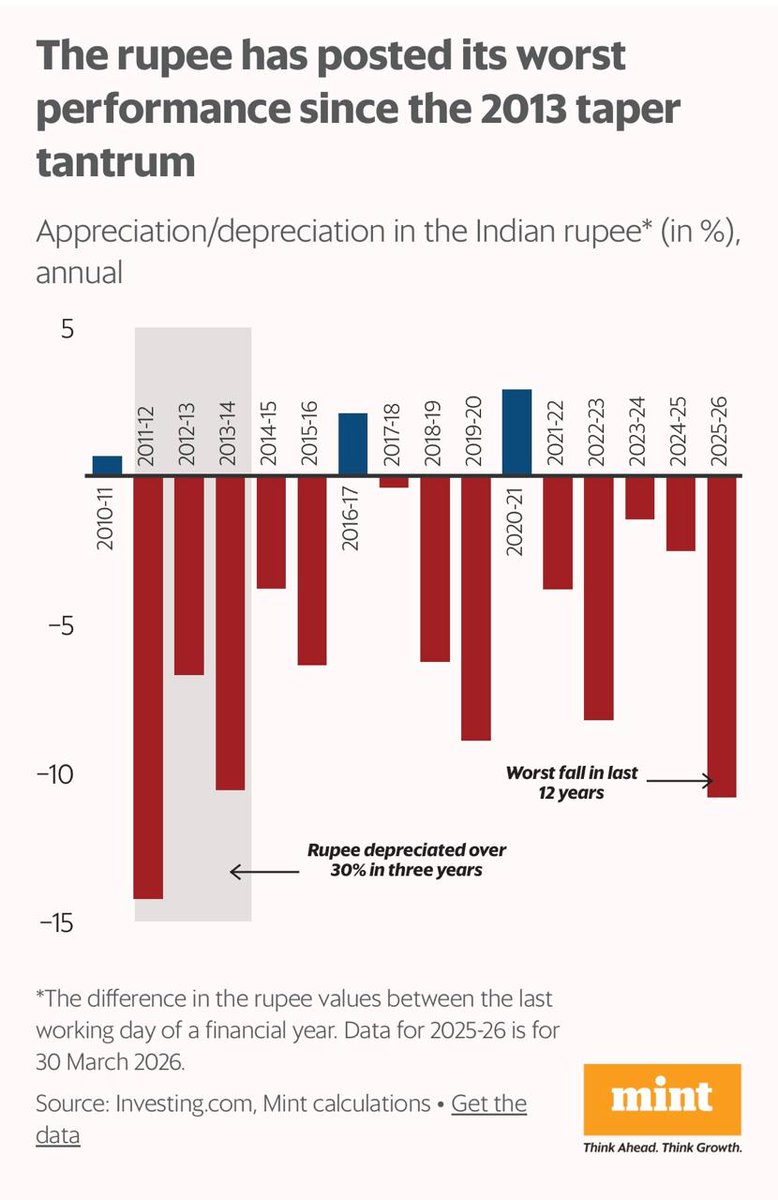
The rupee is in free fall even after RBI intervenion, which led to a bloodbath in Bank Nifty today. It is down by ~4% as I write this. In this post, I’ll explain everything that you need to know. To understand this, you’ve to first know that every Bank has a Treasury. You can think of it as the bank’s own internal hedge fund. This department is responsible for managing the bank's cash and making profits by trading currencies and bonds. Now, you might also be hearing that the RBI has pulled the plug on Rupee’s speculation machine. If you’ve looked at the Rupee today, you’ve seen a violent tug-of-war. To understand why the bank stocks crashed and why the Rupee is acting like a roller coaster, you need to understand how the RBI fundamentally changed Treasury’s plumbing after a decade. The Old Game It was where a bank’s treasury made easy money. Until Friday, big banks were playing a double game. In Mumbai (onshore market), they would buy massive piles of dollars hoping that it would rise. In other words, they were Long USD. Simultaneously, since these bank’s Treasury can’t just randomly take Long bets, what they used to do was in offshore markets like Dubai or Singapore (also called Non-Deliverable Forward (NDF) market), they would Short those dollars immediately (making a bet that the dollar would fall). This would complete the cycle and make their bets risk free. If USD rises, they earn in India, and lose in Dubai. If USD falls, they lose in India, but then gain in Dubai. So, net net, no speculative risk. But why take that trade in the first place when the end result is no gain or loss? Because the price in Dubai was usually higher than in Mumbai (called as Spread). By holding dollars in India and betting against them abroad (to cancel the speculative risk), they locked in a risk-free profit called a Spread. It was easy money for treasuries (let’s say they bought at 93 and sold it at 93.10) even though the overall position remains hedged. The Problem was that to make this profit, banks were hoarding billions of dollars inside India. This hoarding made the Dollar scarce and the Rupee weak. When the Rupee hit 95 on Friday, the RBI realized the banks' profit machine was actually pushing the country toward a currency crisis. The New Rule This led RBI to introduce the $100 Million limit on the Net Open Position (NOP) of banks. Over the weekend, the RBI slapped this limit on how many dollars a bank can hold unbalanced on its books (the difference between what a bank owns and what it owes). Imagine having $800 million in arbritage trade that now must be reduced to $100 million. The result is forced selling. This forced every major bank in India to dump their multi-billion dollar piles into the market starting this morning to bring their NOP within $100 million. This morning, banks were selling their dollars at Fire Sale prices (around 93.60) just to follow the law. Once they sold their Mumbai dollars this morning, they were left with those Short bets in Dubai (that they earlier took to hedge their speculative trade) but no longer had any dollars left in Mumbai to back them up. They were Naked. If the dollar rose, they would be wiped out (as they had shorted it in Dubai). Banks obviously panicked. They rushed to Dubai to Buy Back (cancel) their short bets. But the offshore traders knew the Indian banks were desperate. They jacked up the price. Banks were selling cheap in Mumbai (93.60) and being forced to buy expensive in Dubai (95.00+). This was a double whammy. The 135-paisa gap you saw today is the physical cost of banks being forced to exit a safe trade at suicide prices. They lost on the way out of Mumbai, and they lost again on the way into Dubai. Impact on Rupee Because banks were legally forced to sell USD, the Rupee gapped up this morning to 93.53 (pure demand and supply). It looked like a recovery, but it was artificial. As I write this, the Rupee has already slipped back toward 94.70. This might be because the real buyers (which are oil companies and importers) saw the cheap prices and swallowed every single dollar the banks dumped. Importers just love when currencies appreciate (95 —> 93). The banks took a massive ₹4,000 Crore loss today (according to Jefferies) just to follow the rules, but the Rupee is still under extreme pressure because the fundamental reasons (high oil and war) haven't changed. This loss is however, one time and will reflect in Q4 Treasury earnings for Banks. Liquidity Crunch Again There is also an important angle to this, which is where I am concerned. The economy was already reeling under liquidity crunch, this move will undo all those efforts taken in the last few months. This is where it also tends to hit the real economy. By capping banks at $100M, the RBI (knowingly) killed Liquidity (the ease of trading). For instance, if a big company like Reliance needs $500M to pay for oil, no single bank can handle that trade anymore because it would blow past their $100M limit. The company now has to go to 10 different banks, causing a stampede that spikes the price. Then comes the increased hedging price. An importer buys a Forward Contract to lock in a price for the future (hedging 101). But since banks now have a tiny limit of $100M, that space is incredibly scarce. Banks are now charging double the premium to provide this insurance. So, an importer is now either paying a scarcity tax just to protect his business or is not hedging at all, which is also very risky during a volatile currency phase. The Bottom Line The bottom line is that the RBI has successfully kicked the speculators out of the room, but they’ve also made the room very small for everyone else. We have moved from a market driven by greed to one driven by regulation. The Rupee might be steadier in the short term, but the cost of doing business and liquidity crunch are likely to stay here for a while. This is the short term pain I was referring to in my earlier posts. It is a necessary pain because the alternative is currency crisis, which is even more brutal for the economy.
Tushar Pandey tweet media
English
7
71
279
24.1K
Rahul Ruia
Rahul Ruia@eccentrickky·
@Nick_khandelwal Taleb has written about it…the assumption of normal distribution which is used to for option pricing itself is flawed..such events can be seen as transforming normal distribution curves into a curve with fat tails and thinner body ..
English
1
0
4
629
Rahul Ruia retweetledi
Nikhil Khandelwal.
Nikhil Khandelwal.@Nick_khandelwal·
Crude just made roughly a 6 standard deviation move vs what options were pricing a week ago at 50 IV. ( Under normal Gaussian models ) A move like this should happen once in a “Once in a Million years” type event in market terms. And yet… markets do this every few decades. A good reminder to people who say yeah nainho sakta wo nai ho sakta. Sab kuch ho sakta there is always a small probability to that event.
English
9
9
141
15.6K
Rahul Ruia retweetledi
Macro Liquidity by Sunil Reddy
Macro Liquidity by Sunil Reddy@Macrobysunil·
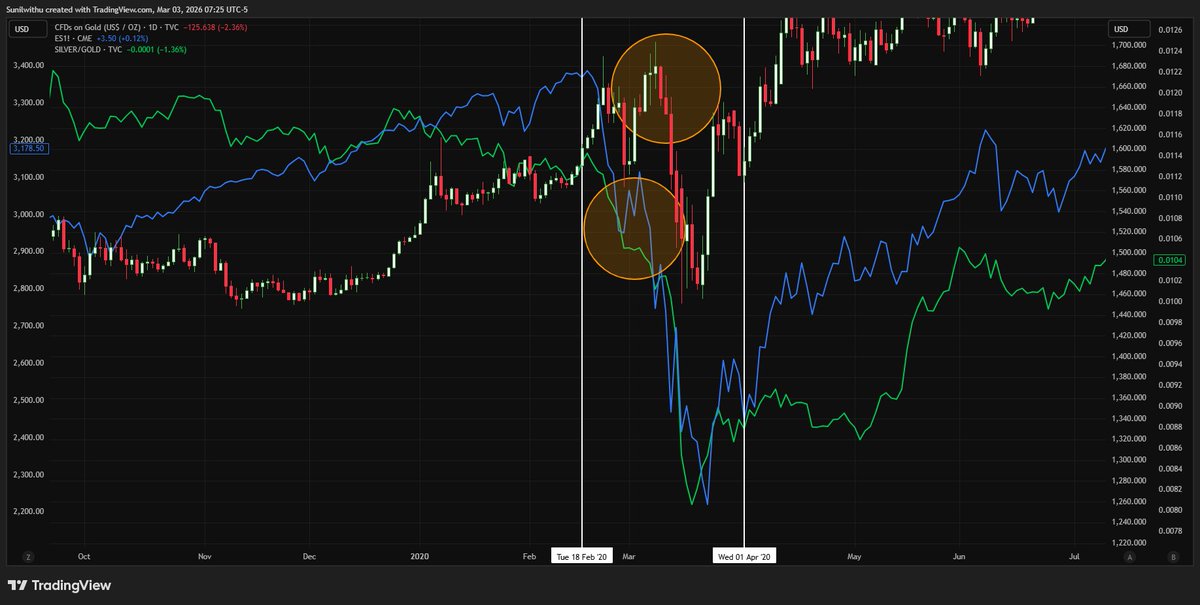
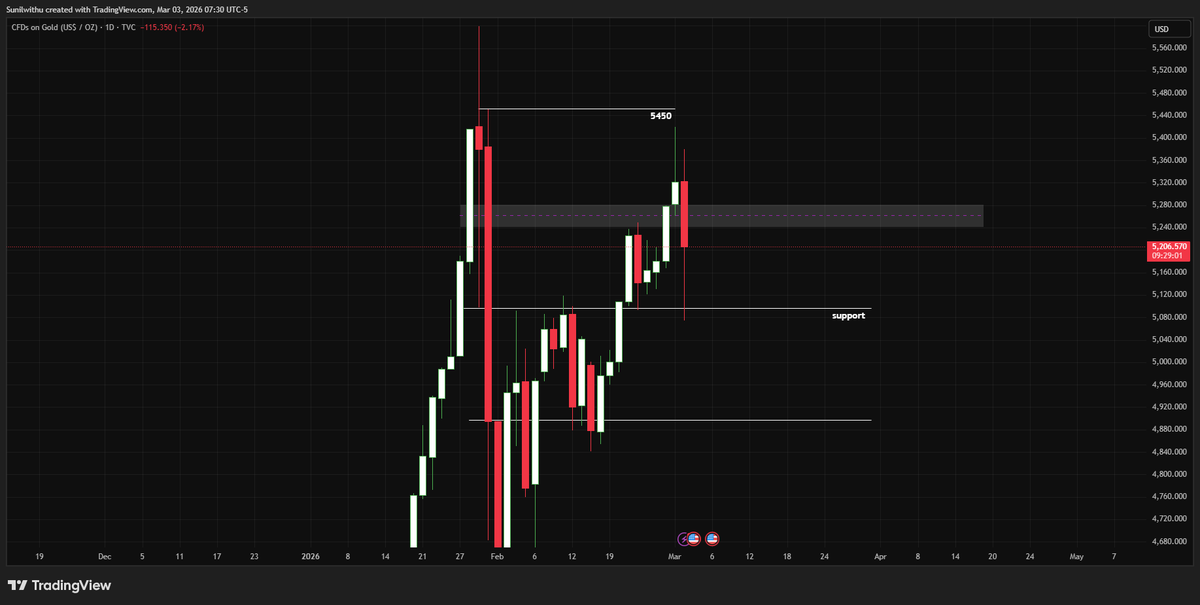
As of now, Gold is still holding support. But how do you know stress is building beneath the surface? Look at cross-asset behavior. How do you detect liquidity stress building? Look beneath price, look at participation. I’ve attached the cross-asset correlation from the 2020 COVID deleveraging. What happened then? • Gold initially held • Equities attempted weak bounces • Silver/Gold ratio collapsed (no risk participation)(even with Gold bouncing) • Dollar stayed firm • Then everything sold together That was a funding squeeze. Now here’s the confirmation checklist: If Gold starts recovering BUT: – Equities bounce weak – Silver/Gold ratio does not expand higher – Dollar refuses to soften That is not a healthy risk-on recovery. That is hidden stress. Because in real strength: ✔ Silver leads Gold ✔ Equities confirm ✔ Dollar eases If those are missing, Gold strength is defensive, not expansionary. And when defensive bids meet persistent dollar strength, liquidity cracks eventually appear. This may unfold in days or in weeks, that depends on how the war evolves. But the structural dynamics do not change with time. Liquidity stress follows the same pattern, irrespective of the timeline. Watch participation. That’s where the real warning signs form.
Macro Liquidity by Sunil Reddy tweet mediaMacro Liquidity by Sunil Reddy tweet media
Macro Liquidity by Sunil Reddy@Macrobysunil

When Gold breaks support, It’s a Big WARNING. Liquidity stress is no longer selective. Equities selling. Bonds selling. Metals selling. Dollar rising. Now if Gold loses support too, we are entering a full-blown liquidity squeeze. That’s when: • Margin calls accelerate • Correlations go to 1 • Everything gets sold for cash This is the “Cash is King” regime. And historically… That’s how every major asset liquidation cycle begins. Brace for impact.

English
8
17
140
15.9K
Rahul Ruia
Rahul Ruia@eccentrickky·
@CzarVT This has been the case since GFC . World Governments want real negative interest rates to reduce debt to GDP ratios - Russel Napier has been speaking about it since post COVID..
English
0
0
1
67
Rahul Ruia retweetledi
🪔 🔸 VT 🔸 🪔
🪔 🔸 VT 🔸 🪔@CzarVT·
The world is already in a silent hidden depression, stretching and surviving on debt fueled aid and liquidity. Governments keep borrowing, central banks keep printing, and balance sheets keep expanding, but real growth, real wages, and real productivity have not kept pace. Households are leaning on credit cards, buy now pay later schemes, mortgages, and personal loans just to maintain the same standard of living. And no government will ever officially call it what it is, for obvious political reasons. It looks stable on the surface. Underneath, it is leverage holding the system together.
English
6
3
20
1.2K
Rahul Ruia retweetledi
🪔 🔸 VT 🔸 🪔
The only reason why India is not a pak or Bangladesh etc is our IT boon (yes boon not boom) without it a domino effect will happen on RE/banking/consumption etc till this on & doing well all 4/5/10 trillion eco can be boasted.. needs to survive trump tantrums & adapt to AI..
English
5
3
34
1.8K
Rahul Ruia
Rahul Ruia@eccentrickky·
@sharadjhun GLD ( based in US ) is backed by physical gold…it publishes an audited holding of its physical stock every quarter …
English
0
0
0
285
Sharad Jhunjhunwala
Sharad Jhunjhunwala@sharadjhun·
#Arbitrage Opportunity #GoldBees (ETF) available at 144Rs at NSE and MCX Gold selling at 190++ ( Rs 190500 for April Future ). Buy ETF in Cash and Short MCX #SilverBees (ETF) available at 350Rs in NSE and MCX Selling at 420++ (Rs 420000+ for SilverMini Feb Future) Can you Dare to do this Trade which is 100% Safe as far as Risk in Long Term is Concerned because this Distortion is only Short lived and in India ETF is backed by Physical stocks unlike USA.
Sharad Jhunjhunwala@sharadjhun

Last Few days have seen very Big Price Distortion/Manipulation in #MCX prices of #GOLD and #Silver with respect to #Commex Ideally a 100$ move in Gold should give a move of 2000-2500Rs in MCX but we have seen this going as high as 18000Rs for 200$ move Same stands for Silver This will lead many to Buy at these Fake Prices, Stay Cautious

English
41
25
268
92.3K
Rahul Ruia
Rahul Ruia@eccentrickky·
@rogueintj Manikarnika ghat in Kashi is a good place- you should try before it is completely revamped.
English
0
0
1
45
Zoso
Zoso@rogueintj·
Mereko smashan saadhna karni hain bas. Ab kahin Mann nahinlagta
हिन्दी
4
1
8
218
Abhishek_39✨
Abhishek_39✨@AbhiAttorney_·
A Venus person will be known for having a dimple either on cheek or chin or both and generally has light soft expressive eyes , soft brown hair and delicate skin. He/she will refrain from bs and nonsense.
English
5
37
502
20.8K
Rahul Ruia
Rahul Ruia@eccentrickky·
@paxtrader777 Can it be offered remotely? To someone based out of the USA?
English
0
0
0
42
PaxTrader777🇺🇸
PaxTrader777🇺🇸@paxtrader777·
If I brought real prop trading into the retail trading world, would there be interest?
English
213
8
896
64.4K
Rahul Ruia
Rahul Ruia@eccentrickky·
@MCXIndialtd - why are higher strikes of Gold options contracts not being opened? how will we hedge our positions if there is a sudden spike in prices? can they not be opened during market hours instead of being opened on the next day? @SEBI_India @SEBI_updates
English
0
0
0
30
Rahul Ruia
Rahul Ruia@eccentrickky·
@LukeGromen the USD will be sacrificed- its a slower burn compared to sacrificing the UST market and blowing up the whole system- those who know , know
English
0
0
0
6
Luke Gromen
Luke Gromen@LukeGromen·
De-coupling from China requires the US to choose to sacrifice either the UST market or the USD; this is not an opinion, it is a double-entry bookkeeping identity. Meme via @gave_vincent from his recent publicly-shared report (link below.)
Luke Gromen tweet media
English
32
65
507
89.3K
Rahul Ruia
Rahul Ruia@eccentrickky·
@BlacklionCTA @PliskinSnak3 would have been lower - but - as of now - policies of both countries are moving in opposite directions- and the direction is that of a probable spike of the Yen. Do let me know your thoughts on this opinion of mine(n/n)
English
0
0
0
16
Rahul Ruia
Rahul Ruia@eccentrickky·
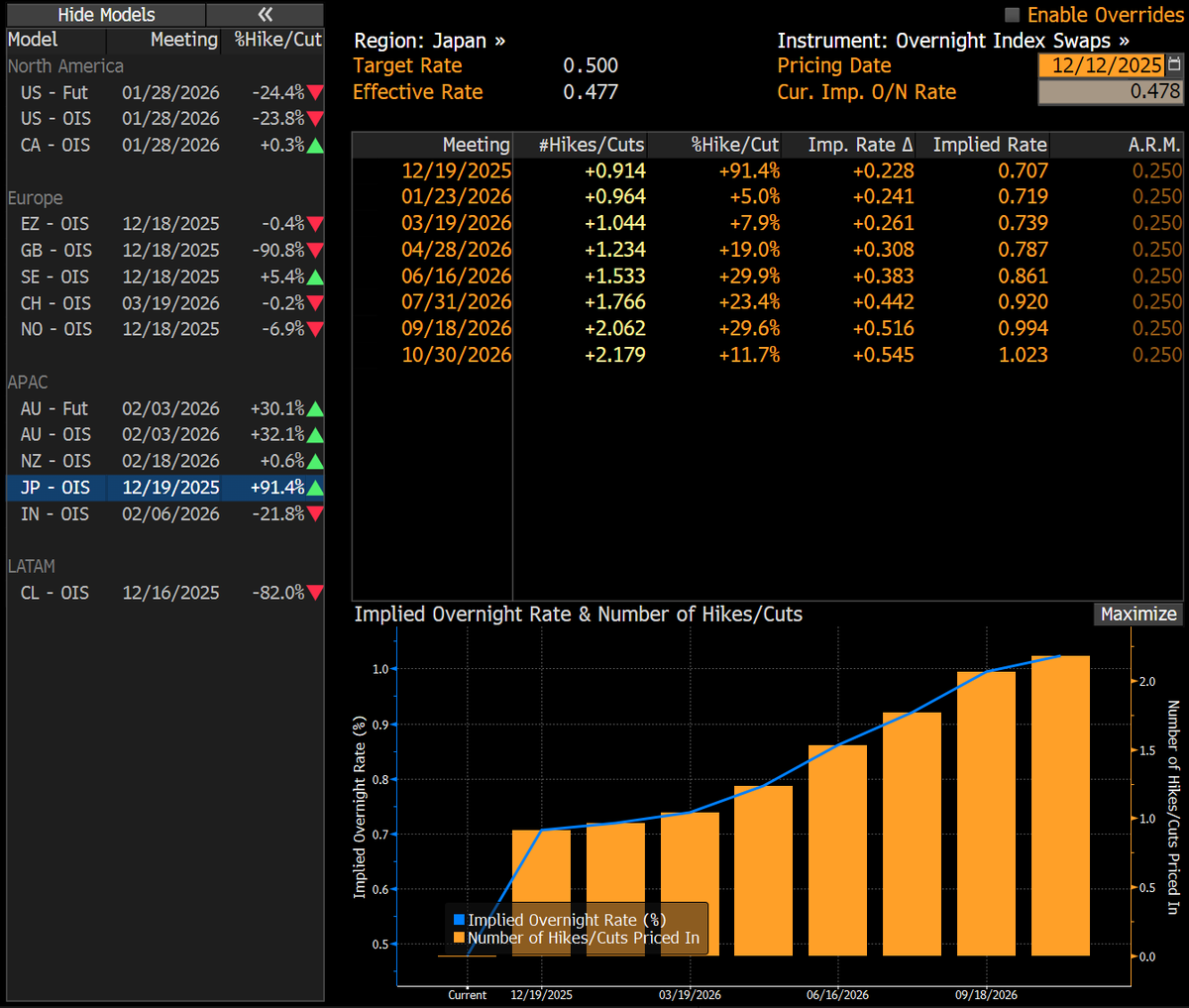
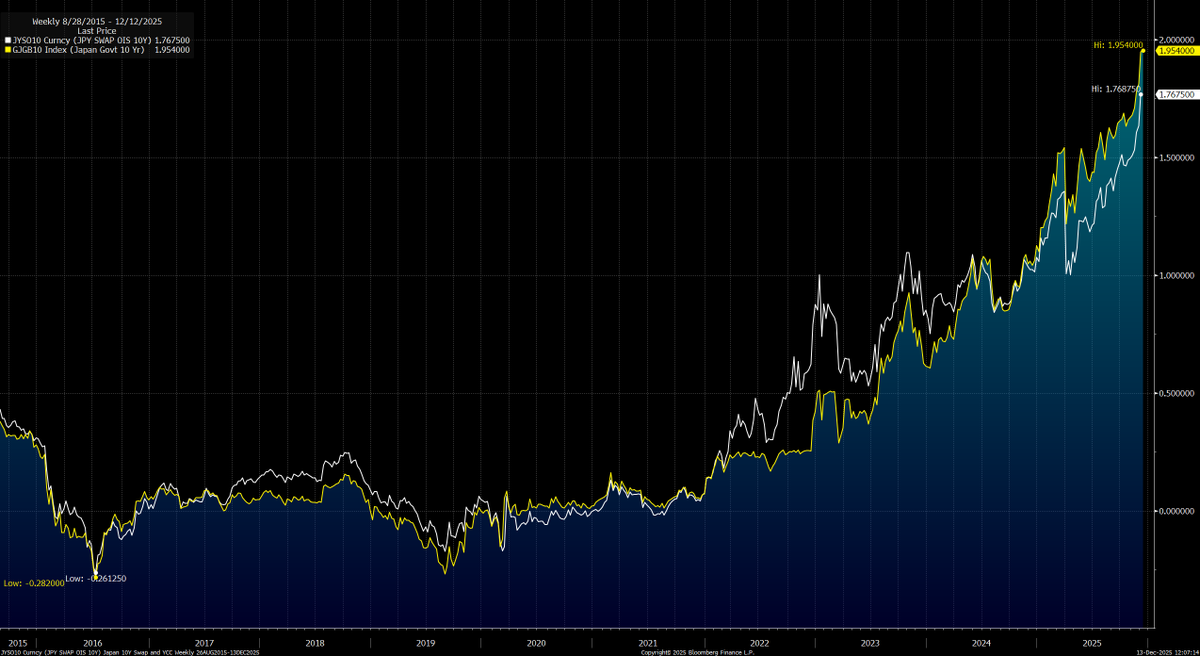
@BlacklionCTA @PliskinSnak3 The DXY has been falling from the past couple of trading sessions- any hike by the BOJ can cause a sudden appreciation of the Yen along with an unwind in risk assets - this is my take. Had the DXY been rising - the odds of this hike causing a sudden spike in Yen (1/n)
English
1
0
0
68
Brent aka Blacklion
Brent aka Blacklion@BlacklionCTA·
91% BOJ raises next week and 10Yr JGB yields still soaring.
Brent aka Blacklion tweet mediaBrent aka Blacklion tweet media
English
8
28
270
47.5K
Rahul Ruia
Rahul Ruia@eccentrickky·
@SamanthaLaDuc @GraphCall @DerivativesDon @allthingsf74065 of course it is outright debasement - if not - then what is the need to expand the balance sheet again? let market forces decide at what yields they will be buyers of US sovereign debt. It doesn’t get more clearer than this!
English
0
0
2
41
Samantha LaDuc
Samantha LaDuc@SamanthaLaDuc·
A Fiscal Problem With A Monetary Solution is indeed about debasement. When inflation is not on target (3% vs 2%), and there is no deflation in earnings or prices; and the velocity of money is still high (liquidity)... the reason Fed starts up yet another “not QE, QE” program - in this case, RESERVE MANAGEMENT PURCHASES - is for one reason: “OUTRIGHT FISCAL DEFICIT MONETIZATION”, @GraphCall
English
3
5
30
3K
Abhishek_39✨
Abhishek_39✨@AbhiAttorney_·
@eccentrickky Physical chains bind the body and easy money binds the soul & the soul is harder to free. That is why its weight is ultimately heavier.
English
1
0
2
55
Abhishek_39✨
Abhishek_39✨@AbhiAttorney_·
The weight of easy money is heavier than chains.
English
2
10
61
1.6K
Rahul Ruia retweetledi
EndGame Macro
EndGame Macro@onechancefreedm·
The Clock Is Ticking: Why the Fed Must Cut Faster Than Anyone Admits This is the invoice for keeping rates too high for too long. For more than a decade, the Fed made easy money on its bond book and sent steady remittances back to Treasury. That’s why the line sits flat. But when they slammed rates to 5% while still holding trillions of low yielding QE bonds, the whole machine flipped. Interest on reserves and RRPs surged, and the Fed started losing money in real time. Since the Fed can’t go bankrupt, it just stops paying Treasury and stacks the losses in a sort of accounting purgatory. That vertical drop roughly $240 billion is money the government will never see unless the Fed earns its way out over years. Why This Moment Is More Dangerous Than It Looks If everything else in the economy were humming, you might chalk this up to the cost of fighting inflation. But the backdrop is weakening in all the places that matter. Auto, card, and student loan delinquencies are climbing. Office real estate is deeply stressed. Credit scores are falling nationwide. Young workers can’t find stable footing. And the 2026 refinancing wall looms: trillions of government and commercial debt that must be rolled at rates far above the ones they were born into. This is the early outline of a demand slowdown and a potential debt deflation setup. High nominal rates in that environment don’t stabilize anything. They just make every dollar of debt heavier as incomes soften. That’s how economies quietly drift into deflationary spirals. Why the Fed Needs to Move Faster Than Anyone Thinks This is why they’ve already cut twice, why QT ends December 1st, and why they’re redirecting MBS runoff into T-bills. They’re trying to create just enough breathing room to prevent a funding accident while pretending everything is fine. But the truth is simple: the longer they leave rates here, the more the real economy including households, banks, and the Treasury itself buckles under the weight. The narrative says slow, steady cuts. The reality is they may not have that luxury. If deflation is the real risk, they can’t wait for the data to confirm it. By the time it shows up cleanly in CPI, the damage is already done. The Fed needs to cut faster than consensus expects not to juice markets, but to keep the system from tightening itself through rising delinquencies, collapsing credit quality, and a refinancing wall that gets more dangerous with every month of high rates. The recent flattening in the chart is the first sign the Fed knows the clock is ticking. Either they bring rates down on their own terms, or the economy will force a far uglier adjustment later.
E.J. Antoni, Ph.D.@RealEJAntoni

Fed has finally stopped the losses, largely b/c IoR has dropped and RRPs are drained while average yield on balance sheet is steadily rising as low-yield assets mature, placed w/ higher-yielding ones; Fed is still over $240 billion away from sending Treasury a single dime:

English
15
35
186
49.9K