
Vladyslav Kavalerchyk 🇺🇦

14.9K posts

Vladyslav Kavalerchyk 🇺🇦 banner
Vladyslav Kavalerchyk 🇺🇦

Vladyslav Kavalerchyk 🇺🇦

@echo_stepbystep

Echocardiography as art and science. #EACVI Web & Comunication Committee, SoMe ambassador @DGK_org. #SoMe editor #EHJIMP & #EHJCVI.

Germany Katılım Mayıs 2016
378 Takip Edilen18.5K Takipçiler
Sabitlenmiş Tweet
Vladyslav Kavalerchyk 🇺🇦
Vladyslav Kavalerchyk 🇺🇦@echo_stepbystep·
Please subscribe my YouTube channel: bit.ly/2DWogkJ I would like to present my project (echocardiography step by step®). With my project, I want to take you into the world of echocardiography through the prism of my experience.
English
8
37
189
0
Vladyslav Kavalerchyk 🇺🇦 retweetledi
EHJ-IMP Editor-in-Chief
📄 Can we trust automated LVEF in hypertrophic cardiomyopathy? 🔗 DOI: doi.org/10.1093/ehjimp… 🫀 AI-powered echocardiography promises faster, scalable assessment of LV function—but does it work in complex phenotypes like HCM? This study raises important concerns. ✨ Study design: 🔹 50 patients with hypertrophic cardiomyopathy 🔹 Comparison between: automated ML-based software (HeartModel®) expert echocardiography CMR (when available) ✨ Key findings: 🔻 Automated LVEF is systematically lower ➡️ −8% vs expert echo ➡️ −12% vs CMR 🔺 LV volumes are overestimated ➡️ EDV +20% ➡️ ESV +43% 🔹 Only modest agreement with standard methods (low R²) ⚠️ Clinical impact: 👉 22% classified as LVEF <50% by AI vs 12% by expert readers 🚨 This translated into: ➡️ wrong treatment decisions in 18% of patients (when applied to myosin inhibitor management) 🧠 Why does AI struggle here? 👉 HCM-specific challenges: abnormal LV geometry hypertrophy hyperdynamic function 👉 Likely underrepresented in training datasets 💡 Clinical take-home message: 👉 AI tools are not yet ready for unsupervised use in HCM ⚠️ Especially when decisions depend on thresholds (e.g. LVEF 50%) 👉 Expert oversight remains essential 🤖 Bigger picture: 👉 AI performance is context-dependent 👉 Validation must be disease-specific—not generic 🚨 Bottom line: In HCM, automated LVEF may mislead—and clinical decisions still require expert interpretation. #Cardiology #HCM #Echocardiography #AIinMedicine #MachineLearning #CardiacImaging #PrecisionMedicine #HeartFailure #DigitalHealth 🫀📊
EHJ-IMP Editor-in-Chief tweet media
English
1
10
26
1.8K
Vladyslav Kavalerchyk 🇺🇦 retweetledi
EHJCVI Editor-in-Chief
🚀 Want to stay updated with the latest from #EHJCVI? 📲 Don’t miss out on cutting-edge imaging, key papers, and expert insights shaping cardiovascular medicine 👥 Follow our Social Media Editors and stay one step ahead: @EHJCVIEiC
EHJCVI Editor-in-Chief tweet media
English
0
9
22
3.1K
Vladyslav Kavalerchyk 🇺🇦 retweetledi
EHJ-IMP Editor-in-Chief
🫀 Myocardial perfusion imaging (MPI) is routinely used to assess ischaemia in CTO patients—but does it actually predict outcomes after PCI? This large registry study provides an important answer. ✨ Study at a glance: 🔹 319 patients undergoing CTO-PCI 🔹 65% had moderate–severe ischaemia (≥10% LV) 🔹 Follow-up: 90 days + 5 years ✨ Key findings: 🔹 No difference in hard outcomes between groups: ➡️ all-cause mortality ➡️ MACCE (MI, stroke, HF, CV death) 🔹 At both 90 days and 5 years: 👉 ischaemia burden did NOT predict prognosis 📊 But here’s the nuance: 🔹 Patients with higher ischaemic burden had: ➡️ lower risk of angina hospitalisation at 5 years 👉 Suggesting a greater symptomatic benefit from CTO-PCI ⚠️ Important considerations: 👉 Ischaemia defined globally (≥10% LV), not vessel-specific 👉 Mix of SPECT and PET imaging 👉 No comparison with medical therapy alone 💡 Clinical take-home message: 👉 Ischaemia is not a prognostic marker after CTO-PCI 👉 But it may help identify patients: ✔ more likely to benefit symptomatically ✔ with greater improvement in quality of life 🧠 This reinforces a growing concept: 👉 CTO-PCI should be: symptom-driven, not ischaemia-driven 👉 Imaging should guide selection—but not dictate it 🚨 Bottom line: More ischaemia ≠ better outcomes—only better symptom relief. #Cardiology #CTO #PCI #Ischaemia #CardiacImaging #PET #SPECT #CoronaryArteryDisease #InterventionalCardiology #QualityOfLife 🫀📊
EHJ-IMP Editor-in-Chief tweet media
English
2
28
82
7.3K
Vladyslav Kavalerchyk 🇺🇦 retweetledi
EHJCVI Editor-in-Chief
#EHJCVI 🫀 Time to refine #echofirst quantification of aortic regurgitation? 🔍 Using #whyCMR as reference, a 2-step TTE algorithm (RegVol≥45 mL + LVEDVi≥93 mL/m²) outperformed traditional criteria for severe AR definition‼️ #VHD ⏩Read more: doi.org/10.1093/ehjci/…
EHJCVI Editor-in-Chief tweet media
English
2
46
170
17.6K
Vladyslav Kavalerchyk 🇺🇦 retweetledi
EHJ-IMP Editor-in-Chief
📄 CTO-PCI: is ischaemia still the key for patient selection? 🔗 DOI: doi.org/10.1093/ehjimp… 🫀 Chronic total occlusion (CTO) PCI has evolved significantly, with high success rates—but patient selection remains the real challenge. This editorial questions a long-standing paradigm: 👉 Is ischaemia enough to guide revascularization? ✨ Key insights: 🔹 CTO-PCI is associated with: ✔ improved symptoms and quality of life ❗ but no clear reduction in mortality or major events 🔹 Randomized trials show: ➡️ similar hard outcomes vs optimal medical therapy ➡️ benefit mainly in angina relief 📊 Role of ischaemia: 👉 Imaging confirms ischaemia—but: ❗ baseline ischaemic burden does NOT predict outcomes after CTO-PCI 🔹 Even patients with ≥10% ischaemia: ➡️ no difference in mortality or MACCE ➡️ but fewer angina hospitalisations ⚠️ Why ischaemia alone is insufficient: 👉 CTO physiology is complex: collateral circulation multivessel disease microvascular dysfunction 👉 SPECT may underestimate disease 👉 PET provides better quantification (MBF, MFR) 💡 Clinical paradigm shift: 👉 From “ischaemia-driven” → “symptom-driven” selection ✔ Revascularize when: refractory angina significant functional limitation 👉 Imaging role: ➡️ confirm viable, ischaemic myocardium ➡️ support—not dictate—the decision 🧠 Future directions: 🔹 PET-based quantification (MBF/MFR) 🔹 Territory-specific ischaemia assessment 🔹 Integration of patient-reported outcomes 🚨 Bottom line: CTO-PCI is a tool to improve symptoms—not to change prognosis. 👉 Treat the patient, not just the ischaemia. #Cardiology #CTO #PCI #Ischaemia #CardiacImaging #PET #CoronaryArteryDisease #InterventionalCardiology #PrecisionMedicine 🫀📊
EHJ-IMP Editor-in-Chief tweet media
English
3
40
119
7.3K
Vladyslav Kavalerchyk 🇺🇦 retweetledi
EHJCVI Editor-in-Chief
#EHJCVI 🫀 LA strain by #whyCMR refines risk stratification in #HCM with low SCD risk 💡 LVEF>50% + LGE<5% + LA-GLS>37.6% identified an ultra-low-risk subgroup with MACE rate of just 2% ‼️ ⏩ Read more: doi.org/10.1093/ehjci/…
EHJCVI Editor-in-Chief tweet media
English
0
7
29
1.5K
Vladyslav Kavalerchyk 🇺🇦 retweetledi
Nicolas Merke
Nicolas Merke@NMerke·
#echofirst limits of 3D. Not all “limitations” are real—many come down to technique and interpretation: - Incomplete reference planes - Poor 2D image quality - Low gain → missing or unclear structures - Low frame rate → NOT ALWAYS TRUE - Uncorrected artifacts - Suboptimal color Doppler 👉 Key point: These are operator- and technique-dependent, not true limitations of 3D echo
GIF
English
2
7
30
1.5K
Vladyslav Kavalerchyk 🇺🇦 retweetledi
Dr Ihab Suliman
Dr Ihab Suliman@IhabFathiSulima·
What are the findings? A Patient in Cardiogenic Shock.
English
13
58
242
44.9K
Vladyslav Kavalerchyk 🇺🇦 retweetledi
EHJ-IMP Editor-in-Chief
📄 Heart rate matters: rethinking how we interpret LV function on echocardiography 🔗 DOI: doi.org/10.1093/ehjimp… 🫀 We routinely interpret LVEF, GLS, and LV volumes as markers of cardiac function… 👉 But how much do they depend on heart rate itself? This study provides a clear and clinically relevant answer. ✨ Study design: 🔹 50 patients with pacemakers 🔹 Controlled heart rate (60 → 140 bpm) via atrial pacing 🔹 >10,000 cardiac cycles analysed using fully automated deep learning ✨ Key findings: 📉 As heart rate increases: 🔹 GLS ↓ by 32% 🔹 LVEF ↓ by 33% 🔹 LVEDV ↓ by 31% 🔹 LVESV ↓ (less pronounced) 👉 Changes are near-linear and highly consistent 📊 Important physiological insight: 👉 Higher heart rate → reduced diastolic filling → lower preload ➡️ drives apparent reduction in LV function metrics 👉 Despite this: ✔ Cardiac output remains relatively stable 🤖 Role of AI: ✔ 97% feasibility ✔ Full automation of >10,000 cycles ✔ Huge reduction in analysis time (hours vs months manually) 👉 Demonstrates how deep learning enables new physiological insights 💡 Clinical take-home message: 👉 LV function parameters are heart rate–dependent ⚠️ A reduced LVEF or GLS at high HR may not reflect true dysfunction 👉 Always: ✔ consider heart rate ✔ standardise conditions ✔ interpret trends, not isolated values 🚨 Bottom line: Heart rate is not just a variable—it’s a determinant of how we read echocardiography. #Cardiology #Echocardiography #HeartRate #GLS #LVEF #CardiacImaging #AIinMedicine #DeepLearning #PrecisionMedicine 🫀📊
EHJ-IMP Editor-in-Chief tweet media
English
2
37
129
6K
Vladyslav Kavalerchyk 🇺🇦 retweetledi
EHJCVI Editor-in-Chief
EHJCVI Editor-in-Chief@EHJCVIEiC·
#EHJCVI 🫀 🔍 Should stage 3-4 cardiac damage flag futility in #TAVI? In the COMPARE-TAVI 1 sub-study (n=985), all CD stages benefited from TAVI, with similar 1-year futility (death/NYHA 3-4) across groups ‼️ #echofirst #VHD ⏩ Read more: doi.org/10.1093/ehjci/…
EHJCVI Editor-in-Chief tweet media
English
0
5
9
793
Vladyslav Kavalerchyk 🇺🇦 retweetledi
The Wall Street Journal
A minimally invasive alternative to open heart surgery is gaining popularity—but some find ​their new valves don’t work as well or last as long as they hoped. 🔗 on.wsj.com/4cvGJSH
The Wall Street Journal tweet media
English
11
44
103
90K
Vladyslav Kavalerchyk 🇺🇦 retweetledi
Jorge Parras
Jorge Parras@ParrasJorge2·
Aorta can be surprisingly interesting.
English
0
4
25
2.8K
Vladyslav Kavalerchyk 🇺🇦 retweetledi
EHJ-IMP Editor-in-Chief
EHJ-IMP Editor-in-Chief@EHJIMPEiC·
📄 2025 ESC/EACTS Valvular Guidelines: imaging perspective 🔗 DOI: doi.org/10.1093/ehjimp… 🫀 Core message The new guidelines mark a major shift: 👉 from a single decision (surgery vs transcatheter) 👉 to a lifetime management strategy ➡️ In this framework, imaging becomes central to Heart Team decision-making. 🔑 Key clinical updates Aortic stenosis: 👉 Age threshold for TAVI lowered to ~70 years 👉 Decisions now based on lifetime strategy (redo options, coronary access, anatomy) Primary mitral regurgitation: 👉 Surgery remains the gold standard 👉 Earlier intervention recommended in selected asymptomatic patients Atrial secondary MR: 👉 Recognised as a distinct entity 👉 New indications for surgery and transcatheter therapies Tricuspid regurgitation: 👉 Transcatheter therapies enter mainstream guidelines 👉 Strongly dependent on RV function and pulmonary hypertension 🧠 New role of imaging 👉 No longer just to “confirm severity” 👉 But to shape the entire clinical pathway Three key shifts: From single parameters → integrated phenotyping Right modality at the right time Standardisation and reproducibility 🖥️ Role of imaging modalities Echocardiography: first-line, now expected to be integrative (3D, stress) CT: crucial for anatomy, feasibility, and lifetime planning CMR: reference for volumes, regurgitation, and myocardial damage Multimodality imaging: essential for complex decision-making 🔄 Paradigm shift 👉 Imaging-driven pathway: DEFINE → SELECT → DELIVER → TRACK ➡️ Moving from thresholds → personalised, predictive care 🤖 Future: AI in imaging 👉 Not just automation, but: standardisation detection of discordance guideline-based decision support ⚠️ Must remain transparent, validated, and clinically accountable 🚨 Bottom line 👉 Imaging is now: a continuous, central, decision-making tool in valve disease 👉 Not just measuring valves ➡️ but guiding lifelong patient management strategies
EHJ-IMP Editor-in-Chief tweet media
English
2
71
210
12.4K
Vladyslav Kavalerchyk 🇺🇦 retweetledi
Edgar Argulian
Edgar Argulian@argulian·
Technically difficult transthoracic echo due to poor windows. Concern about right atrial echo density, the best view shown. Fact or artifact? What is the next step?
English
13
7
39
4.3K
Vladyslav Kavalerchyk 🇺🇦 retweetledi
EHJ-IMP Editor-in-Chief
EHJ-IMP Editor-in-Chief@EHJIMPEiC·
📄 Echocardiography in LVAD outflow graft complications: redefining the diagnostic paradigm 🔗 DOI: doi.org/10.1093/ehjimp… 🫀 Outflow graft (OG) abnormalities in LVAD patients are insidious and often clinically silent in early stages—making timely diagnosis challenging. This editorial highlights how transthoracic echocardiography (TTE) can reshape the diagnostic pathway. ✨ Key insights: 🔹 OG obstruction may initially present with: subtle LVAD parameter changes preserved flow minimal symptoms 🔹 Current gold standard: ➡️ CT ± invasive assessment ❗ Not ideal for routine surveillance 📊 Role of TTE: 👉 High feasibility and excellent specificity (~100%) 👉 Moderate sensitivity (~61%), improving in proximal graft lesions 👉 Most importantly: TTE is not a replacement—but a gatekeeper ⚙️ Why TTE matters: ✔ Non-invasive ✔ Widely available ✔ Low cost ✔ Ideal for longitudinal follow-up 👉 Helps identify patients who need: CT imaging invasive haemodynamic assessment 📈 Key concept shift: ❗ Absolute velocity cut-offs are limited 👉 Instead: focus on patient-specific trends over time ➡️ deviations from baseline are more informative 🧠 Future directions: 🔹 Device-specific thresholds needed 🔹 Integration with clinical + device data 🔹 Potential role of AI-guided echo to improve standardisation 🚨 Bottom line: TTE should be integrated as a first-line surveillance tool—not to replace CT, but to guide when to escalate. #Cardiology #Echocardiography #LVAD #HeartFailure #CardiacImaging #AdvancedHeartFailure #MechanicalSupport #PrecisionMedicine 🫀📊
EHJ-IMP Editor-in-Chief tweet media
English
1
18
37
2.2K
Vladyslav Kavalerchyk 🇺🇦 retweetledi
Nicolas Merke
Nicolas Merke@NMerke·
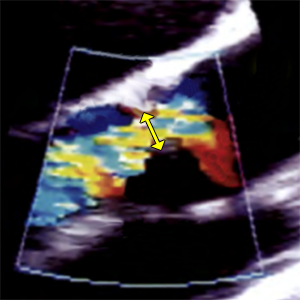
Single valve regurgitation by #echofirst severity grading beyond vena contracta and PISA EROA 👉 recognize the problem 👉 very eccentric faint jet probably commissural 👉 look at LV dimension, LA volume, E Wave inflow 👊 always go for volumes
English
5
11
59
5.2K