E Williams

498 posts

E Williams banner
E Williams

E Williams

@ejwill1996

APUSH @DHS_Panthers, College U.S. @wsutech | Field Educator @KSDEtchrleaders | TAC Member @ConstitutionCtr | Ambassador @RetroReport | Board Member @KCHEKansas
Kansas Katılım Ağustos 2025
255 Takip Edilen67 Takipçiler
E Williams retweetledi
National Women's History Museum
National Women's History Museum@womenshistory·
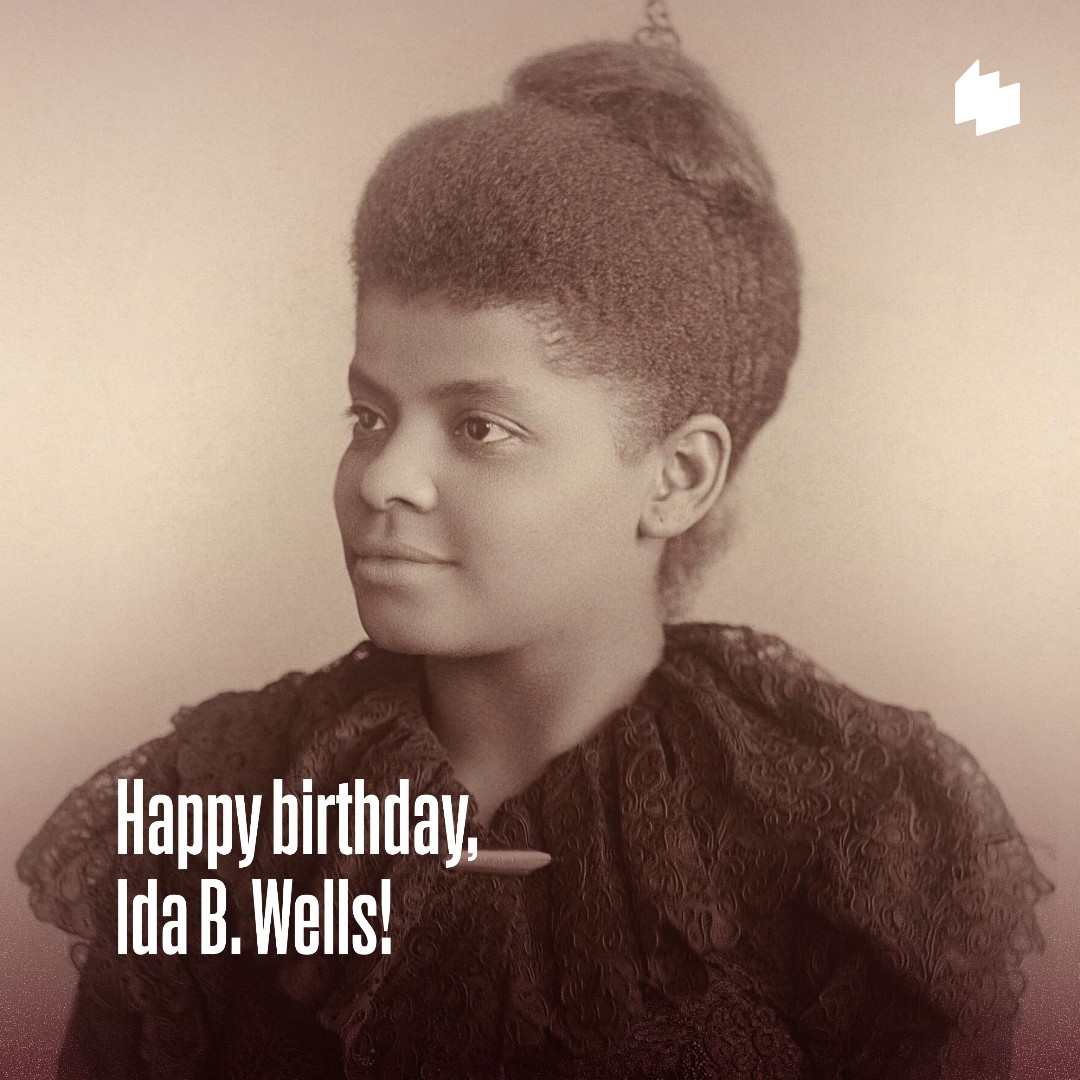
Happy Birthday to journalist, anti-lynching activist, suffragist, and one of the most fearless voices in American history, Ida B. Wells! “The way to right wrongs is to turn the light of truth upon them.” —Ida B. Wells
National Women's History Museum tweet media
English
5
145
361
3.5K
Stephen F. Knott
Stephen F. Knott@publius57·
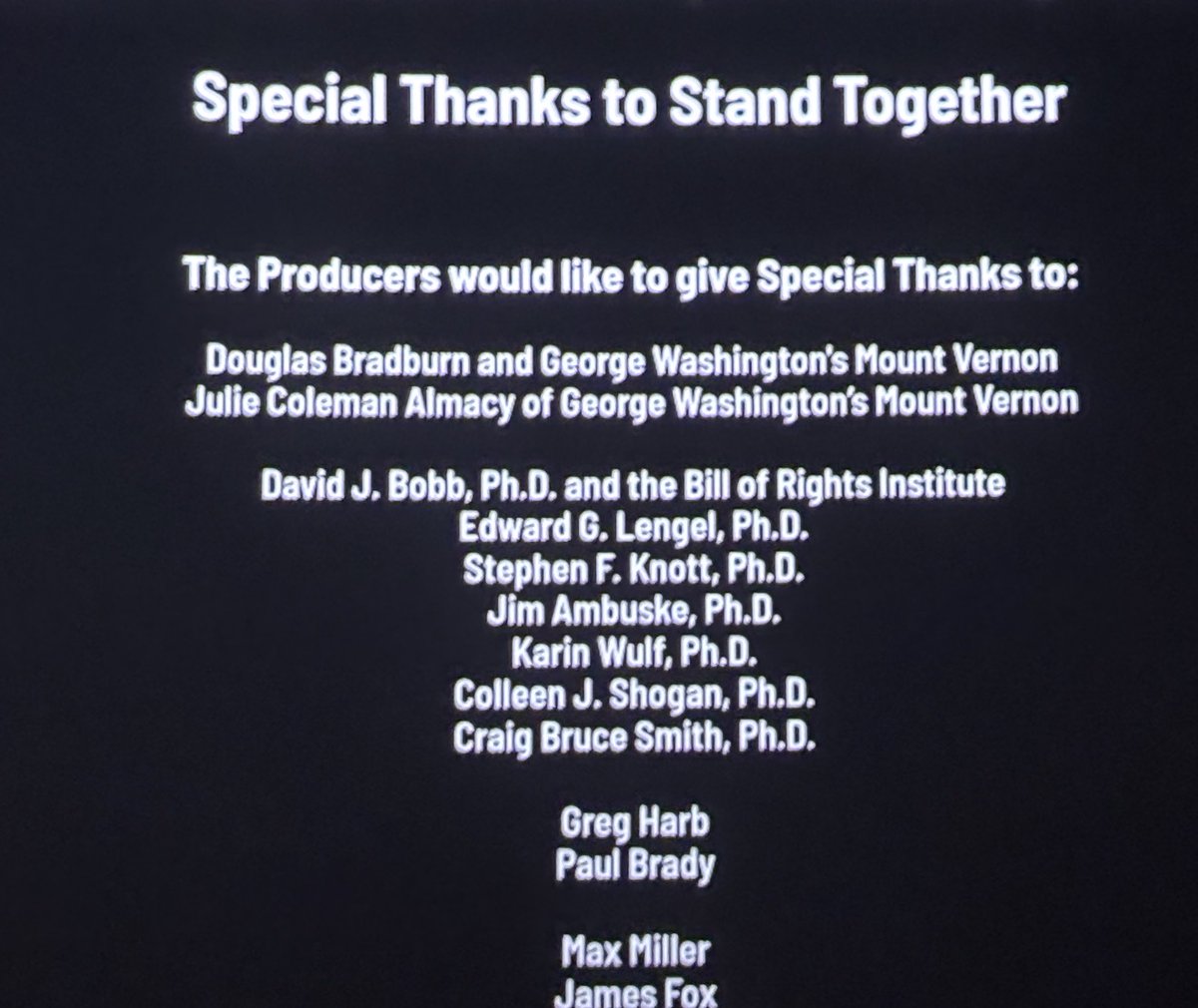
My screen credit for the film ‘Young Washington.’ SAG-AFTRA card incoming.
Stephen F. Knott tweet media
English
5
3
60
1.4K
E Williams
E Williams@ejwill1996·
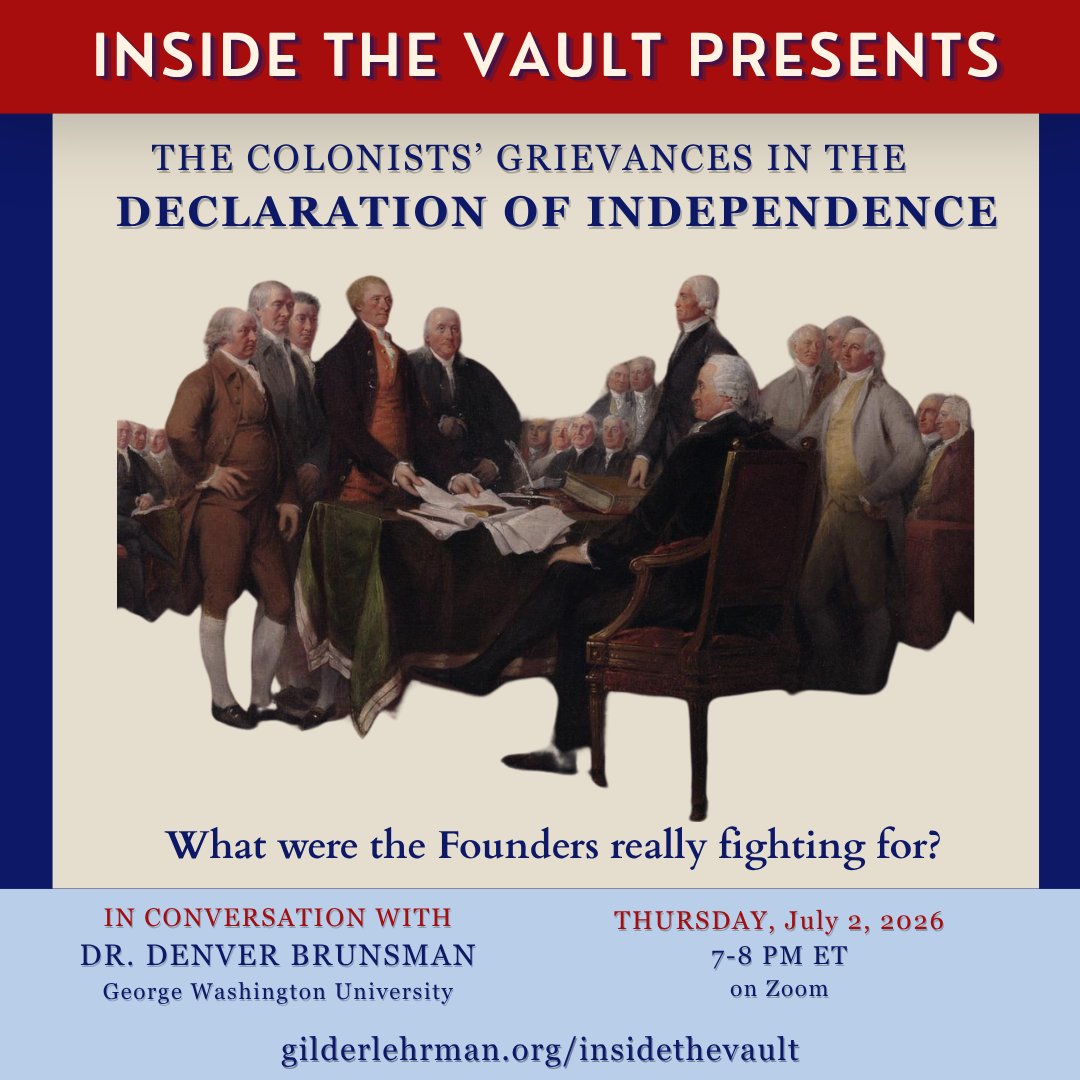
Officially, the Continental Congress declared its freedom from Great Britain on July 2, 1776, when it voted to approve a resolution submitted by delegate Richard Henry Lee of Virginia. 🇺🇸
National Constitution Center@ConstitutionCtr

There’s no doubt that the nation’s founders signed the Declaration of Independence in July 1776. But if John Adams were alive today, he would tell you that July 2 is the date with the legitimate claim to #IndependenceDay. ow.ly/RGNV50ZiJYJ
English
0
0
1
20
E Williams retweetledi
The Gilder Lehrman Institute of American History
🌟Did you know the Gilder Lehrman Institute has Kahoots? Celebrate the 250th anniversary of the Declaration of Independence by testing your Founding Era knowledge and learning more about American history! Get started: ow.ly/F3tp50ZhU0Q
The Gilder Lehrman Institute of American History tweet media
English
0
3
6
439
E Williams retweetledi
Mount Vernon
Mount Vernon@MountVernon·
#TheAmericanExperiment – The origin story of American democracy. We’re so proud of Mount Vernon President & CEO @DouglasBradburn and Executive Director of the George Washington Presidential Library Lindsay Chervinsky for their involvement in this historic documentary miniseries The American Experiment. Now streaming on @netflix.
Mount Vernon tweet media
English
19
57
253
17.6K
E Williams retweetledi
Derby High School - Derby Public Schools
Beginning July 1, 2026, Derby High School will no longer use this platform. This account will remain visible but will not be monitored or updated. For the latest news, announcements and information, please visit derbyschools.com.
English
0
1
0
174
E Williams retweetledi
Trevor Packer
Trevor Packer@AP_Trevor·
The 2026 AP United States History Exam scores: 5: 14%; 4: 37%; 3: 23%; 2: 18%; 1: 8% The 2026 AP United States History Exam was taken by ~554,000 students — roughly 3% of the U.S. high school population. AP United States History Multiple-Choice Questions (MCQ) AP US History students performed solidly across the MCQ section, with an overall mean of 65% correct. A few patterns stood out: • Students demonstrated the strongest performance on questions related to Period 1 (1491–1607), Period 2 (1607–1754), and Period 7 (1890–1945). More than 25% of students answered all these questions correctly. • The most challenging MCQ content related to Period 4 (1754–1800) and Period 9 (1980–Present). About 5% of students answered each of these questions right. AP United States History Free-Response Questions (FRQ) Each AP exam has multiple versions for different time zones. I'll focus the commentary below on the version taken by most students: apcentral.collegeboard.org/media/pdf/ap26… Since AP scores are reported on a 5-point scale, the free-response questions are designed to include tasks of varying difficulty to differentiate students across the full score range. Here is how students fared on each component: SAQ 1, the Reconstruction historiography question, invited students to analyze passages from two professional historians who reached divergent conclusions about Reconstruction's outcomes and summon evidence related to each argument. This is typically the most difficult of the short-answer questions, mirroring the ways historians must evaluate multiple, contending perspectives. Students receiving AP 1s and 2s were not usually able to meet the demands of this challenging of a question, so SAQ 1 served to differentiate among AP 3s, 4s, and 5s, with students earning AP 3s able to accurately distill the arguments within the secondary sources, and students earning AP 4s and 5s consistently able to summon additional evidence related to the historians’ arguments. SAQ 2, a primary source analysis, centered on a 1761 speech by Minweweh, a leader of the Anishinaabe (Ojibwe) people, delivered to an English trader at Fort Detroit. Students were asked to identify Minweweh's purpose, explain the developments that produced the circumstances he describes, and trace consequences through 1840. This demanded careful attention to perspective, historical context, and cause and effect across more than eighty years of history. Students generally performed well on this question, with most students who received AP 2s able to demonstrate some relevant knowledge / skills and 27% of students earning all points possible. SAQ 3, in which students described and explained the ideas, rise, and influence of the Patriot movement from 1765–1783, was the highest-scoring FRQ question on this year's exam. An impressive 45% of students earned all points possible here. This question also differentiated well across scores of 2, 3, and 4, as students receiving AP 2s were typically able to describe the movement’s ideas, unlike students receiving AP 1s. Students receiving AP 3s were generally able to earn most of the possible points, and students receiving AP 4s and 5s were typically earning all points possible. SAQ 4 asked students to describe and explain the influences on and of the 1945–1970 civil rights movements. More challenging than SAQ 3, 27% of students earned all points possible on this question. The ability to describe a specific reform advocated by such movements differentiated between AP 2s and AP 3s, as students earning AP 3s were consistently able to do this, whereas students receiving AP 2s were not. The Document-Based Question (DBQ) presented students with seven primary sources ranging from religious addresses and anonymous pamphlets to factory workers' recollections, legislative petitions, a magazine illustration, and speeches by Dorothea Dix and Elizabeth Cady Stanton. Students were charged with evaluating the extent to which women’s participation in public life in the US changed from 1783 to 1855 Earning full marks requires reading and analyzing the seven sources, constructing a defensible thesis, providing historical context, analyzing documents for point of view and purpose, deploying outside evidence, and demonstrating complex understanding — a genuinely demanding set of tasks to complete within a 1-hour, proctored, AI-blocked window. The DBQ serves well to differentiate students who qualify for college credit from those who don’t, as students receiving an AP 3+ score earned most of these points, whereas students earning 1s and 2s did not. Crafting a historical claim / thesis: 81% of students earned the thesis point, a differentiator between AP scores of 1 and 2, as students receiving a 2 tended to earn this point, whereas students receiving a 1 did not. Contextualization: the ability to situate their argument within a broader historical context differentiated AP scores of 3, 4, and 5 from lower scores, as students who earned a 3 or higher were typically demonstrating this knowledge and skill. Use of evidence from the primary source documents: this skill also differentiated between AP scores of 1 and 2, as students receiving a 2 were able to extract at least some historical evidence from the documents, whereas students receiving a 1 were not. Students receiving a 4 or higher typically earned full points for this skill. Outside evidence: The ability to summon additional evidence beyond the seven primary sources was knowledge that differentiated AP scores of 3 from AP scores of 4 and 5, as students achieving AP 4s and 5s were consistently able to demonstrate this skill, while students earning AP 3s often did not. Sourcing: Similarly, students achieving AP 4s much more consistently earned the sourcing point — requiring them to explain how the point of view, purpose, historical situation, or audience of two or more of the documents is relevant to their argument--than students earning AP 3s. Complexity of analysis and reasoning: 17% of students earned the complex understanding point, the most demanding point on the DBQ, a differentiator between students achieving AP 5s, who are consistently earning this point, and students earning AP 4s, who are much less consistently earning this point within the intensity of timed, proctored essay writing. Long Essay Questions: Students chose from three options: LEQ 2, in which students evaluated how geography influenced European colonization in the Americas from 1500 to 1754, 14% of students — typically, those achieving AP 5s — earned all points possible. On the other end of the spectrum, students receiving AP 1s did not usually earn any points on this essay, while students receiving AP 2s were distinguished from those earning AP 1s by their ability to generate a thesis and/or some relevant evidence. Essays that qualified students for scores of 3 and 4 demonstrated multiple skills related to thesis, evidence, contextualization, and/or analysis and reasoning. LEQ 3, in which students evaluated how westward expansion influenced US society from 1865 to 1898, was by far the most challenging of the three LEQ options. A key problem with these essays: responses often focused on aspects of westward expansion prior to the specified period. Accordingly, many students who selected this topic failed to generate a valid thesis statement (50% of the students who attempted this essay earned this point), let alone support it with accurate evidence, analysis, and reasoning. 6% of students earned all points possible for this essay. In contrast, LEQ 4, in which students evaluated how politics influenced US society from 1945 to 2000, earned the highest overall scores of the three LEQs. 22% of students earned all points possible on it, and the majority of essays earned full points for use of evidence. All said: very big congratulations to AP US History students and teachers this year. Working through a seven-document DBQ, analyzing competing scholarly interpretations of Reconstruction, reading a primary source from a Native American leader in 1761, and constructing sustained historical arguments spanning anywhere from fifty to five hundred years of American history — all within 2 hours and 10 minutes of free-response time that followed a similarly comprehensive multiple-choice section — is a genuine intellectual achievement. I'm impressed by the knowledge and historical thinking skills this exam invited students to develop and proud of what so many of them demonstrated. All subjects' AP score distributions for 2026 will be posted here when available: apstudents.org/score-distribu….
Trevor Packer tweet media
English
31
46
445
122K
Megan Thompson
Megan Thompson@DuchessThompson·
@IAmSophiaNelson Biden has a Master's and an Ed.D. I don't believe any of them has a PHD, but I agree that they're all incredibly successful!
English
5
0
4
2K
Sophia A. Nelson
Sophia A. Nelson@IAmSophiaNelson·
What I love about this photo is that every one of these women has a Master's Degree, JD, or PHD. All professionals. All loyal wives. Great mothers to their kids/grandkids. And all are successful in their own right. If Barbara Bush or Rosalyn Carter were still alive, they would be the exception. We have made great progress. One day, a woman will be the President of our country. One day soon. #ObamaPresidentialCenter
Chris D. Jackson@ChrisDJackson

📸 First Ladies Jill Biden, Michelle Obama, Laura Bush and Hillary Clinton. Four good, professional and dedicated women who served the nation well in their own right.

English
52
1.1K
7.3K
218K