
ERoz
1.1K posts

ERoz retweetledi

@Gugabed @Memecoin_Quant @bennpeifert @stoked_on_waves Yes! Yes!
All I want is a good amount of friction.
Fucking ads all day to download a gambling app on your phone which you connect to your bank account with two clicks. And then it fucking notifies you endlessly with prompts to gamble.
It's not a fair fight.
English

ERoz retweetledi

We are deeply saddened and shocked by the senseless attack in the early hours of this morning at the Hatzola Northwest ambulance base.
Hatzola NW, along with all Hatzola organisations, provides life-saving services without discrimination, regardless of faith or background. It is extremely distressing and difficult to comprehend that such a vital service could be targeted and attacked in such a way.
We are working closely with the police and relevant support agencies to ensure the safety and security of our premises and resources, so that we can continue to respond swiftly to emergencies.
English
ERoz retweetledi
ERoz retweetledi

Let's talk about sports betting via prediction markets, which the Commodity Futures Trading Commission started allowing last year.
The CFTC was created to regulate derivatives contracts in commodities that provide price transparency and facilitate risk transfer. These markets include some level of customer hedging and some speculation. The latter is necessary to facilitate the former and (usually) improves price signals.
Beyond traditional commodities like oil, wheat, and copper, the CFTC sanctions contracts on stock indices, currencies, and interest rates. More recently, they've expanded to other markets in which businesses face risk they may want to hedge against like weather, freight costs, and emissions.
A new innovation comes from prediction markets, where one can buy and sell contracts based on the probability of a specific event happening in the future. This allows someone, at least in theory, to hedge events like election outcomes, geopolitics, and corporate earnings.
Before 2025, the CFTC explicitly rejected sports contracts. But last year, the CFTC allowed Kalshi to self-certify contracts on sports betting by not intervening. Soon, the prediction sites were filled with not just questions about Iran but outright sports betting like whether Purdue will cover a 7 point line against Texas on Thursday.
This isn't hedging. This isn't price transparency. This is just gambling. Sports betting should not be regulated by the CFTC, but by the states, where all gambling decisions have been made since the founding of this country.
States have long made different decisions on gambling based on what is right for them. Nevada and Utah share a long border but have made very different decisions on gambling: Nevada has legalized most forms while Utah has done the opposite. Voters and policymakers in those respective states have made those decisions.
The CFTC has explicitly violated states' rights by implicitly legalizing online sports gambling across all 50 states. While most states have chosen a minimum age of 21 for gambling, the CFTC has lowered that to 18. While states have commissions to set guardrails on consumer protections, marketing, and state taxes, the CFTC has none of that.
We can have a fulsome debate about what gambling is allowed and for whom. Reasonable people can have different views on the answer. I don't know what is optimal, but I do know that debate is best done in states. There is too much heterogeneity across America to have a one size fits all law. Nevada should be able to make different decisions than Utah.
I am pleased that a pair of bipartisan bills have been introduced in the House and Senate return authority to the states. Kudos to Sens. Schiff (D-CA) and Curtis (R-UT) and Reps. Moore (R-UT) and Carbajal (D-CA). Online sports betting is not hedging. It's not an investment. It is gambling and should be regulated as such.
English
ERoz retweetledi
ERoz retweetledi

@theparthrastogi As described, this would very possibly be challenged by IRS as not having economic substance. See linked tweet:
Brent Sullivan@TaxAlphaInsider
Where I'm at in the "bitcoin has no wash sale rule, trade immediately" debate... If someone suggests aggressive tax-loss harvesting and does NOT even mention economic substance (or generally, substance over form concepts), I'm assuming they're at the beginning of their journey and am ignoring them. An EA recently mentioned his client is being audited for a $550k crypto tax loss harvest and is sweating bullets. Profit seeking trading should be the default.
English
ERoz retweetledi

If investment alpha's so hard, try...tax alpha?
.@denitsa_tsekova and I wrote about the latest craze on Wall Street for "tax efficiency": 351 ETF conversions, tax-aware long-short, trader funds etc
(which comes with a few *wild* illustrations like this one)

English
ERoz retweetledi

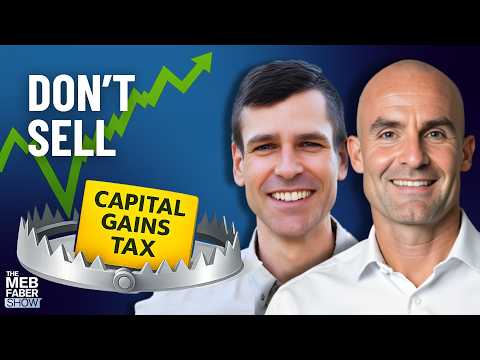
My conversation with Wes Gray (@alphaarchitect) & Brent Sullivan (@TaxAlphaInsider) on how to handle concentrated stock positions. We cover:
• 351 to ETF conversions
• Tax managed long/short
• Direct indexing
• Exchange funds
🍎 Apple: podcasts.apple.com/us/podcast/the…
🍏 Spotify: open.spotify.com/episode/11D9FP…
📺 YouTube: youtu.be/3jZks0rq6H0

YouTube

English

@TaxAlphaInsider @cliffcornell_ Yeah, I feel like your area is niche enough that existing followers should be pretty durable, and large majority will follow if you make your own thing. If you do, I’ll be there!
English

@cliffcornell_ I don't have a huge following. But it is mighty. And maybe that's enough to achieve Substack-escape velocity.
English

Pretty sure I'm leaving Substack. I've been in the top 100 bestselling finance writers for the last 6 mo or so (taxes amirite) and that ranking is why I stuck around, but the fees are too high. Pretty much anybody making real money on Substack should leave Substack. Hell of a business model.
English
ERoz retweetledi

In 2001, Haim Saban sold the Fox Family Channel to Disney for $5.3 billion. His attorney introduced him to a Seattle firm that knew how to handle the resulting tax bill.
At its peak, the firm, Quellos, managed $25 billion on behalf of clients.
Its tax solution, POINT, purportedly generated tax losses without putting any capital at risk.
According to a later insurance claim, Quellos sought to shelter roughly $2 billion in capital gains and avoid around $240 million in federal taxes for a small group of private clients.
The clients were real. The solution was not.
Safe Harbor, Ep 1: Mighty Morphin Power Rangers is now available.
Link in profile.

English

@TheFlowHorse Maybe one of them is 'What's your edge?' Probably better for screening non-legit traders than finding legit ones
English

@DougPolkVids For a second I thought the bad beat you were referring to was the first frame of this video where your rivered 4th pair was beat by sevens
English

ERoz retweetledi

@TheFlowHorse @napoleonkapital Real edges have capacity limits. It makes no sense to say both “I am trading small edges that institutions don’t bother with” and simultaneously “I can sell this edge to hundreds or thousands of people and they will all be able to trade it profitably”.
English

One of my finance-saying pet peeves is "You buy insurance for everything else in life, why not buy insurance on your portfolio?" I saw this again recently, so here are my two cents: (If you are the person who just posted this saying, note that I mean this in a friendly way)
When you own a stock, you are the insurance company. You are selling insurance by owning these risky assets to someone else who would rather have 92.5 dollars in cash instead of 100 dollars in risky expected value. Sure, there is such a thing as reinsurance, but the decision to buy it should by no means be as automatic as the decision to buy health insurance.
English