Ellen
1.5K posts


Ellen retweetledi


Ellen retweetledi

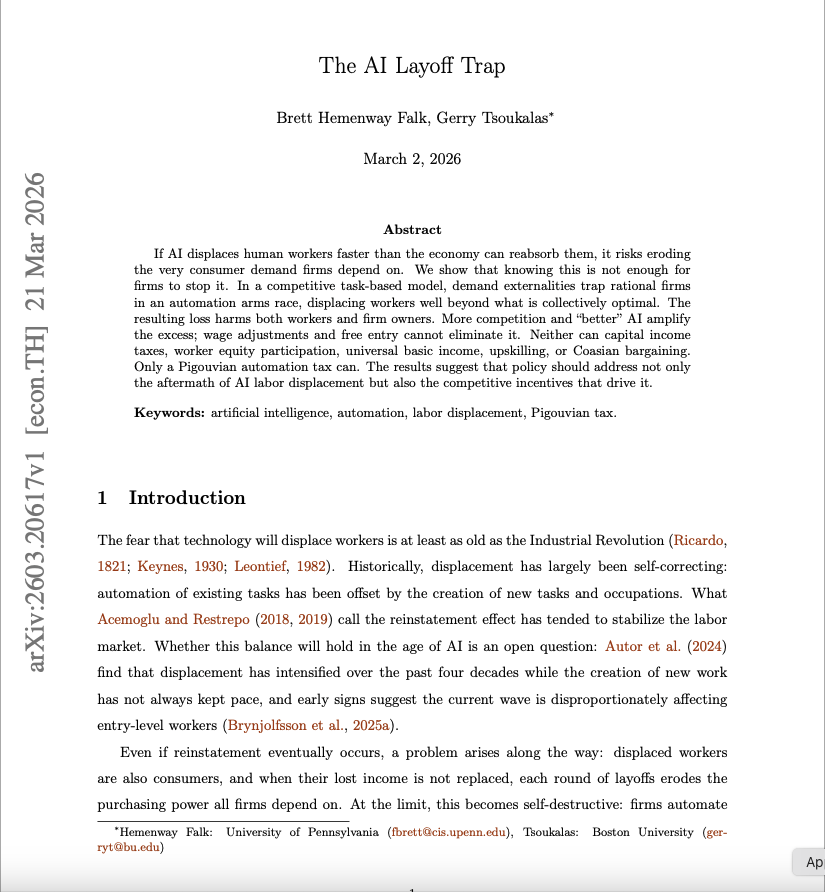
Two economists just published a mathematical proof that AI will destroy the economy.
Not might. Not could. Will — if nothing changes.
The paper is called "The AI Layoff Trap." Published March 2, 2026. Wharton School, University of Pennsylvania. Boston University. Peer reviewed. Mathematically modeled.
The conclusion is one sentence.
"At the limit, firms automate their way to boundless productivity and zero demand."
An economy that produces everything. And sells it to nobody.
Here is how you get there.
A company fires 500 workers and replaces them with AI. A competitor fires 700 to keep up. Another fires 1,000. Every company is behaving rationally. Every company is following the incentives correctly. And every company is building a trap for itself.
Because the workers who were fired were also customers.
When they lose their jobs faster than the economy can absorb them, they stop spending. Consumer demand falls. Companies respond by cutting costs — which means automating more workers — which means less spending — which means more falling demand — which means more automation.
The loop has no natural exit.
The researchers tested every proposed solution. Universal basic income. Capital income taxes. Worker equity participation. Upskilling programs. Corporate coordination agreements.
Every single one failed in the model.
The only intervention that worked: a Pigouvian automation tax — a per-task levy charged every time a company replaces a human with AI, forcing them to price in the demand they are destroying before they pull the trigger.
No government has implemented this. No major economy is seriously discussing it.
Meanwhile the numbers are already tracking the curve. 100,000 tech workers laid off in 2025. 92,000 more in the first months of 2026. Jack Dorsey fired half of Block's workforce and said publicly: "Within the next year, the majority of companies will reach the same conclusion."
Nobody is doing anything wrong. Companies are following their incentives perfectly. That is exactly the problem.
Rational behavior. At scale. Simultaneously. With no mechanism to stop it.
Two economists built the math. The math leads to one place.
Source: Falk & Tsoukalas · Wharton School + Boston University ·
arxiv.org/pdf/2603.20617
English
Ellen retweetledi

Map of Chongqing's metro system in 3D.
Chongqing is called the "mountain city". Building metro here is more difficult than in plain cities.
Chongqing’s metro total length ranks 7th in the world, with over 550 km.
English
Ellen retweetledi
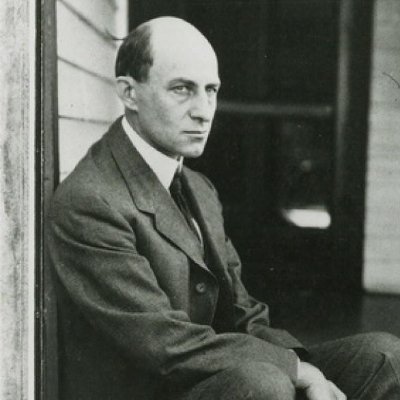
Whenever the stock market reacts in a way that does not make sense, I come back and read this
English
Ellen retweetledi

Slipi Jaya tidak pernah ingkar janji.


Raskha@RashkaLLC
A wise man told me 2 things: 1) Slipi Jaya tidak pernah ingkar janji 2) Setan kuningan akan bertaubat
Indonesia
Ellen retweetledi

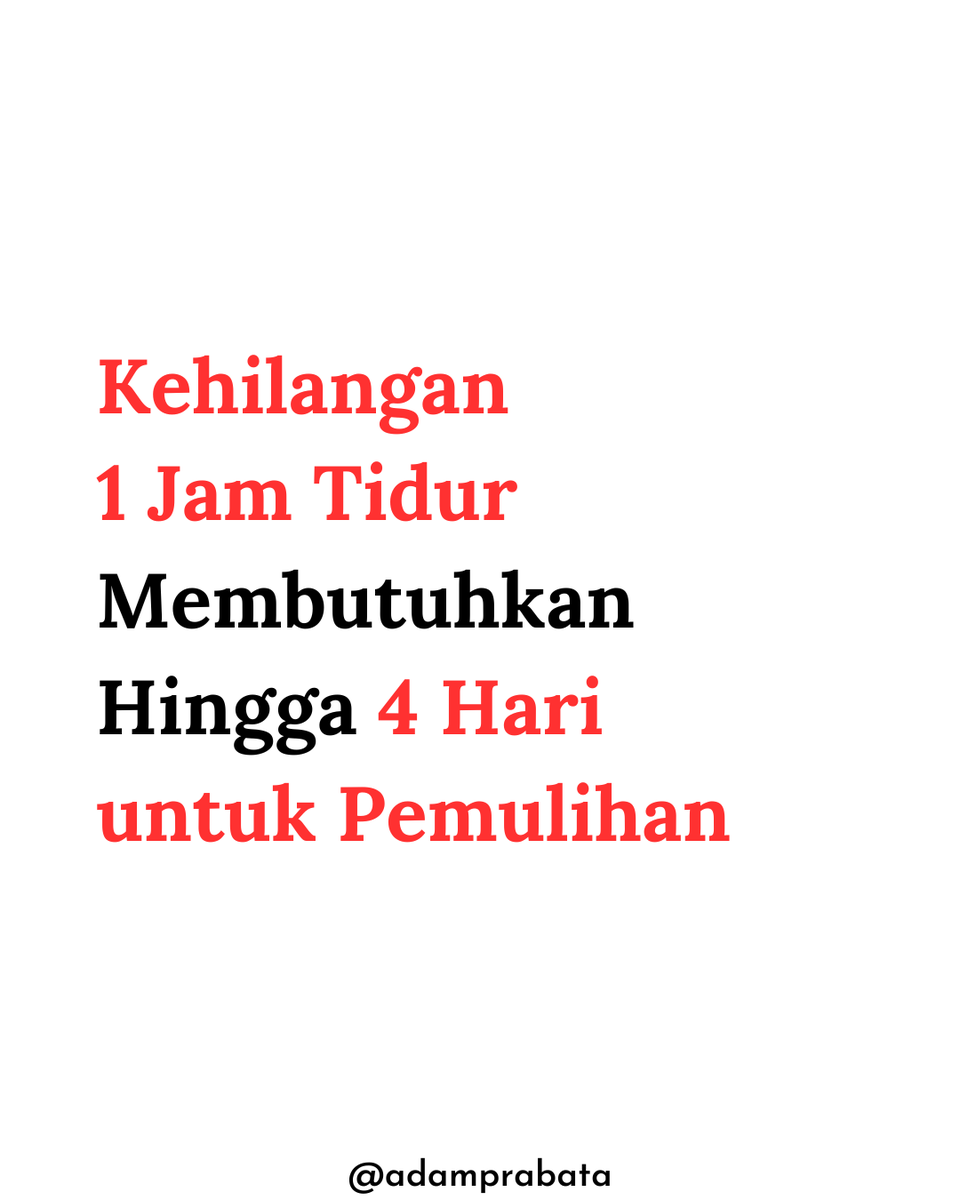
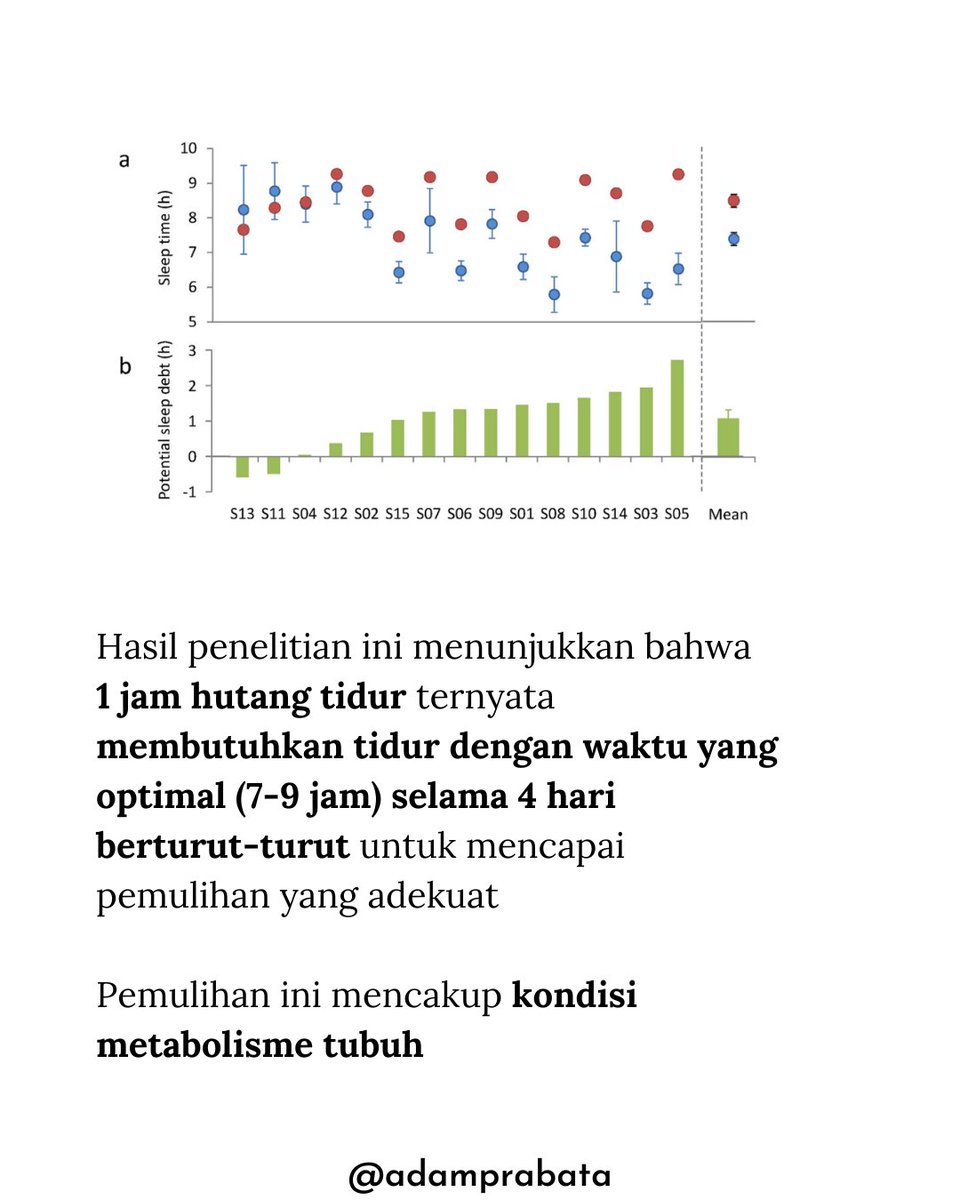
KEHILANGAN 1 JAM TIDUR membutuhkan hingga 4 HARI untuk pemulihan
Kalian pernah gak ngerasa “ah cuma kurang tidur 1 jam, santai lah”?
Ternyata penelitian menyebutkan efeknya gak sesantai itu!
Ini semacam tamparan gue pribadi juga sih saat menjalani kehidupan sebagai PPDS ini.
Jadi gue baru nemu penelitian yang bikin mikir ulang soal pola tidur yang intinya adalah kehilangan 1 jam tidur aja bisa bikin tubuh butuh sampai 4 hari buat pulih penuh.
Penelitian kecil ini melibatkan 15 laki-laki dewasa muda dan dilihat pola tidurnya dengan hasil yang cukup membuat kaget yaitu:
1 jam hutang tidur, ternyata butuh tidur durasi optimal (7–9 jam) selama 4 hari berturut-turut buat bener-bener tubuh bisa balik normal.
Ini konteksnya juga termasuk pemulihan metabolisme tubuh yang terganggu akibat kurang tidur.
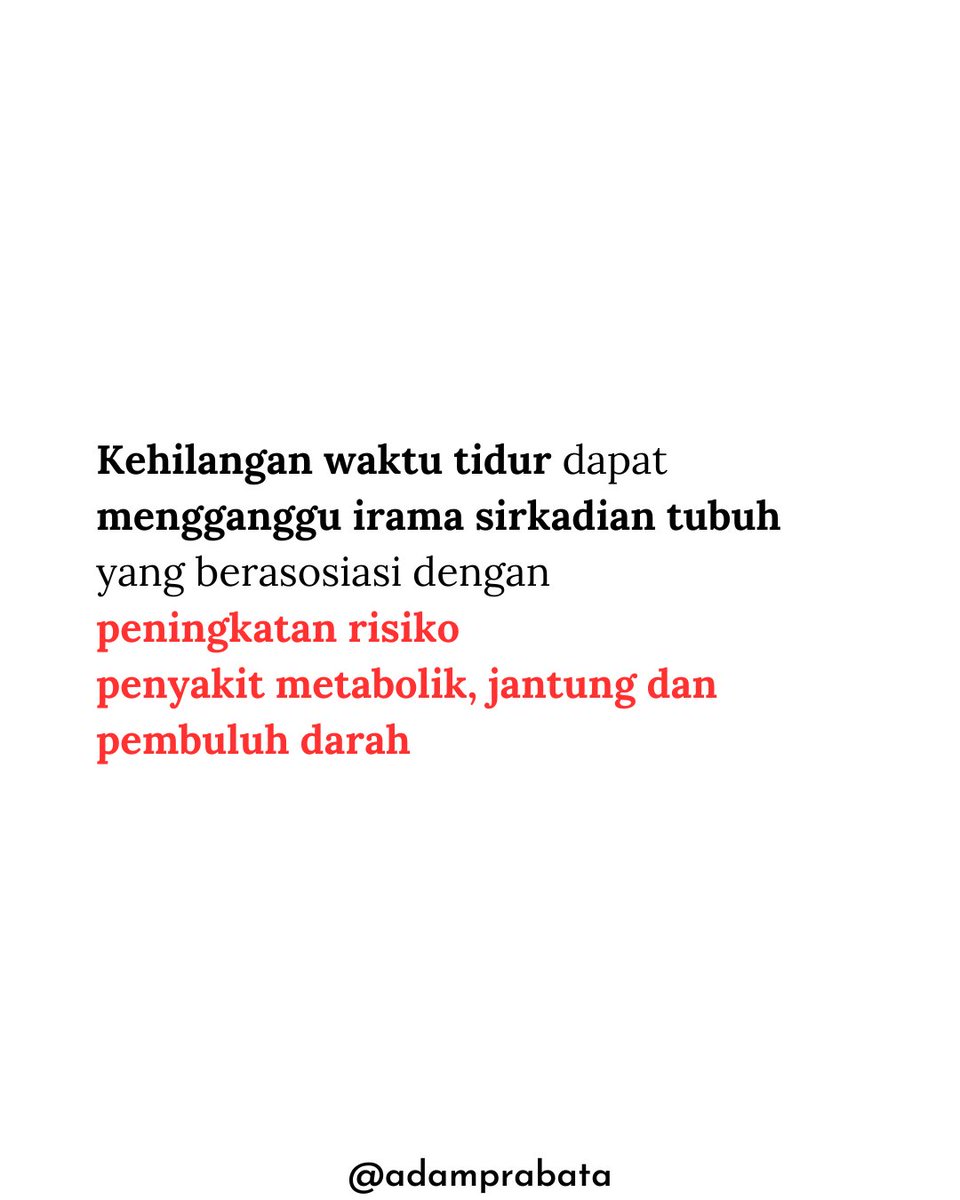
Hutang tidur itu bisa mengganggu irama sirkadian, yang akhirnya ngaruh ke risiko penyakit metabolik, jantung, dan pembuluh darah.
Jadi kalau lagi kurang tidur, jangan berharap pulih hanya dengan satu malam ‘balas dendam tidur’. tapi butuh 4 hari tidur malam dengan durasi cukup.
Jaga tubuh kalian baik-bak ya!

Indonesia
Ellen retweetledi

Ellen retweetledi

The actual research is wild. Every time you push down a feeling, your brain has to choose between suppressing that emotion and recording what’s happening around you. It picks the suppression. The memory doesn’t get saved.
A 2000 Stanford study confirmed this: people told to hide their emotions while watching a film remembered far fewer details than people who just reacted naturally. Suppressing emotions uses up mental energy, and that leaves less brain power for saving new memories.
Brain scans show why. A 2012 study found that suppression quiets the hippocampus (your brain’s memory-recording center) right when it should be saving information. The two brain regions that normally team up to lock in memories stop talking to each other.
Over time it gets worse. Suppression keeps cortisol (the stress hormone) elevated, and cortisol shrinks the hippocampus. Chronically stressed people can lose 10 to 15% of its volume. Just three weeks of high cortisol can shrink the tiny connection points between brain cells by about 20%. The good news: studies show this shrinkage can partially reverse once stress levels drop. Not necessarily permanent.
A Finnish study of 1,137 older adults tracked over roughly a decade found that habitual emotion suppressors had nearly 5x the risk of developing dementia, even after controlling for genetics, smoking, obesity, and education.
There’s a better way to handle emotions that doesn’t cost you your memory. It’s called cognitive reappraisal: instead of bottling the feeling, you reframe what’s causing it. (“This meeting isn’t a threat, it’s practice.”) A 2003 Stanford/UC Berkeley study found reappraisers had more positive emotion, better relationships, and higher wellbeing. Suppressors got the opposite on every measure. And reappraisal carries zero memory cost.
The difference comes down to timing. Suppression kicks in after the emotion has already fired, so your brain is fighting its own response while simultaneously trying to record the moment. Reappraisal changes how you interpret the situation before the emotion fully activates. Same event, same person, but your hippocampus stays free to do its actual job: recording your life.
syl ♡@sylviapuffs
SUPRESSING YOUR EMOTIONS CAUSES MEMORY LOSS WTF???
English
Ellen retweetledi

I'm sorry but you need to see this peaceful kitty with butterflies.
You're welcome.
English
Ellen retweetledi

Ellen retweetledi

Anyone who says that communication is the most important part of a relationship is forgetting the ACTUAL most important part of a relationship. And that is…
Regulating your own damn emotions before communicating.
English
Ellen retweetledi