𝗭𝗔𝗡𝗨 𝗣𝗙 𝗗𝗜𝗗 𝗪𝗔𝗡𝗧 𝗔𝗡 𝗘𝗫𝗘𝗖𝗨𝗧𝗜𝗩𝗘 𝗣𝗥𝗘𝗦𝗜𝗗𝗘𝗡𝗧 𝗜𝗡 𝟭𝟵𝟳𝟵, 𝗧𝗢 𝗨𝗡𝗜𝗧𝗘 𝗧𝗛𝗘 𝗡𝗔𝗧𝗜𝗢𝗡.
Contrary to the false claims being made by Patrick Chinamasa, Jonathan Moyo and others in ZANU PF that the party never wanted the direct election of the President before independence, an article written by RW Apple Jr., titled “Rhodesians Split On British Proposal Threatens Peace Parley In London,” published in the New York Times on 15 September, shows otherwise. According to it, the Patriotic Front, which consisted of ZANU and ZAPU, presented its own constitutional proposal at Lancaster House, clearly stating that it wanted an executive President.
According to Edison Zvobgo, a member of the Patriotic Front negotiating team, their proposed constitution wanted an executive President who would be head of the armed forces, with powers to take property from white settlers and dismiss colonial-era civil servants in order to replace them with workers aligned to the party’s ideology.
The only reason Zimbabwe could not implement these measures—common to many liberated nations—was because it was forced to accept the Lancaster House Constitution, which required Zimbabwe to use the parliamentary process to select the head of state as Rhodesia and to retain white civil servants which resulted in our government currently owing over $1 billion in pension obligations to former white Rhodesians who are living in the UK.
ZANU and ZAPU later amended the Lancaster House Constitution in 1987 to end Gukurahundi, fulfilling their objective of establishing a system that directly elects an executive President who could unify the nation beyond tribal divisions, as envisioned in 1979.
According to the Hansard of 3 November 1987, Edison Zvobgo, then Minister of Justice, outlined five reasons why ZANU PF preferred an executive President:
1. It reflected an African system, distinct from the British and American models.
2. It ensured political stability and effective national leadership.
3. It avoided structural conflict.
4. It removed titular division.
5. It reduced democratic distance between the executive and the people. He argued that indirect election fostered sectorial, regional, and tribal interests, which had contributed to conflicts such as the liberation war and Gukurahundi.
According to him, an executive President would be elected by the whole nation and remain accountable to all citizens, not just a specific clan or tribe.
In a statement made on 30 November 1987, the then Minister of State Security and the current President of Zimbabwe, Emmerson Mnangagwa, said: “The [1987] bill is clearly testament to the party’s irrevocable belief in the people’s will, expressing the democratic aspiration of Zimbabweans—their right to choose and elect a President through the popular vote.”
So, if Edison Zvobgo and the current President are anything to go by, ZANU PF adopted the direct election of the President in 1987 and we have had it for 39 years precisely because it reflects the aspirations of the Zimbabwean people—to choose their leader through popular vote, in line with an African system that would move away from colonial practices and unite the nation beyond tribal and sectional lines.
Now, if this was the reasoning behind abandoning the Lancaster House system of indirect presidential election, it must follow that CAB3 seeks to achieve the opposite—by reintroducing a Western colonial-style system that removes direct accountability to the people and risks shifting power toward narrower regional or tribal interests. So why are we making the change to a system we rejected in 1987?
🚨 BREAKING: Kylian Mbappé is very angry with the situation at Real Madrid:
He has had private discussions with several players regarding this same issue, as he believes some players in the squad have ruined the season.
Jude Bellingham is ine of the players he has had issues with, because Jude is one of the few who has dared to question some of Mbappé's bad performances.
— @lejournaldureal
🚨 Nicolas Jackson will return to Chelsea in June as FC Bayern are NOT triggering €65m buy option clause.
Bayern director Eberl confirms the decision to ZDF — as reported since January. ❌
Chelsea and Jackson’s camp will assess his future with possible new move in the summer.
Beloved South Africans and Africans brothers, this is the uncircumcised vigilant and Xenophobic demon found in KZN. When you see him, take him entabeni. Inkwekwe this one.
🚨 Congratulations to Al-Ahli for winning the AFC Champions League for the 2nd year in a row.
Cristiano Ronaldo still hasn’t after 4 years and dropped us down to the 2nd tier (ACL 2).
PRESIDENT TRUMP: "Nobody told me this was such a dangerous profession. If Marco [Rubio] would have told me, maybe I wouldn't have run. Maybe I would have said, 'I'll take a pass.'"
"It's a dangerous profession, but I don't view it that way. Look, I'm here to do a job."
"I can't imagine that there's any profession that's more dangerous — but I love the country and I'm very proud."
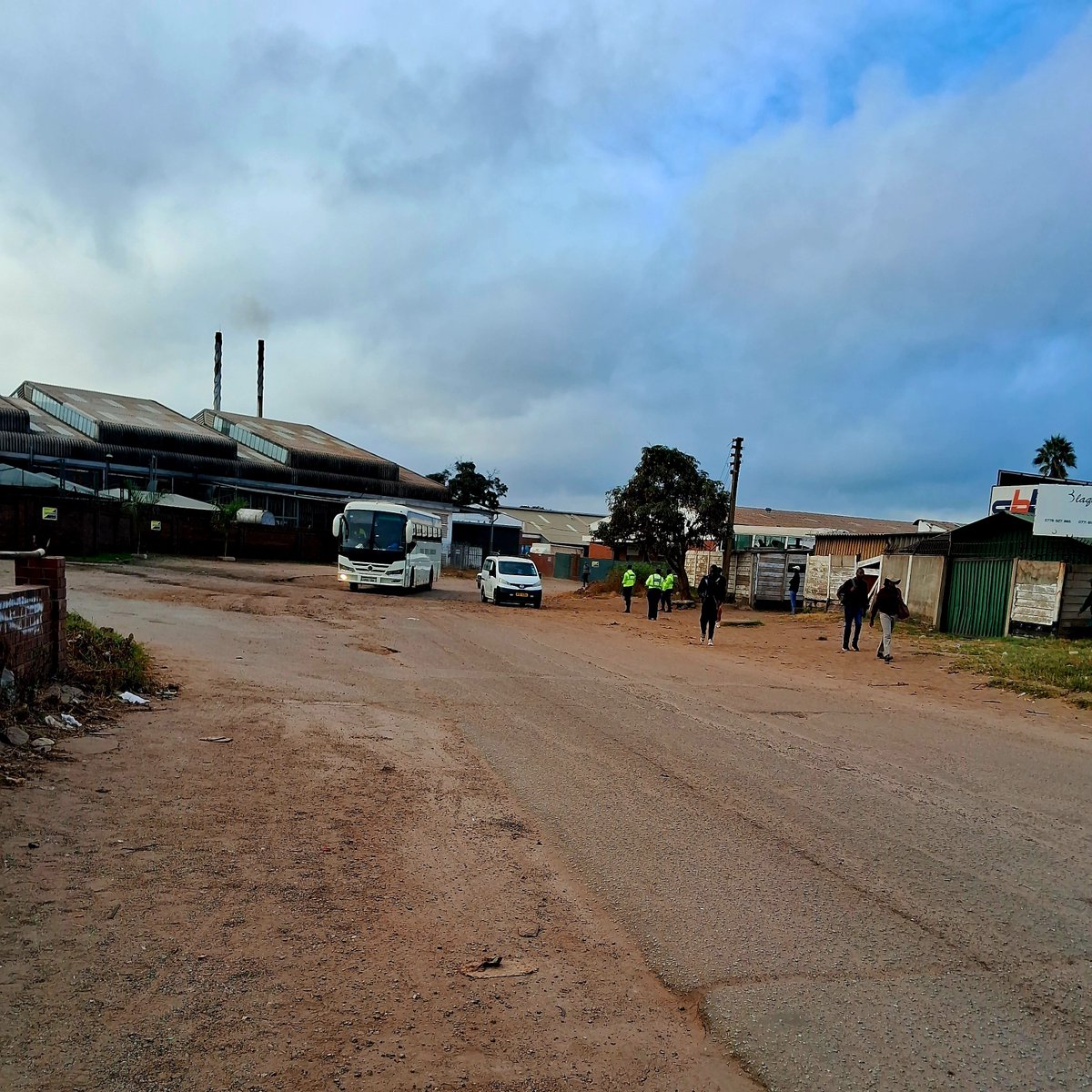
There is a roadblock every day at the curve along Craster Road in Southerton, near Mazuda Spares, heading towards Harare Hospital in the industrial area. Another roadblock is set up directly in front of Harare Hospital on Lobengula Street.
Are these roadblocks legal? It’s concerning that every police officer present appears to be carrying a ticket book.
@PoliceZimbabwe