The hardest part of AI strategy is knowing what not to build.
Every founder wants the agent that runs everything. Most need three boring documents and one workflow people actually use, first.
Restraint is the strategy. It's also how you tell a real firm from a shop that builds whatever you ask.
My DMs are open if someone's selling you "an agent for everything."
Four hours a day per sales rep on CRM maintenance. Call notes. Deal stage updates. Follow-up drafts. All manual.
The information already existed. In call recordings, email threads, meeting transcripts. They were just moving it by hand.
We built an agent that reads the transcript, updates the CRM, generates the follow-up draft, flags what needs a human.
Four hours dropped to thirty minutes.
Manual CRM work survives because it feels like the job. It isn't. It's administration sitting on top of the job.
If your reps spend more time logging activity than doing it, that's an architecture problem.
"What should I automate first?" is the most-DM'd question I get from $5M–$25M founders.
The honest answer: it's not what most consultants tell you.
The first thing to automate is not the loudest workflow, the most-complained-about workflow, or the one that looks impressive in a deck. It's the workflow that produces the foundation everything else builds on.
Swipe for the 5-step order that compounds; and the trap most companies fall into when they skip it.
DM me "foundations" if you want the doc we send to every new client before we build a single thing.
Introducing Zight MCP, now available to all Zight users
Connect Claude, ChatGPT, and any MCP client directly to your Zight captures. Meeting notes, Transcripts, OCR text, console and network logs are all available to your agent instantly, with zero copy-pasting. 🧵👇
After hundreds of builds, the pattern is clear.
The projects that created the most value weren't the ones with the biggest budgets or the most detailed specs.
They were the ones where someone, before any build started, asked the right questions. What's actually broken? What would a 10x improvement here change about the business? Is this the right problem to solve first?
When those questions get answered well, the build is fast, adoption is high, and the ROI compounds.
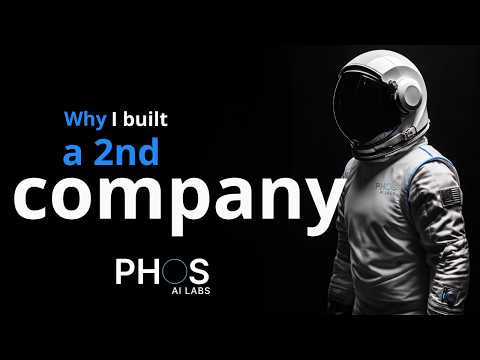
That's the outcome we build Phos around, better decisions before the software.
Link to video in the first comment.
The exam weights "agentic orchestration" at 27%. That's the single largest domain on it.
Not tool knowledge. Not prompt syntax. Whether you can design the control flow that decides when an agent stops, when it escalates, when it hands work to another agent.
That's the actual skill gap right now. Everyone can call the API. Fewer people can architect what happens between the calls.
JUST SHIPPED: working with files on Zo should feel smooth as butter now 🧈
We made a nested sidebar to help you navigate across files seamlessly. Also Zo can read any file now, from PDFs (commenting + highlighting) to Word docs, spreadsheets, ppts, audio, and more.
Try it today!
I'm not sure who's going to see this and hasn't seen me in a while on X, but I'm seeing A LOT of people I haven't seen in years.
So hey, I missed y'all
just another day at the token factory 🏭
my job has become monitoring the assembly line from thoughts to deployed code
day by day i get to think bigger thoughts
Every "now anyone can build software" promise for 60 years has been wrong. AI won't be the exception. And I say that as someone who built a company on no-code.
FORTRAN promised it. COBOL promised it. SQL promised it. Each one was supposed to make engineers optional so accountants and lawyers could build their own systems. It never happened.
Not because the syntax stayed hard. The syntax got easy every single time. Because writing code was never the hard part. The hard part is judgment, and being accountable for the call.
I've made real money on tools that made building accessible. And here's what those tools actually did: they pushed demand for good judgment UP, not down. More people could build, so the people who could tell good from bad, safe from reckless, became the constraint.
"AI lets anyone build" is the newest verse of a very old song. Easier to build has never once meant safe to build alone.
Deploying AI company-wide produces one guaranteed outcome.
Decision made. Budget spent. Everyone has access. You can tell the board.
Six months later, the work runs exactly the same.
The tool didn't change the operation. It changed what's open in a browser tab.
Real progress shows up in hours recovered. Decisions removed. Processes that run without the same person touching them.
If you can't measure any of that, the deployment isn't done.