Emilio L. Cano

6.8K posts

Emilio L. Cano banner
Emilio L. Cano

Emilio L. Cano

@emilopezcano

Profesor Titular en @etsii_urjc de la @urjc Entusiasta de R (#rstats). Presidente @R_Hisp. Presidente CTN 66/SC3 de @NormasUNE

Madrid, Spain Katılım Ağustos 2009
1.7K Takip Edilen1.3K Takipçiler
Emilio L. Cano retweetledi

Felipe Ortega
Felipe Ortega@jfelipe·
For all people willing to really *understand* (of many kinds) models in data science, including recent advances in interpretation and evaluation, this is a key resource: m-clark.github.io/book-of-models/ Big pro: all examples in both R and Python, because focus is on mastering concepts.
English
1
1
2
47
Emilio L. Cano
Emilio L. Cano@emilopezcano·
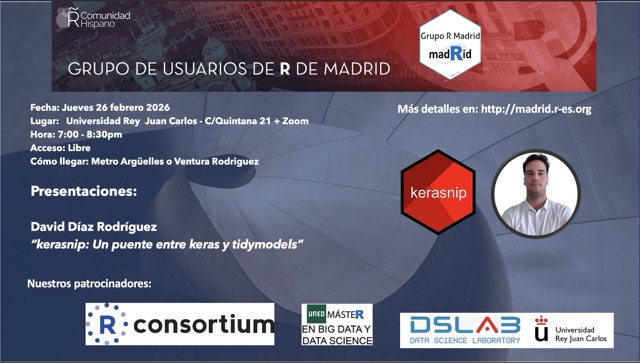
Positron: ¡¿otro IDE para R?! Yo ya me he cambiado Lo cuento el martes en la 102 reunión del grupo de R de Madrid. Si te pilla cerca ven a verlo, y si no atento al link de zoom que compartiremos en breve. eventos.urjc.es/go/rmadrid102 Salón de actos, Quintana 21 @R_Hisp @DSLAB_URJC
Español
0
2
2
144
Emilio L. Cano retweetledi
Borja Adsuara Varela ⚖️
🚨 ÚLTIMA HORA: "Investigadores de Berkeley pasaron 8 meses dentro de una empresa tecnológica observando cómo los empleados utilizan realmente la IA. La promesa era simple: la IA te ahorrará tiempo. Haz menos. Trabaja de forma más inteligente. Ocurrió lo contrario. Los trabajadores no usaron la IA para terminar temprano e irse a casa. La usaron para asumir más. Más tareas. Más proyectos. Más horas. Nadie se lo pidió. Se lo hicieron ellos mismos".
Nav Toor@heynavtoor

🚨BREAKING: Berkeley researchers spent 8 months inside a tech company watching how employees actually use AI. The promise was simple: AI will save you time. Do less. Work smarter. The opposite happened. Workers didn't use AI to finish early and go home. They used it to take on more. More tasks. More projects. More hours. Nobody asked them to. They did it to themselves. The researchers sat inside the company two days a week for 8 months. They watched 200 employees in real time. They tracked work channels. They conducted 40+ interviews across engineering, product, design, and operations. Here's what they found. AI made everything feel faster, so people filled every gap. They sent prompts during lunch. Before meetings. Late at night. The natural stopping points in the workday disappeared. People ran multiple AI agents in the background while writing code, drafting documents, and sitting in meetings simultaneously. It felt like momentum. It felt productive. But when they stepped back, they described feeling stretched, busier, and completely unable to disconnect. 83% said AI increased their workload. Not decreased. Increased. 62% of associates and 61% of entry-level workers reported burnout. Only 38% of executives felt the same strain. The people doing the actual work absorbed the damage while leadership celebrated the productivity numbers. Then came the trap nobody saw coming. When one person uses AI to take on extra work, everyone else feels like they're falling behind. So the whole team speeds up. Nobody formally raises expectations. But the new pace quietly becomes the default. What AI made possible became what was expected. The researchers gave it a name: workload creep. It looks like productivity at first. Then it becomes the new baseline. Then it becomes burnout. AI was supposed to give you your time back. Instead it's eating more of it. And the worst part? You're doing it to yourself. Voluntarily.

Español
32
382
1.1K
159K
Emilio L. Cano retweetledi
IMartindeDiego
IMartindeDiego@IMartindeDiego·
⏳ El lunes 2 de marzo finaliza el primer plazo ordinario de preinscripción del Máster Universitario en Análisis de Datos Deportivos. Sports Analytics: el lenguaje que está transformando el deporte. Es el momento de dar el salto. 🔗 urjc.es/estudios/maste…
Español
0
2
2
69
Emilio L. Cano retweetledi
Math Files
Math Files@Math_files·
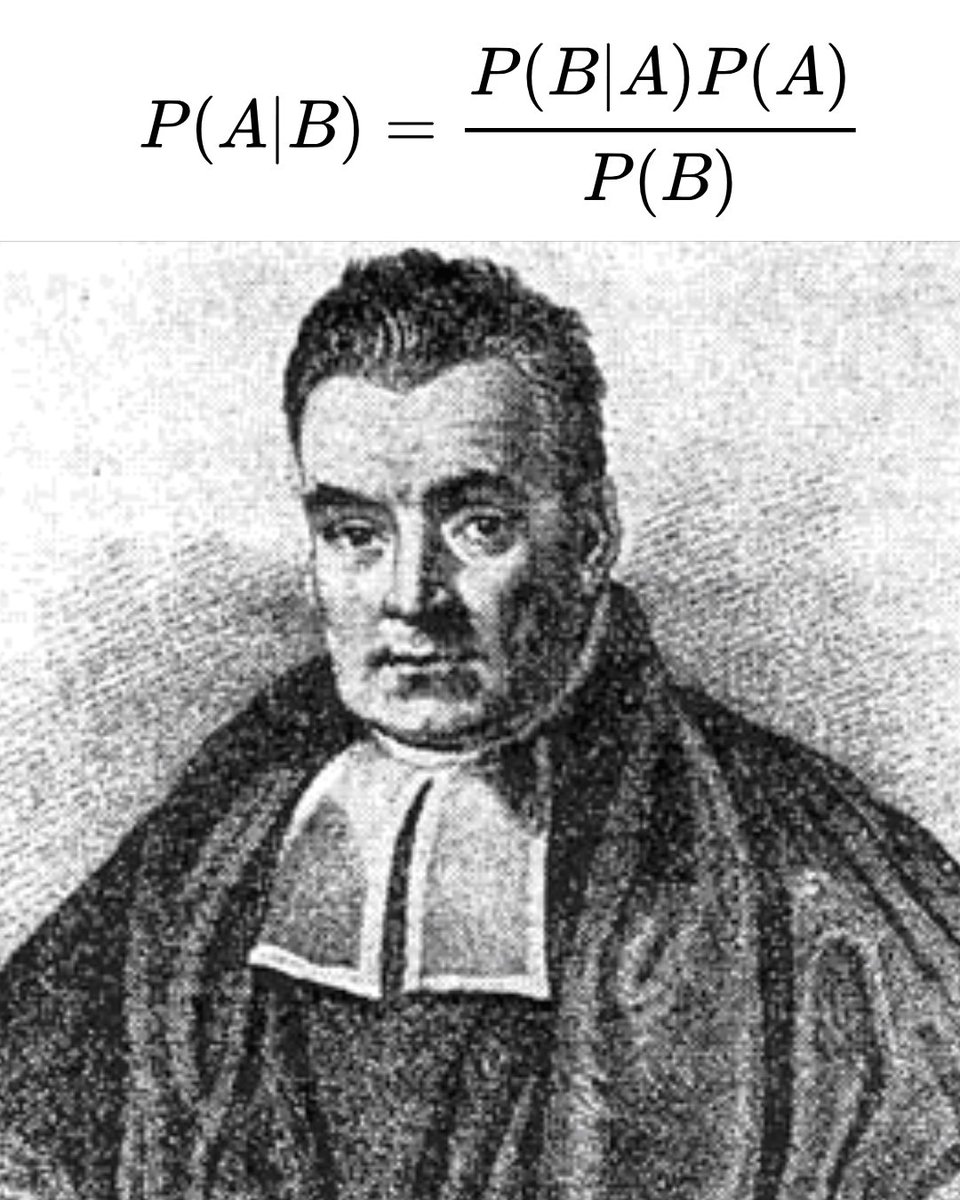
Bayes’ theorem is probably the single most important thing any rational person can learn. So many of our debates and disagreements that we shout about are because we don’t understand Bayes’ theorem or how human rationality often works. Bayes’ theorem is named after the 18th-century Thomas Bayes, and essentially it’s a formula that asks: when you are presented with all of the evidence for something, how much should you believe it? Bayes’ theorem teaches us that our beliefs are not fixed; they are probabilities. Our beliefs change as we weigh new evidence against our assumptions, or our priors. In other words, we all carry certain ideas about how the world works, and new evidence can challenge them. For example, somebody might believe that smoking is safe, that stress causes mouth ulcers, or that human activity is unrelated to climate change. These are their priors, their starting points. They can be formed by our culture, our biases, or even incomplete information. Now imagine a new study comes along that challenges one of your priors. A single study might not carry enough weight to overturn your existing beliefs. But as studies accumulate, eventually the scales may tip. At some point, your prior will become less and less plausible. Bayes’ theorem argues that being rational is not about black and white. It’s not even about true or false. It’s about what is most reasonable based on the best available evidence. But for this to work, we need to be presented with as much high-quality data as possible. Without evidence—without belief-forming data—we are left only with our priors and biases. And those aren’t all that rational.
Math Files tweet media
English
2.2K
8.5K
37.3K
27.2M
Emilio L. Cano retweetledi
Jaime Gómez-Obregón
Jaime Gómez-Obregón@JaimeObregon·
¿Me lee alguien en la @AEPD_es? Quiero reportar un error en su Sede Electrónica que dificulta la descarga del justificante de presentación de una solicitud. He grabado este vídeo explicando el problema y la solución. 👉 Al hacer clic para descargar el justificante, no sucede nada. Esto es frustrante y me ha llevado un rato entender qué está pasando. — El problema, como muestro en el vídeo, es que el evento que dispara la descarga del documento no está vinculado al enlace, sino solo al icono. — La solución, que vinculen el evento al enlace completo, no solo al icono. Informo de esto a la @AEPD_es porque seguro que esto está afectando a más personas, algunas de las cuales no estarán logrando descargar su documentación. Lo reporto en público porque no he encontrado un mecanismo simple y de baja fricción™️ para reportar problemas técnicos. OTROSÍ DIGO Que estoy muy harto de encontrar problemas en casi cada trámite digital que curso. Pero estoy instalado en la paciente y constructiva actitud de que: 1️⃣ Si informo de cada problema que encuentro y aporto una propuesta de solución técnica —cuando puedo—, y ✨el organismo escucha✨, el trámite mejorará no solo para mí sino para todo el país. 2️⃣ Si lo hago públicamente y con pedagogía, esto puede ayudar a otros organismos públicos y a los programadores que trabajan en las consultoras que desarrollan para ellos estos trámites. Que esto llegue a la @AEPD_es y lo resuelvan dirá si esta actitud mía es útil o ingenua. Sea como fuere, por cada problema que encuentre en un trámite digital, pondré un tuit público. Me seguís 130 000 personas (¡muchas gracias!), y voy a utilizar esa influencia para mejorar todo lo que pille roto en la Administración electrónica y en la relación ciudadano-Estado.
Español
29
357
860
68.6K
Emilio L. Cano retweetledi
Archivo RTVE
Archivo RTVE@ArchivoRTVE·
Tenemos noticias. Hemos resubido ‘La bola de cristal’ en la mejor calidad de imagen y sonido. Del primer al último programa. Siéntate en frente, que es como el cine 👉 rtve.es/play/videos/la… #FelizSábado #BuenosDías #31Enero
Español
92
1.3K
4.1K
186.9K
Emilio L. Cano retweetledi
Data Science Lab. Universidad Rey Juan Carlos
¡Tenemos nueva Doctora 🥳! ¡Enhorabuena a la flamante Doctora Natalia Madrueño Sierro que ha defendido hoy su tesis doctoral "Improving Model Generalization and Robustness through Generative AI", una tesis que cuenta con mención industrial e internacional!
Data Science Lab. Universidad Rey Juan Carlos tweet mediaData Science Lab. Universidad Rey Juan Carlos tweet mediaData Science Lab. Universidad Rey Juan Carlos tweet media
Español
0
6
7
231
Emilio L. Cano retweetledi
Paula Moraga 🌍💻📊
Paula Moraga 🌍💻📊@Paula_Moraga_·
rspatialdata: a repository of spatial datasets & tutorials for spatial analysis & visualization in #rstats, supporting real-world applications such as estimating air pollution, quantifying disease burden, and monitoring progress toward the SDGs🌍💻📊 👉 rspatialdata.github.io
Paula Moraga 🌍💻📊 tweet media
English
0
25
134
6K
Emilio L. Cano retweetledi
Juan Gómez-Jurado
Juan Gómez-Jurado@JuanGomezJurado·
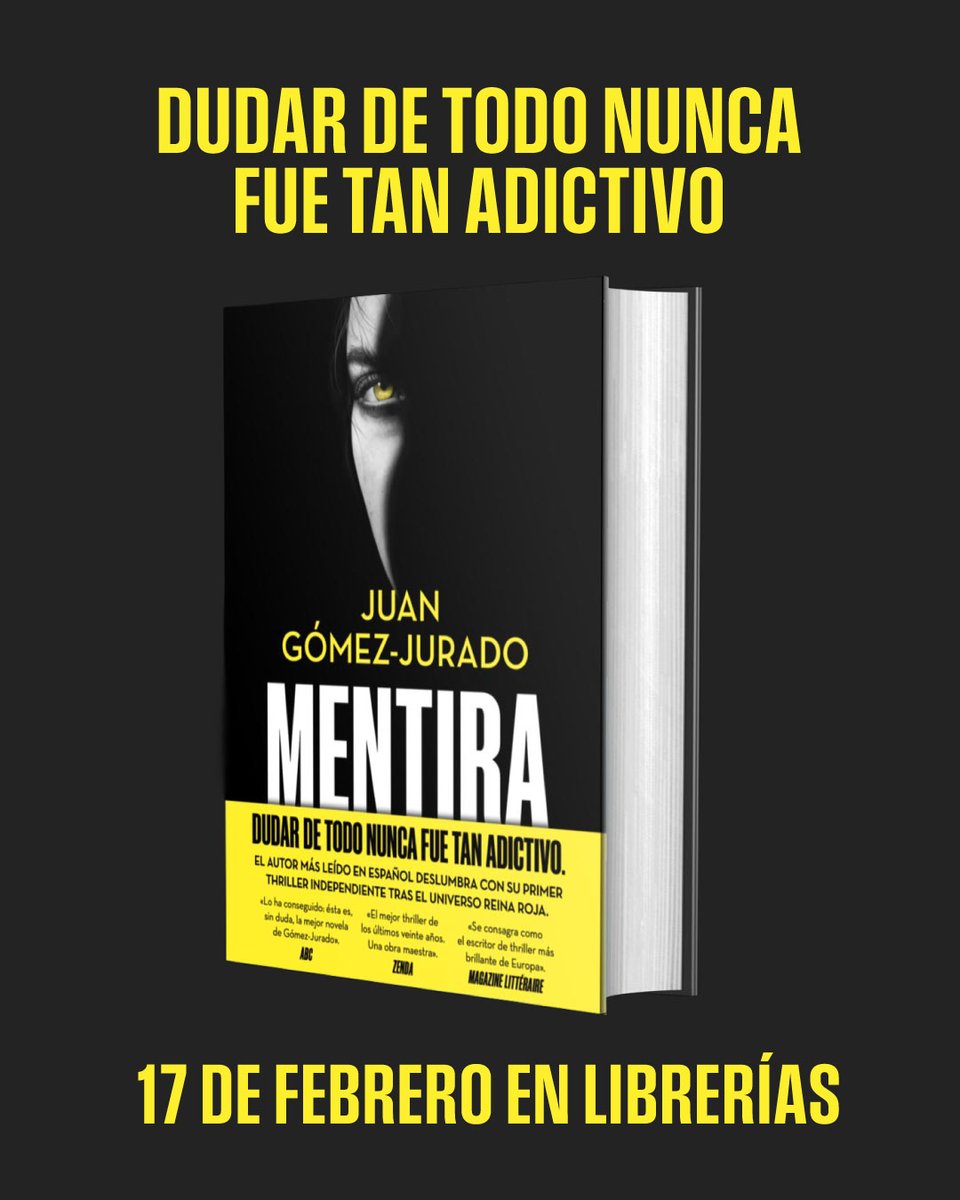
Como ya es tradición, tengo diez copias dedicadas y adelantadas de #Mentira a sortear entre todos los que hagáis RT al tuit de aquí abajo. ¡Léelo antes que nadie! 💛💛💛💛
Juan Gómez-Jurado@JuanGomezJurado

“Mi trabajo es mentir, pero contigo no voy a hacerlo”. Así comienzan las 700 adictivas páginas de #Mentira, que ya podéis reservar aquí abajo 👇🏻. Os quiero mucho. 💛💛💛 ¿Un RT bonico? 💛💛💛 Amazon: amzn.to/4qOWVTq ECI: cutt.ly/2th5B7dQ CDL: cutt.ly/Pth5BKsd Fnac: cutt.ly/Lth5BUch Agapea: cutt.ly/Ath5NjzB TTL: cutt.ly/Dth5NTVX 🐧: cutt.ly/Oth5MT74

Español
179
1.4K
883
128.3K
Emilio L. Cano retweetledi
JMV
JMV@YedaiJamao·
Me llamo Jesús Martínez del Vas y soy ilustrador tradicional. ¿Me ayudas a difundir mi trabajo con un retuit? Cada vez que compartas, curas a un gatito, haces feliz a un unicornio, y ademas apoyas arte humano frente a la IA. ¡Mil gracias!
JMV tweet mediaJMV tweet mediaJMV tweet mediaJMV tweet media
Español
239
11K
11.5K
258.9K
Ismael Sanz
Ismael Sanz@sanz_ismael·
La irrupción de ChatGPT y otras IA en la universidad ha puesto en cuestión el papel del pensamiento crítico. La amenaza no es la tecnología en sí, sino la desvinculación cognitiva: estudiantes que dejan de razonar por sí mismos y delegan su pensamiento en algoritmos. @jsainzg m.youtube.com/watch?v=eHaO0W… eldebate.com/educacion/2025…
Ismael Sanz tweet media
Español
4
221
522
18.8K