Emzy [ ₿⚡️]

10.4K posts

Emzy  [ ₿⚡️] banner
Emzy  [ ₿⚡️]

Emzy [ ₿⚡️]

@emzy

#Internet and IT Professional. #Bitcoin #Linux #ITSec PGP Fingerprint: 9EDA FF80 E080 6596 04F4 A76B 2EBB 056F D847 F8A7

Germany Katılım Nisan 2008
2.8K Takip Edilen3.3K Takipçiler
Emzy [ ₿⚡️] retweetledi

Alex | Stoizismus & Bitcoin
Alex | Stoizismus & Bitcoin@stoanakamoto_de·
Kugel Eis für 5€? 🍦 Dieser „Traum“ könnte Realität werden. Ich habe die Preisentwicklung einer Kugel Eis aus dem Café Münchner Freiheit mal für die nächsten 20 Jahre hochrechnen lassen, um den Kindern in unserem kostenlosen Geldkurs ein Gefühl für Inflation zu geben. Historische Teuerung: ca. 4,5% pro Jahr. 2001: 1 Kugel für 0,70€ 2025: 1 Kugel für 2€ 2045: Über 5€ pro Kugel? Oder sehen wir die 5€ schon früher?
Alex | Stoizismus & Bitcoin tweet media
Deutsch
7
2
22
1.4K
Emzy [ ₿⚡️] retweetledi
International Cyber Digest
International Cyber Digest@IntCyberDigest·
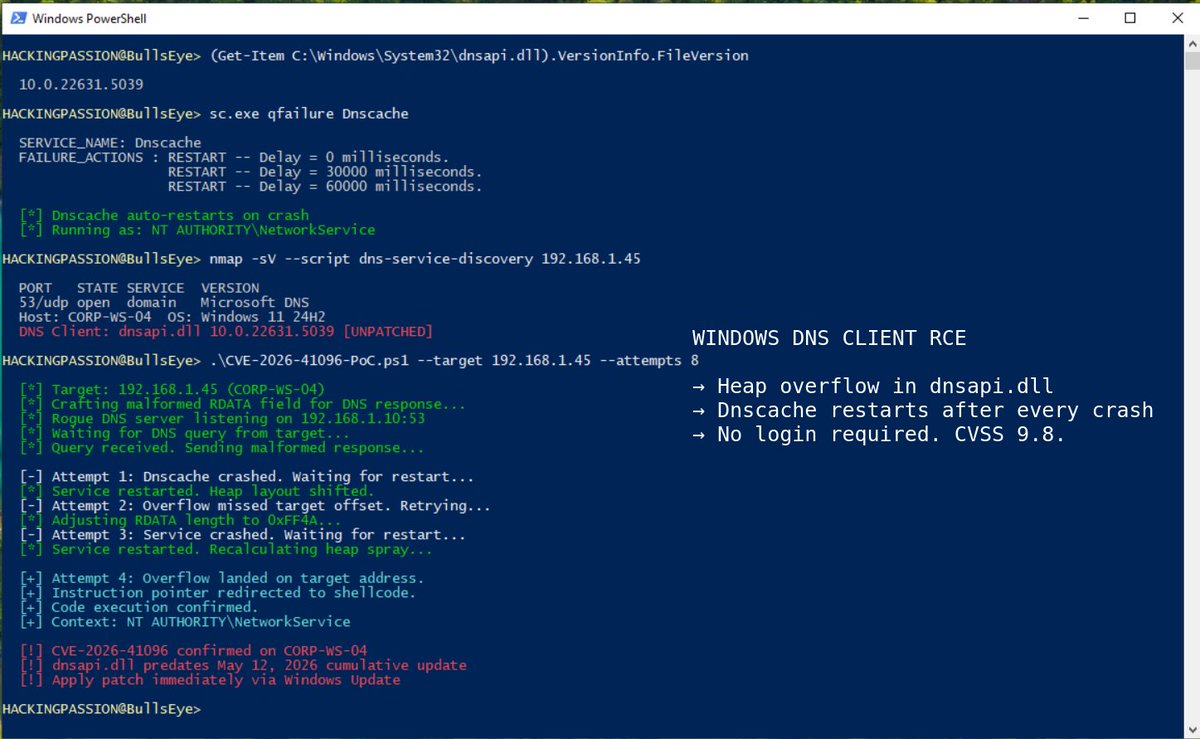
‼️🚨 Microsoft has patched a critical Windows DNS Client remote code execution vulnerability that allows an unauthorized attacker to execute code over a network. All it takes is a malicious DNS response. The vulnerability is tracked as CVE-2026-41096 with a CVSS score of 9.8. It is a heap-based buffer overflow in dnsapi.dll, the Windows component that processes DNS answers on every machine. To trigger it, an attacker needs a position where they can influence DNS responses: a rogue DNS server, a poisoned resolver, a compromised router, hostile WiFi, or a man-in-the-middle placement. That puts ordinary Windows DNS activity in the blast radius. Browsers, VPN clients, enterprise apps, update checks, and background services constantly ask DNS where to connect. The vulnerable processing sits in the Windows DNS Client path, not an edge-facing server product. Microsoft assessed exploitation as "less likely," and Rapid7 lists the issue as not publicly disclosed and not known to be exploited at release. On the contrary, a 9.8 unauthenticated network RCE in DNS client handling is exactly the kind of bug defenders should assume will be reverse-engineered quickly. Defenders should: - Deploy the May 2026 cumulative updates and confirm coverage across endpoints and servers - Restrict DNS traffic to trusted resolvers where possible - Monitor Dnscache and svchost.exe for abnormal child processes or unexpected outbound activity - Treat public WiFi and untrusted resolver paths as higher-risk until patching is complete
International Cyber Digest tweet mediaInternational Cyber Digest tweet media
English
35
316
1.6K
133.5K
Emzy [ ₿⚡️] retweetledi
True Crime Bitcoin Podcast
True Crime Bitcoin Podcast@Muenzcrime·
Münzcrime - True Crime Bitcoin Podcast: Mt. Gox: "Withdrawal denied". Episode 5 Stell dir vor: 70 % aller Bitcoin-Transaktionen der Welt laufen über eine einzige Börse. Dann macht diese Börse einfach dicht. Die Server stehen still. Deine Coins sind weg. serve.podhome.fm/episodepage/mu…
Deutsch
1
2
1
137
Emzy [ ₿⚡️] retweetledi
b10c
b10c@0xB10C·
Posted a "new" project-idea about monitoring Bitcoin DNS seeds. @vir7u had a project doing this a while ago, but the data hasn't been updating since end of 2024. Would be good to have a tool again and someone looking into it. github.com/0xB10C/project…
English
2
11
30
2.9K
Emzy [ ₿⚡️] retweetledi
International Cyber Digest
International Cyber Digest@IntCyberDigest·
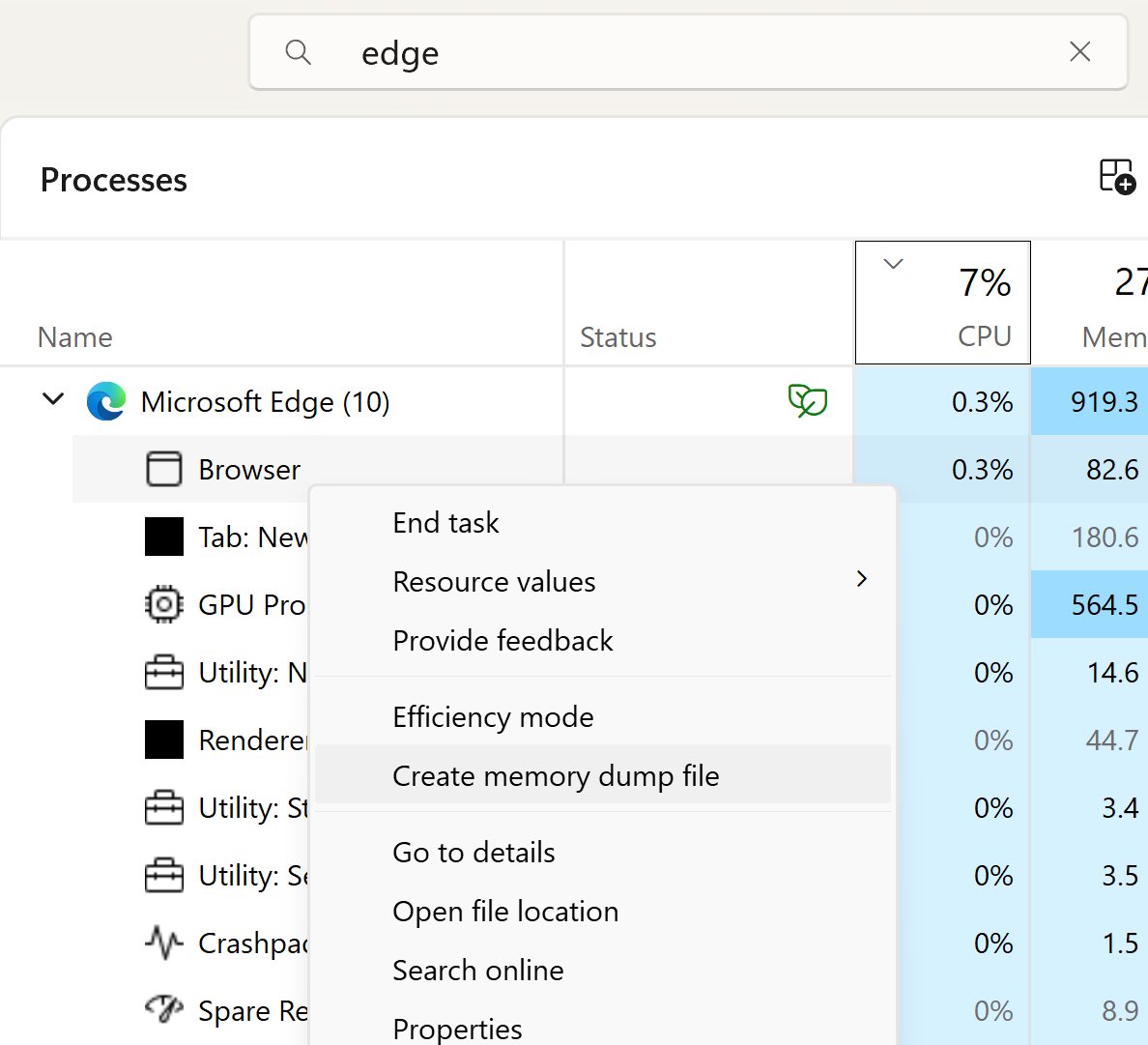
‼️🚨 Microsoft calls this "intended behaviour," so here we go. How to dump the credentials of every user stored in Microsoft Edge: 1. Open Edge. Don't browse anywhere, just open it. 2. Flip to Task Manager, find Edge, expand the task. 3. Highlight the "browser" sub-task, right-click, and choose "Create Memory Dump." 4. Open the dump file and look for credentials. The logged-in Windows user can dump every stored Edge credential with no additional rights. Which means any malware that user executes has those credentials for the asking. Thanks to Rob VandenBrink at SANS: isc.sans.edu/diary/32954
International Cyber Digest tweet mediaInternational Cyber Digest tweet media
English
290
2.4K
13.5K
1.1M
Emzy [ ₿⚡️] retweetledi
DENIC eG
DENIC eG@denic_de·
⚠️ Outage Alert: DENIC reports a major DNS service disruption affecting all DNSSEC-signed .de domains. This is causing global reachability issues. Technical teams are working at full speed on a fix. Stay tuned for updates. #DENIC #DNSSEC #InternetOutage
DENIC eG tweet media
English
15
37
78
20.2K
Emzy [ ₿⚡️] retweetledi
Cloudflare Radar
Cloudflare Radar@CloudflareRadar·
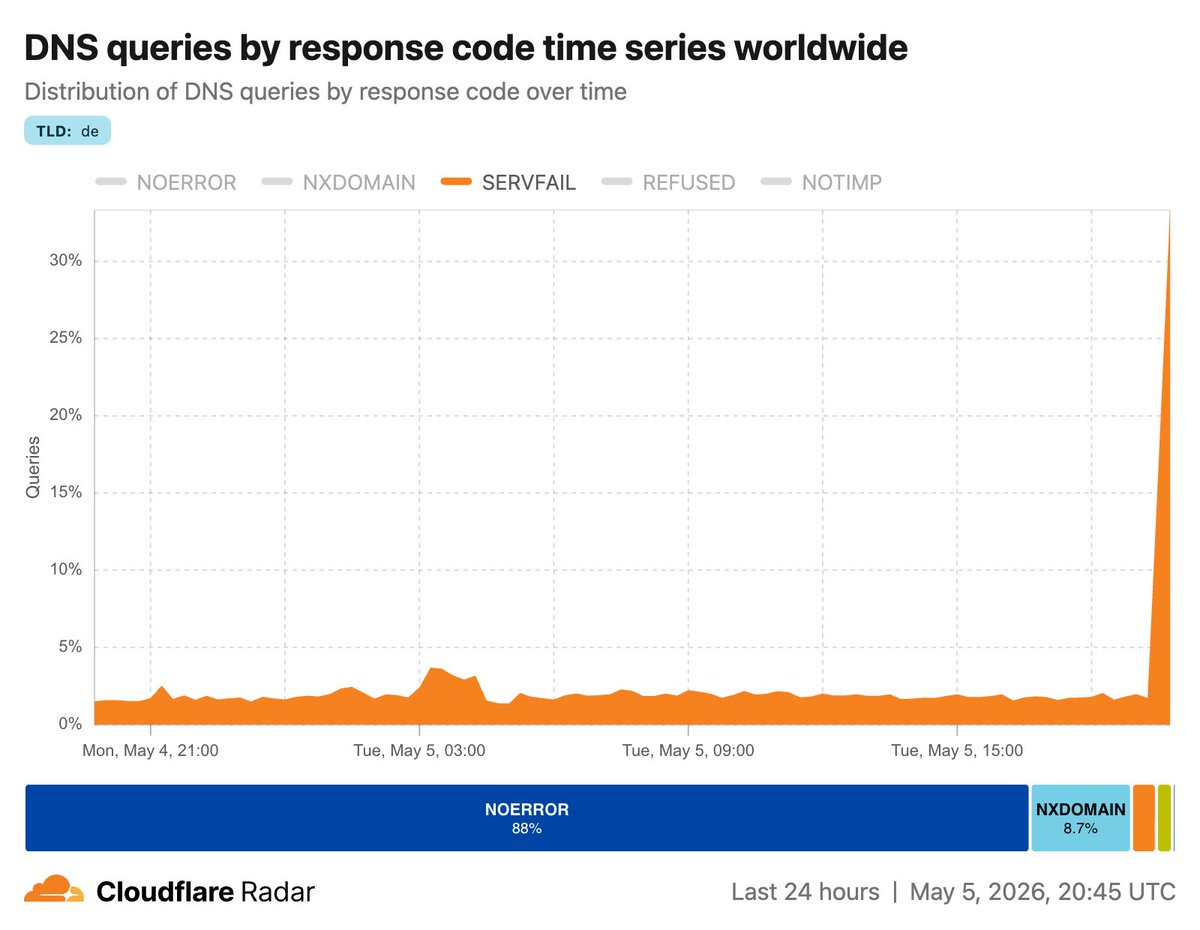
Apparent DNSSEC problems impacting the .de top-level domain (TLD) are visible on the Radar Data Explorer as a spike in SERVFAIL responses: #result" target="_blank" rel="nofollow noopener">radar.cloudflare.com/explorer?dataS… news.ycombinator.com/item?id=480278…
Cloudflare Radar tweet media
English
11
105
414
79.5K
Emzy [ ₿⚡️] retweetledi
Frank
Frank@jedisct1·
All the .de domain names are currently offline due to a DNSSEC failure at DeNIC. dnsviz.net/d/de/dnssec/ - Yay, DNSSEC.
English
10
31
144
11.9K
Emzy [ ₿⚡️] retweetledi
Bisq
Bisq@bisq_network·
Bisq v1 has experienced an exploit in its trade protocol that allowed an attacker to drain a portion of available offers.
English
31
130
453
95.7K
Emzy [ ₿⚡️] retweetledi
International Cyber Digest
International Cyber Digest@IntCyberDigest·
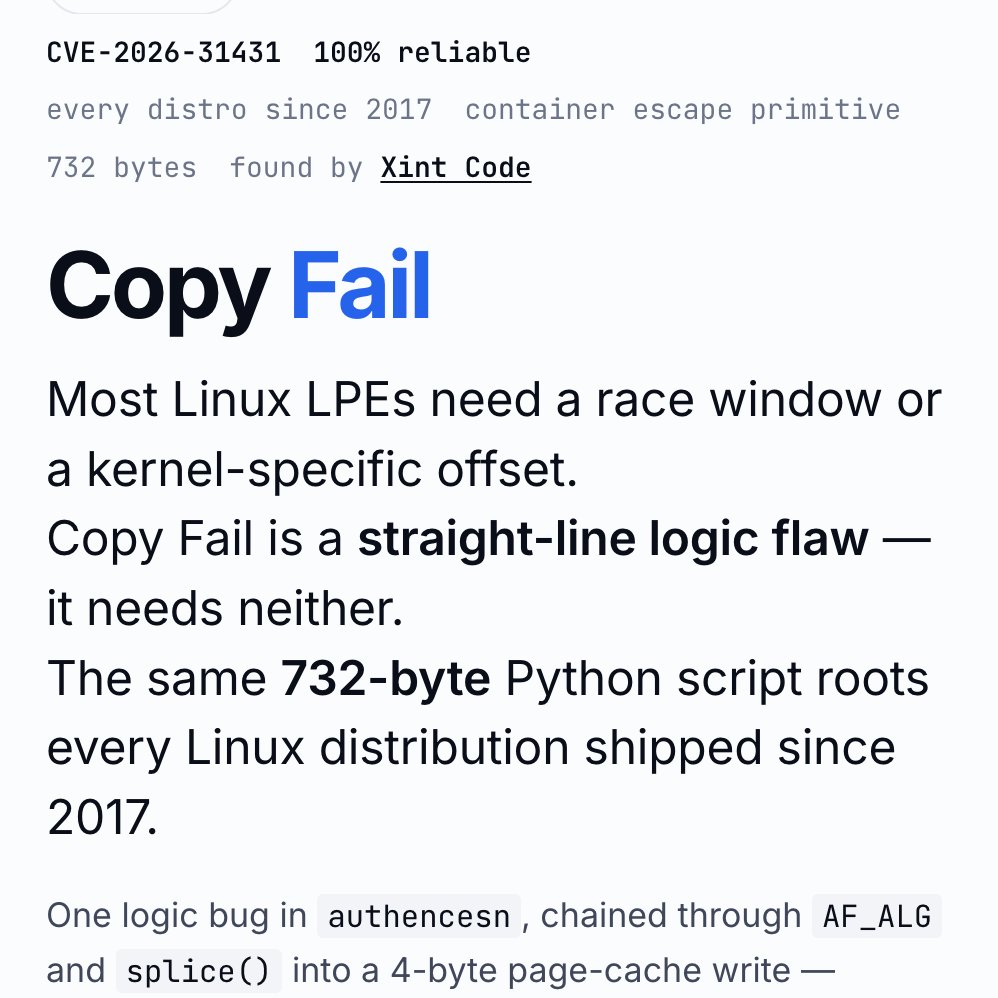
‼️🚨 BREAKING: An AI found a Linux kernel zero-day that roots every distribution since 2017. The exploit fits in 732 bytes of Python. Patch your kernel ASAP. The vulnerability is CVE-2026-31431, nicknamed "Copy Fail," disclosed today by Theori. It has been sitting quietly in the Linux kernel for nine years. Most Linux privilege-escalation bugs are picky. They need a precise timing window (a "race"), or specific kernel addresses leaked from somewhere, or careful tuning per distribution. Copy Fail needs none of that. It is a straight-line logic mistake that works on the first try, every time, on every mainstream Linux box. The attacker just needs a normal user account on the machine. From there, the script asks the kernel to do some encryption work, abuses how that work is wired up, and ends up writing 4 bytes into a memory area called the "page cache" (Linux's high-speed copy of files in RAM). Those 4 bytes can be aimed at any program the system trusts, like /usr/bin/su, the shortcut to becoming root. Result: the next time anyone runs that program, it lets the attacker in as root. What should worry most: the corruption never touches the file on disk. It only exists in Linux's in-memory copy of that file. If you imaged the hard drive afterwards, the on-disk file would match the official package hash exactly. Reboot the machine, or just put it under memory pressure (any normal system load that needs the RAM), and the cached copy reloads fresh from disk. Containers do not help either. The page cache is shared across the whole host, so a process inside a container can use this bug to compromise the underlying server and reach into other tenants. The original sin was a 2017 "in-place optimization" in a kernel crypto module called algif_aead. It was meant to make encryption slightly faster. The change broke a critical safety assumption, and nobody noticed for nine years. That bug then rode every kernel update from 2017 to today. This vulnerability affects the following: 🔴 Shared servers (dev boxes, jump hosts, build servers): any user becomes root 🔴 Kubernetes and container clusters: one compromised pod escapes to the host 🔴 CI runners (GitHub Actions, GitLab, Jenkins): a malicious pull request becomes root on the runner 🔴 Cloud platforms running user code (notebooks, agent sandboxes, serverless functions): a tenant becomes host root Timeline: 🔴 March 23, 2026: reported to the Linux kernel security team 🔴 April 1: patch committed to mainline (commit a664bf3d603d) 🔴 April 22: CVE assigned 🔴 April 29: public disclosure Mitigation: update your kernel to a build that includes mainline commit a664bf3d603d. If you cannot patch immediately, turn off the vulnerable module: echo "install algif_aead /bin/false" > /etc/modprobe.d/disable-algif.conf rmmod algif_aead 2>/dev/null || true For environments that run untrusted code (containers, sandboxes, CI runners), block access to the kernel's AF_ALG crypto interface entirely, even after patching. Almost nothing legitimate needs it, and blocking it shuts the door on this whole class of bug...
International Cyber Digest tweet mediaInternational Cyber Digest tweet media
English
231
2.7K
11.6K
2.4M
Emzy [ ₿⚡️] retweetledi
Jonas Nick
Jonas Nick@n1ckler·
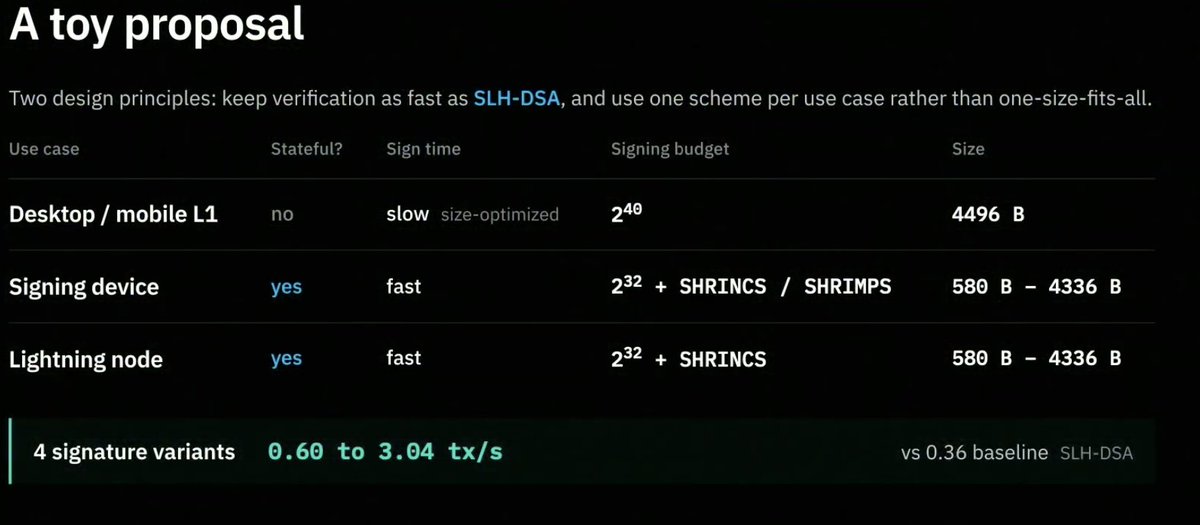
Last week at @OPNEXT2026 I presented a toy proposal for hash-based sigs in Bitcoin (incl. SHRINCS). Open questions: • What are acceptable sign/verify costs? Higher → smaller sigs • How to design safe stateful setups? • Optimizations beyond SHRINCS? • L2s and stateful sigs?
Jonas Nick tweet media
OPNEXT 2026@OPNEXT2026

OPNEXT '26: OP_CHECKSHRINCS, a hash-based signature opcode for post-quantum Bitcoin: OPNEXT’ 26 @n1ckler of @Blockstream presented two hash-based signature schemes, SHRINKS and SHRIMPS, as pragmatic near-term candidates for quantum proofing Bitcoin. 📺 youtube.com/watch?v=ed1K_1…

English
5
21
76
20.2K
Emzy [ ₿⚡️] retweetledi
stickies-v
stickies-v@stickies_v·
ASmap increases your node's robustness against being partitioned off the network, for example through an eclipse attack. It's been available since v20.0, but required some setup. From v31.0, enabling it is as easy as adding `-asmap=1` to your startup options (default off).
Bitcoin Core Project@bitcoincoreorg

Bitcoin Core v31.0 was released! It is available from: bitcoincore.org/en/download/ Release notes: bitcoincore.org/en/releases/31…


English
4
21
65
11K