Elias Palti
1.9K posts
Elias Palti
@epalti
PhD Berkeley. Docente UBA, investigador CONICET. Antifa
Buenos Aires Katılım Nisan 2011
682 Takip Edilen2.9K Takipçiler
@AlejRozitchner No te queda ni un resto de dignidad. Sos un pobre tipo
Español
No es el peor momento del gobierno, es el peor momento del periodismo.
Español





@lilialemoine Pobre . No se enteró que la Union Sovietica hace ya 35 años que dejó de existir. Debería volver a la primaria
Español

Periodistas y políticos argentinos reciben dinero de Rusia para desestabilizar al gobierno y fomentar agenda islamista/socialista/soviética.
En 2024 una ex diputada de LLA pidió la presidencia de Juicio Político (insistentemente) y los GPA de Rusia, e Irán. Este último, Diplomacia Parlamentaria SE LO NEGÓ.
¿Entienden LO CERCA que estuvimos de un golpe institucional? Habría que relevar quiénes me llamaron "conventillera" por advertir insistentemente sobre esto cuando prácticamente nadie me creía.
Los que lo niegan a esta altura son ignorantes o CÓMPLICES.
Español



@NYGBertie Libra Andis son inventos? No seas tan rastrero. Tenete un mínimo de dignidad
Español

Recuerden cuando Javier se metió en la política y le dieron una noticia buena y una mala. La buena: le buscaron cosas y estaba limpio. La mala: se las iban a inventar.
Todo el círculo de Javier está sujeto a lo mismo. Hay ataques coordinados desesperados por intereses colosales.
Español
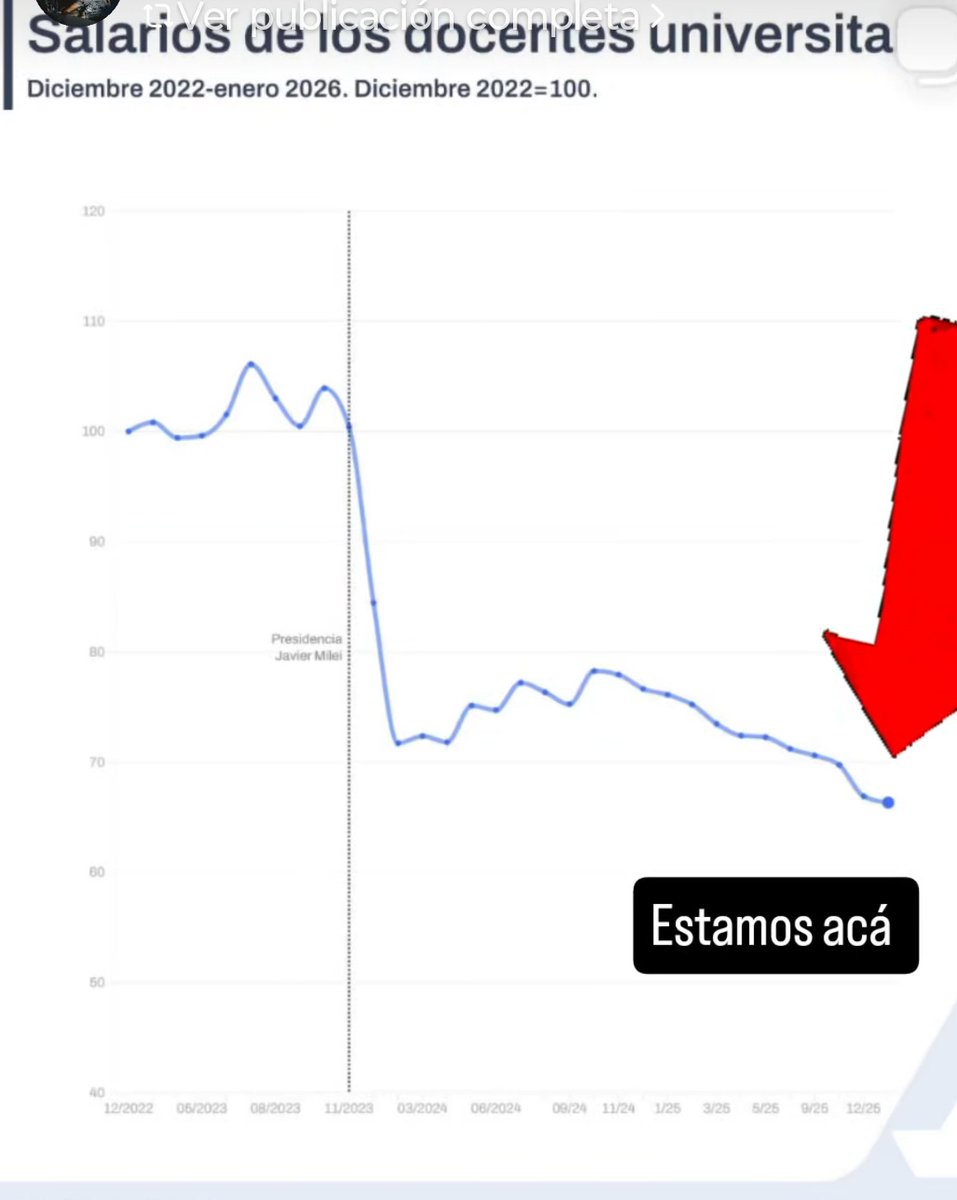
Elias Palti retweetledi


Argentinos no os da vergüenza que éste tío sea vuestro presidente?
Español
@patoenero Esa era una frase de Hi tler de 1934. Inmediatamente inicio los campos de concentración con socialistas y comunistas. Los judíos vinieron 6 años después
Español

"Milei tenía razón al decir: pensé que los comunistas tenían un problema mental pero luego descubrí que realmente es una enfermedad del alma"
Español

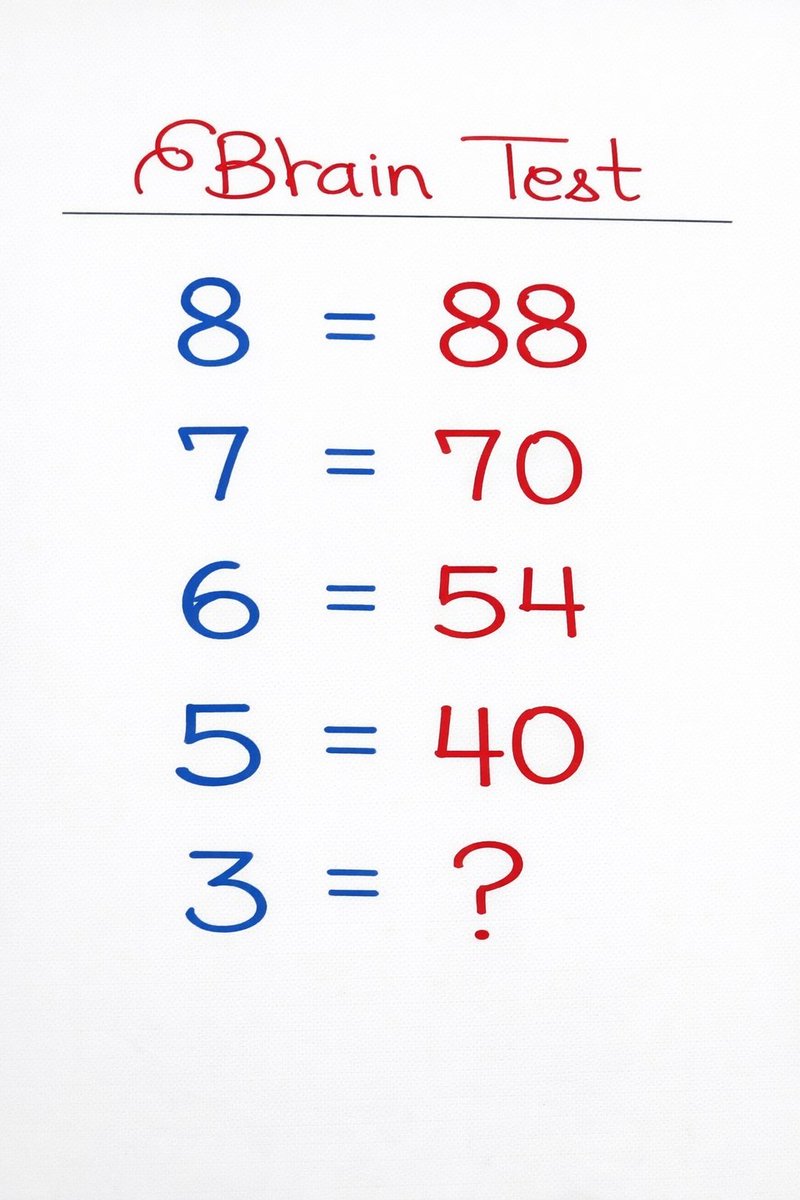
Elias Palti retweetledi
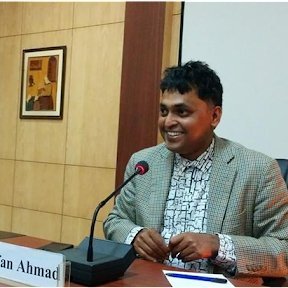
Some Notes on Jürgen Habermas (1929 –2026)
Yesterday post-iftār, I read the news of death of Habermas on my social media feed. While the Associated Press described him as “one of the world’s most influential philosophers,” the German Chancellor Friedrich Merz said that “Germany and Europe have lost one of the most significant thinkers of our time.” When read together, the two observations where the world is or can be mostly synonymous with Germany or Europe (and vice versa) also summarize the scope and limits of Habermas’ thinking.
Even for many informed observers and readers of Habermas, he was a noteworthy and “rational” philosopher of our time except for his 2023 statement on Palestinians-Israel, which they take as a deviation or digression from his otherwise uplifting, Enlightenment-defending philosophy. As I have argued in my 2025 essay, Habermas’ 2023 statement, when analyzed closely, instead was largely an offshoot of his earlier, otherwise “good” philosophy.
1. Eloquent about “internal colonization” of lifeworld by system in Western plutocracies (especially, Germany), Habermas was conceptually silent about external colonialism and imperialism at large. This silence by a philosopher of “universalism” speaks volumes about the kind of philosophy he wrote and stood for. Clearly, in his philosophy there is no mention of the ongoing brutalization of lifeworld of Palestinians who have no system of their own, as they (un)live under occupation of the Israeli settler colonial state.
2. “… there’s no sense in his [Habermas’] writings” that he felt “guilt or shame for his adolescent role in fighting for Hitler” (Jeffries, Grand Hotel Abyss, Verso, 2016, p. 295, ebook).
3. In a way, Habermas also diminished, even demeaned, philosophy when he argued that “philosophy cannot and should not try to play the role of usher” or a “judge” (in Moral Consciousness and Communicative Action, 1990). In agreement with Richard Rorty’s argument about the demise of philosophy, he held that cultural anthropology would be “the strongest candidate to succeed philosophy after its demise.” Yet, Habermas had no genuine interest in anthropology and cultures of the non-West. For example, whenever he wrote about Islam, as he did prominently after 2001, he mostly mimicked and displayed rank Western Orientalism. In his writings and many interviews, there is no reflexivity, the so-called attribute bequeathed by the Enlightenment and modernity.
4. Commentators on and defenders of Habermas take him as Kantian or neo-Kantian. Habermas too sees himself in that tradition. From a decolonial framework, this indeed is the precise problem. As the star philosopher of the Enlightenment, Kant’s own project of rational philosophy stands in opposition to a series of others, most notably Islam and Muslims. Habermas’ rank orientalism vis-à-vis Islam is thus beholden to Kant as well as to Max Weber, who serves as his key inspiration in The Philosophical Discourse of Modernity and who is an arch orientalist in relation, among others, to Islam [ on my formulation of European Enlightenment as an ethnic project, see Religion as Critique: Islamic Critical Thinking from Mecca to the Marketplace, 2017; uncpress.org/9781469635095/… ]
5. Many on the Left take Habermas as a critic –– sometimes even a radical one –– of capitalism. However, his stance on capitalism is at best pretty reformist. In The Theory of Communicative Action, he described capitalism as “norm-free:” capitalist “market is the most important example of a norm-free regulation of cooperative contexts.” Though he withdrew his characterization of capitalism as “norm-free sociality,” the withdrawal was only in its linguistic “expression,” not in substance. With the fall of the USSR and Berlin Wall, Habermas’ liberal position became stark; for Habermas, the enemy was not capitalism but its “management” and technocracy. He was “an enthusiastic apologist for…capitalism in its all viciousness at home and abroad.”
6. Of his many texts, the one on public sphere is widely discussed. There is certainly much merit in this text; however, it is also ridden with contradictions and elision. In Public Sphere and Experience: Toward an Analysis of the Bourgeois and Proletarian Public Sphere Negt and Kluge wrote an early critique. There are notable critiques of it from feminist scholars too. Consider this. Israel struck a deal with Paraguay, which had given refuge to Nazi war criminals, including Dr. Josef Mengele, responsible for murdering hundreds of Jews in Auschwitz. In this deal, Israel aimed to get rid of sixty thousand Palestinians, ten percent of the total population, by transferring them to Paraguay. Such deals that defy democracy’s supposed transparency to remain in dark secrecy rarely find any meaningful mention in Habermas’ theory of public sphere.
7. The Eurocentrism of Habermas and his total disregard of non-Weste was evident in his 2003 text, at once an analysis and an “appeal,” on the demonstrations against the US-engineered imperialist invasion of Iraq. To counter “the hegemonic unilateralism of the United States,” Habermas proposed a common European policy based on a historical and futuristic European identity. To the existing and future constituent nation-states of the EU, Habermas advised adding a “European dimension” to their “national identities.” The core of this European identity, to Habermas, was the distinct “form of spirit” “rooted in the Judeo-Christian tradition.” So permeated throughout with Eurocentrism was Habermas’ appeal that he felt impelled to say, in his final sentence, that he rejected Eurocentrism. American political theorist Iris Young rightly noted how the philosopher’s appeal amounted to a re-centering of Europe and far removed from any notion of an inclusive global democracy. Tellingly, she dubbed Habermas’ posturing of European identity against the US as “little more than sibling rivalry.” More importantly, Young pointed out how the appeal to fashion and nurture “a particularist European identity” entailed designing new “others,” indeed continually constructing and setting “insiders” against “outsiders.” Young also correctly identified the erasure of demonstrations outside Europe because Habermas highlighted only those within Europe to signal “the birth of a European public sphere.”
[for more on this, see this link below]
academia.edu/48974091/Ahmad…
@NewLeftReview @MehreenKhn @alex_callinicos @CihanTugal @TuttReal @TeachinginHE @ibrar_bhatt
#Habermas #habermas #philosophy #Enlightenment #Europe #modernity #GazaGenocide #anthropology
Irfan Ahmad@IrfanHindustan
Happy to share this new essay titled "Habermas as an Ethnic Thinker Par Excellence: On Critique, Palestine and the Role of Intellectuals," in the journal Teaching in Higher Education, @TeachinginHE From the horizon of critical thinking enunciated and employed in this essay, it is not Occidental rationalism mobilized by Habermas that should hurriedly be deployed to understand Gaza; rather, Gaza should become the conceptual ground with a notion of critique that is its own and from which to assess the history, worth, and consequence of the Reformation, the Enlightenment and modernity the conglomeration of which constitute ‘Occidental rationalism.’ ABSTRACT: Taking Habermas’ 2023 statement on Palestinians-Israel as the point of entry, this article examines his concept of critique. Against the dominant view of him as a philosopher of ‘universalism’ and ‘critical rationality,’ my thesis is that Habermas is an ethnic thinker, for, his ideas of critique and universalism unidirectionally rest on ‘to all’ rather than ‘from all.’ Consequently, it is missionary and borders on Islamophobia, particularly after 9/11. I show how Habermas’ denial of Palestinians’ genocide and his unqualified support to ‘Israel's right to exist’ as integral to Germany's ‘democratic ethos’ is neither an ample departure from his participation in the Hitler Youth nor from his understanding of the Enlightenment-modernity but largely their offshoots. I also juxtapose Habermas’ role as a public intellectual with that of Imam Malik (d. 795) who chose to be flogged rather than parrot unjust language of power elites. I conclude with three broad implications this article has in the field of teaching in higher education. tandfonline.com/doi/full/10.10…
English
@lilialemoine @Horacio246 Lo único que sabes mirar. No te das para otra cosa
Español
@Horacio246 Eso que se ve ahí en el pantalón es más alto que Kicillof.
Borren. No les juega a favor.
Español