Faraz Haider

5.8K posts

Faraz Haider banner
Faraz Haider

Faraz Haider

@f_aider

PhD Candidate @fass_air | Senior Research Fellow @strafasia_PK 📝 #ClimateSecurity #StrategicStudies #SratComm @SAVoices @KCL_CSSS @CntrClimSec 🎓 @Swinburne

Islamabad, Pakistan Katılım Haziran 2016
524 Takip Edilen589 Takipçiler
Faraz Haider retweetledi
StrafAsia Pakistan
StrafAsia Pakistan@Strafasia_PK·
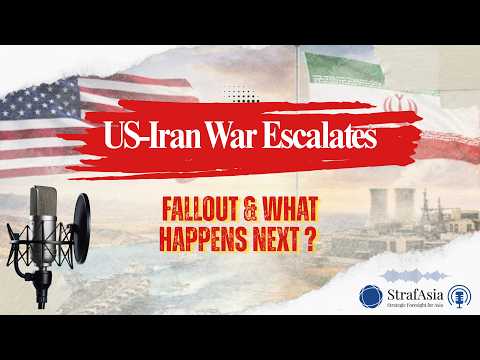
Is our definition of "National Security" outdated? We’re joined by climate activist Ameera Adil to discuss why issues like water security, food security, and gender mainstreaming are often sidelined as "non-traditional" threats when they are, in fact, the essence of our survival. It’s time to rethink how we define and defend our future. Catch the full conversation here: youtube.com/watch?v=0WToJl… #StrafAsia #Podcast #ClimateSecurity #GenderEquality #StrategicForesight @adilsultan @Aiza_Azam @f_aider
YouTube video
YouTube
StrafAsia Pakistan tweet media
English
0
3
5
112
Faraz Haider
Faraz Haider@f_aider·
Amidst war, there can be rain... . . Rooh paaty hai sakoon is asmaan ki lazzat mein Ye lalkaar hai jis ka dil ho harkat mein -آزاد
Eesti
0
0
2
53
Faraz Haider retweetledi
Miftah Ismail
Miftah Ismail@MiftahIsmail·
Fahd Hussain is not a biased propagandist but a serious professional journalist and opinion leader. For him to say the govt has failed to act on any major reform areas, in spite of the most favourable circumstance, is a damning indictment of this government. @Fahdhusain
Shahbaz Rana@81ShahbazRana

@Fahdhusain again raises very pertinent 10 questions on the ability of the government. The striking para👇 “Consider this. No government has had more space to get work done than the present one. There are no judges who are throwing Suo Moto spears at it, or striking down any projects or policies as unconstitutional; there are no journalists who are exposing any scandals or running a campaign against the government (on their own or on someone's behalf), there is no opposition that is holding long marches or public rallies or even challenging the Treasury benches in the Parliament; there is no threat from the establishment; there are no external challenges (or threat of punitive actions) from superpowers, regional powers or financial institutions; there is no province that has the need or the capacity to undercut the functioning of the Centre; and there is more diplomatic goodwill available than has ever been in living memory” tribune.com.pk/story/2619004/…

English
27
30
162
30.6K
Faraz Haider retweetledi
Aiza Azam
Aiza Azam@Aiza_Azam·
The author: (i) Does not appear to understand the meaning of 'cognitive bias', using the term to describe American public sentiment against the Vietnam war and the reason the US pulled out of that conflict. Does not appear to have proper appreciation of history regarding the war against Vietnam either. (ii) Offers the statement " It would be apt to say that mind is the new strategic depth in contemporary strategic calculus", which suggests lack of understanding of how the term is used. (iii) Argues, "Historically, deterrence was a kinetic competition based on counting nuclear warheads, delivery system, troop numbers, and economic output etc. However, in the age of cognitive warfare, the psychological domain of deterrence has been expanded massively". Ma'am, no. The psychological aspect has never not been part of deterrence thinking, as was made exceedingly clear by the earliest scholars in the field. Please read Michael Quinlan, if no one else. (iv) Writes, "[Think tanks] support two core pillars of deterrence, deterrence by denial through strengthening domestic mental resilience and deterrence by punishment through exposing and imposing costs on cognitive aggressors". This is a massive leap in the capabilities and mandate of our currently operational think tanks and appears largely to be an attempt to extend their funding cycle, thereby enabling most of them to continue their staunch policy of not moving beyond optics, rhetoric and tired research ideas. Our academic and research community, and the platforms publishing them, must do better. I genuinely believe we can.
The Friday Times@TFT_

"Victory is measured not in territory captured but in cognitive advantage gained and protected." How did the Pakistan-India crisis of 2025 reshape strategic deterrence? @AsmaKhawaja5 breaks down the mechanics of Cognitive Warfare. 🇵🇰🛡️ 🔗 thefridaytimes.com/14-Jul-2026/te…

English
0
3
11
750
Faraz Haider retweetledi
Anas Yamin
Anas Yamin@AnasYamin_·
Finally something one can listen to while unwinding! Hope it turns out to be a success! @Strafasia_PK
Faraz Haider@f_aider

The pilot episode of #StrategicDrive by @Strafasia_PK introduces why we wanted to move away from the conventional desk-based, studio-style geopolitical commentary format, and build something more casual, dynamic, and conversational instead. youtu.be/9P-JIIpjHeY?si… #podcast #Geopolitics #strategicaffairs #carpool @adilsultan @Aiza_Azam @nuverah_a @AnasYamin_ @ahmadsaleem_rao

English
0
2
3
71
Faraz Haider retweetledi
StrafAsia Pakistan
StrafAsia Pakistan@Strafasia_PK·
Talking Geopolitics on the Go! We’re moving our conversations out of the studio and away from the heavy jargon towards a "Strategic Drive," a new series focused on accessible, conversational analysis of geopolitics and security. Watch our intro here: youtube.com/watch?v=9P-JII… Let us know what topics you want to hear about next! #StrafAsia #StrategicDrive #Geopolitics #SecurityStudies @adilsultan @Aiza_Azam @f_aider
YouTube video
YouTube
StrafAsia Pakistan tweet media
English
0
4
6
422
Faraz Haider retweetledi
StrafAsia Pakistan
StrafAsia Pakistan@Strafasia_PK·
Why is climate change the ultimate threat multiplier in South Asia? Our intern, Alishba Khan, extrapolates from Strafasia's very own @f_aider's piece for the South Asian Voices. She explores how the collapse of data sharing and the weaponization of water create dangerous information vacuums that could lead to miscalculation and escalation. Read the original piece on South Asian Voices: southasianvoices.org/geo-m-pk-r-wat… #StrafAsia #WaterSecurity #RegionalStability #Internship2026
StrafAsia Pakistan tweet mediaStrafAsia Pakistan tweet media
English
0
5
8
121
Faraz Haider
Faraz Haider@f_aider·
Clear national interest involved with the defence deal, but is it strategic vision or strategic overstretch?
StrafAsia Pakistan@Strafasia_PK

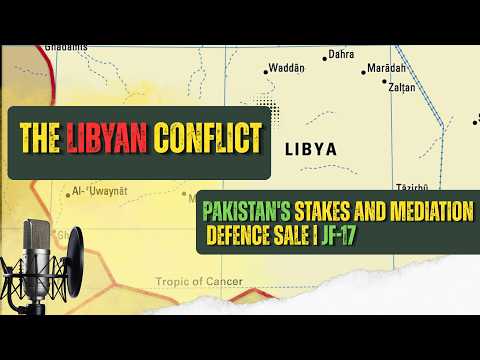
Pakistan, Libya, JF-17 and a multi‑billion defence deal. New StrafAsia #podcast on Pakistan’s #mediation role in the Libyan conflict – and what it tells us about Pakistan’s evolving strategic map from South Asia to West Asia and North Africa. 🎧 [youtube.com/watch?v=9H40R6…] #Pakistan #Libya #JF17 #Geopolitics #WestAsia #NorthAfrica #StrafAsia @adilsultan @Aiza_Azam @f_aider @nuverah_a @AnasYamin_ @ahmadsaleem_rao

English
0
2
5
171
Faraz Haider retweetledi
Adil
Adil@adilsultan·
In this short Strafasia podcast we try to understand Pakistan's involvement as a 'mediator' in the internal fight amongst the Libyan factions. Pakistan in the Libyan Conflict: Mediation | JF-17 Deal | Strategic Visi... youtu.be/9H40R631oKE?si… via @YouTube
YouTube video
YouTube
English
0
1
7
1.4K
Faraz Haider
Faraz Haider@f_aider·
I write for @Strafasia_PK on the Indus Water Treaty and how its current 'Abeyance' status carries tremendous climate and security risks. You can read it at strafasia.com/indus-waters-t… #climatesecurity #induswatertreaty #iwt #india #pakistan
StrafAsia Pakistan@Strafasia_PK

The Indus Waters Treaty has historically functioned as a vital mechanism for regional stability. As this framework faces political pressure, @f_aider explores why shifting from cooperative management to unilateral signaling weakens the basin's climate-adaptation capacity and creates dangerous uncertainty for millions. Read Here: strafasia.com/indus-waters-t… #WaterSecurity #Geopolitics #StrafAsia

English
0
3
10
727
Faraz Haider retweetledi
Aiza Azam
Aiza Azam@Aiza_Azam·
Must read article by @f_aider for @Strafasia_PK on the climate consequences of holding the Indus Waters Treaty in abeyance: strafasia.com/indus-waters-t… "India’s posture cannot be measured only by how much water can be physically controlled...unilateral signalling around treaty obligations, storage, releases, and procedural commitments disrupts the planning assumptions on which downstream adaptation depends."
English
0
4
9
534