Fabio Salern

38 posts

Fabio Salern banner
Fabio Salern

Fabio Salern

@fabiosalern

Software Engineer @ Stema | LLMs enthusiast

Remote Katılım Nisan 2020
93 Takip Edilen23 Takipçiler
Fabio Salern retweetledi

Andrej Karpathy
Andrej Karpathy@karpathy·
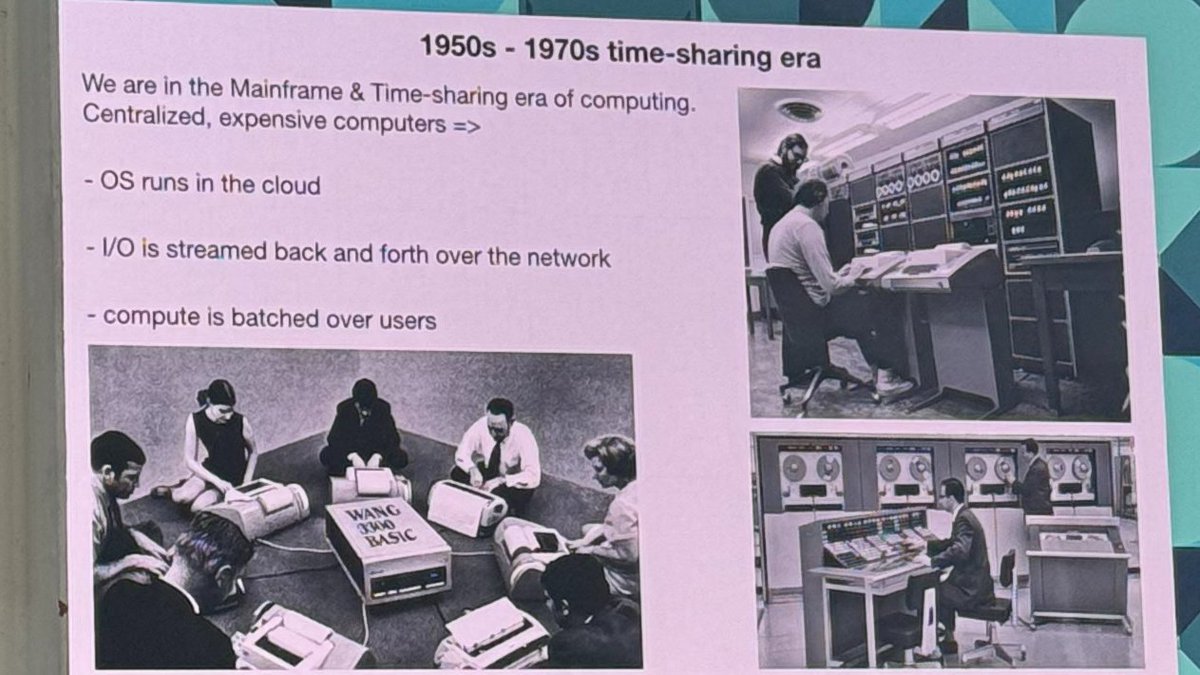
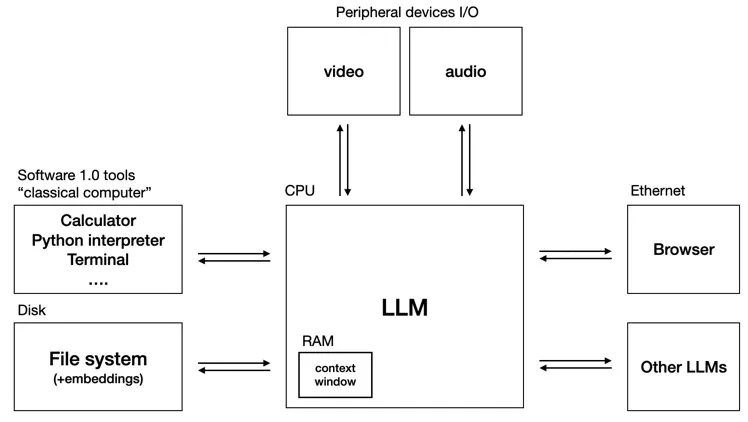
Nice - my AI startup school talk is now up! Chapters: 0:00 Imo fair to say that software is changing quite fundamentally again. LLMs are a new kind of computer, and you program them *in English*. Hence I think they are well deserving of a major version upgrade in terms of software. 6:06 LLMs have properties of utilities, of fabs, and of operating systems => New LLM OS, fabbed by labs, and distributed like utilities (for now). Many historical analogies apply - imo we are computing circa ~1960s. 14:39 LLM psychology: LLMs = "people spirits", stochastic simulations of people, where the simulator is an autoregressive Transformer. Since they are trained on human data, they have a kind of emergent psychology, and are simultaneously superhuman in some ways, but also fallible in many others. Given this, how do we productively work with them hand in hand? Switching gears to opportunities... 18:16 LLMs are "people spirits" => can build partially autonomous products. 29:05 LLMs are programmed in English => make software highly accessible! (yes, vibe coding) 33:36 LLMs are new primary consumer/manipulator of digital information (adding to GUIs/humans and APIs/programs) => Build for agents! Thank you again for the invite @ycombinator and congrats again on an awesome events! I'll post some links/references in the reply.
Y Combinator@ycombinator

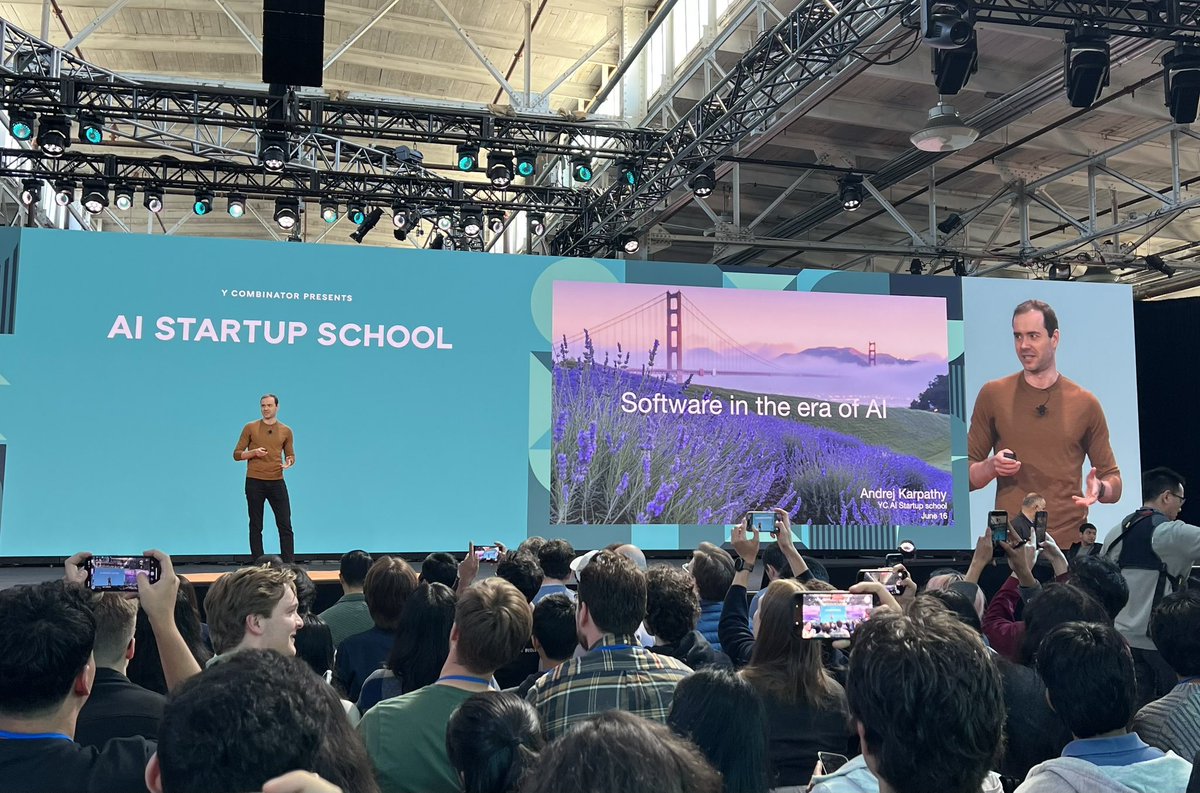
Andrej Karpathy's (@karpathy) keynote yesterday at AI Startup School in San Francisco.

English
222
1.2K
8.9K
1.3M
Fabio Salern retweetledi
ADAM
ADAM@adamcohenhillel·
a quick note from @karpathy talk, which afterwards I was fully immersed in the talk I stopped writing down/taking notes: While it is interesting to think about LLMs in terms of "electricity" -> CAPEX to train an LLM (~= to build the grid) -> OPEX to serve intelligence over increasingly homogeneous API (prompt, image, tools, ...) -> Metered access (S/1M tokens) -> Demand for low latency, high uptime, consistent quality (~= demanding consistent voltage from grid) -> OpenRouter ~= Transfer Switch (grid, solar, battery, generator...) -> Intelligence "brownouts" e.g. when OpenAl goes down. LLM are more like Operation System and we are still in the early "mainframe era" of computing in this LLM equivalent, not PC yet, with time-sharing computing, etc. We do see early Personal computing paradigm, with @exolabs like clusters, but what will it look like in the long run? we don’t know yet. He does not entirely believe in full the autonomous agent, and think the paradigm of human in the loop is here to stay. Also, things takes time, so, this is not "the year of agents," but the "decade of agents". Demos are cool, but real-world prod is much much harder and different. He gave the example of a Waymo drive he took in 2013, and 12 years later we are still in this automation process, and progressing. Professional software engineering will not disappear, and vibe-coding is more like a "gateway drug" to it. We do however, have a new paradign of software - "Software 3.0" (i.e., etnglish). You will need software 2.0 for some usecases (training neural networks), as well as software 1.0 (writing code) He is bullish on Semiautonomous GUI (Cursor-like), and say we will see more and more of this. The cool part about it, is the "automation scale," where you have a UI you can control how much automation to allow the agent. Sometimes, with some tasks, it will be 100%, some other tasks, not. He gave the example of Ironman, where it augment the human most of the time, but can also act autonomously if needed. With that being said, we need to make stuff accessible for agents, llm.txt etc
ADAM tweet mediaADAM tweet mediaADAM tweet media
English
14
61
448
95.3K
Fabio Salern retweetledi
Aadit Sheth
Aadit Sheth@aaditsh·
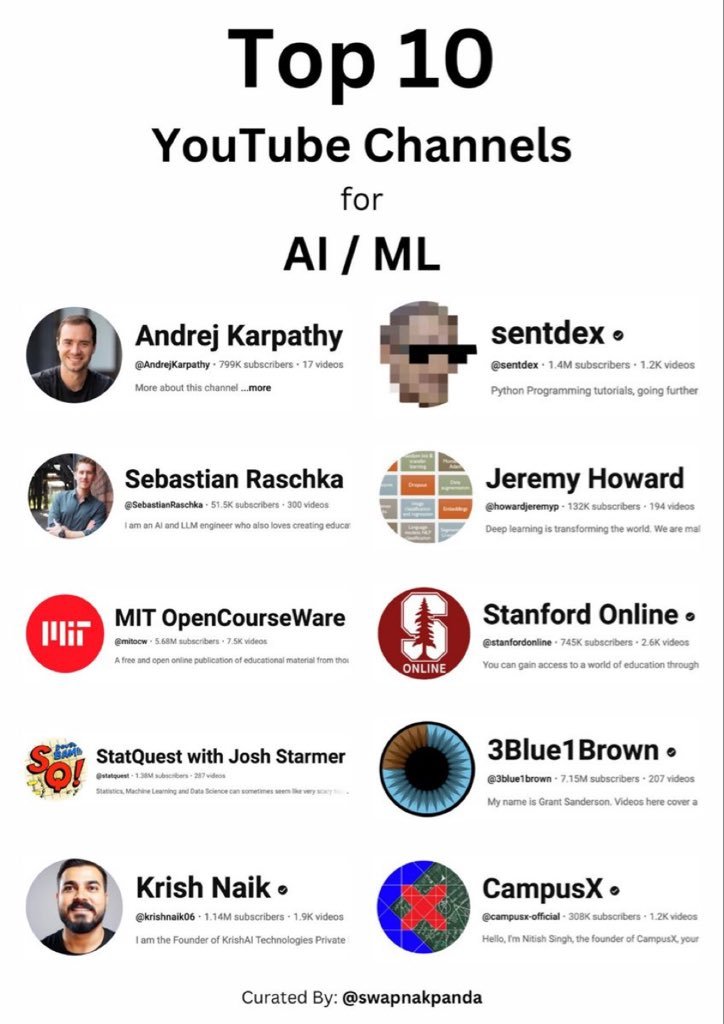
The smartest way to learn AI in 2025 is to follow the right people. Start here.
Aadit Sheth tweet media
English
29
211
2K
179.3K
Fabio Salern retweetledi
Arek 🦄
Arek 🦄@areksds·
I think @karpathy just gave the best talk of @ycombinator AI Startup School. Software in the era of AI. Here are some of the main takeaways 👇
Arek 🦄 tweet media
English
4
5
30
1.9K
Fabio Salern retweetledi
Poonam Soni
Poonam Soni@CodeByPoonam·
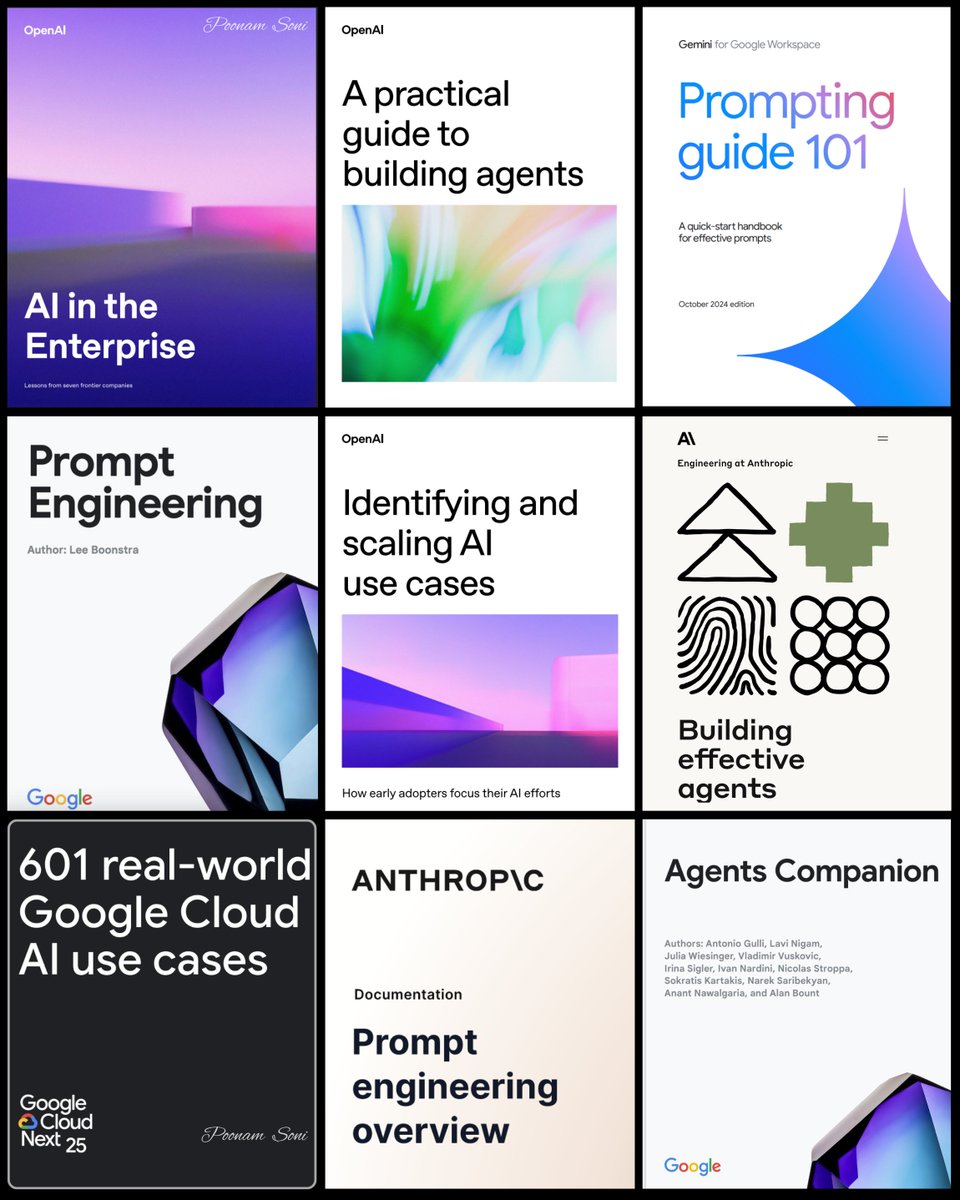
OpenAI, Google, and Anthropic released best guides on: - Prompt Engineering - Building effective Agents - AI in Business - 601 AI use cases and so much more... 9 best guides you can’t afford to miss:
Poonam Soni tweet media
English
50
478
2.8K
314.8K
Fabio Salern retweetledi
elvis
elvis@omarsar0·
On building your personalized deep research agents. I recently built this deep research agentic workflow with n8n and was very impressed by the results. Combining reasoning models + multi-agent workflows is like magic! A few things I learned along the way:
elvis tweet media
English
17
65
540
86.4K
Fabio Salern retweetledi
Andrej Karpathy
Andrej Karpathy@karpathy·
Good post from @balajis on the "verification gap". You could see it as there being two modes in creation. Borrowing GAN terminology: 1) generation and 2) discrimination. e.g. painting - you make a brush stroke (1) and then you look for a while to see if you improved the painting (2). these two stages are interspersed in pretty much all creative work. Second point. Discrimination can be computationally very hard. - images are by far the easiest. e.g. image generator teams can create giant grids of results to decide if one image is better than the other. thank you to the giant GPU in your brain built for processing images very fast. - text is much harder. it is skimmable, but you have to read, it is semantic, discrete and precise so you also have to reason (esp in e.g. code). - audio is maybe even harder still imo, because it force a time axis so it's not even skimmable. you're forced to spend serial compute and can't parallelize it at all. You could say that in coding LLMs have collapsed (1) to ~instant, but have done very little to address (2). A person still has to stare at the results and discriminate if they are good. This is my major criticism of LLM coding in that they casually spit out *way* too much code per query at arbitrary complexity, pretending there is no stage 2. Getting that much code is bad and scary. Instead, the LLM has to actively work with you to break down problems into little incremental steps, each more easily verifiable. It has to anticipate the computational work of (2) and reduce it as much as possible. It has to really care. This leads me to probably the biggest misunderstanding non-coders have about coding. They think that coding is about writing the code (1). It's not. It's about staring at the code (2). Loading it all into your working memory. Pacing back and forth. Thinking through all the edge cases. If you catch me at a random point while I'm "programming", I'm probably just staring at the screen and, if interrupted, really mad because it is so computationally strenuous. If we only get much faster 1, but we don't also reduce 2 (which is most of the time!), then clearly the overall speed of coding won't improve (see Amdahl's law).
Balaji@balajis

AI PROMPTING → AI VERIFYING AI prompting scales, because prompting is just typing. But AI verifying doesn’t scale, because verifying AI output involves much more than just typing. Sometimes you can verify by eye, which is why AI is great for frontend, images, and video. But for anything subtle, you need to read the code or text deeply — and that means knowing the topic well enough to correct the AI. Researchers are well aware of this, which is why there’s so much work on evals and hallucination. However, the concept of verification as the bottleneck for AI users is under-discussed. Yes, you can try formal verification, or critic models where one AI checks another, or other techniques. But to even be aware of the issue as a first class problem is half the battle. For users: AI verifying is as important as AI prompting.

English
134
537
4.4K
844.3K
Fabio Salern retweetledi
elvis
elvis@omarsar0·
🔥 Introducing Firecrawl /search. @firecrawl just launched an insane feature to search and crawl in one shot. You heard that right! One API call to search the web and scrape any data you need for your AI agents. I took it for a spin in n8n:
English

7
32
225
43.7K
Fabio Salern retweetledi
Rohan Paul
Rohan Paul@rohanpaul_ai·
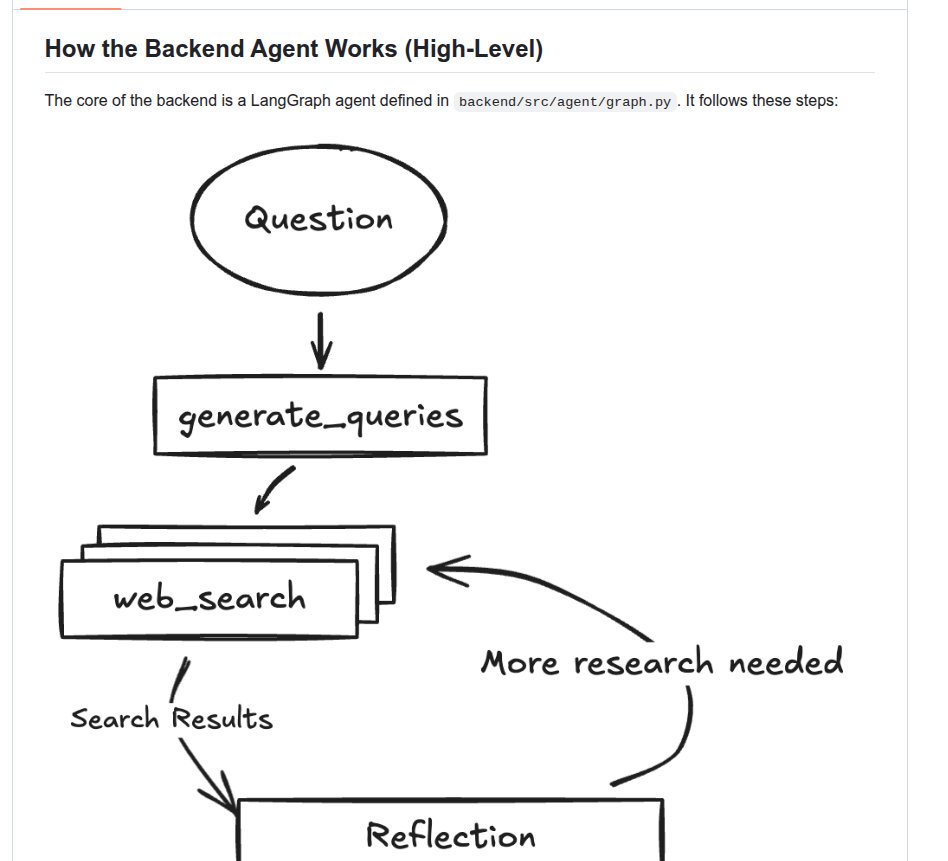
Google opensources DeepSearch stack Get started with building Fullstack Agents using Gemini 2.5 and LangGraph 📝 Overview This project has a React frontend and a FastAPI backend built on LangGraph. The agent turns user input into search queries with Gemini, fetches web results via Google Search API, reflects on them to spot missing info, and loops until it crafts a final answer with citations. ⚙️ The Core Concepts Agent starts by generating initial queries with a Gemini model. It calls Google Search API to get web pages. It runs a reflection step to check if results cover the topic. If gaps exist, it refines queries and repeats until confidence is high, then synthesizes a well-cited answer. 🧰 Deployment Details In production, backend serves the optimized frontend build. LangGraph needs Redis for streaming real-time output and Postgres to save assistant states, threads, and task queues. Docker image builds frontend and backend together. Environment keys (Gemini and LangSmith) must be set before running docker-compose. 🔥 The Most concept here is The agent’s reflective loop, where it analyzes search outcomes, spots gaps, and refines queries, ensures deeper, more accurate research without manual prompts.
Rohan Paul tweet media
English
10
115
877
92.6K
Fabio Salern retweetledi
ℏεsam
ℏεsam@Hesamation·
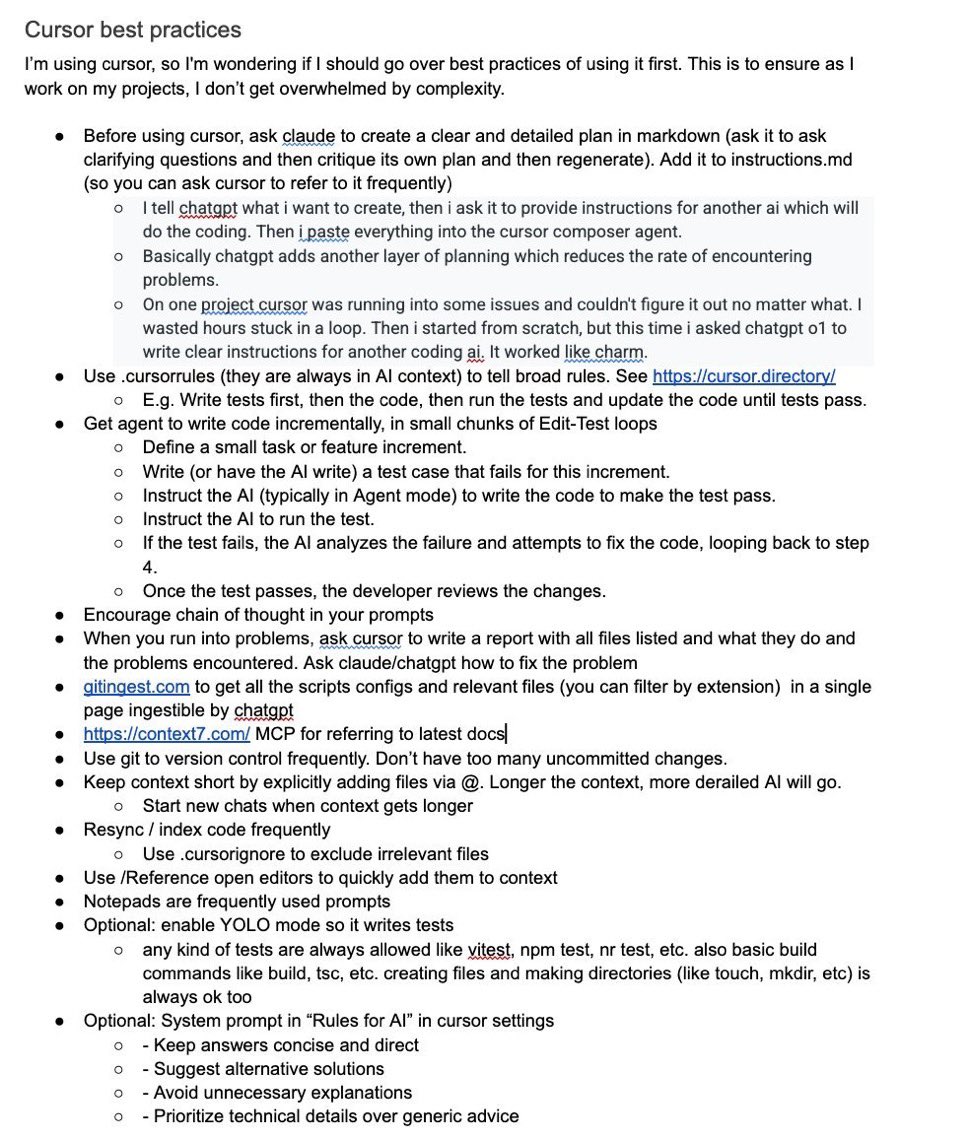
if you’re not using Cursor like this, you’re using it wrong
ℏεsam tweet media
English
24
217
2.6K
347K
Fabio Salern retweetledi
Andrej Karpathy
Andrej Karpathy@karpathy·
An attempt to explain (current) ChatGPT versions. I still run into many, many people who don't know that: - o3 is the obvious best thing for important/hard things. It is a reasoning model that is much stronger than 4o and if you are using ChatGPT professionally and not using o3 you're ngmi. - 4o is different from o4. Yes I know lol. 4o is a good "daily driver" for many easy-medium questions. o4 is only available as mini for now, and is not as good as o3, and I'm not super sure why it's out right now. Example basic "router" in my own personal use: - Any simple query (e.g. "what foods are high in fiber"?) => 4o (about ~40% of my use) - Any hard/important enough query where I am willing to wait a bit (e.g. "help me understand this tax thing...") => o3 (about ~40% of my use) - I am vibe coding (e.g. "change this code so that...") => 4.1 (about ~10% of my use) - I want to deeply understand one topic - I want GPT to go off for 10 minutes, look at many, many links and summarize a topic for me. (e.g. "help me understand the rise and fall of Luminar"). => Deep Research (about ~10% of my use). Note that Deep Research is not a model version to be picked from the model picker (!!!), it is a toggle inside the Tools. Under the hood it is based on o3, but I believe is not fully equivalent of just asking o3 the same query, but I am not sure. All of this is only within the ChatGPT universe of models. In practice my use is more complicated because I like to bounce between all of ChatGPT, Claude, Gemini, Grok and Perplexity depending on the task and out of research interest.
Andrej Karpathy tweet media
English
621
1.6K
13.4K
1.3M
Fabio Salern retweetledi
Adéwálé
Adéwálé@__adewale·
@lingodotdev Sometimes I register on platforms with “null” as my name to imagine the dev freaking out
English
6
1
18
1.2K
Fabio Salern retweetledi
elvis
elvis@omarsar0·
YC on the key prompting techniques used by the best AI startups:
elvis tweet media
English
34
302
3.3K
658.5K
Fabio Salern retweetledi
George from 🕹prodmgmt.world
product manager using their 16” M4 Max Macbook Pro to open JIRA
George from 🕹prodmgmt.world tweet media
English
124
675
15.3K
583K
Fabio Salern retweetledi
Mustufa Khan
Mustufa Khan@mustufa4socials·
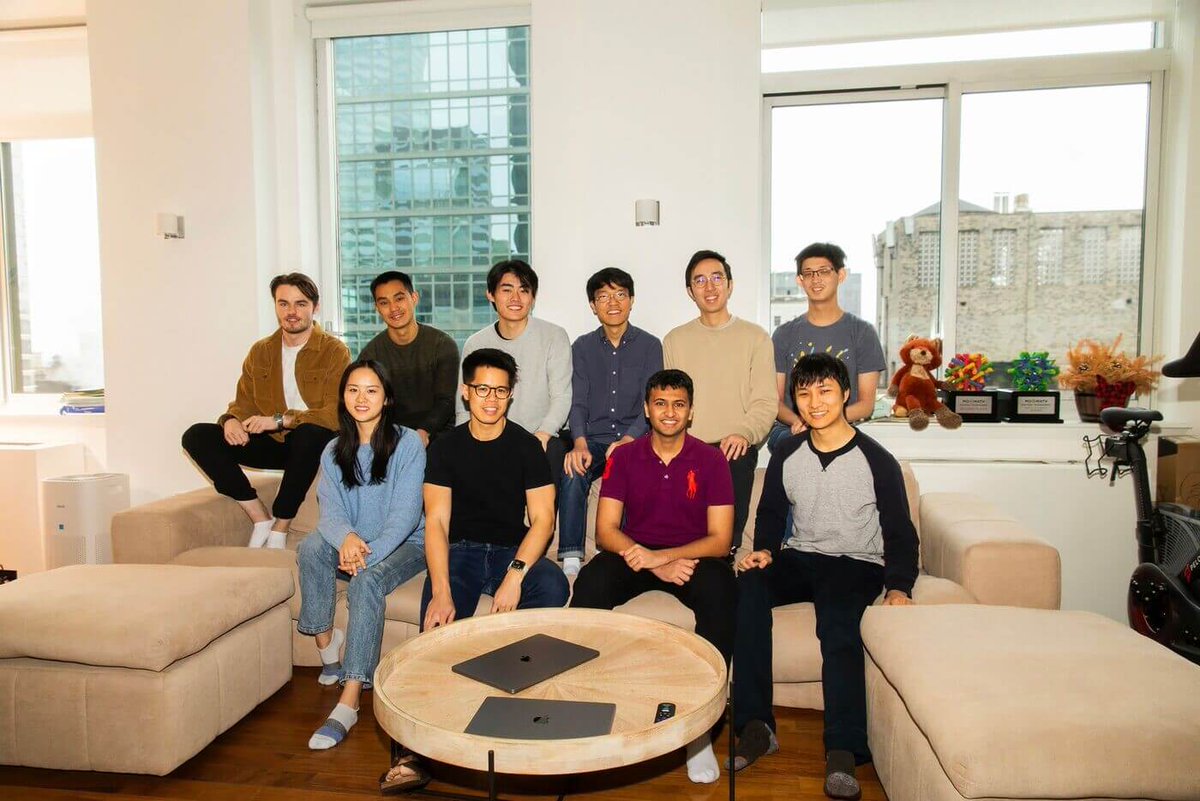
This tiny team tricked Silicon Valley: Overhyped their AI Reached $2 BILLION valuation Invited to elite tech conferences Created mass panic among developers But one software engineer spotted a fatal flaw—and everything unraveled. Here's the outrageous story:🧵
Mustufa Khan tweet mediaMustufa Khan tweet media
English
91
245
3.4K
1.2M
Fabio Salern retweetledi
Ryan Hart
Ryan Hart@thisdudelikesAI·
I turned ChatGPT into a personal assistant, and now I only work for a few hours. Here are 10 ChatGPT prompts so powerful and useful that they feel illegal to use:
Ryan Hart tweet media
English
28
53
469
150.9K
Fabio Salern retweetledi
Akshay 🚀
Akshay 🚀@akshay_pachaar·
5 levels of Agentic AI systems, clearly explained (with visuals):
English
19
122
1K
259.1K
Fabio Salern retweetledi
Deedy
Deedy@deedydas·
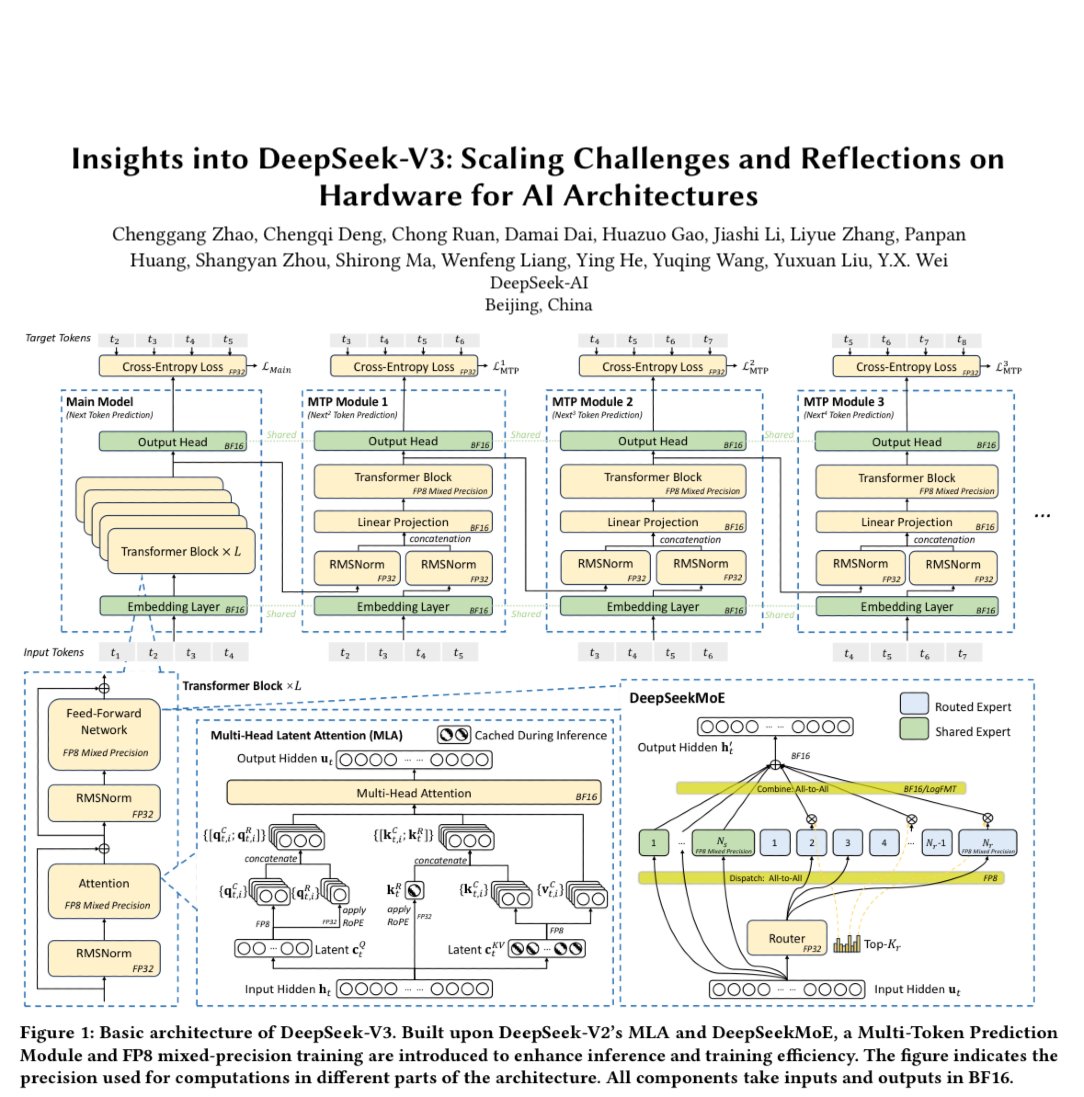
DeepSeek just dropped the single best end-to-end paper on large model training. It covers — Software (MLA, training in FP8, DeepEP, LogFMT) — Hardware (Multi-Rail Fat Tree, Ethernet RoCE switches) — Mix (IBGDA, 3FS filesystem) DeepSeek's engineering depth is insane. Must read.
Deedy tweet media
English
44
668
4.4K
327.8K
Fabio Salern retweetledi
John B. Holbein
John B. Holbein@JohnHolbein1·
Nice.
John B. Holbein tweet media
English
25
364
2.1K
206.4K
Fabio Salern retweetledi
trash
trash@trashh_dev·
you can’t make this stuff up.
trash tweet media
English
174
6.2K
67.8K
990.9K