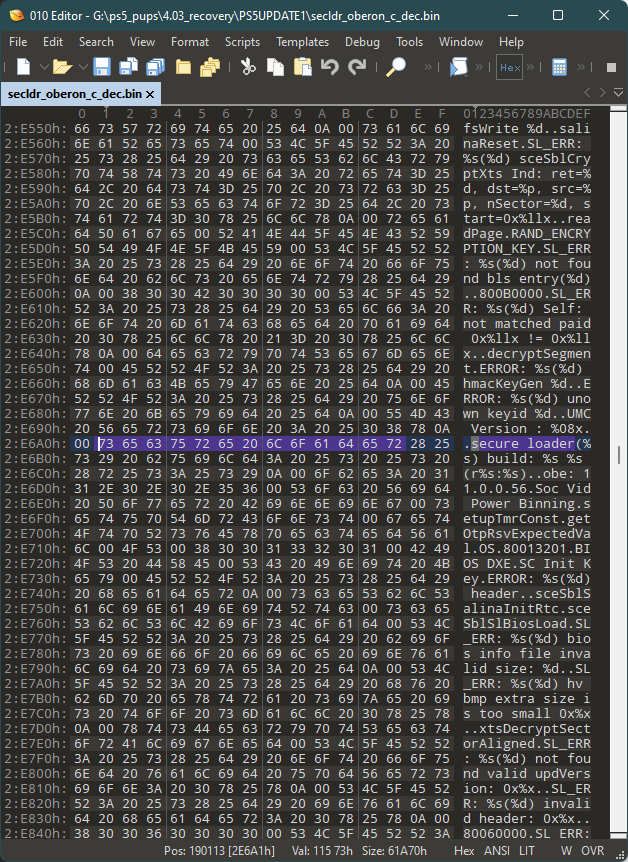
btw: we first used the included iommu script to bypass iommu and dump x86 kernel text via custom pcie device in m.2 slot - worked first try :')
#historylesson#incaseyouevencared
New blog post about hacking PS VR! We managed to find some major flaws - breaking secure boot and extracting all key material: fail0verflow.com/blog/2022/ps4-…
@VVildCard777@LightningMods_ With emc code exec, you can handle all snvs msgs to sc yourself. Makes it easier to fiddle with snvs contents and avoid bad writes into the actual sc. sc dump is still required for key. hdd backup isn't required, but maybe faster than going through recovery install.
Took a peek at latest PS4 Pro (CUH-72xx, board NVG-001): same southbridge (CXD90046GG), newly marked syscon (A06-C0L2 but still RL78/G13) - so nothing changes in terms of "Aux Hax" stuff :)
Another "PS4 Aux Hax" blog! Using HDMI-CEC to get code exec on all PS4 southbridge versions (including PS4 Pro, etc.), without requiring other parts of the system to be pwned:
fail0verflow.com/blog/2018/ps4-…
Small update to Aux Hax:
Nearly same methods are working against devices on recent PS4 Pro board NVB-003:
Syscon A05-C0L2 (R5F101LL)
Belize southbridge (CXD90046GG)
Belize has ROM readout protection and clears stack...they're learning ;)
@drtune@cybergibbons Agree; would be nice if it were useful on other devices too. Note the FM3 on that board was still marked Fujitsu. Design has gone to Spansion, which has merged with Cypress since then. A lot of opportunity for change - or not :D
@fail0verflow Wow (as usual)! Huh.. that thing with the Flash Patch Breakpoint on CM3 surviving reset is an interesting find; sounds generic. Wondering which common M3 chips were compiled with that option enabled... @cybergibbons
@wmbell It's an upper bound. It could've been disclosed earlier, but not later, otherwise a CVE wouldn't have been allocated (unless we requested it ourselves, which we didn't).
@fail0verflow “Disclaimer: The entry creation date may reflect when the CVE ID was allocated or reserved, and does not necessarily indicate when this vulnerability was discovered, shared with the affected vendor, publicly disclosed, or updated in CVE.”