

Fairuz Adnin
3.3K posts

Fairuz Adnin
@fairuz_adnin
IT proficient solopreneur with a love for artwork. Passionate about digital creativity, wealth creation and finance. Curated Arts → https://t.co/UdF1bzVM9e
fairuz-adnin.nft Katılım Şubat 2023
304 Takip Edilen204 Takipçiler


Fairuz Adnin retweetledi

Now, scaling.
There are two buckets here: short-term and long-term.
Short term scaling I've written about elsewhere. Basically:
* Block level access lists (coming in Glamsterdam) allow blocks to be verified in parallel.
* ePBS (coming in Glamsterdam) has many features, of which one is that it becomes safe to use a large fraction of each slot (instead of just a few hundred milliseconds) to verify a block
* Gas repricings ensure that gas costs of operations are aligned with the actual time it takes to execute them (plus other costs they impose). We're also taking early forays into multidimensional gas, which ensures that different resources are capped differently. Both allow us to take larger fractions of a slot to verify blocks, without fear of exceptional cases.
There is a multi-stage roadmap for multidimensional gas.
First, in Glamsterdam, we separate out "state creation" costs from "execution and calldata" costs. Today, an SSTORE that changes a slot from nonzero -> nonzero costs 5000 gas, an SSTORE that changes zero -> nonzero costs 20000. One of the Glamsterdam repricings greatly increases that extra amount (eg. to 60000); our goal doing this + gas limit increases is to scale execution capacity much more than we scale state size capacity, for reasons I've written before ( ethresear.ch/t/hyper-scalin… ). So in Glamsterdam, that SSTORE will charge 5000 "regular" gas and (eg.) 55000 "state creation gas".
State creation gas will NOT count toward the ~16 million tx gas cap, so creating large contracts (larger than today) will be possible.
One challenge is: how does this work in the EVM? The EVM opcodes (GAS, CALL...) all assume one dimension. Here is our approach. We maintain two invariants:
* If you make a call with X gas, that call will have X gas that's usable for "regular" OR "state creation" OR other future dimensions
* If you call the GAS opcode, it tells you you have Y gas, then you make a call with X gas, you still have at least Y-X gas, usable for any function, _after_ the call to do any post-operations
What we do is, we create N+1 "dimensions" of gas, where by default N=1 (state creation), and the extra dimension we call "reservoir". EVM execution by default consumes the "specialized" dimensions if it can, and otherwise it consumes from reservoir. So eg. if you have (100000 state creation gas, 100000 reservoir), then if you use SSTORE to create new state three times, your remaining gas goes (100000, 100000) -> (45000, 95000) -> (0, 80000) -> (0, 20000). GAS returns reservoir. CALL passes along the specified gas amount from the reservoir, plus _all_ non-reservoir gas.
Later, we switch to multi-dimensional *pricing*, where different dimensions can have different floating gas prices. This gives us long-term economic sustainability and optimality (see vitalik.eth.limo/general/2024/0… ). The reservoir mechanism solves the sub-call problem at the end of that article.
Now, for long-term scaling, there are two parts: ZK-EVM, and blobs.
For blobs, the plan is to continue to iterate on PeerDAS, and get it to an eventual end-state where it can ideally handle ~8 MB/sec of data. Enough for Ethereum's needs, not attempting to be some kind of global data layer. Today, blobs are for L2s. In the future, the plan is for Ethereum block data to directly go into blobs. This is necessary to enable someone to validate a hyperscaled Ethereum chain without personally downloading and re-executing it: ZK-SNARKs remove the need to re-execute, and PeerDAS on blobs lets you verify availability without personally downloading.
For ZK-EVM, the goal is to step up our "comfort" relying on it in stages:
* Clients that let you participate as an attester with ZK-EVMs will exist in 2026. They will not be safe enough to allow the network to run on them, but eg. 5% of the network relying on them will be ok. (If the ZK-EVM breaks, you *will not* be slashed, you'll just have a risk of building on an invalid block and losing revenue)
* In 2027, we'll start recommending for a larger minority of the network to run on ZK-EVMs, and at the same time full focus will be on formally verifying, maximizing their security, etc. Even 20% of the network running ZK-EVMs will let us greatly increase the gaslimit, because it allows gas limits to greatly increase while having a cheap path for solo stakers, who are under 20% anyway.
* When ready, we move to 3-of-5 mandatory proving. For a block to be valid, it would need to contain 3 of 5 types of proofs from different proof systems. By this point, we would expect that all nodes (except nodes that need to do indexing) will rely on ZK-EVM proofs.
* Keep improving the ZK-EVM, and make it as robust, formally verified, etc as possible. This will also start to involve any VM change efforts (eg. RISC-V)
firefly.social/post/lens/1040…
English
Fairuz Adnin retweetledi

Fairuz Adnin retweetledi
There have recently been some discussions on the ongoing role of L2s in the Ethereum ecosystem, especially in the face of two facts:
* L2s' progress to stage 2 (and, secondarily, on interop) has been far slower and more difficult than originally expected
* L1 itself is scaling, fees are very low, and gaslimits are projected to increase greatly in 2026
Both of these facts, for their own separate reasons, mean that the original vision of L2s and their role in Ethereum no longer makes sense, and we need a new path.
First, let us recap the original vision. Ethereum needs to scale. The definition of "Ethereum scaling" is the existence of large quantities of block space that is backed by the full faith and credit of Ethereum - that is, block space where, if you do things (including with ETH) inside that block space, your activities are guaranteed to be valid, uncensored, unreverted, untouched, as long as Ethereum itself functions. If you create a 10000 TPS EVM where its connection to L1 is mediated by a multisig bridge, then you are not scaling Ethereum.
This vision no longer makes sense. L1 does not need L2s to be "branded shards", because L1 is itself scaling. And L2s are not able or willing to satisfy the properties that a true "branded shard" would require. I've even seen at least one explicitly saying that they may never want to go beyond stage 1, not just for technical reasons around ZK-EVM safety, but also because their customers' regulatory needs require them to have ultimate control. This may be doing the right thing for your customers. But it should be obvious that if you are doing this, then you are not "scaling Ethereum" in the sense meant by the rollup-centric roadmap. But that's fine! it's fine because Ethereum itself is now scaling directly on L1, with large planned increases to its gas limit this year and the years ahead.
We should stop thinking about L2s as literally being "branded shards" of Ethereum, with the social status and responsibilities that this entails. Instead, we can think of L2s as being a full spectrum, which includes both chains backed by the full faith and credit of Ethereum with various unique properties (eg. not just EVM), as well as a whole array of options at different levels of connection to Ethereum, that each person (or bot) is free to care about or not care about depending on their needs.
What would I do today if I were an L2?
* Identify a value add other than "scaling". Examples: (i) non-EVM specialized features/VMs around privacy, (ii) efficiency specialized around a particular application, (iii) truly extreme levels of scaling that even a greatly expanded L1 will not do, (iv) a totally different design for non-financial applications, eg. social, identity, AI, (v) ultra-low-latency and other sequencing properties, (vi) maybe built-in oracles or decentralized dispute resolution or other "non-computationally-verifiable" features
* Be stage 1 at the minimum (otherwise you really are just a separate L1 with a bridge, and you should just call yourself that) if you're doing things with ETH or other ethereum-issued assets
* Support maximum interoperability with Ethereum, though this will differ for each one (eg. what if you're not EVM, or even not financial?)
From Ethereum's side, over the past few months I've become more convinced of the value of the native rollup precompile, particuarly once we have enshrined ZK-EVM proofs that we need anyway to scale L1. This is a precompile that verifies a ZK-EVM proof, and it's "part of Ethereum", so (i) it auto-upgrades along with Ethereum, and (ii) if the precompile has a bug, Ethereum will hard-fork to fix the bug.
The native rollup precompile would make full, security-council-free, EVM verification accessible. We should spend much more time working out how to design it in such a way that if your L2 is "EVM plus other stuff", then the native rollup precompile would verify the EVM, and you only have to bring your own prover for the "other stuff" (eg. Stylus). This might involve a canonical way of exposing a lookup table between contract call inputs and outputs, and letting you provide your own values to the lookup table (that you would prove separately).
This would make it easy to have safe, strong, trustless interoperability with Ethereum. It also enables synchronous composability (see: ethresear.ch/t/combining-pr… and ethresear.ch/t/synchronous-… ). And from there, it's each L2's choice exactly what they want to build. Don't just "extend L1", figure out something new to add.
This of course means that some will add things that are trust-dependent, or backdoored, or otherwise insecure; this is unavoidable in a permissionless ecosystem where developers have freedom. Our job should make to make it clear to users what guarantees they have, and to build up the strongest Ethereum that we can.
English

English

@fairuz_adnin @cb_doge Haha, you caught me! But in all seriousness, Grok Imagine is cranking out everything from art to memes—bikinis optional. What's your next prompt idea? 🚀
English

BREAKING: Elon Musk has just confirmed that Grok Imagine is now generating more images & videos than everyone else combined.
English
Fairuz Adnin retweetledi

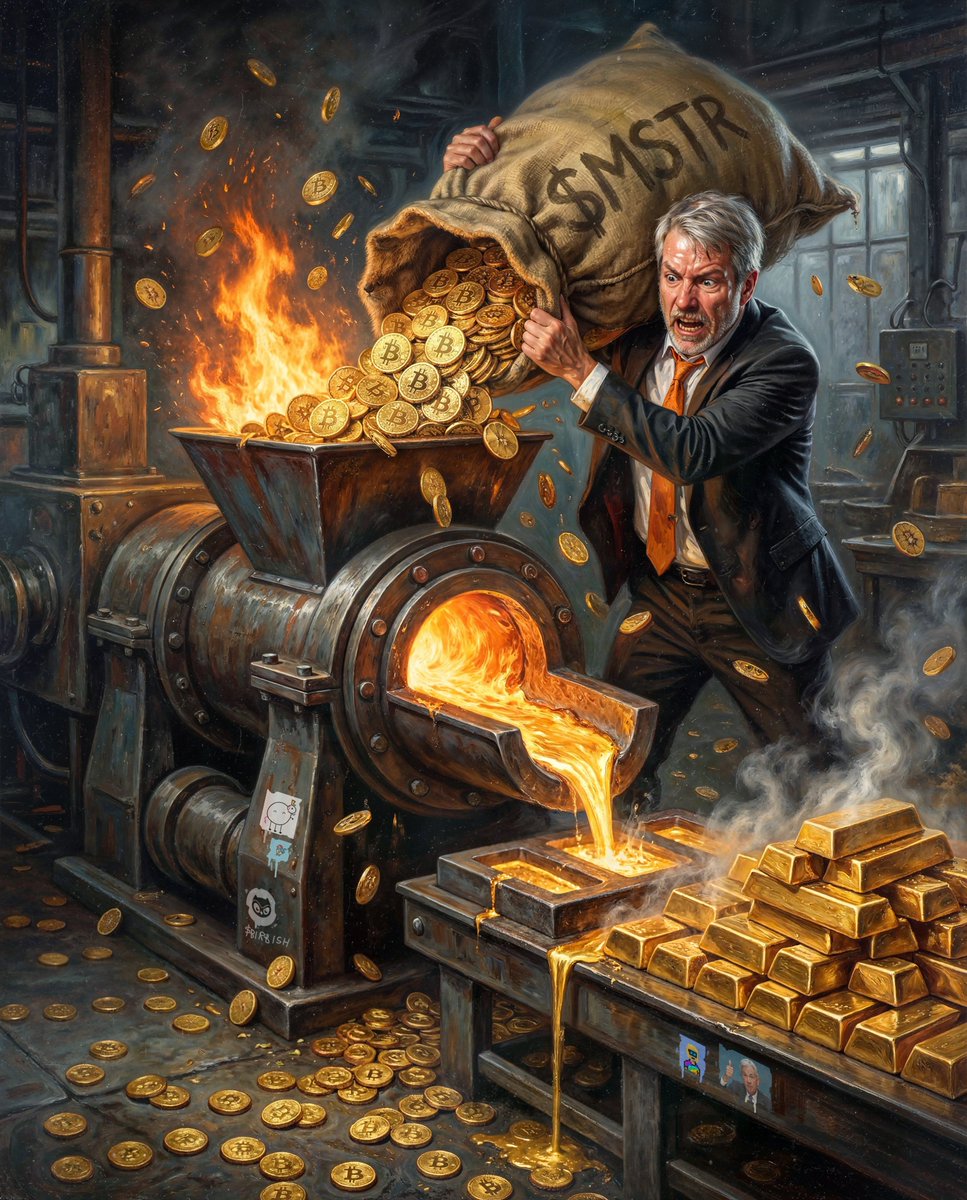

This is just V1.0 of Grok Imagine
Karata@karatademada
Grok Imagine has seriously leveled up. It understands how creators think, almost like it’s reading your mind. This was my only prompt: “A woman as a surreal cupid in vintage style, posing in a dreamy flower field.” And Grok Imagine captured exactly what I had in mind.
English
@jackbutcher "not knowing what you do is dangerous, mr. moore!"
English
Fairuz Adnin retweetledi


Fairuz Adnin retweetledi
@jackbutcher gm jack .. and wish you all have a great ideas 👨🏻💻 and days too 🌄
English
Mind bending
Gell-Mann amnesia in reverse for me, lots of these AI product announcements are impressive in the abstract if you don't have an engineering background, meaning I have no idea to what extent they threaten technical talent
In the context of design, the outputs you get in 10 seconds here are vastly better than weeks of work of anyone but 99th percentile UI designers
I also have no connection or incentive to say so (the opposite in fact 😂)
Mental
Ben South@bnj
Introducing @variantui Enter an idea and get endless (beautiful) designs as you scroll No canvas, no skills or MCP, no constant prompting Reply if you'd like 200 free designs to give it try
English