Fabian 🇪🇺🇺🇦

8.1K posts

Fabian 🇪🇺🇺🇦 banner
Fabian 🇪🇺🇺🇦

Fabian 🇪🇺🇺🇦

@fapexxo

econ student, he/him

Europe Katılım Mayıs 2015
3.8K Takip Edilen211 Takipçiler
Jack Meyer 🏛️
Jack Meyer 🏛️@Jackbmeyer·
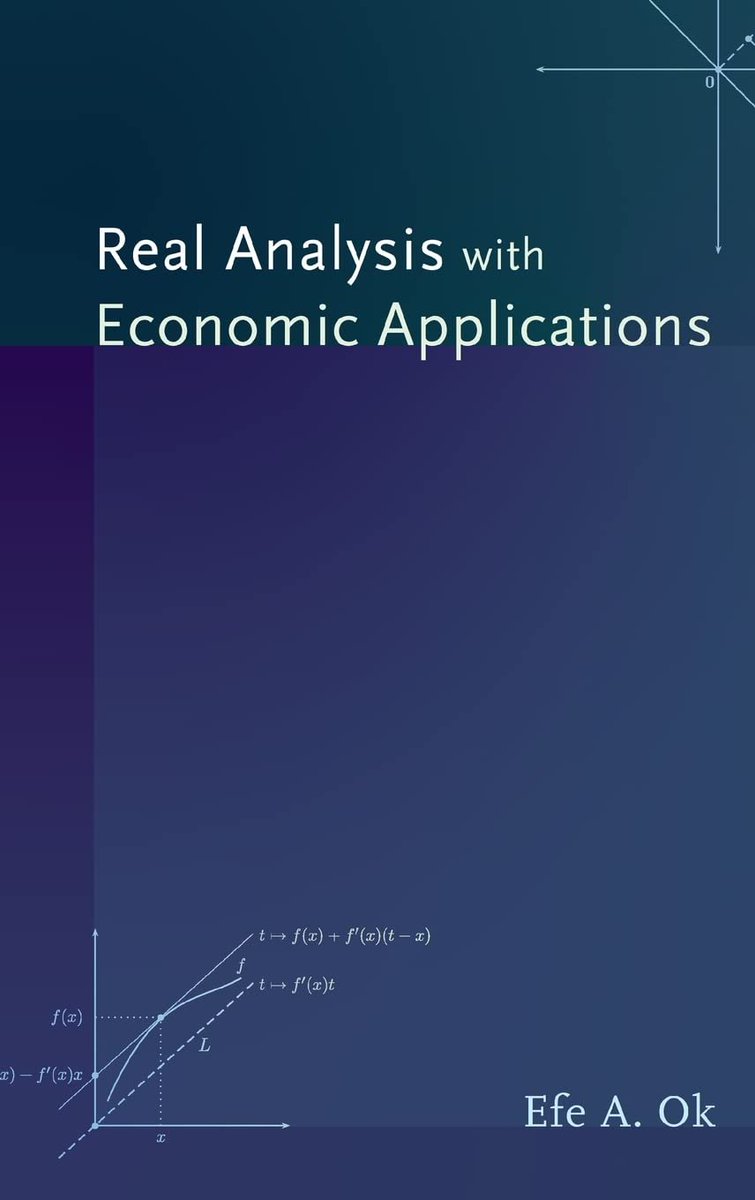
Two books anyone who opines on economics should have read.
Jack Meyer 🏛️ tweet mediaJack Meyer 🏛️ tweet media
English
10
43
439
39.9K
Fabian 🇪🇺🇺🇦
@pmddomingos This comparison is misleading because the labor force participation rate is pretty large through many working part-time that would maybe not work at all in other countries
English
0
0
5
167
Pedro Domingos
Pedro Domingos@pmddomingos·
Contrary to popular myth, Germans are the laziest people in Europe.
Pedro Domingos tweet media
English
121
49
408
70.9K
Sumit Kumar
Sumit Kumar@TweetsOfSumit·
Hier werden 2 Dinge suggeriert die faktisch falsch sind: 1. Vermögen wird nicht “verteilt”. Es wird erwirtschaftet. 2. Mit einer Vermögenssteuer geht mehr an den Staat. “Nach unten verteilt” wird da sicher nichts. Beweisstück A: die BRD, in der trotz Rekordeinnahmen überall Leistungen gekürzt werden während Politiker Gehaltserhöhungen bekommen.
Maischberger@maischberger

Bei der Vermögensverteilung in Deutschland müsse Grundlegendes geändert werden, sagt Moderatorin Bettina #Böttinger. Es müsse „von oben nach unten umverteilt werden”. Sie plädiert für eine Vermögensteuer. #maischberger

Deutsch
25
51
472
20.2K
Fabian 🇪🇺🇺🇦
In der kurzen Frist zumindest weil der Mietmarkt alles andere als flexibel ist und Mieter nicht einfach Wohnungen wechseln können?
Deutsch
0
0
1
29
Fabian 🇪🇺🇺🇦
Vielleicht bin ich da zu sehr in der Modellwelt drin. Aber warum sollten sich mit einem 50/50 Split des CO2-Preises die Anreize für Vermieter ändern, fossile Heizungen einzubauen?
DER SPIEGEL@derspiegel

Mieter sollen entlastet werden: Union und SPD haben sich auf einen Kompromiss beim Heizungsgesetz verständigt. Der Abschied von Öl und Gas bei neuen Geräten dürfte damit besiegelt sein. #ref=rss" target="_blank" rel="nofollow noopener">spiegel.de/wirtschaft/ser…

Deutsch
1
0
1
52
Sumit Kumar
Sumit Kumar@TweetsOfSumit·
Ich bin generell dafür, dass Politiker mehr „dogfooding“ betreiben *müssen*! Beispiele: - GKV Pflicht - Rente zu 90% DAX ETF Anteile - Inland Reise ausschl. ICE - Kinder müssen auf öffentliche Schule - etc. Damit würden Politiker ihr ganzes Leben die Auswirkungen ihrer Entscheidungen selbst erleben. Und wir hätten SOFORT Reformen bei Bahn, Bildung, Migration, Wirtschaft und Gesundheitssystem. Heute wird Kram entschieden von dem Sie selbst nichtmal betroffen sind.
Sumit Kumar@TweetsOfSumit

Fun fact: 90% aller Beamte sind privat versichert. Nichtmal der Staat selbst, der uns in der GKV halten will, möchte dass seine Mitarbeiter in diesem System sind. Mmn sollten alle Beamte in die GKV bevor eine Grenze angehoben wird. Dann gibt es auch echte Anreize für die Politik das System zu verbessern.


Deutsch
28
142
1.2K
53.7K
Alex
Alex@Alex68803248·
@TweetsOfSumit @corona_realism Der DAX ist aber kein guter Maßstab für die deutsche Wirtschaft, weil die Unternehmen den Umsatz größtenteils in Ausland generieren - im DAX sind praktisch nur "internationale" Konzerne. Der MDAX oder SDAX passen besser.
Deutsch
1
0
17
581
Fabian 🇪🇺🇺🇦 retweetledi
KingoftheCoast
KingoftheCoast@kingofthecoastt·
It is well known that Europeans spend less hours at work than the US. What's less well-known: the vast majority of this gap is offset by their greater hours spent in home production. Due to high taxes, Europeans in-source many services things that Americans buy in the market.
KingoftheCoast tweet media
English
64
192
1.7K
272K
Sumit Kumar
Sumit Kumar@TweetsOfSumit·
"How can we reduce the demand" is a twisted way to solve this problem. Making stuff more efficient - hell yes. But producing energy cheaper, locally, at scale, <-- that is the main problem to tackle here.
SightBringer@_The_Prophet__

⚡️The von der Leyen quote is one of the most revealing things a European leader has said in the last decade and almost nobody is going to process it correctly. “The cheapest energy is the one you don’t use.” That is a sentence spoken by a person presiding over civilizational decline who has decided to reframe the decline as virtue. It’s not a policy statement. It’s a theological position. The energy crisis isn’t a problem to be solved by producing more energy. It’s an opportunity for Europeans to need less. To want less. To consume less. To live smaller lives in smaller apartments heated to lower temperatures with less travel and less activity and less economic output. The scarcity isn’t a failure. It’s the goal. This is the thing Americans and everyone outside of Europe cannot fully grasp about where European elite thinking has landed. They genuinely believe that reducing European energy consumption is morally good regardless of the economic consequences, because European consumption is tied to European environmental guilt which is tied to European colonial guilt which is tied to a broader belief that European civilization has been net negative for the world and should shrink. The energy crisis gives them political cover to implement policies that would otherwise be unpopular. Now they can say circumstances force the reduction when the reduction was always the plan. Von der Leyen is not an aberration. She represents the consensus view among the European political class. Macron believes this. Scholz believes this. The entire EU Commission believes this. They don’t say it this directly usually because it polls badly, but every major policy they implement is consistent with this worldview. Degrowth is not a fringe academic position in European politics. It’s the operating framework at the top. The American version of this framing would be “the cheapest energy is the one we produce ourselves at scale.” That’s what actually reduces cost and increases resilience. Building more nuclear, extracting more gas, expanding the grid, investing in new production. The European version is the opposite. Don’t build anything. Don’t extract anything. Don’t produce anything. Just use less. And when citizens can’t heat their homes or fly for work, frame it as virtue. This is why Europe can’t recover from the current trajectory. The recovery would require a complete reversal of the ideological framework that produced the decline, and that framework is held most strongly by exactly the people who have the power to change it. They’re not going to reverse it because they don’t see the trajectory as a problem. They see it as necessary and good.

English
5
0
11
2.1K
Fabian 🇪🇺🇺🇦
Fabian 🇪🇺🇺🇦@fapexxo·
@AndrewHammel1 What do you mean by an "actual economist"? He has a PhD in business and mostly worked as a management consultant after that.
English
0
0
3
478
Andrew Hammel
Andrew Hammel@AndrewHammel1·
1/ German economist Daniel Stelter, an actual economist who actually understands actual basic economic principles and doesn't force them through a candy-colored ideological filter (a rarity in Germany) explains why Germany's future is bleak: welt.de/wirtschaft/plu…
English
27
89
621
75.7K
Holger Zschaepitz
Holger Zschaepitz@Schuldensuehner·
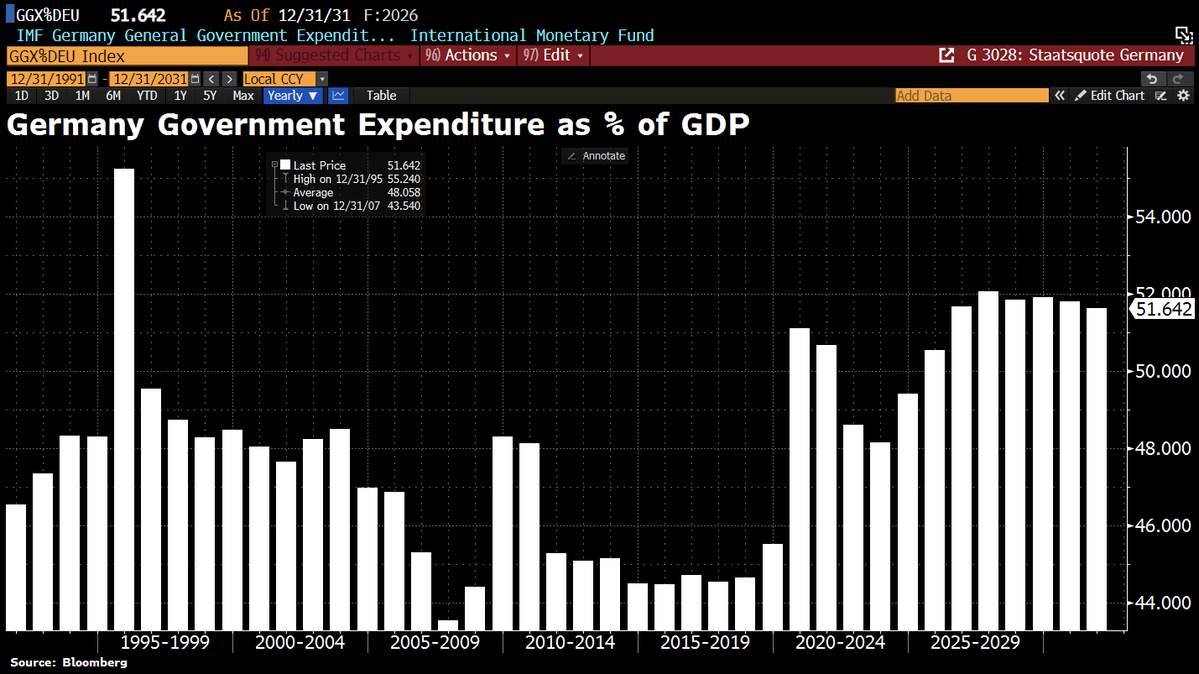
Hello from Germany, which is steadily drifting toward socialism. Since 2025, government spending ratio has exceeded 50% of GDP, and the IMF expects it to climb above 52% in the coming years and stay above 51% until 2031.
Holger Zschaepitz tweet media
English
77
370
1.8K
85K
Fabian 🇪🇺🇺🇦 retweetledi
Alex Imas
Alex Imas@alexolegimas·
Yes and no. While it is silly to think that AI will wipe out all or even most human labor in the foreseeable future, it is also not right to think there won’t be huge potential disruptions. History of tech impact had 1) more new jobs created than destroyed but also 2) winners and losers. The hope is that we have a better understanding of economics than in the 19th century, so that disruption can be managed in a way that facilitates maximum prosperity, and that prosperity is broadly distributed.
Garry Kasparov@Kasparov63

Indeed. The history of tech impact on labor is well-documented, including by those named. It's unpredictable, but usually improves productivity and leads to expansion. Law & white-collar workers aren't horse-buggy drivers or elevator operators. They will use AI and adapt.
English
11
7
89
11.2K
Fabian 🇪🇺🇺🇦
Fabian 🇪🇺🇺🇦@fapexxo·
@TweetsOfSumit Warum findest du Steuersenkung gut? Mir fallen vor allem negative Punkte ein: verzerrt relative Preise, Gießkanne statt bedarfsabhängig, wiederholte Versicherung fossiler Risiken, und vor allem Elastizität spricht dafür, dass eher Profite steigen statt Verbraucherpreis sinkt.
Deutsch
0
0
0
37
Sumit Kumar
Sumit Kumar@TweetsOfSumit·
Energiesteuer runter finde ich gut. Übergewinne: meine Meinung kennt ihr. Kartellrecht: sicher nicht verkehrt denke ich. Ist noch etwas vage.
Deutsch
3
0
17
2K
Sumit Kumar
Sumit Kumar@TweetsOfSumit·
Das ist interessant formuliert. "Wir" stärken Arbeitnehmer... ...indem ArbeitGEBER einen Bonus zahlen sollen, von dem "wir" außnahmsweise nichts wegnehmen. 😅 Also steuerfreie Boni für Mitarbeiter finde ich super - versteht mich nicht falsch - gerne mehr davon 👏. Ist nur interessant wie es verkauft wird.
Sumit Kumar tweet media
Bundesministerium der Finanzen@BMF_Bund

Folgende Maßnahmen sind geplant:

Deutsch
31
33
492
30.2K
Fabian 🇪🇺🇺🇦 retweetledi
Jacob Edenhofer 🇪🇺 🇺🇦
Jacob Edenhofer 🇪🇺 🇺🇦@edenhofer_jacob·
Good news! It’ll be very interesting to see (i) what shenanigans Orbán will come up with in the interim, (ii) just how different Magyar will be (on foreign policy and the ROL), and (iii) how well prepared he is for repairing the damage of the last 16 years (see Tusk in Poland).
Szabolcs Panyi@panyiszabolcs

💥🇭🇺🗳️ BREAKING: Péter Magyar says Viktor Orbán called to concede and congratulate him. Magyar will be Hungary’s next prime minister and, as it stands, is set to secure a 2/3 supermajority – enough to fully dismantle Orbán’s system. A 16-year chapter is over.

English
1
2
10
957
Luke Heeney
Luke Heeney@heeney_luke·
Zotero but for all the papers I’ve bookmarked on X, who’s building this?
English
7
1
25
6K