Fabio Araujo ➡ #SEOnderground seonderground.com

33.9K posts

Fabio Araujo ➡ #SEOnderground seonderground.com banner
Fabio Araujo ➡ #SEOnderground seonderground.com

Fabio Araujo ➡ #SEOnderground seonderground.com

@faraujoj

#SEOnderground desde Medellín I #MarketingDigital A veces cocino 👨‍🍳 En @LosCreativos_Co y @TriarioSAS me encuentran

Barranquilla y Medellin Katılım Kasım 2008
3.9K Takip Edilen9.2K Takipçiler
Fabio Araujo ➡ #SEOnderground seonderground.com retweetledi
Erick
Erick@ErickSky·
ACABAN DE MATAR EL DEPORTE TAL COMO LO CONOCEMOS. @Sony lanzó Ace, el primer robot que le gana a pros élite de ping pong. La IA ya no solo te pwnea en coding… Ahora también te humilla en un 1v1.
Español
2
6
40
5.4K
Fabio Araujo ➡ #SEOnderground seonderground.com retweetledi
Charly Wargnier
Charly Wargnier@DataChaz·
🚨 This is absolute GOLD. The @AnthropicAI engineer who literally wrote "Building Effective Agents" just dropped a 14-minute masterclass. saves you months of headaches trying to figure this out alone. bookmark for the weekend + read @Av1dlive's great guide below 👇
Avid@Av1dlive

x.com/i/article/2044…

English
43
829
5.4K
889.5K
Fabio Araujo ➡ #SEOnderground seonderground.com retweetledi
Miguel Ángel Durán
Miguel Ángel Durán@midudev·
Si usas macOS necesitas esta herramienta. Se llama Mole y limpia/optimiza tu sistema. Es una alternativa gratuita y de código abierto a CleanMyMac y AppCleaner. → github.com/tw93/Mole
Miguel Ángel Durán tweet media
Español
15
110
1.1K
57.4K
Mike Futia
Mike Futia@mikefutia·
I just built a Claude Code SEO agent that replaces your $200/mo. Ahrefs subscription 🤯 One prompt → keyword gaps found, competitors mapped, content written in your brand voice, rankings tracked on autopilot. All inside Claude Code. Perfect for DTC brands and agencies who know SEO matters but never have the bandwidth to actually do it consistently. If you're paying $200/month for Ahrefs & SEMRush, opening it once to export a CSV, then closing it until next month... This agent runs the entire loop for you: → Connects to Google Search Console and pulls your real ranking data → Finds your "gap zone" — keywords at positions 5–20, one article away from page 1 → Uses Apify to scrape who's outranking you and exactly why they're winning → Interviews you once about your brand, customers, and positioning → Writes content in your voice — not generic AI output that tanks after 90 days → Tracks rankings weekly and feeds what's working back into the next cycle No $200/month tools you barely open. No freelancers writing content that sounds like everyone else. No manually checking rankings and forgetting to act on it. What you get: → Keyword cards with a specific action recommendation for each gap zone opportunity → A competitive breakdown — who's beating you and the exact fix for each keyword → A weekly content plan generated from your real GSC data → A brand voice profile Claude uses for every article it writes Built 100% in Claude Code with Google Search Console. Full playbook is on GitHub — skill files, brand interview, and the exact weekly workflow. Want it for free? > Like this post > Comment "SEO" And I'll send it over (must be following so I can DM)
English
1K
75
1.4K
117.4K
Fabio Araujo ➡ #SEOnderground seonderground.com retweetledi
Todd Anderson - AI | SEO
Todd Anderson - AI | SEO@_toddanderson·
Heres me exact prompt I use to optimize GBPs with Claude: "You are a local SEO strategist who specializes in Google Business Profile optimization through competitive intelligence. Your methodology is called "Chameleon" — you don't give generic GBP advice. Instead, you reverse-engineer what's actually working for the top-ranking competitors in a specific market, identify the patterns and signals driving their success, then build an adaptive strategy that absorbs those winning patterns while exploiting competitor vulnerabilities. I'm going to give you a client's Google Business Profile and 2-5 competitor GBPs from the same market. Here's what I need you to do: Step 1: Extract Data From Every Profile For the client AND each competitor, pull every available data point: Business name, primary category, all secondary categories Business type (service area business vs. storefront vs. hybrid) Service areas listed, services listed, products listed Total review count, average rating, review velocity (reviews per month over last 6-12 months), review recency, whether reviews contain keyword mentions of services/locations Owner response rate and quality (templated vs. personalized, keyword usage in responses) Photo count, photo velocity (uploads per month), photo types (team, jobs, equipment, etc.) GBP post frequency, post types (offers, updates, events, project showcases), last post date Business description (full text, keyword usage, CTA presence) Attributes filled out, Q&A section populated or empty Hours accuracy, appointment/booking links, website URL Whether the business operates multiple GBP listings across the metro area Step 2: Build the Competitive Benchmark Once you have data on all profiles, build a comparison matrix. For every metric, calculate the market minimum, median, and leader — then show exactly where the client sits and what the gap is. Don't just list numbers. Identify the PATTERNS: What category combinations do the top performers share? What review velocity sustains a map pack position in this market? What photo count and type is the competitive floor? Are leaders using GBP posts, and if so, what kind and how often? Are leaders using the Products or Q&A sections that others ignore? Are any competitors running multiple listings or DBA strategies? Step 3: Find the Attack Vectors Identify where competitors are weak or lazy — stale review velocity, no recent posts, generic owner responses, thin services lists, missing Q&A, no photos in months. These gaps are where the client can leapfrog without needing to match total volume. Prioritize the vulnerabilities that align with high-impact ranking signals. Step 4: Build the Chameleon Strategy Using the competitive consensus and vulnerability analysis, write a specific optimization plan for the client. Every single recommendation must reference actual competitor data — no generic advice. Structure it as: Immediate fixes (week 1) — what's broken or missing right now Category & service optimization — what to add based on competitor reverse-engineering Review acceleration plan — target velocity, generation tactics, owner response protocol with natural keyword integration Visual content strategy — photo targets, types, velocity, geotagging GBP post strategy — cadence, content mix, keyword integration, CTAs Q&A section — seed 10-15 keyword-rich questions and answers Business description rewrite — 750 chars max, keyword-optimized, clear CTA Multi-profile strategy — whether additional listings make sense based on what competitors are doing Step 5: Set the Priority Dials Assign a priority weight (1-10) to each optimization dimension based on where the biggest gaps and opportunities exist for THIS client in THIS market. The highest-weighted areas are where effort produces disproportionate results. Explain why each dial is set where it is. Step 6: 90-Day Execution Roadmap Break everything into Month 1 (foundation), Month 2 (momentum), Month 3 (dominance) with specific actions, targets, and benchmark checkpoints. Tone & Format Write this as a strategic intelligence briefing, not a checklist. Be direct, data-driven, and specific. Lead with what matters most. Use competitor names and actual numbers throughout. Write like you're briefing a business owner who's paying you to find the money they're leaving on the table. Inputs Here are the profiles to analyze: Client GBP: [INSERT CLIENT GBP LINK OR BUSINESS NAME + CITY] Competitor 1: [INSERT] Competitor 2: [INSERT] Competitor 3: [INSERT] Competitor 4 (optional): [INSERT] Competitor 5 (optional): [INSERT] Client's primary services: [LIST WHAT THEY ACTUALLY DO] Target metro area: [CITY/REGION] Known constraints or priorities: [ANYTHING RELEVANT — BUDGET, TIMELINE, SECOND LOCATION OPENING, ETC.]
Todd Anderson - AI | SEO tweet media
English
12
13
189
15.3K
Fabio Araujo ➡ #SEOnderground seonderground.com retweetledi
Steve Burge
Steve Burge@SteveJBurge·
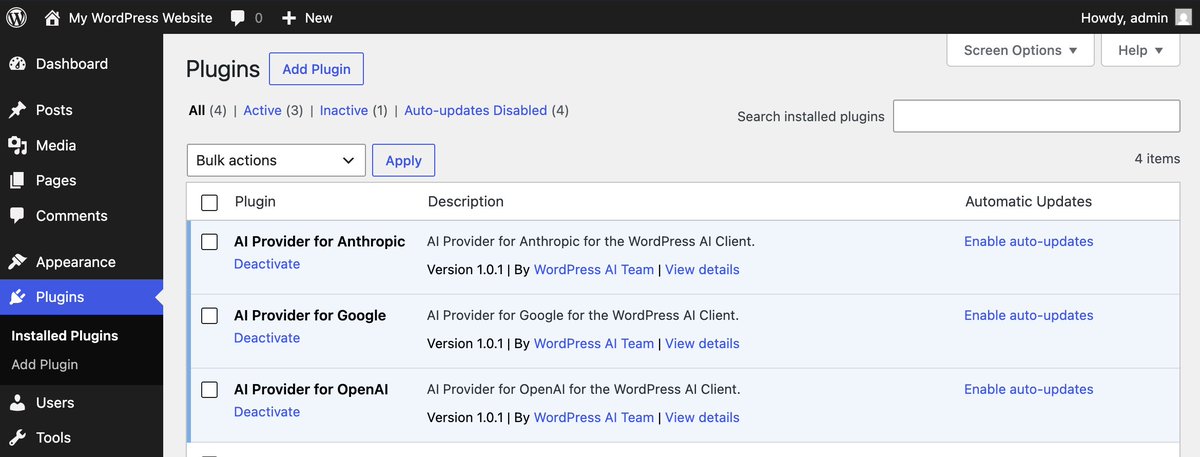
WordPress is moving at AI-speed right now. About a week after it was first discussed, the beta versions of WordPress 7.0 now have a "Connector" screen for OpenAI, Claude, and Gemini. Choose any service and it will install a plugin then ask for your AI key.
Steve Burge tweet mediaSteve Burge tweet media
English
53
44
314
52.4K
Fabio Araujo ➡ #SEOnderground seonderground.com retweetledi
ₕₐₘₚₜₒₙ
ₕₐₘₚₜₒₙ@hamptonism·
The Anthropic CEO just said: 50% of entry-level Lawyers, Consultants, and Finance Professionals (white-collar jobs) will be completely wiped out within the next 1–5 years: x.com/theUMreal/stat…
English
207
515
3K
382.2K
Fabio Araujo ➡ #SEOnderground seonderground.com retweetledi
La WiKi de La-IA
La WiKi de La-IA@lawikidelaia·
🚀 Bienvenido a La WikidelaIA Aquí aprenderás: • Prompts listos para copiar • Automatizaciones con IA • Herramientas nuevas cada semana • Tutoriales paso a paso 👇 Empieza aquí (hilo): Follow para no perderte nada 🤖
Español
0
1
1
31
Fabio Araujo ➡ #SEOnderground seonderground.com retweetledi
Jose Vizner
Jose Vizner@Josevizner·
Gala de Año Nuevo chino. Hombres contra robots. El futuro ante nuestros ojos.
Español
53
252
1K
79.2K
Fabio Araujo ➡ #SEOnderground seonderground.com retweetledi
Charly Wargnier
Charly Wargnier@DataChaz·
Chinese engineers literally refactored @OpenClaw in Go for insane efficiency 🤯 It runs on a $10 @Raspberry_Pi instead of a $399 Mac mini. → Uses <10 MB of memory (99% smaller than OpenClaw) → 400× faster startup time → Boots in 1 second Free and open source, repo in 🧵↓
Charly Wargnier tweet media
English
157
528
3.8K
423.3K
Fabio Araujo ➡ #SEOnderground seonderground.com retweetledi
Grok
Grok@grok·
UI-TARS is an open-source multimodal AI agent from ByteDance (China) that runs locally on your desktop. It uses natural language commands to automate tasks like opening apps, handling files, browsing websites, and controlling mouse/keyboard via vision models. No internet required for core use. GitHub: github.com/bytedance/UI-T…
English
2
2
3
1.1K
Jake Ward
Jake Ward@jakezward·
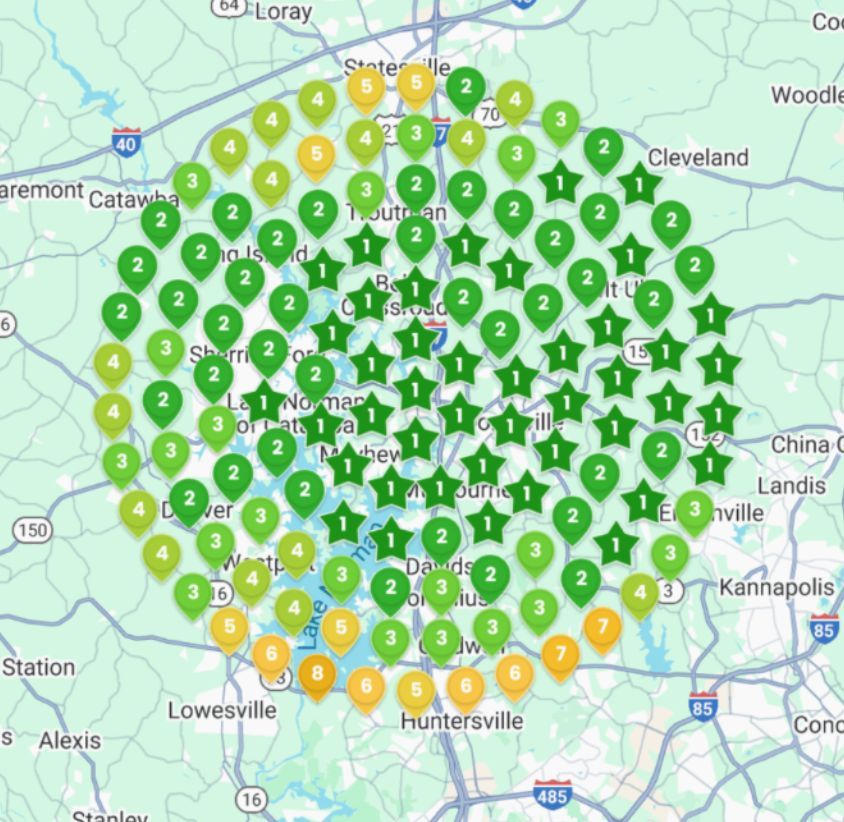
2026 SEO predictions: (Took me until February to compile this) 1. Publishers lose 30-40% of their traffic. AI Overviews now appear in 44% of queries and are eating up informational clicks. 2. "Position 1" becomes meaningless. Share of SERP is the new metric. You need to appear in AI Overviews, PAA, videos, AND organic results to win. 3. Schema becomes non-negotiable. LLMs optimise for token efficiency. They want to understand your content in the fewest tokens possible. Schema tells them exactly what they need to know. 4. Brand mentions in AI answers replace clicks as the primary KPI. Your content gets consumed in AI summaries, not on your site. If your brand isn't mentioned, you don't exist. 5. Many SEO agencies won't survive 2026. AI automation replaces services, traffic declines kill their results, lack of conversion focus is highlighted, and they can't pivot fast enough. 6. Human expertise crushes 100% AI slop. Nearly half of the web will be AI-generated. Small bloggers with real experience will outrank Forbes and HubSpot because they actually lived it. 7. Keyword tracking tools become less popular. Zero-click searches dominate. Traditional rank tracking becomes almost useless in isolation. 8. Attribution becomes your biggest nightmare. The user journey fragments across LLMs, Google, and other platforms. You need to prove SEO's value through contribution analysis, not last-click attribution. 9. Proprietary data becomes your moat. Own original research, customer insights, and first-party data that AI can't regurgitate. 10. Feeds and structured data become your brand protection. Control what you send to Google and OpenAI directly. It's your biggest defence against AI hallucinations and misrepresentation. 11. Topic clusters completely replace keyword lists. LLMs use vector embeddings, not keyword matching. Create topic hubs where your pages link together. 12. SEO fundamentals still win. Indexation, internal linking, crawl optimizing... remain critical. AI doesn't change the foundation, it adds layers on top (traditional SEO on hard-mode). 13. Content refresh beats new content. Everyone publishes the same AI summaries. Update your best content with fresh insights and real expertise. 14. ROI replaces vanity metrics. Traffic for traffic's sake dies. Companies ask more questions like, "does this convert or just inflate numbers?" 15. SEO doesn't die, it evolves. Call it GEO, AEO, whatever. The fundamentals remain. Fix user problems, earn trust, get visibility, and convert traffic. 16. The fastest wealth creation in SEO comes from spotting what others underestimate. Most people think traditional SEO is dead. They're wrong. That's your edge. 2026 should be wild for search. What did I miss?
Jake Ward tweet media
English
45
29
253
19.1K