Feanor
230 posts

Feanor
@feanor_eth
Validator, Blockchain Infrastructure Ex | @AvailProject, @Obol_Collective


RWAs aren’t the future anymore, they’re here, and they’re driving infra choices. • Tokenised assets on @arbitrum . • Privacy upgrades on @ethereum . • Rust/WASM runtimes (e.g., @VaraNetwork ) targeting high‑throughput settlement. This isn’t about which chain wins. It’s about: which infrastructure becomes the settlement & routing layer for tomorrow’s asset flows. RWAs require predictable settlement, auditable execution, cross venue liquidity, and low latency rails. Crypto is building exactly that. Imagine: ‑ Tokenised treasuries issued on one network. ‑ Traded through a high‑performance runtime (Rust/WASM). ‑ Settled via an L2 with shared DA. ‑ Posted as collateral in another venue. All verified with light‑clients, privacy primitives, shared sequencing. That’s not a chain war anymore. It’s a modular settlement network that routes liquidity. And infra teams building toward that (modular stacks, Rust/WASM chains, privacy layers) are positioning for when institutions stop experimenting and start standardising. The chain that wins isn’t the loudest. It’s the one institutions standardise on without thinking.


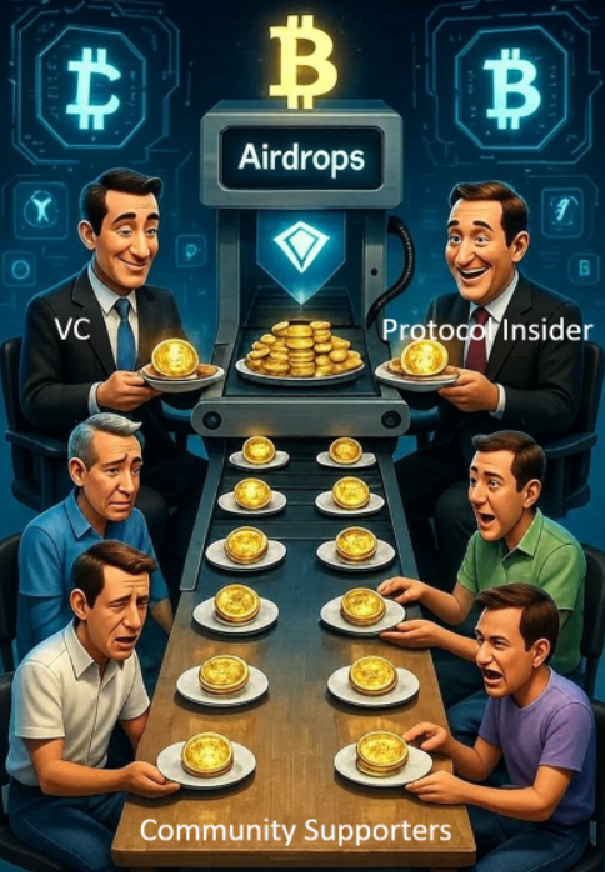
airdrops are dumb - tanks your chart - inhibits price discovery - does zero for adoption - not connected to a funnel or desired metric/behavior - lazy alignment most airdrops come before there is any usable product, so ppl get their free magic internet money, sell it and call it a day ‘But it creates alignment?!’ - does it? Maybe ppl will think twice before posting something negative but that’s hardly a win. You should take the hard road of building advocates, and giving ppl a bit of free money isn’t the way We got backed into airdrops by regulatory pressures. It’s time to move away from them and towards a model that benefits your project long terms

A friend asked me this weekend: "What's the point of tokenized real estate?" Here’s how I explained it, and why the $280T property market is moving on-chain. 1. You don’t buy the building 🏙️ You don’t directly own bricks and mortar Instead, you own fractional tokens linked to an SPV (Special Purpose Vehicle) - a legal entity that owns the property. 🔸Your tokens = digitized SPV shares 🔸Same legal rights & protections as traditional investing 2. How you make money 💸 🔸Rental yield. Earn pro-rata (% of tokens held) rent via automated smart contract payouts 🔸Capital appreciation. If the property value goes up, so does your token price 🔸Instant liquidity. Sell tokens 24/7 on-chain, no delays or broker fees. 🔸Flexible utility. Use tokens as collateral, stake, or LP for extra yield 3. Why tokenization wins 🔸Start from $100, not $100K+ 🔸Trade anytime, from anywhere 🔸global diversity. Hedge your portfolio 🔸Automated payouts, no middlemen skimming 🔸Plug into defi yields Platforms like @circle, @Securitize, @OndoFinance, and @wormhole are building cross chain liquidity rails powering this shift. TradFi built walls around real estate. Tokenization tears them down. $280T is about to get liquid. 💧


Five weeks ago, Ethereum celebrated 10 years of zero downtime. Next week, LINEA becomes the most significant token to enter the ecosystem since ETH itself. The eligibility checker is now live ahead of the September 10 TGE. Check yours at linea.build/hub


Google dropping some details on its L1 blockchain (GCUL) over on LI Chain will feature python based smart contracts. Aims to be neutral infra built for finance w/ “native commercial bank money on-chain”, 24/7 cap markets infra, payments and agentic capabilities. Looks like they plan to open it up to the full Google network with “billions of users” and “100s of institutional partners” Currently in private testnet, announced a tokenized asset pilot with the CME earlier in the year. Planning to provide further technical details in the months ahead