
Felix the Tech Guy retweetledi
Felix the Tech Guy
12K posts


Felix the Tech Guy
@felixthetechguy
🚀 Tech Enthusiast | Full-Stack Developer | Software Engineer | Mobile Dev | Turning ideas into code. Let’s innovate together! 📧 [email protected]
The Heart of Real Madrid Katılım Kasım 2021
2K Takip Edilen2.1K Takipçiler

Felix the Tech Guy retweetledi

Under this bill, even if someone is accused of being LGBTQ, you cannot beat them, strip them, record them, threaten them, harass them, or attack them.
That is mob justice and the punishment is 6 months to 3 years in prison.
So yes, the bill targets LGBTQ people but it also says ordinary people cannot turn themselves into police, judge, and executioner/
Seth Doe Esq@seth_doe22
So this is true…
English
Felix the Tech Guy retweetledi

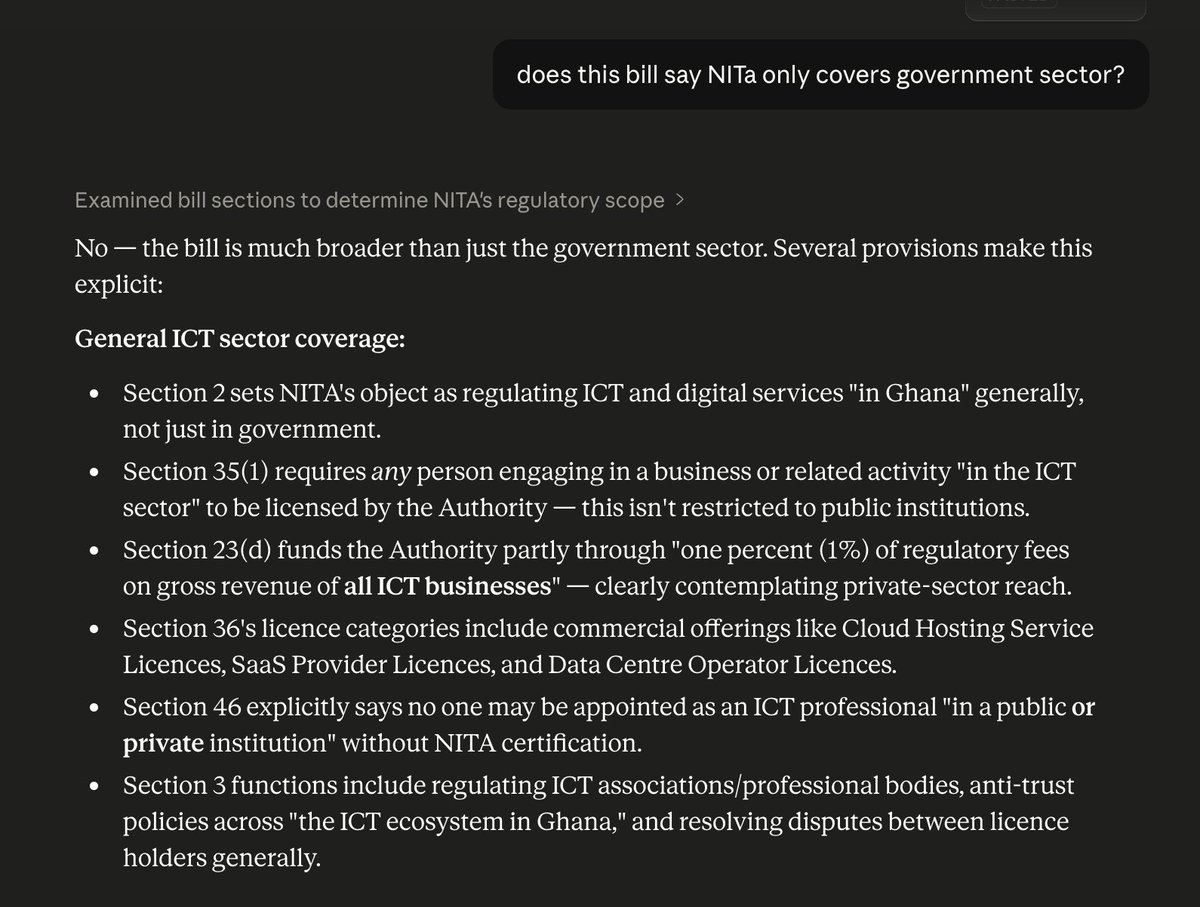
@NITAGhana that is not true. Your bill covers private sector.
Don't lie to us.
If the proposal has changed, give us the update.
Don't lie to our faces.
We are not idiots.

English
Felix the Tech Guy retweetledi

If you are an influencer and you think this doesn't concern you, wait till you see the Misinformation and Disinformation bill 😂😂😂
English
Felix the Tech Guy retweetledi

Crazy but I also understand the event culture in those areas … we just have to gradually change it by taking the risk to go on with events early to send signals to fans that , if you delay you will miss the performance … that’s standard practice in the western world
Ypee Baakop3🤴@ypeegh
organizers in these towns always wanna sell tickets till 4am 🤣
English
Felix the Tech Guy retweetledi

At this point, with the way NITA is moving, I won’t be surprised if they’re already building their own operating system for us to start using 😂😂
If they don’t pay we just go lock demma laptops😂
English
Felix the Tech Guy retweetledi
GH influencers when dey see the Misinformation and Disinformation bill 🤣🤣🤣

English
Felix the Tech Guy retweetledi
On 31 July 2025, President John Mahama appointed a new NITA Board to oversee the restructuring of Ghana’s ICT regulator. 9 people sworn in. 2 more expected.
During the ceremony, Sam George said the board would reshape the future of ICT governance in Ghana.
Then he said: “17 years on, NITA remains a sleeping giant. Your task is to wake it up. We are splitting NITA into two, a regulatory agency and a commercially run infrastructure company. This board will oversee both.”
The agency just woke up from a 17-year nap and the first thing it said was “allow cash out.”
Reporting live, “IT Professional.”

English
Felix the Tech Guy retweetledi

The ordinary Ghanaian thinks supplements are steroids 😂
English
Felix the Tech Guy retweetledi

Felix the Tech Guy retweetledi

Imagine going to Nsawam for fixing Dr Aba’s wifi only for her to tell me Nyame nhyira wo
Ebe this country naa person must leave
#StopTheNITABill
GIF
Nana B.@koboateng
This is too serious to be politicized. It will affect everyone
English
Felix the Tech Guy retweetledi

@NITAGhana As Ghana's national ICT regulator, I noticed your website is exposing the WordPress admin path in plain HTML. A basic security hardening fix is needed. Practice what you regulate. Regarding the Bill, we will discuss it later. First things first. #CyberSecurity #Ghana

English
Felix the Tech Guy retweetledi

I believe @koboateng, @TheDumbTechGuy, @kwekutech, and the wider tech community would be better not engaging with this individual’s position, given that @CSAGhana is applying the same kind of gatekeeping practices that @NITAGhana is pursuing.
In his post he says:
"Before any invoice is issued, CSA Ghana conducts a vetting process to assess the qualifications, competence, and eligibility of the applicant or organization. The licensing structure is tier-based, with each tier having its own requirements, fees, and renewal periods."
I’m not sure whether he benefits from @CSAGhana or is a politician, I’ve asked him twice to share any supporting documents for his statements on the standards and vetting process. You can also ask him to publicly share more details on the requirements and standards, fees, how vetting is conducted, who handles the vetting, the different tiers, and similar information.
Just like what @NITAGhana is planning to do, @CSAGhana only provides a form to fill, followed by a hidden bureaucratic process, a fee to pay, and annual renewal with no transparent vetting process or published standards.
And It seems his concern is only about Cyber Security being removed from NITA's bill. He isn’t calling for a broader review or removal of all such licensing requirements. Additionally, I’m not sure he’s aware that the proposal is focused on centralising all tech licences under NITA, including cybersecurity.
Stop telling us that @CSAGhana follows standards. Show us the documents including the vetting process, fees, and other relevant details.
If you support @CSAGhana’s hidden bureaucratic processes, then you should also support @NITAGhana’s bill because they are practically the same unless, of course, you are benefiting from one side.
To my fellow tech professionals: integrity is essential to building a thriving tech ecosystem. We must uphold strong principles and demand transparency.
Nana Sei Anyemedu@RedHatPentester
If you’re a cybersecurity practitioner, I beg don’t rush to pay any 30,000 or 20,000 application fee or license fee to @NITAGhana. NITA regulates laws and standards within the broader IT space, particularly for IT governance and organizations providing general IT services. However, cybersecurity services in Ghana are regulated solely by the Cyber Security Authority (@CSAGhana ). When it comes to CSA licensing and accreditation, first of all is FREE. There are different tiers and categories. Applicants are not compelled to pay a fixed amount upfront. Before any invoice is issued, CSA Ghana conducts a vetting process to assess the qualifications, competence, and eligibility of the applicant or organization. The licensing structure is tier-based, with each tier having its own requirements, fees, and renewal periods. The accreditation framework published by NITA primarily applies to professionals and organizations operating in IT governance and general IT service delivery, not specifically cybersecurity service providers. Therefore, if an individual or company provides both IT services and cybersecurity services, they may be required to comply with both regulators respectively: NITA for the IT service component and CSA Ghana for the cybersecurity component. Also, know this: CYBERSECURITY AUTHORITY is not under @NITAGhana. @CSAGhana is a full body on its own when it comes to everything cybersecurity in Ghana. NITA needs to come clear what it means by cybersecurity service providers⚡️
English
Felix the Tech Guy retweetledi

EVERYONE PLEASE, THE GOVERNMENT WANTS TO FORCE PROGRAMMERS TO PAY FOR A LICENSE JUST TO BUILD WEBSITES!!!!!!
We are facing a critical moment for Ghana's tech future. The NITA Bill 2025 is currently in Parliament, and if passed in its current form, it could require every ICT professionals including freelancers and self-taught developers to obtain a government-issued license just to work.
Let’s be clear, the tech community has already proven its worth. When we faced the dumsor crisis a few weeks back, it was developers on this very app who stepped up to build tracking tools to help citizens, all without needing a government permit to use their skills.
We have invested years of hard work and thousands of cedis in tuition to master our craft. Being told we must now pay for a government license to practice those same skills is not just an unnecessary barrier, it’s an attempt to gatekeep the industry and stifle the very innovation that keeps this country moving forward.
I need everyone to take a moment and sign this petition: nitastopthebill.vercel.app
#nitastopthebill
English
Felix the Tech Guy retweetledi

Kindly share to help stop this nonsense of a Bill 🙏🏻
#StopTheNITABill #StopTheNITABill
#StopTheNITABill #StopTheNITABill
#StopTheNITABill #StopTheNITABill
#StopTheNITABill #StopTheNITABill
#StopTheNITABill #StopTheNITABill
#StopTheNITABill #StopTheNITABill
Hubert Tieku Esq@KwesiHubert
I barely do this but I beg any Ghanaian to read the following write up by Chris-Vincent Agyapong. Bookmark, share etc cos wtf 😳 1/4 “Ghana's NITA Bill 2025: How a Government That Cannot Fix Potholes Wants to Certify Your Keyboard Strokes There is a particular brand of Ghanaian governance that operates on a simple, well-rehearsed logic: identify the one sector in which ordinary young people, without connections, without family money, without a politician uncle are actually building something for themselves, and then erect a magnificent bureaucratic tollbooth right in the middle of it. The National Information Technology Authority Bill, 2025 currently making its way through Ghana's legislative machinery with the quiet confidence of a document probably written by a majority of people who have never debugged a line of code in their lives is precisely that tollbooth. It is, in its 105 sections and accompanying Schedule, one of the most breathtaking exercises in regulatory overreach this country has produced in recent memory. And given our regulatory track record, that is genuinely saying something. The ICT sector is the one industry where a boy from Ashaiman, or, like my friend from Pulima, Aliu Wahab, with a second-hand laptop and a YouTube tutorial, can compete with someone whose father went to Achimota. It is the one space where talent, not tribe; skill, not surname; output, not old-boy network, still carries meaningful weight. It is, bluntly, the only functioning meritocracy left in Ghana's economic life. And our government, with the NITA Bill 2025 has decided that this is precisely the sector that requires the most elaborate regulatory architecture since the tale of Moses coming down from Sinai with the Ten Commandments. The Absurdity of Section 46: Certifying Everyone, Everywhere, Always Let us begin with what is, without competition, the most extraordinary provision in this bill. Section 46(1) states, in plain and unambiguous terms: "A person shall not be appointed as an ICT professional in a public or private institution unless that person is certified by the Authority." Read that again. Public or private. This is not a provision that limits itself to government systems handling national security data. This is not a narrow carve-out for critical infrastructure. This is a provision that means the software developer at a startup in Osu, the data analyst at a logistics firm in Tema, the web designer freelancing from her bedroom in Kumasi, all of them, every single one must first obtain certification from a government authority before they can lawfully be employed. Who dreamed this up? Under what theory of governance does it make sense for the government of Ghana which cannot consistently process a DVLA licence within six months, which spent years and hundreds of millions on a national identification system that still cannot talk to the health insurance database to position itself as the certifying gatekeeper for an entire profession across the entire economy? And here is the delicious irony that the framers of this bill seem constitutionally incapable of perceiving: the government's own ICT record is the single most compelling argument against giving it certification authority over anyone. You do not hand the keys of the wine cellar to the person who has been drinking the wine. Politicians: The One Profession That Needs Certification Most, and Gets It Least Since we are on the subject of certification, let us pause to consider who in this country is not required to demonstrate any competence whatsoever before being handed consequential power over millions of lives. Continued below
English