Ministry of Finance, Government of Pakistan

10.4K posts

Ministry of Finance, Government of Pakistan banner
Ministry of Finance, Government of Pakistan

Ministry of Finance, Government of Pakistan

@Financegovpk

Official Account of the Ministry of Finance, Government of Pakistan

Islamabad, Pakistan Katılım Haziran 2014
14 Takip Edilen262.4K Takipçiler
Ministry of Finance, Government of Pakistan retweetledi

Geo News Urdu
Geo News Urdu@geonews_urdu·
ہماری پوری کوشش ہے کہ این ایف سی ایوارڈ میں آبادی بڑھانے کو incentivize نہ کریں، آئی ایم ایف سے contraceptives پہ ٹیکس ختم کرنے پر بات چیت جاری ہے، امید ہے آئی ایم ایف سے contraceptives پہ ٹیکس چھوٹ حاصل کر لیں گے، وزیر خزانہ محمد اورنگزیب
اردو
12
6
71
19.7K
Ministry of Finance, Government of Pakistan
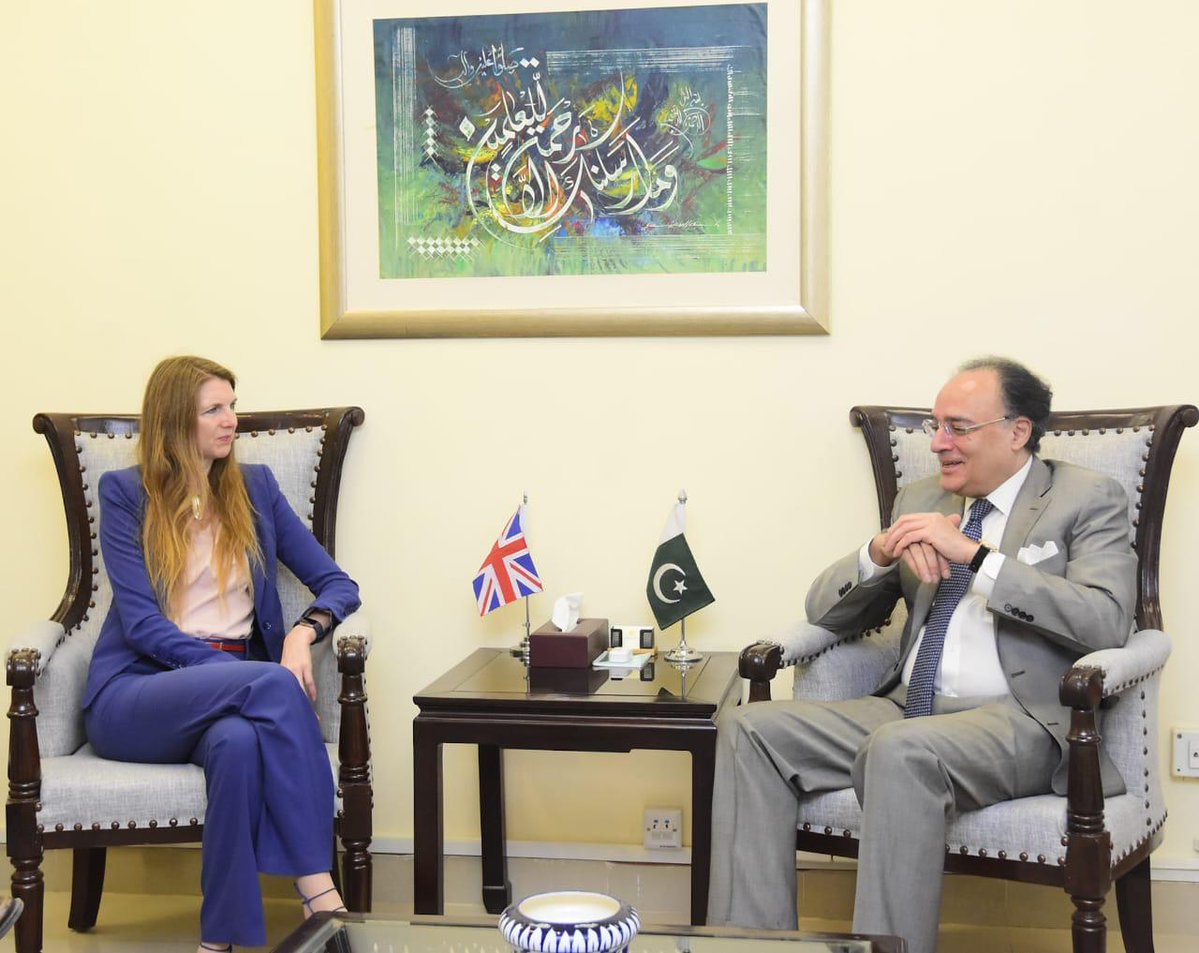
Finance Minister, British High Commissioner Discuss Economic Cooperation and Reform Agenda Federal Minister for Finance and Revenue Senator Muhammad Aurangzeb held a meeting today with Ms. Jane Marriott CMG OBE, British High Commissioner to Pakistan, who called on the Minister at the Finance Division. The meeting focused on Pakistan–United Kingdom bilateral cooperation, economic reforms, regional developments, and continued engagement on matters of mutual interest. During the meeting, the Finance Minister shared the Government’s perspective on the evolving global economic environment and its implications for Pakistan’s economy, particularly in the context of regional geopolitical developments and energy market volatility. He outlined the Government’s ongoing efforts to maintain macroeconomic stability, manage external sector pressures, and sustain the momentum of economic reforms aimed at ensuring long-term growth and resilience. Senator Aurangzeb highlighted improvements in key economic indicators, including stability in the external account, continued strength in remittance inflows, and growing investor confidence. He also briefed the British High Commissioner on measures being undertaken to broaden the tax base, strengthen revenue mobilization, improve compliance, and enhance transparency through technology-driven reforms and digitalization initiatives. The Finance Minister further emphasized the Government’s commitment to policy continuity, fiscal discipline, and structural reforms, including efforts to improve public sector efficiency, strengthen institutional coordination, and create an enabling environment for private sector-led growth and investment. Discussions also covered the importance of effective communication and public engagement in sustaining support for the reform agenda. Regional and global developments, including their economic and humanitarian implications, also came under discussion. Both sides acknowledged the importance of dialogue, international cooperation, and coordinated efforts to address emerging challenges affecting economic stability and global supply chains. The British High Commissioner appreciated Pakistan’s continued engagement on regional issues and reaffirmed the United Kingdom’s support for Pakistan’s economic reform efforts and development priorities. Matters relating to climate resilience, population planning, social sector coordination, and cooperation with international financial institutions were also discussed during the meeting. The meeting ended with a shared commitment to further strengthening Pakistan-United Kingdom bilateral relations and enhancing cooperation across economic, development, and institutional sectors.
Ministry of Finance, Government of Pakistan tweet media
English
5
8
67
2.4K
Ministry of Finance, Government of Pakistan
Finance Minister Discusses Revenue Reforms and Sectoral Competitiveness with PTC Delegation Federal Minister for Finance and Revenue, Senator Muhammad Aurangzeb, met with a delegation of Pakistan Tobacco Company (PTC) at the Finance Division. The delegation was led by Mr. Usman Zahur, Area Director (APMEAC) & General Manager Pakistan, and included senior representatives from marketing, corporate affairs, and fiscal affairs. During the meeting, the Finance Minister outlined the Government’s broader fiscal reform agenda focused on strengthening revenue mobilization, broadening the tax base, improving enforcement, and enhancing transparency through technology-driven systems. He noted that ongoing reforms in tax administration centered on people, processes, and technology are aimed at improving compliance, reducing leakages, and ensuring fair revenue collection across the economy. The Minister highlighted that enhanced enforcement measures, supported by digitization, technology-based monitoring systems, and coordinated operations by relevant agencies, are contributing to improved compliance and revenue collection in several sectors. He noted that enforcement actions in industries including sugar, cement, beverages, textiles, and tobacco are helping address illicit and undocumented economic activity. The PTC delegation appreciated the Government’s reform and enforcement initiatives and shared views on the tobacco sector, including excise taxation, illicit trade, market dynamics, and export competitiveness. The delegation acknowledged recent actions against illegal and non-compliant operators and emphasized the importance of a stable and predictable taxation framework to support formal sector growth and sustainable revenue generation. Discussions also covered regulatory and taxation issues, sectoral competitiveness, market trends, and the importance of strengthening enforcement to reduce the share of illicit products operating outside the documented economy. Both sides exchanged views on coordinated enforcement mechanisms involving federal and provincial authorities. The Finance Minister reiterated that revenue mobilization and effective enforcement remain central to the Government’s fiscal reform agenda. He emphasized that while the Government is committed to ensuring policy consistency and strengthening compliance, all sector-specific proposals would be evaluated in line with broader fiscal objectives and economic priorities. The meeting also discussed export potential and investment opportunities within the tobacco sector and related value-added products. The delegation highlighted Pakistan’s role as a regional manufacturing and export base for certain product categories and shared perspectives on international market opportunities. Discussions further included regional experiences relating to enforcement, taxation models, and regulatory practices in comparable markets. The Finance Minister appreciated the delegation’s input and reaffirmed the Government’s commitment to continued engagement with the formal business sector to support investment, exports, industrial activity, and sustainable economic growth. He stated that the Government would continue pursuing reforms aimed at improving the ease of doing business, strengthening compliance systems, and creating a more transparent and competitive economic environment.
Ministry of Finance, Government of Pakistan tweet media
English
1
2
10
1.1K
Ministry of Finance, Government of Pakistan
RT @kschehzad: 𝗥𝗲𝗮𝗹𝗶𝘁𝘆 𝗼𝗳 𝗭𝗲𝗿𝗼 𝗖𝗼𝘂𝗽𝗼𝗻 𝗕𝗼𝗻𝗱 Some people are presenting the Zero Coupon Bond as if the government is taking Rs80 billion tod…
English
0
1
0
351
Ministry of Finance, Government of Pakistan
RT @kschehzad: زیرو کوپن بانڈ کی حقیقت Zero Coupon Bond کو بعض لوگ اس طرح پیش کر رہے ہیں جیسے حکومت نے آج 80 ارب روپے لے کر 15 سال بعد 51…
اردو
0
1
0
281
Ministry of Finance, Government of Pakistan
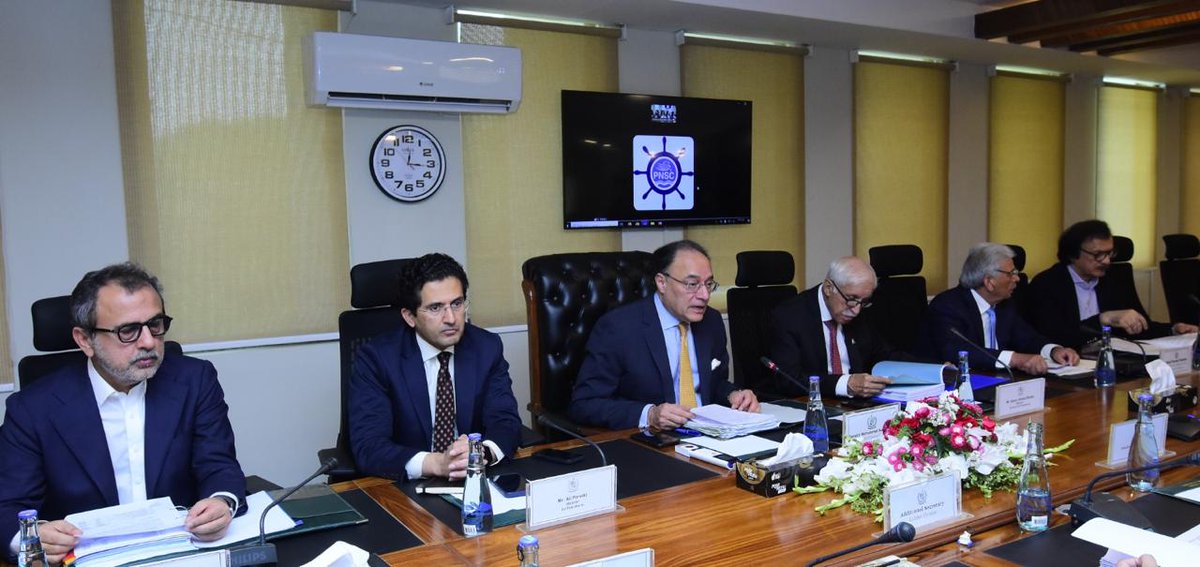
ECC Approves Key TSGs, PNSC Restructuring, and Gemstone Policy The Economic Coordination Committee (ECC) of the Cabinet met today at the Finance Division under the chairmanship of the Federal Minister for Finance and Revenue, Senator Muhammad Aurangzeb. The ECC approved a summary submitted by the Ministry of Federal Education & Professional Training for allocation of Rs. 3,915.24 million through Technical Supplementary Grant (TSG) for the Prime Minister Youth Skill Development Programme through NAVTTC and establishment of Danish Schools in Azad Jammu & Kashmir, Gilgit-Baltistan, and Balochistan. The ECC further approved two summaries submitted by the Ministry of Interior & Narcotics Control, including TSG amounting to Rs. 160 million for repair and maintenance of the Prime Minister’s Office during FY 2025-26, and allocation of Rs. 480 million for recurring operational requirements of Frontier Corps KP (North) Hospital at Shakas, District Khyber. The Committee was informed that following winding up of Pakistan Public Works Department (Pak PWD), maintenance responsibilities of the Prime Minister’s Office had been transferred to the Capital Development Authority (CDA). The ECC further noted that the approved allocation for FC KP (North) Hospital would support uninterrupted provision of healthcare and operational services for FC personnel, families of Shuhadas, and injured soldiers. The ECC considered and approved a summary submitted by the Ministry of National Health Services, Regulations & Coordination for a TSG of Rs. 1,500 million for the Prime Minister National Health Programme (4th Revised) during PSDP 2025-26. The programme, previously known as Sehat Sahulat Programme, is a fully public-financed social health protection initiative aimed at expanding healthcare coverage and supporting access to medical services. The Committee also approved a summary submitted by the Ministry of Kashmir Affairs & Gilgit-Baltistan regarding enhancement of monthly Subsistence/Guzara Allowance for Jammu & Kashmir Refugees of 1989 from Rs. 3,500 to Rs. 6,000 per person with effect from 01 February 2026, along with allocation of Rs. 578.838 million through TSG for the period ending 30 June 2026. The Committee directed the concerned Ministry to take up future budgetary requirements with the Finance Division for the next budget cycle. The ECC considered a summary submitted by the Ministry of Railways regarding allocation of additional grant for payment of outstanding liabilities under the Prime Minister Assistance Package. After detailed deliberation, the Committee approved Rs. 1 billion as Prime Minister Assistance Package, and directed the Railways Division to undertake a broader review of their pension liabilities. The ECC also directed the Establishment Division to review the overall policy framework relating to the Prime Minister Assistance Package. The ECC further approved a summary submitted by the Ministry of National Food Security & Research for allocation of Rs. 1 billion through TSG for operationalization of the National Agri-Trade and Food Safety Authority (NAFSA). The Authority was established to strengthen regulatory oversight relating to food safety, plant health, livestock, and agro-chemicals in line with international standards and trade requirements. The Committee also granted in-principle approval for restructuring of Pakistan National Shipping Corporation (PNSC) through sale of 30% shareholding and transfer of management control to National Logistics Corporation (NLC), submitted by Ministry of Maritime Affairs. The ECC directed the concerned authorities to expedite the process in view of tapping the emerging maritime and transshipment opportunities. The ECC further approved the National Policy to Realize Pakistan’s Gemstone Potential 2026–2030 submitted by the Industries and Production Division. The policy aims to formalize the gemstone sector, promote value addition and modern mining practices, and enhance exports and regional economic development, particularly in Gilgit-Baltistan, Khyber Pakhtunkhwa, and Azad Jammu & Kashmir. The meeting was attended by Federal Minister for Investment Mr. Qaiser Ahmed Sheikh, Federal Minister for Power Sardar Awais Ahmed Khan Leghari, Federal Minister for Petroleum Mr. Ali Pervaiz Malik, Federal Minister for National Food Security and Research Mr. Rana Tanveer Hussain, Special Assistant to the Prime Minister on Industries and Production Mr. Haroon Akhtar Khan, along with federal secretaries and senior officials from the relevant ministries, divisions, and regulatory authorities.
Ministry of Finance, Government of Pakistan tweet mediaMinistry of Finance, Government of Pakistan tweet mediaMinistry of Finance, Government of Pakistan tweet mediaMinistry of Finance, Government of Pakistan tweet media
English
7
2
12
2K
Ministry of Finance, Government of Pakistan
Federal Minister for Finance and Revenue, Senator Muhammad Aurangzeb, held a virtual meeting with Provincial Finance Ministers to discuss key economic and fiscal matters, with focus on coordination, fiscal discipline, and reforms to support sustainable economic growth.
Ministry of Finance, Government of Pakistan tweet mediaMinistry of Finance, Government of Pakistan tweet mediaMinistry of Finance, Government of Pakistan tweet media
English
1
1
4
1.1K
Ministry of Finance, Government of Pakistan
Finance Minister Discusses Tokenization of Sovereign Bonds in Meeting with PVARA Chairman Federal Minister for Finance and Revenue Senator Muhammad Aurangzeb today held a meeting with Bilal Bin Saqib, Minister of State and Chairman of the Pakistan Virtual Assets Regulatory Authority (PVARA), and the Advisor on Debt Management to the Finance Minister, Omer Khan, to discuss the tokenization of sovereign debt instruments, and Naya Pakistan Certificates. The meeting marked one of the first high-level governmental discussions in Pakistan focused specifically on sovereign asset tokenization and the role blockchain infrastructure can play in modernising capital markets, expanding investor access, and enabling Pakistan to participate in the financial infrastructure of the new economy. Discussions focused on potential structures, implementation pathways, regulatory considerations, and next steps required to explore tokenized sovereign instruments within Pakistan’s evolving financial ecosystem. A central element of the discussion focused on the international precedent for sovereign and quasi-sovereign debt tokenization, and how Pakistan can adopt a structure aligned with established global market infrastructure. The model under consideration, often referred to as a Digitally Native Note issued through a regulated financial market infrastructure, allows a sovereign bond to be created on a regulated blockchain platform at the moment of issuance, with same-day settlement, before integrating with the conventional international clearing and settlement systems that already serve Pakistan’s existing Eurobond programme. The bond’s coupon payments, secondary trading, and final repayment continue through the established global infrastructure, ensuring full interoperability with the institutional investor base that participates in Pakistan’s conventional sovereign issuances. The tokenization of Naya Pakistan Certificates to potentially enable broader retail participation, improve accessibility for overseas Pakistanis, and create more seamless digital investment rails connected to global markets was also discussed. Furthermore, it was highlighted that the Roshan Digital Account has attracted close to USD 13 billion in cumulative inflows from overseas Pakistanis and international investors since its launch in 2020, with the majority of that capital deployed within Pakistan’s economy. It was further noted that the proposed digital distribution agenda is intended to extend this investment channel to a broader base of eligible global investors under full regulatory supervision. The meeting also explored how blockchain-powered financial infrastructure could help take Pakistan to the world by connecting local financial products and sovereign instruments with a wider international investor base through programmable and digitally native markets. Finance Minister Senator Muhammad Aurangzeb stated: “Pakistan remains committed to exploring forward-looking financial technologies that can support economic modernization, deepen investor participation, and strengthen financial accessibility. Discussions around tokenized sovereign instruments represent an important exploratory step toward understanding how emerging infrastructure can support the future evolution of Pakistan’s capital markets.” Speaking following the meeting, Bilal Bin Saqib, Chairman PVARA, stated: “The financial system of the next century will not run on paper, manual processes, or fragmented rails. It will run on programmable infrastructure, real-time settlement, and borderless digital networks. Pakistan has an opportunity to leapfrog legacy systems and position itself among the countries building the financial architecture of the future. The tokenization of sovereign assets is not simply a technology shift, it is a strategic national opportunity to bring Pakistan into the next era of global finance, unlock wider participation in our economy, and connect our markets to the emerging digital capital networks of the world.” It was agreed that PVARA, Ministry of Finance and Sate Bank of Pakistan will continue to coordinate on the design, governance and phased development of the agenda. Further announcements will follow as the work progresses through the appropriate approvals. Both sides agreed to continue technical discussions and institutional coordination on potential frameworks, international benchmarking, regulatory considerations, and pilot structures related to sovereign asset tokenization initiatives. The engagement reflects Pakistan’s broader push toward modernising financial infrastructure, strengthening digital asset regulation, and positioning the country as an emerging hub for responsible blockchain innovation.
Ministry of Finance, Government of Pakistan tweet media
English
5
6
29
15.1K
Ministry of Finance, Government of Pakistan
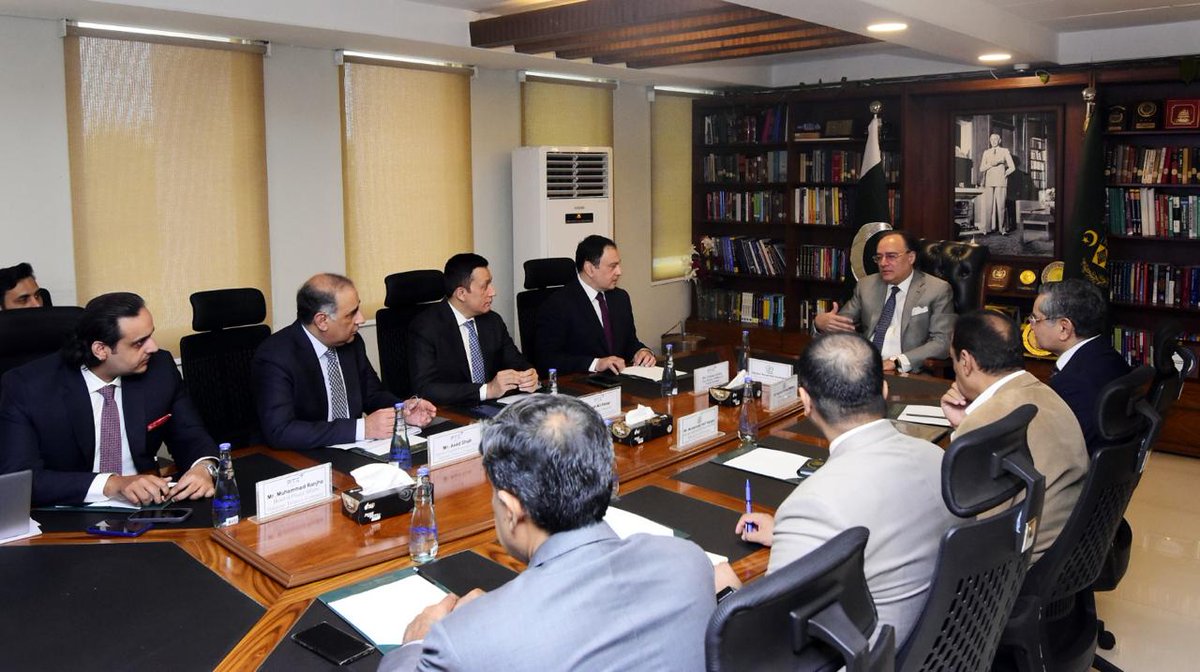
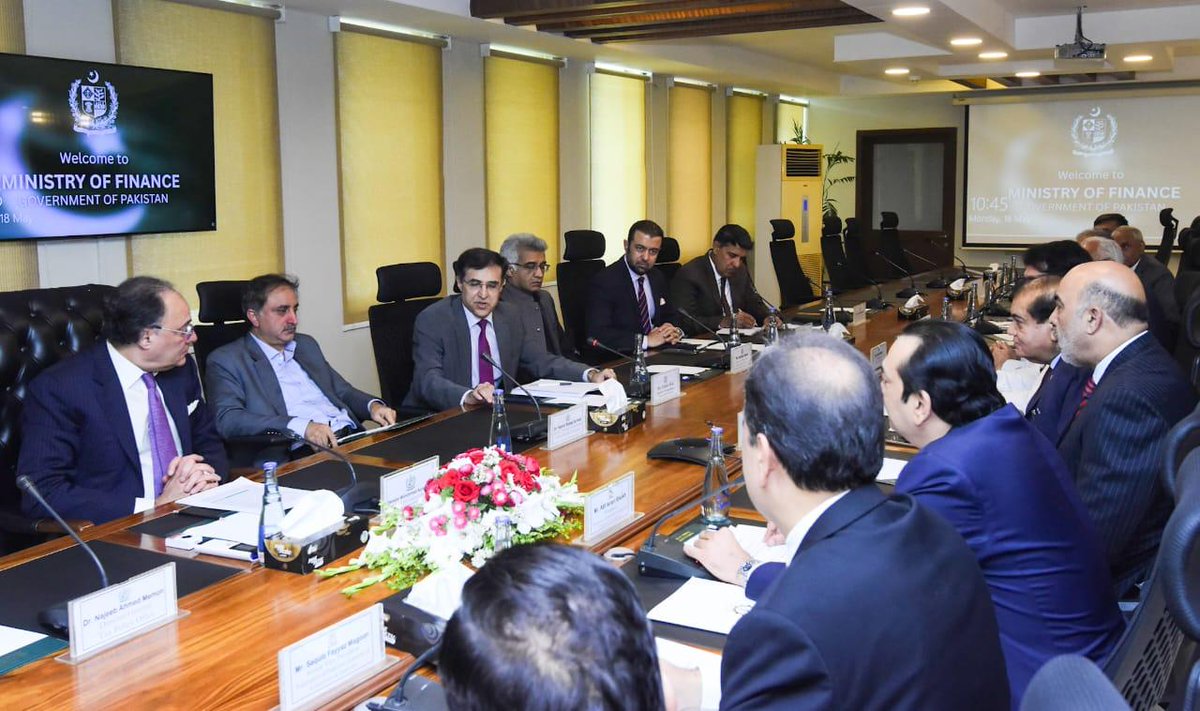
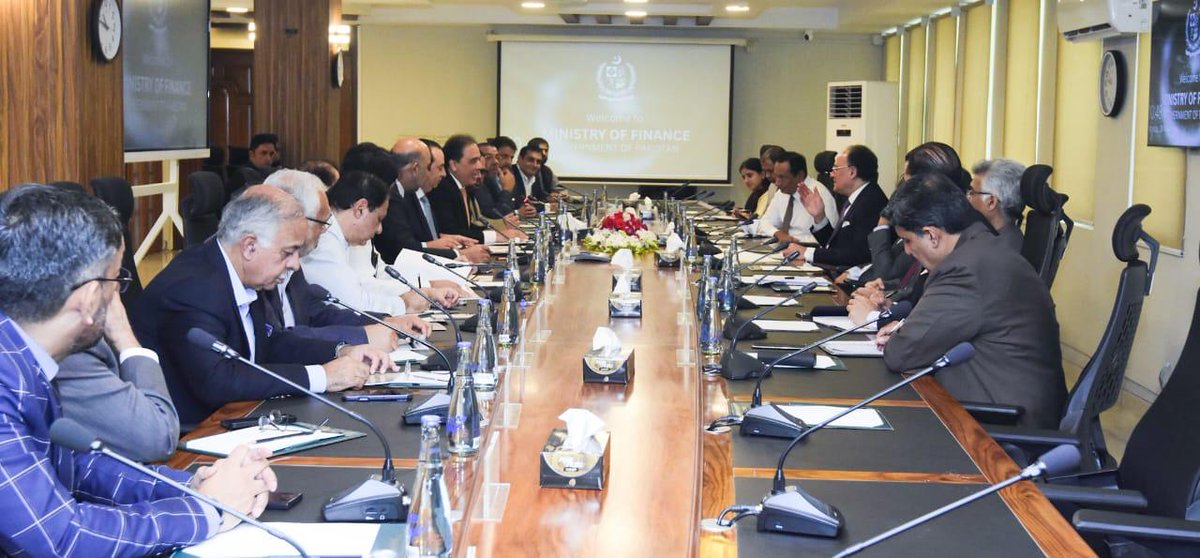
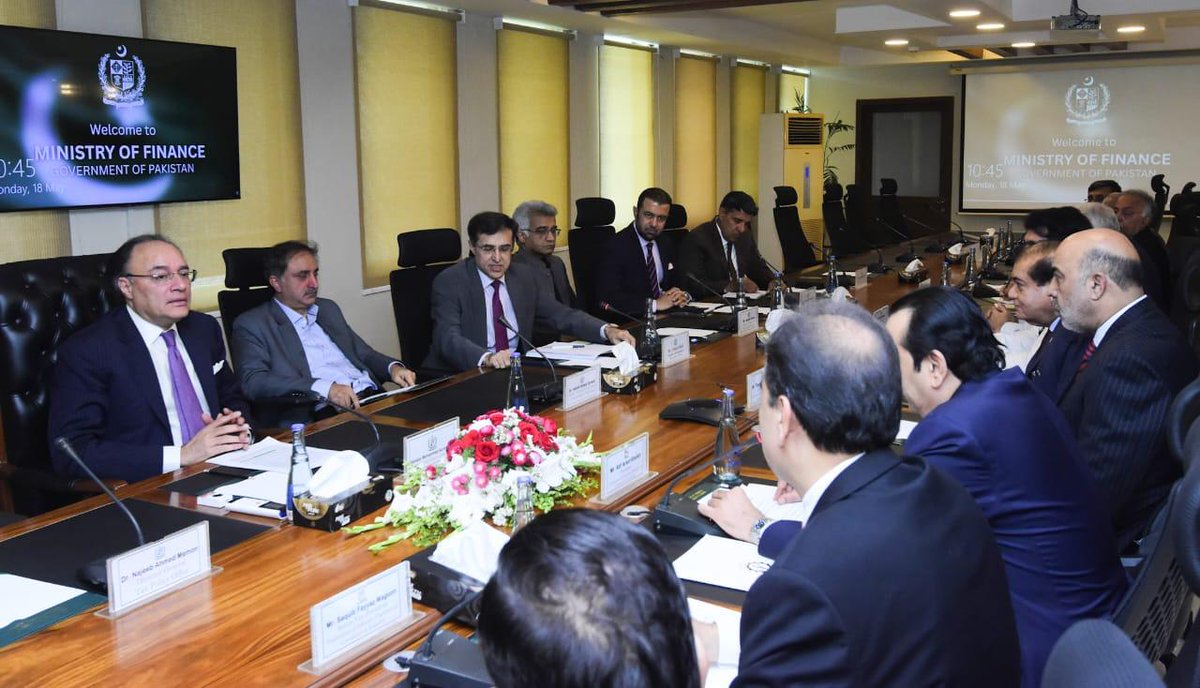
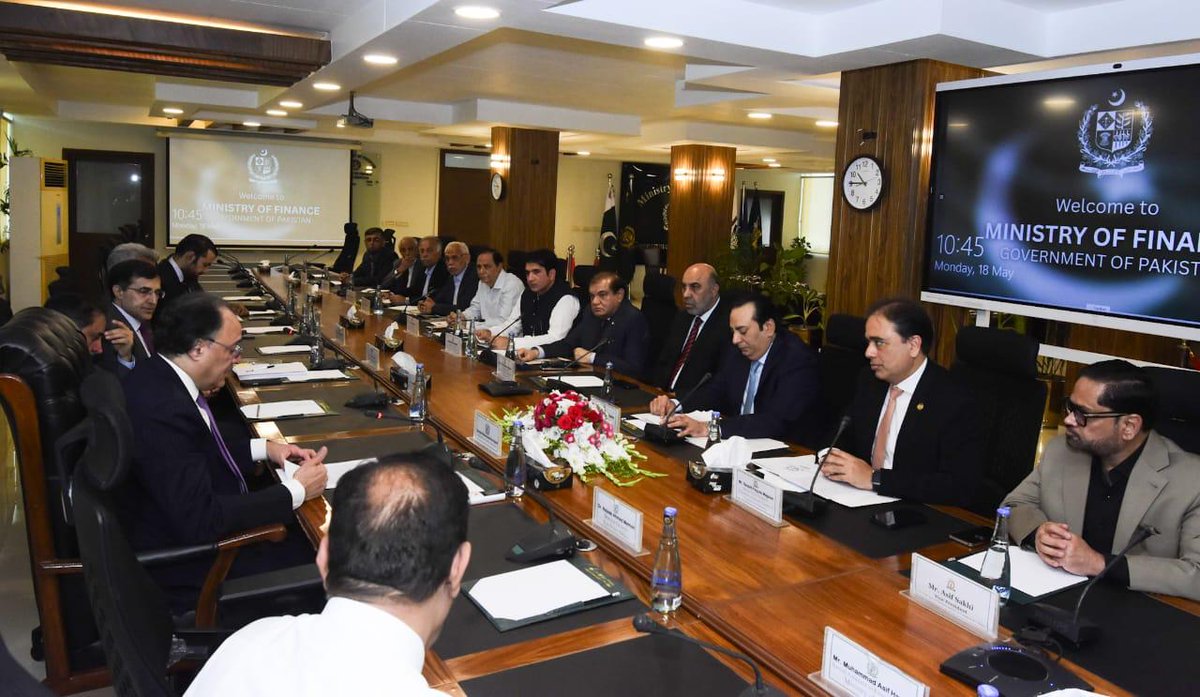
Finance Minister Holds Consultative Session with FPCCI on Export Facilitation, and Tax Reforms Federal Minister for Finance and Revenue, Senator Muhammad Aurangzeb, held a meeting at the Finance Division with a delegation of the Federation of Pakistan Chambers of Commerce and Industry (FPCCI) led by Mr. Atif Ikram Sheikh, President FPCCI. During the meeting, the Finance Minister appreciated FPCCI’s role as a representative body of the business community and underscored the importance of continued engagement with industry stakeholders to ensure that economic and fiscal policies remain practical, growth-oriented, and supportive of business, investment, and industrial activity. The Finance Minister shared the Government’s broader economic priorities focused on sustaining macroeconomic stability, improving the investment climate, supporting export-led growth, encouraging industrial expansion, and enhancing competitiveness across key sectors of the economy. He highlighted ongoing efforts aimed at strengthening economic documentation, modernizing tax administration, promoting digitization and automation, and streamlining regulatory procedures to facilitate taxpayers and businesses. The discussion focused on a wide range of proposals and taxation-related recommendations in the context of the upcoming Budget 2026–27, including matters relating to sales tax, customs duties, export facilitation schemes, industrial inputs, and regulatory procedures. The Finance Minister noted that the Government remained committed to promoting a predictable, transparent, and technology-driven taxation framework while ensuring effective revenue mobilization and broadening of the tax base. The FPCCI delegation presented sector-specific proposals and recommendations relating to industrial raw materials, machinery imports, export competitiveness, faster refund processing, simplification of tax procedures, and reduction in compliance costs. Participants also shared views relating to exporters, manufacturers, traders, and industrial sectors including textiles, steel, edible oil, plastics, chemicals, and cotton ginning. Broader matters relating to trade facilitation, market competitiveness, documentation, customs administration, and regulatory coordination also came under discussion. Participants highlighted the importance of improving transparency, strengthening enforcement capacity, and ensuring a level playing field for legitimate businesses operating within the documented economy. The Finance Minister reiterated the Government’s focus on technology-driven reforms in tax administration and revenue collection systems. He highlighted ongoing initiatives relating to automation, digital invoicing, data integration, and process simplification aimed at improving transparency, minimizing unnecessary human intervention, enhancing compliance, and facilitating genuine businesses. He further emphasized that digital transformation and data-based governance remained central to the Government’s broader reform agenda. Participants further exchanged views on export facilitation mechanisms, industrial productivity, and measures aimed at improving Pakistan’s competitiveness in regional and international markets. Discussions also covered support for value-added sectors, timely implementation of export-related schemes, improved access to raw materials and production inputs, and measures aimed at encouraging long-term industrial growth and export diversification. The meeting also included discussion on the importance of policy continuity, institutional coordination, and regular engagement between the Government and private sector stakeholders in the context of ongoing economic and fiscal reforms. Participants exchanged views on implementation-related matters, operational efficiency, and measures aimed at facilitating business and industrial activity across different sectors of the economy. The Finance Minister acknowledged the proposals and recommendations shared by the FPCCI delegation and assured participants that their input would be carefully reviewed as part of the ongoing budget formulation process. He reaffirmed the Government’s commitment to continued engagement with the business community and noted that stakeholder consultations would remain an important part of the policy formulation process in support of economic growth, exports, industrial development, and investment activity. Both sides shared a common understanding on the importance of continued collaboration between the Government and industry stakeholders to support economic reforms, strengthen documentation, improve competitiveness, and promote export-led growth. The delegation included Mr. Saquib Fayyaz Magoon, Senior Vice President FPCCI; Vice Presidents FPCCI Mr. Aman Piracha, Mr. Asif Sakhi, Mr. Zaki Aijaz, and Mr. Tariq Jadoon; Mr. Sham Lal Manglani, Chairman Cotton Ginners Association; Mr. Umer Rehan, Chairman Pakistan Vanaspati Manufacturers Association; Mr. Ghazanfar Bilour, Former President FPCCI; Mr. Mian Zahid Hussain, Chairman FPCCI Policy Advisory Board; Mr. Karim Aziz Malik, Incharge FPCCI Capital Office; Mr. Malik Sohail Hussain, Chairman Coordination FPCCI Capital Office; Mr. Tariq Irshad, Chairman Steel Merchant Association; and Mr. Danish Saleem, Member FPCCI.
Ministry of Finance, Government of Pakistan tweet mediaMinistry of Finance, Government of Pakistan tweet mediaMinistry of Finance, Government of Pakistan tweet mediaMinistry of Finance, Government of Pakistan tweet media
English
4
0
3
947
Ministry of Finance, Government of Pakistan
Finance Minister Meets AIIB President to Discuss Infrastructure Financing and Economic Reforms Federal Minister for Finance and Revenue, Senator Muhammad Aurangzeb, held a meeting with a delegation of the Asian Infrastructure Investment Bank (AIIB) led by its President, Ms. Zou Jiayi, at the Finance Division today. Welcoming the delegation, the Finance Minister recalled his recent interaction with Ms. Zou Jiayi during the IMF-World Bank Spring Meetings in Washington, D.C., and appreciated AIIB’s continued partnership with Pakistan in supporting infrastructure development, economic reforms, and long-term development financing. He thanked AIIB for its support in the successful issuance of Pakistan’s PANDA Bond through AIIB-backed guarantee arrangements, noting that the successful transaction reflected growing investor confidence in Pakistan’s economic outlook and reform trajectory. The AIIB President also congratulated the Government of Pakistan on the successful issuance of the PANDA Bond. She observed that the issuance demonstrated the important role multilateral development institutions can play in strengthening the financial capacity of member countries and facilitating access to diversified sources of financing. She also appreciated the strong market response and favorable pricing outcome achieved through the transaction. During the meeting, the Finance Minister shared that Pakistan’s macroeconomic indicators have shown marked improvement over the past year as a result of stabilization measures and ongoing structural reforms. He noted positive trends in inflation, external sector stability, fiscal management, and market confidence, while emphasizing the Government’s commitment to sustaining macroeconomic stability and transitioning towards export-led, productivity-driven, and inclusive economic growth. Detailed discussions were held on Pakistan’s present and upcoming investment portfolio, with particular focus on infrastructure-led growth and long-term development planning. Both sides reviewed ongoing and planned investments across strategic sectors including transport connectivity, energy transition, water resource management, urban infrastructure, digital connectivity, and climate-resilient development initiatives. The Finance Minister emphasized that the Government is prioritizing projects capable of strengthening regional connectivity, enhancing economic competitiveness, and supporting sustainable growth. The meeting also focused on strengthening strategic cooperation between Pakistan and AIIB through a structured multi-year financing pipeline aligned with national development priorities. Discussions covered opportunities for enhanced collaboration in project preparation, implementation readiness, institutional capacity building, and mobilization of long-term development financing. Participants further exchanged views on expanding Pakistan’s investment landscape through innovative financing mechanisms and broader private sector participation. The Finance Minister emphasized the importance of developing domestic capital markets, diversifying financing instruments, strengthening debt and equity markets, and encouraging greater institutional investment to support infrastructure and development financing requirements. The AIIB delegation also shared an overview of the Bank’s ongoing engagement in Pakistan and discussed avenues for further collaboration in support of the country’s long-term development priorities. Discussions focused on enhancing cooperation in infrastructure connectivity, energy sector development, climate policy-based financing, and emergency financing mechanisms. The Finance Minister also briefed the delegation on the Government’s broader reform agenda, including taxation reforms, energy sector restructuring, state-owned enterprise reforms, institutional modernization, and measures aimed at improving implementation effectiveness across ministries and public sector institutions. He emphasized that strengthening governance, transparency, technological integration, and policy coordination remained central pillars of the Government’s reform strategy. The Finance Minister further reaffirmed the Government’s commitment to policy continuity, timely implementation of reforms, and maintaining a stable, transparent, and investment-friendly environment to support sustainable economic growth and long-term development partnerships. The delegation included Mr. Konstantin Limitovskiy, Chief Investment Officer, Public Sector Region II & Global Project and Corporate Finance; Mr. Yong Zhou, Chief Officer, Office of the President; Ms. Xiaohong Yang, Director General, Public Sector Clients Department Region II; Mr. Martin Naegele, Senior Executive Officer, Office of the President; Mr. Asad Zafar, Senior Investment Officer, Public Sector Clients Department Region II; Ms. Afsona-Bonu Mansurova, Communications Associate, Communications Department; Ms. Yibo Zhao, Executive Assistant, Office of the President; and Mr. Tahir Sheikh, Liaison Consultant, Public Sector Clients Department Region II.
Ministry of Finance, Government of Pakistan tweet mediaMinistry of Finance, Government of Pakistan tweet mediaMinistry of Finance, Government of Pakistan tweet mediaMinistry of Finance, Government of Pakistan tweet media
English
2
1
10
885
Ministry of Finance, Government of Pakistan
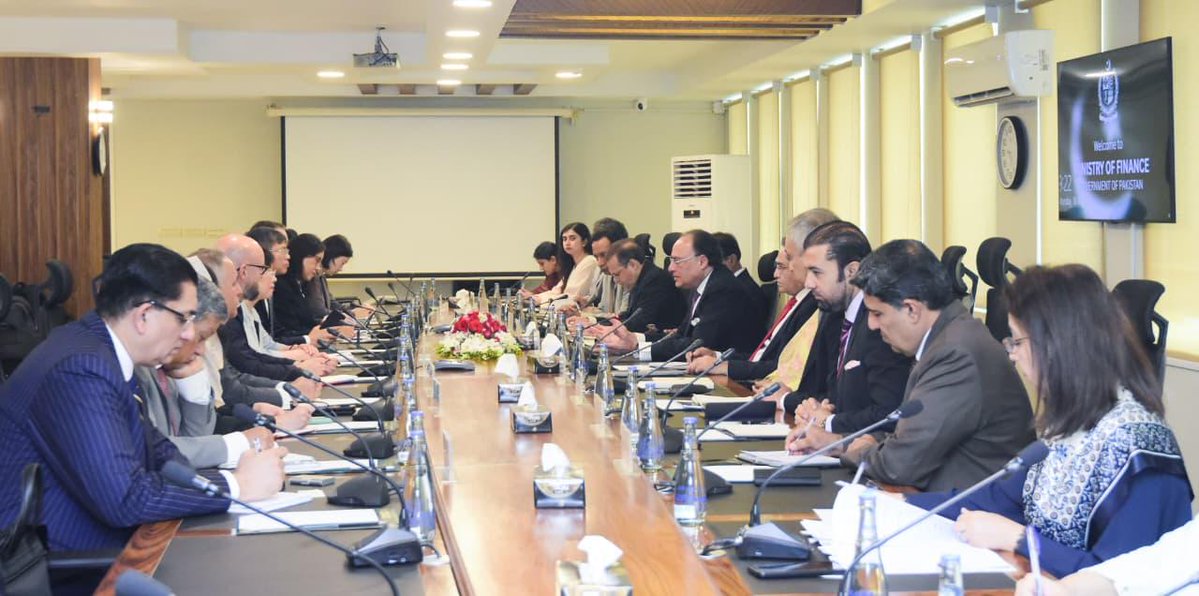
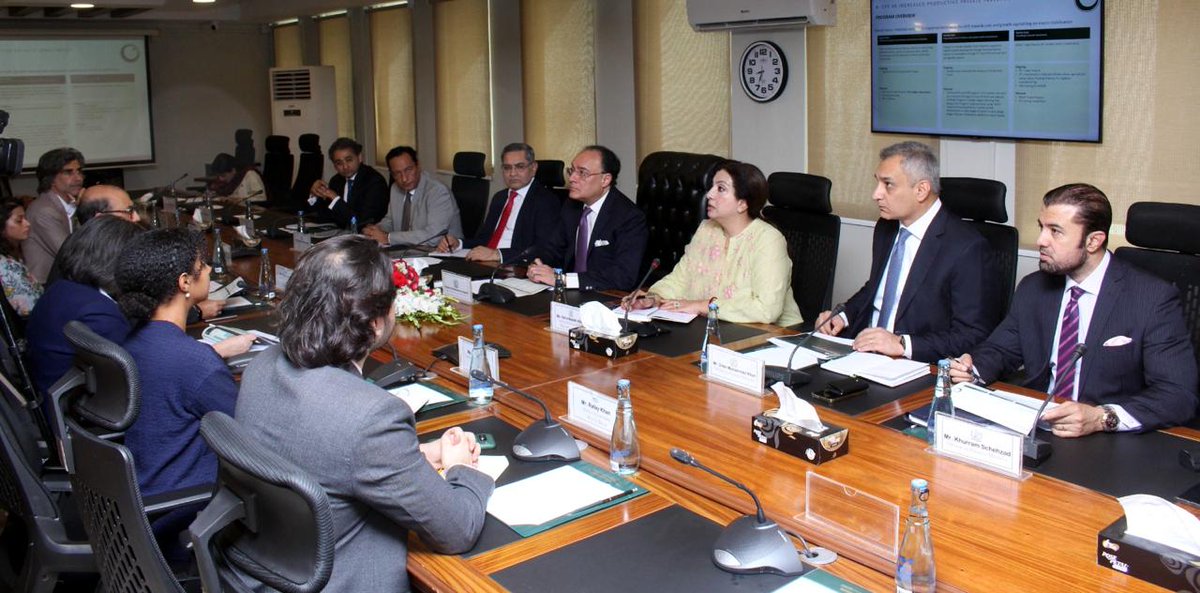
Finance Minister, World Bank Team Review Economic Reform Priorities and Institutional Transformation Agenda Federal Minister for Finance and Revenue, Senator Muhammad Aurangzeb, held a meeting at the Finance Division with a World Bank team led by Ms. Bolormaa Amgaabazar, Country Director for the World Bank in Pakistan. During the meeting, the Finance Minister appreciated the World Bank’s continued engagement with Pakistan on economic reforms and institutional development. He acknowledged the World Bank’s support across key reform areas and emphasized the importance of close coordination and technical collaboration to support implementation of the Government’s economic priorities and reform agenda. The meeting reviewed progress on a range of ongoing reform initiatives and technical assistance programs being supported by the World Bank, including public financial management reforms, institutional capacity building, debt management, and private sector development. Discussions also covered implementation timelines, coordination mechanisms, and operational arrangements relating to various reform-linked initiatives and technical support programs. The Finance Minister emphasized the importance of ensuring that technical assistance programs remain focused, specialized, and aligned with clearly defined reform objectives. He underlined the Government’s preference for high-quality international expertise, practical implementation support, and knowledge transfer aimed at strengthening institutional capacity within the public sector. He further noted the importance of developing sustainable in-house expertise and enhancing the Government’s ability to independently manage and implement complex reform initiatives over time. Discussions also focused on the Government’s ongoing efforts to transform the Federal Board of Revenue (FBR) through reforms centered around people, processes, and technology. The Finance Minister highlighted progress being made in automation, digitization, simplification of procedures, and technology-driven monitoring systems and he reiterated that the Government remained fully committed to the broader tax administration transformation agenda and institutional modernization efforts. The World Bank team shared updates regarding its ongoing technical support relating to the Medium-Term Revenue Strategy (MTRS), Tax Policy Office (TPO), and FBR transformation initiatives. Both sides exchanged views on strengthening coordination, accelerating implementation, and ensuring that reform measures remain aligned with broader fiscal and governance objectives. The Finance Minister emphasized the importance of operationalizing reforms in a manner that supports transparency, efficiency, and improved taxpayer facilitation. The meeting also covered broader structural reform priorities aimed at promoting sustainable and export-oriented economic growth. Discussions included regulatory reforms, trade facilitation, export competitiveness, access to credit markets, and capital market development. Participants highlighted the importance of improving the business environment, reducing regulatory barriers, and strengthening financial sector depth to support private sector-led growth and investment. The Finance Minister particularly emphasized the Government’s focus on deepening domestic debt and capital markets, reducing overreliance on bank financing, and expanding market-based financing avenues. Discussions also covered ongoing work relating to debt market development, investor outreach, and measures aimed at enhancing Pakistan’s investment profile and access to international financial markets. Participants further exchanged views on labor market reforms, vocational skills development, overseas employment opportunities, workforce competitiveness, and ongoing analytical work relating to right-sizing, public sector efficiency, and long-term growth and jobs strategy. The Finance Minister emphasized the importance of aligning skills development frameworks with evolving market needs, improving labor market information systems, and leveraging existing reform work and institutional analysis to ensure that future policy interventions remain focused, practical, and implementation-oriented. The Finance Minister appreciated the World Bank’s continued engagement and constructive support across multiple reform areas. Both sides reaffirmed their commitment to continued collaboration and close coordination in advancing Pakistan’s economic reform agenda, strengthening institutional capacity, and supporting sustainable and inclusive economic growth. The delegation included Mr. Tobias Haque, Lead Economist and Team Lead Fiscal Operation; Ms. Anna Twum, Team Lead Growth and Jobs and Economist; Mr. Rafay Khan, Senior Financial Sector Specialist; Ms. Sahar Etezaz, IFC Country Officer; and Mr. Shabih Ali Mohib, Regional Manager, Economics and Public Sector.
Ministry of Finance, Government of Pakistan tweet mediaMinistry of Finance, Government of Pakistan tweet mediaMinistry of Finance, Government of Pakistan tweet media
English
3
0
7
1.3K
Ministry of Finance, Government of Pakistan retweetledi
Khalil Hashmi
Khalil Hashmi@KhalilHashmi·
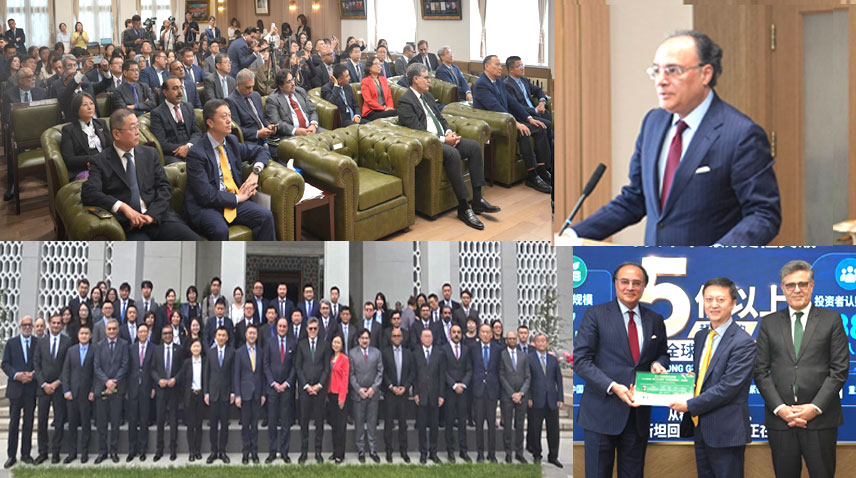
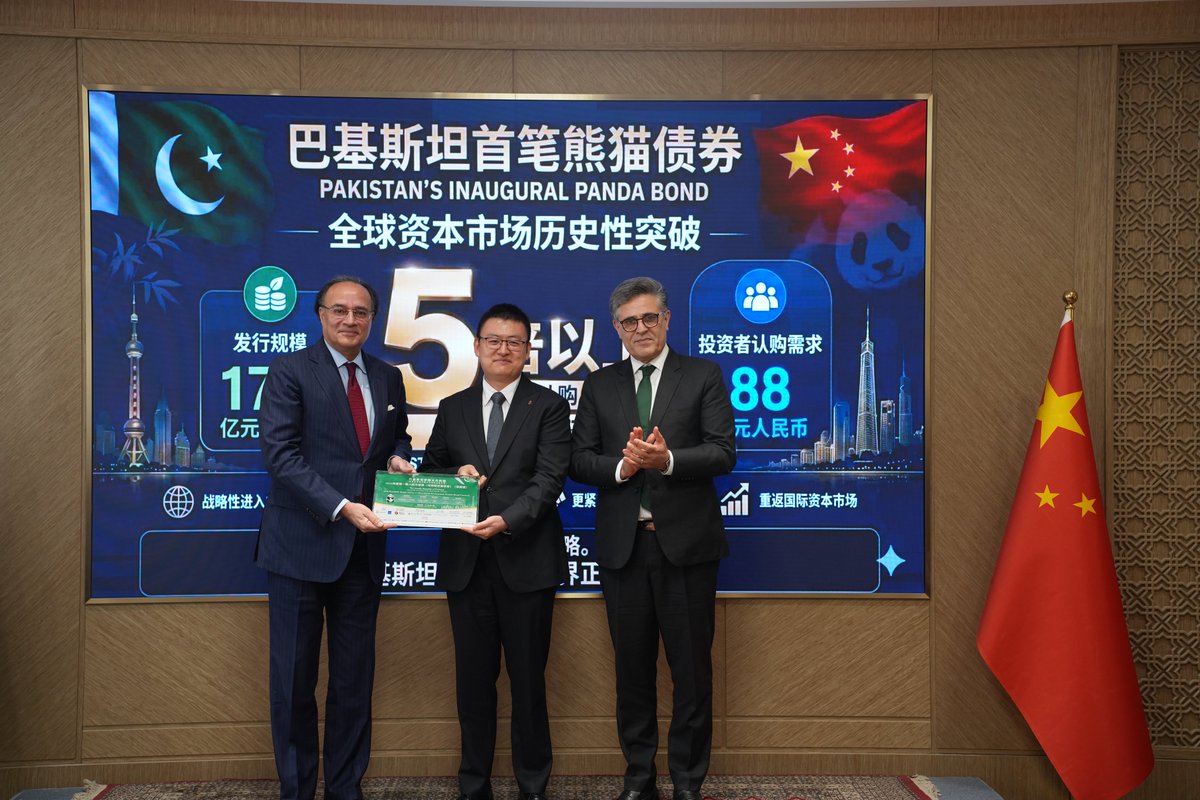
Speaking on this occasion, the Finance Minister thanked all Chinese and multilateral institutions for their trust, collaboration, and support in making this transaction possible. The issuance of panda bonds marks Pakistan’s successful entry into China’s onshore capital market. Senior representatives from M/o Finance China, People's Bank of China (PBOC), Bank of China (BOC), National Association of Financial Market Institutional Investors ( NAFMII), Asian Infrastructure Investment Bank (AIIB), Asian Development Bank (ADB), market regulators, underwriters, and leaders of anchor investors attended the ceremony, which also featured tombstone presentations and reflections from key Chinese and international partners. This milestone strengthens 🇵🇰–🇨🇳 financial cooperation, deepens market connectivity, and opens a new chapter for Pakistan’s long-term presence in China’s capital markets. Long Live Pakistan–China friendship. 🇵🇰🤝🇨🇳 在此次仪式上,巴基斯坦财政部长感谢所有中方及多边机构的信任、协作与支持,使本次熊猫债券成功发行。此次熊猫债券的发行标志着巴基斯坦成功进入中国境内资本市场。出席仪式的有中国财政部、中国人民银行、中国银行、中国银行间市场交易商协会、亚洲基础设施投资银行、亚洲开发银行的高级代表,以及市场监管机构、承销商和主要锚定投资者的负责人。仪式上还进行了纪念牌展示,中方及国际合作伙伴代表发表了感言。 这一里程碑事件 加强了🇵🇰🇨🇳金融合作,深化了市场互联互通,并为巴基斯坦长期深耕中国资本市场开启了新篇章。 中巴友谊万岁!🇵🇰🤝🇨🇳
Khalil Hashmi tweet mediaKhalil Hashmi tweet mediaKhalil Hashmi tweet media
Khalil Hashmi@KhalilHashmi

Yesterday, we organized inaugural panda bond issuance ceremony at Pakistan Embassy in Beijing. Finance Minister Muhammad Aurangzeb graced the occasion marking successful completion of an important milestone in China’s onshore market — a historic first for any South Asian country. The CNY 1.75 billion Sustainable Panda Bond, backed by AIIB & ADB partial guarantee (95%), marks a new era of financial cooperation between 🇵🇰–🇨🇳 in a year where we are commemorating 75th anniversary of diplomatic relations. @ForeignOfficePk @Financegovpk @CGTNOfficial 昨日,我们在巴基斯坦驻华大使馆举办了首笔熊猫债券发行仪式。巴基斯坦财政部长穆罕默德·奥朗则布亲临现场,共同见证了这一在中国境内债券市场取得的重要里程碑——这也是南亚国家首次实现这一历史性突破。 此次发行的17.5亿元人民币可持续发展熊猫债券,由亚洲基础设施投资银行和亚洲开发银行提供95%的信用担保,标志着🇵🇰🇨🇳两国在庆祝建交75周年之际,开启了金融合作的新篇章。

English
3
6
25
3.3K
Ministry of Finance, Government of Pakistan retweetledi
Khalil Hashmi
Khalil Hashmi@KhalilHashmi·
Yesterday, we organized inaugural panda bond issuance ceremony at Pakistan Embassy in Beijing. Finance Minister Muhammad Aurangzeb graced the occasion marking successful completion of an important milestone in China’s onshore market — a historic first for any South Asian country. The CNY 1.75 billion Sustainable Panda Bond, backed by AIIB & ADB partial guarantee (95%), marks a new era of financial cooperation between 🇵🇰–🇨🇳 in a year where we are commemorating 75th anniversary of diplomatic relations. @ForeignOfficePk @Financegovpk @CGTNOfficial 昨日,我们在巴基斯坦驻华大使馆举办了首笔熊猫债券发行仪式。巴基斯坦财政部长穆罕默德·奥朗则布亲临现场,共同见证了这一在中国境内债券市场取得的重要里程碑——这也是南亚国家首次实现这一历史性突破。 此次发行的17.5亿元人民币可持续发展熊猫债券,由亚洲基础设施投资银行和亚洲开发银行提供95%的信用担保,标志着🇵🇰🇨🇳两国在庆祝建交75周年之际,开启了金融合作的新篇章。
Khalil Hashmi tweet mediaKhalil Hashmi tweet mediaKhalil Hashmi tweet media
English
2
10
35
5.1K
Ministry of Finance, Government of Pakistan retweetledi
Khalil Hashmi
Khalil Hashmi@KhalilHashmi·
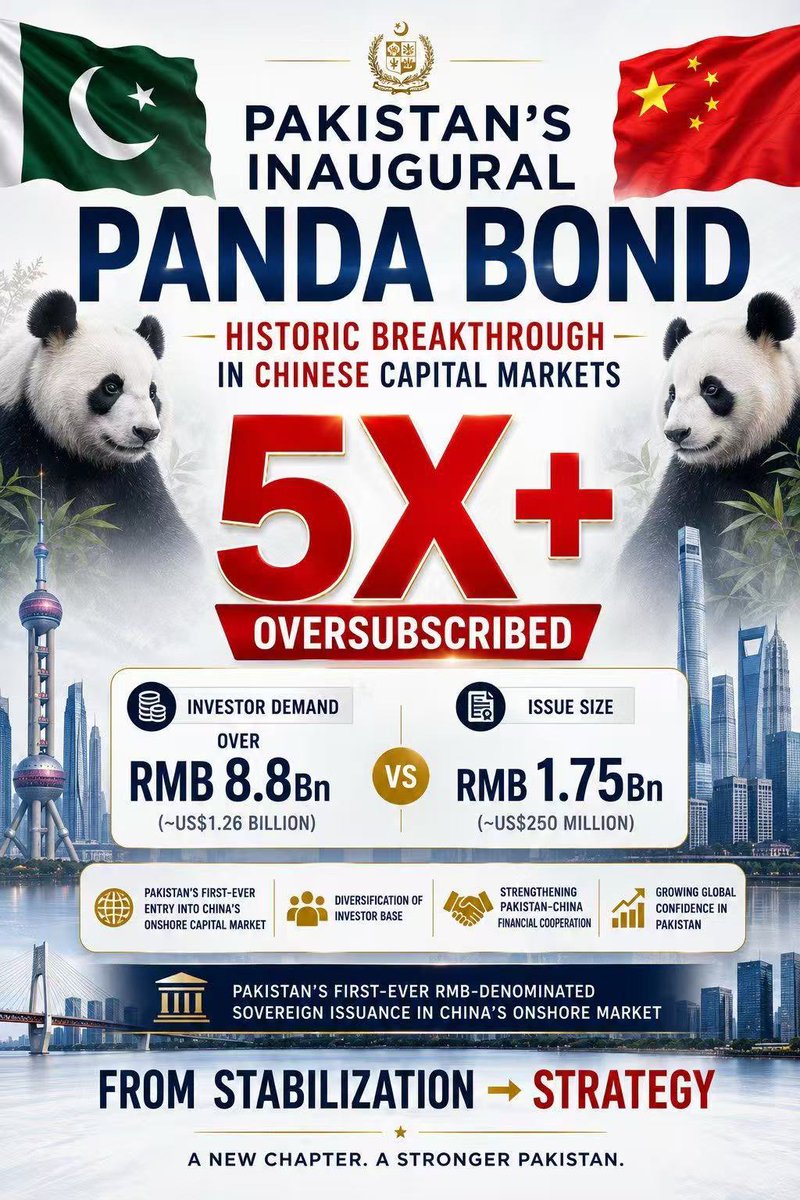
Pakistan's inaugural Panda Bond issuance yesterday in China got oversubscribed by >5x. The inaugural issuance is a 3-year fixed-rate instrument, making it Pakistan’s first-ever RMB-denominated sovereign issuance in China’s onshore capital market. This landmark issuance of RMB 1.75 billion (equivalent to US$250 million) attracted overwhelming investor demand of over RMB 8.8 billion (approximately US$1.26 billion). This groundbreaking issuance marks 🇵🇰's first-ever entry into the world’s second-largest and deepest capital market. Given that demand for the inaugural tranche alone exceeded Pakistan’s entire planned Panda Bond programme size of RMB 7.2 billion (US$1 billion equivalent) reflects growing international investor confidence in Pakistan’s economic outlook and reform trajectory. It also signifies a historic milestone for 🇵🇰 🇨🇳 economic & financial cooperation as we celebrate #PakChinaAt75. This first-ever RMB-denominated sovereign issuance represents a groundbreaking step towards diversifying sovereign financing channels. @ForeignOfficePk @Financegovpk @CGTNOfficial 巴基斯坦昨日在中国完成首笔熊猫债券发行,获得超过5倍超额认购。此次首发为3年期固定利率债券,是巴基斯坦首次在中国在岸资本市场发行人民币计价主权债券。   这一里程碑式发行规模为17.5亿元人民币(约合2.5亿美元),吸引了高达88亿元人民币(约合12.6亿美元)的投资者认购需求。   此次开创性发行标志着🇵🇰首次进入全球第二大、深度最强的资本市场。   仅首发一期的认购需求就超过了巴基斯坦整个熊猫债计划规模72亿元人民币(约合10亿美元),反映出国际投资者对巴基斯坦经济前景和改革路径的信心日益增强。值此庆祝巴中建交75周年之际,这也成为🇵🇰 🇨🇳经济与金融合作的历史性里程碑。   首次人民币计价主权债券的发行,是朝着多元化主权融资渠道迈出的开创性一步。
Khalil Hashmi tweet mediaKhalil Hashmi tweet media
English
0
21
41
2.4K
Ministry of Finance, Government of Pakistan retweetledi
ADBPakistan
ADBPakistan@PakistanADB·
With support from ADB and @AIIB_Official, Pakistan has successfully issued its first Panda bond, marking the country's debut in the renminbi market. The proceeds will finance projects in water governance, energy reliability and efficiency, and healthcare: ow.ly/KrN450Z03sH @PakPMO @gop_info @DigitalPak_GoP @GovtofPakistan @appcsocialmedia @RadioPakistan @StateBank_Pak @Financegovpk @PlanComPakistan @sifcpakistan @pakstockexgltd #PSX #CapitalMarket @SECPakistan
ADBPakistan tweet media
English
0
3
8
1.2K
Ministry of Finance, Government of Pakistan
Finance Minister Highlights Historic Pakistan-China Financial Cooperation at Inaugural Panda Bond Issuance Ceremony Federal Minister for Finance and Revenue, Senator Muhammad Aurangzeb, today addressed the inaugural Panda Bond Issuance Ceremony held at the Embassy of Pakistan in Beijing, describing the successful debut issuance of Pakistan’s first-ever Panda Bond as a historic milestone in the country’s economic and financial engagement with China and the international capital markets. Addressing representatives of the Government of China, multilateral development banks, rating agencies, financial institutions, investors, and distinguished guests, the Finance Minister said the successful issuance reflected trust, partnership, innovation, financial collaboration, and a shared commitment to sustainable development and regional connectivity. The Finance Minister stated that the occasion carried special significance as Pakistan and China celebrate 75 years of diplomatic relations founded on mutual respect, strategic trust, and unwavering support for each other’s progress. He noted that the Panda Bond issuance demonstrated the growing maturity of bilateral economic cooperation and the confidence of Chinese institutions and investors in Pakistan’s economic direction. Pakistan, he added, is proud to become the first Panda Bond issuer from South Asia. Senator Muhammad Aurangzeb informed participants that Pakistan had successfully established a CNY 7.2 billion Panda Bond Programme after two years of extensive preparation and coordination with Chinese regulators, development partners, advisors, and market participants. He noted that the debut issuance of CNY 1.75 billion received an overwhelmingly positive response and was oversubscribed, reflecting strong investor confidence in Pakistan’s economic outlook and reform agenda. The Finance Minister appreciated the leadership and support provided by China International Capital Corporation (CICC) as lead underwriter, alongside Bank of China, Standard Chartered Bank, and Hongta Securities as joint lead underwriters as well as HBL as financial advisor. He also expressed gratitude to the Asian Infrastructure Investment Bank (AIIB) and the Asian Development Bank (ADB) for their credit-enhancement guarantees, which helped facilitate Pakistan’s successful entry into the Chinese onshore bond market. Highlighting the sustainable dimension of the issuance, the Finance Minister stated that this was Pakistan’s first Sustainable Panda Bond, with proceeds earmarked for projects in the water, energy, and health sector underscoring the Government’s commitment to inclusive and sustainable growth. Speaking on Pakistan’s economic progress, Senator Muhammad Aurangzeb said that the country’s economy was experiencing renewed stability, disciplined reforms, and forward-looking transformation. He highlighted improvements in macroeconomic indicators, including stronger GDP growth, sharply reduced inflation, improved foreign exchange reserves, fiscal consolidation, and a stabilised external sector supported by resilient exports and robust remittance inflows. The Finance Minister further noted that the Government was advancing tax reforms through digitalisation and expansion of the tax base, implementing energy sector reforms to address circular debt and improve efficiency, and pursuing state-owned enterprise reforms through restructuring and privatisation initiatives. He added that Pakistan’s investment climate was improving through regulatory simplification, digital governance, and targeted sectoral reforms. He reaffirmed Pakistan’s strong commitment to the IMF programme, stating that adherence to the reform agenda had strengthened macroeconomic foundations and reinforced market confidence in the country’s economy. The Finance Minister expressed sincere appreciation to the Government of the People’s Republic of China, particularly the Ministry of Finance of China, the People’s Bank of China, and NAFMII, for their invaluable support and facilitation throughout the process. He also acknowledged the contribution of CCXI, Fangda Partners, A&Q, the Ministry of Finance team, and the Embassy of Pakistan in Beijing. Concluding his address, Senator Muhammad Aurangzeb stated that the successful issuance marked not the end, but the beginning of a long-term partnership between Pakistan and the Chinese capital market. He expressed confidence that the establishment of the CNY 7.2 billion programme would provide Pakistan with a strong platform for future issuances and further deepen financial connectivity and sustainable economic cooperation between Pakistan and China.
Ministry of Finance, Government of Pakistan tweet mediaMinistry of Finance, Government of Pakistan tweet mediaMinistry of Finance, Government of Pakistan tweet media
English
4
8
30
3.7K