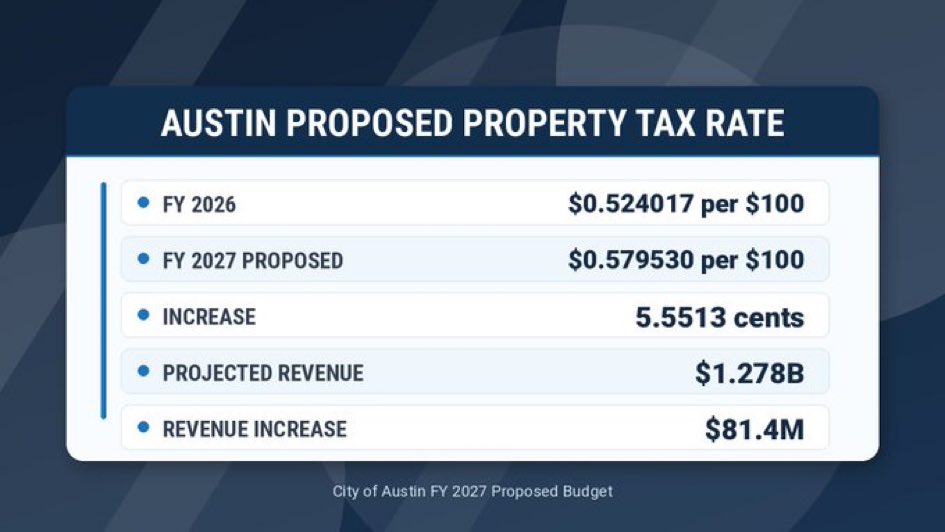
Latest #WatsonWire: What's in Your Wallet? Early in the budget process, I asked the City Manager to show us what a budget would look like if we held property taxes at the “No New Revenue” rate—meaning no Maintenance & Operations (M&O) tax increase and keeping the tax revenue to the city at what it was last year. I wanted to have more discipline in budgeting and to daylight the inherent tension in meeting the community’s needs and also keeping Austin’s affordability top of mind. As part of good stewardship, I want Council and the public to see all the options—what services should go on the chopping block, how that affects quality of life, and how it all affects affordability. A No New Revenue rate scenario results in a large and compounding budget shortfall that starts at $26.4 million this year and grows to $122 million by 2030. The Manager’s current proposal doesn’t use the No New Revenue rate. He closes the initial $26.4 million funding shortfall through spending reductions, reallocations, and higher fees and M&O property taxes. He proposes using the “Voter Approval” tax rate. A city can raise property taxes to generate up to 3.5% more revenue than the previous year without an election. The Manager’s proposal would cost the average homeowner $346 more per year than the current tax bill or $29 per month. I want us, as part of our discussions, to look specifically at what would need to be changed or cut if we didn’t go up to the Voter Approval rate. Read more: bit.ly/BudgetWire1