

FIRST HELIUM • $HELI $HELI.V $FHELF
1.4K posts

FIRST HELIUM • $HELI $HELI.V $FHELF
@firsthelium
🇨🇦 Canadian Helium Exploration 📈 We explore for #helium, seeking to capture and produce it, to help meet demand in the North American market. $HELI $FHELF
Canada Katılım Haziran 2021
2.4K Takip Edilen7.2K Takipçiler

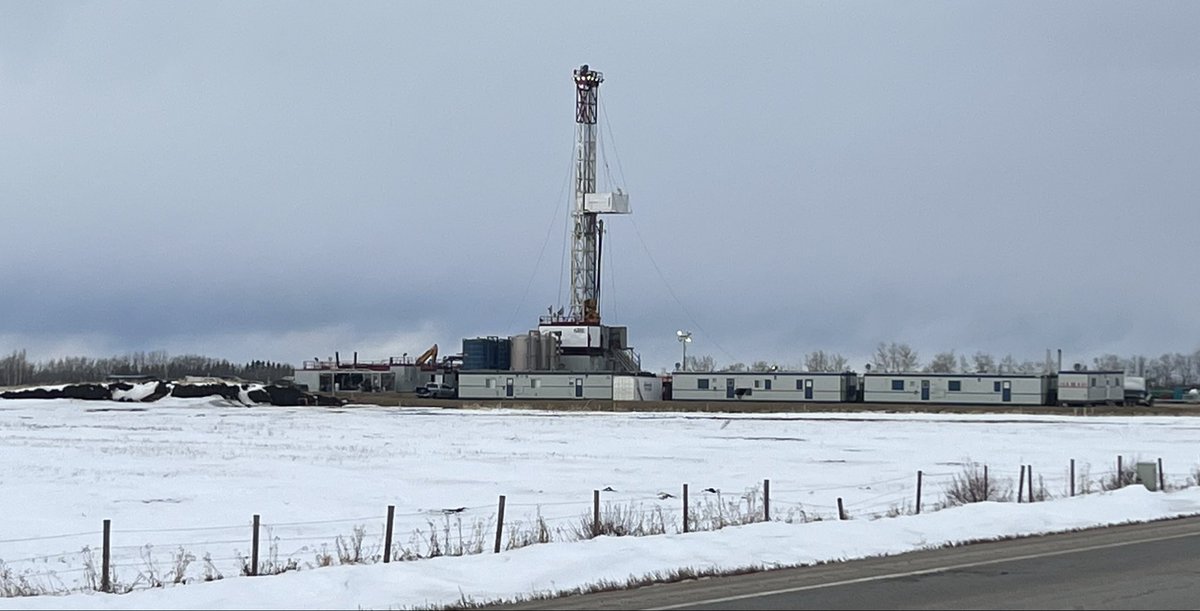
@BrianJeanAB Continued focus on safety and oversight helps maintain confidence in Canada’s energy infrastructure.
English

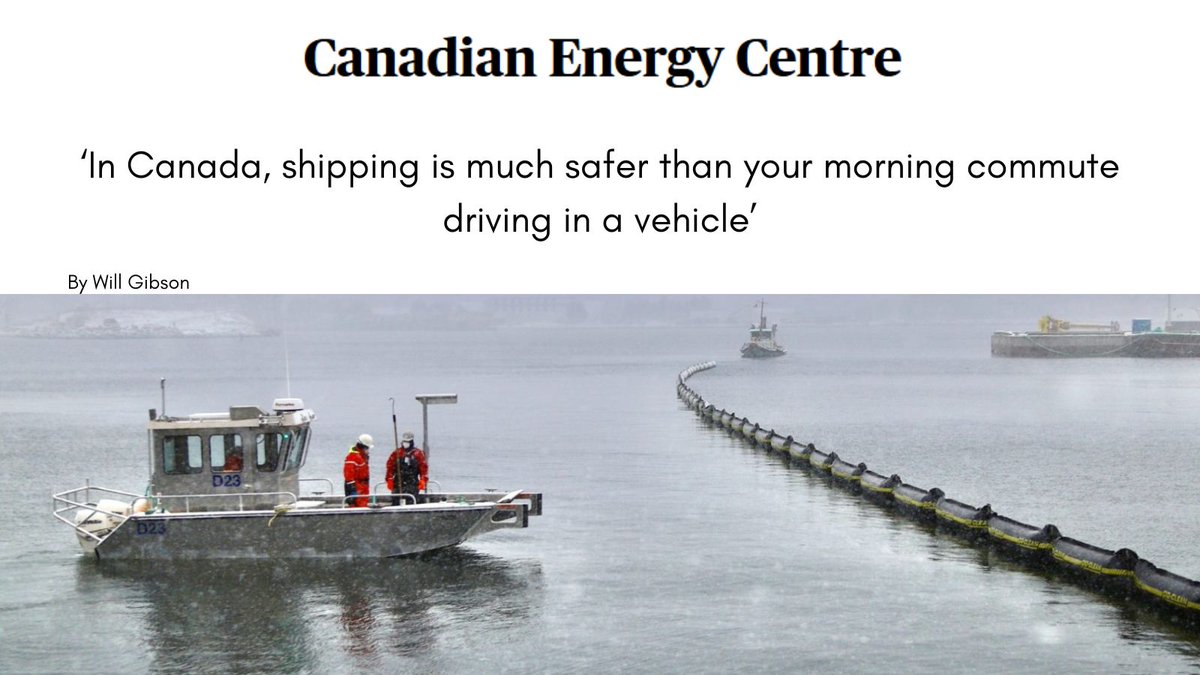
English
@CDNEnergyCentre Continued development in Alberta’s energy sector reinforces Canada’s position as a reliable, responsible global supplier. 🇨🇦⚙️
English

Another expansion of Alberta oil sands production is now online.

English
@sarobertsonca Canada’s diverse resource base and commitment to responsible development make it a strong partner in meeting global energy and mineral demand. 🌍🇨🇦
English

Tim Hodgson on Indian demand for Canadian energy: "I believe there is demand for additional natural gas, LPG and conventional oil. There's also demand for critical minerals... for potash. There's also an incredible opportunity to exchange capabilities with respect to renewables."
English
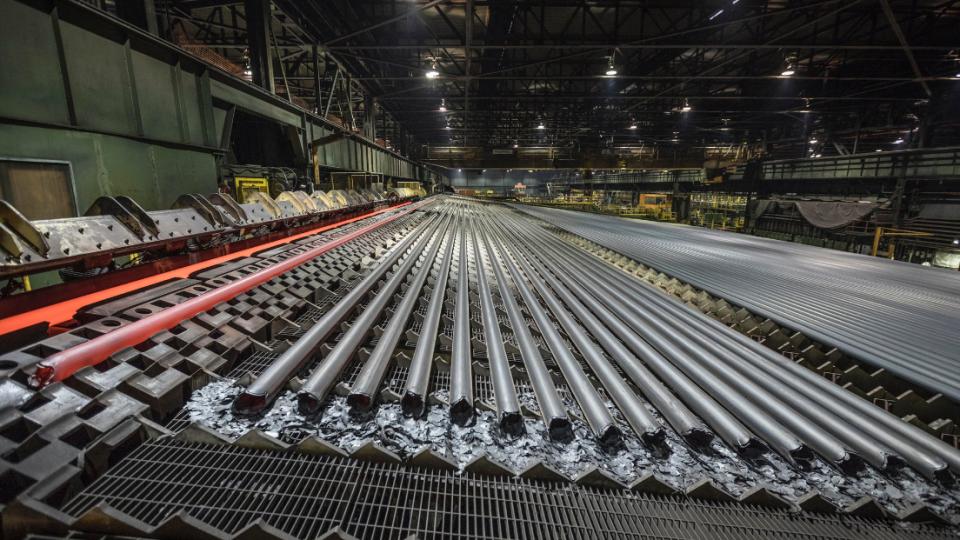
@CDNEnergyCentre Infrastructure development creates opportunities across industries - from energy to manufacturing. Strong, reliable supply chains are the backbone of Canada’s economy. 🇨🇦⚙️
English
Pipelines power more than energy — and steelmakers across Canada see major opportunity. ow.ly/U0TN50YhIRs
English
@CanLightSource @UAlberta @UAlberta_Eng Exciting to see Canadian research advancing more efficient and sustainable oil sands processing. Innovation drives responsible energy progress. 🇨🇦#CanadianEnergy
English

Canada’s #oilsands are an important source of energy and economic activity. Researchers from @UAlberta @UAlberta_Eng are using the CLS to find more efficient, environmentally friendly ways to process the #bitumen that's extracted there. bit.ly/46EnylB
English
@RajanJSaw @RebeccaAltyNWT @timhodgsonmt Great to see continued dialogue centered on Indigenous leadership and shared ownership in Canada’s energy future. Collaboration and respect build lasting value for all communities. 🇨🇦🤝
English

This evening, I met with The Honourable @RebeccaAltyNWT, Minister of Crown-Indigenous Relations, and The Honourable @timhodgsonmt, Minister of Energy and Natural Resources, to explore how Indigenous communities can lead and hold ownership in Canada’s energy sector.
We discussed ways to ensure Indigenous rights, perspectives, and priorities guide energy projects. Our focus was on driving economic development while protecting the environment and culture and supporting long-term benefits for communities.
#IndigenousOwnership #AlbertaEnergy #EnvironmentalStewardship #SustainableDevelopment #AIOC

English
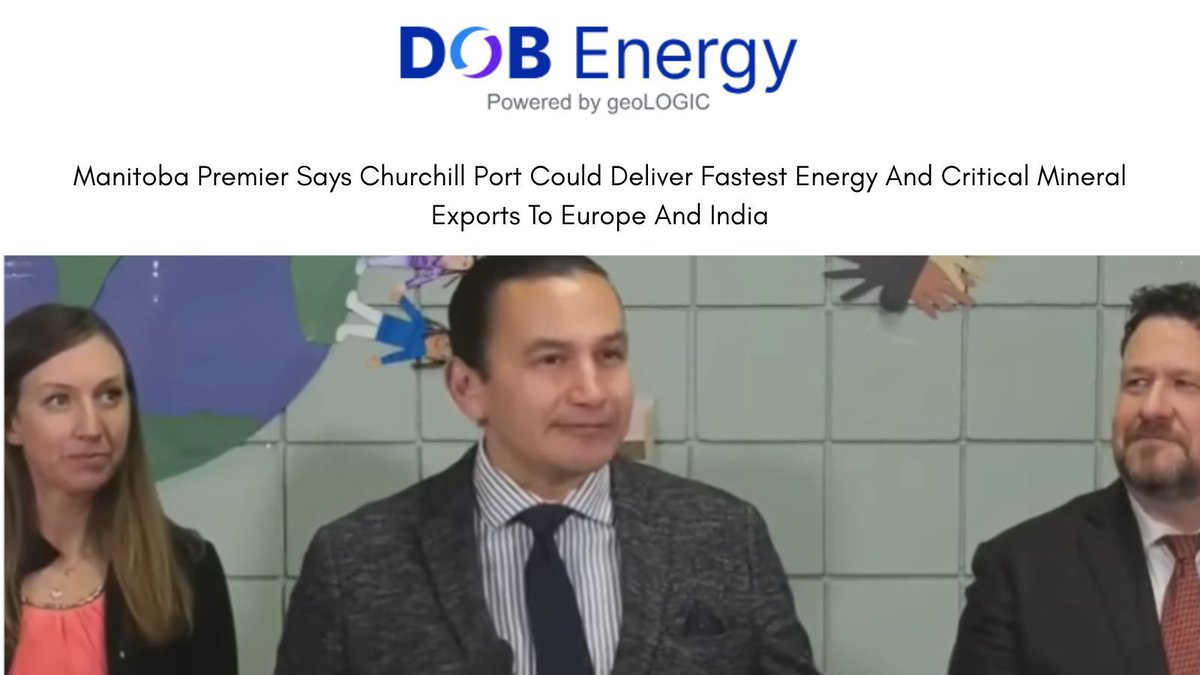
@BrianJeanAB Stronger together 💪 Collaboration across provinces drives Canada’s energy and economic future. 🇨🇦#Energy #Canada
English
The transportation of Hydrogen, LNG, and oil products are all being considered.
I look forward to Alberta and Manitoba working together to improve Canada’s economy!
#Churchill #CanadianEnergy
buff.ly/UsgnXge
English
Demand for Canadian energy is growing. Glad to see that most Canadians see the value in a new pipeline.
#CanadianEnergy #AlbertaEnergy
buff.ly/8DqrB6Y

English
@lejeunethome Thank you! We are excited for what's to come!
English

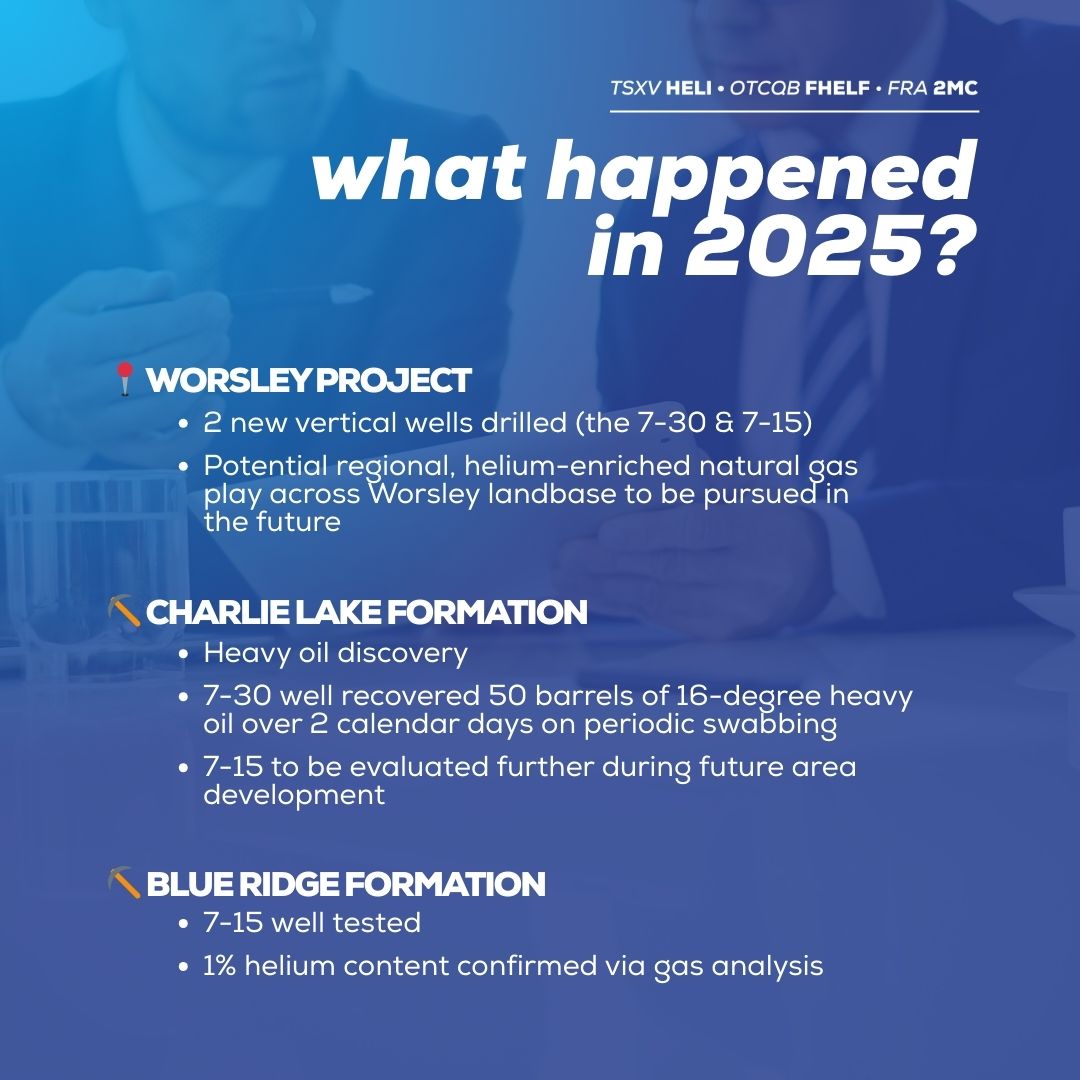
This year’s oil discovery set the tone for a strategic shift toward developing the Charlie Lake Shallow Heavy Oil Play.
Management envisions a multi-phase development, with Phase 1 targeting up to 15 multi-leg horizontal wells leveraging existing 1-30 infrastructure — a path to near-term oil production and cash flow, while helium assets provide long-term upside for shareholders.
English
@QuirkyForum Energy strength through balance. Canada continues to lead as a stable, responsible global supplier. 🇨🇦
English
CANADA IS AN ENERGY SUPERPOWER We have mssive reserves of crude oil, natural gas and uranium. We have world class hydroelectric and nuclear installations. We are installing wind, solar, biofuel and geothermal facilities. We are building transmission lines and pipelines. And most importantly we are a stable dependable supplier for the world.

English
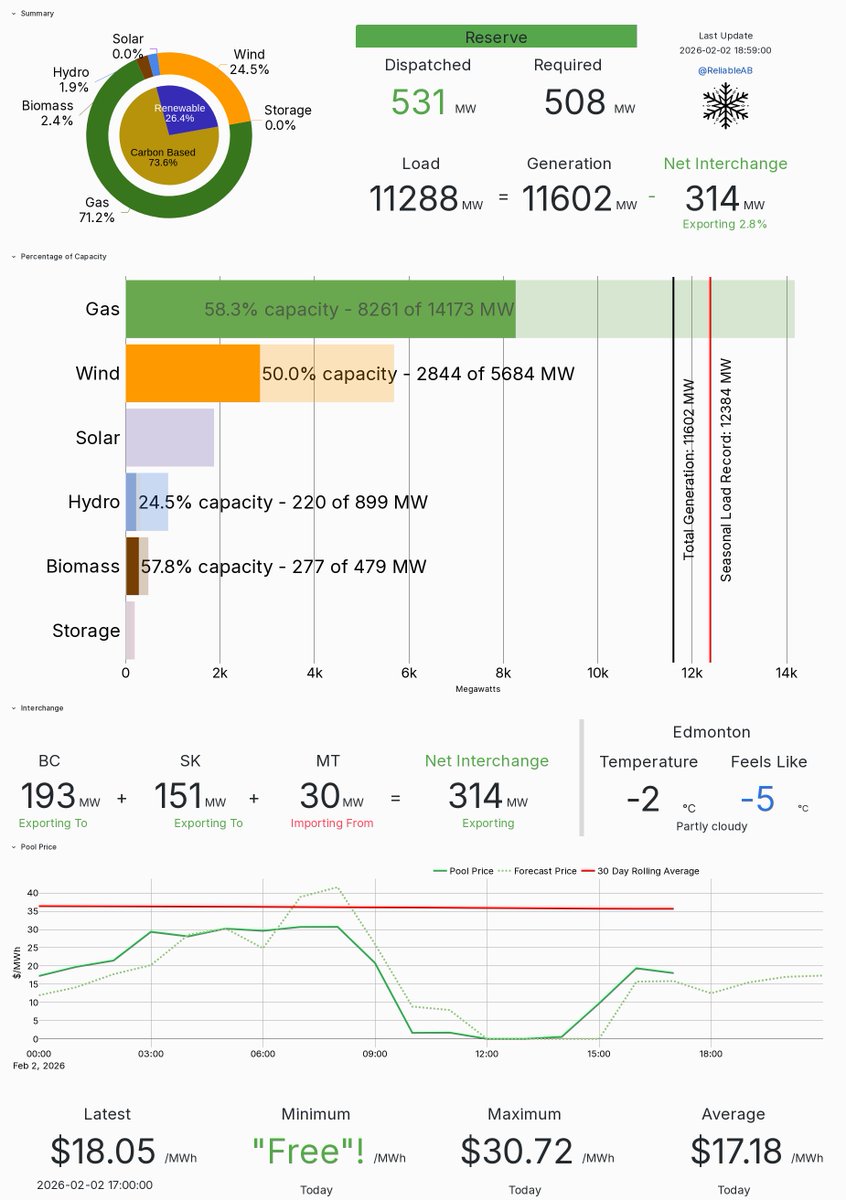
@ReliableAB Real-time view of Alberta’s grid balance - a mix of reliability, transition, and innovation at work.
English

At this moment, 02-Feb-2026 @ 18:59, 71.2% of Alberta's electricity is being produced by fossil fuels. Wind is at 50.0% of capacity and producing 24.5% of total generation, while solar is at 0% of capacity and producing 0% of total generation. At the same time, we are exporting 314 MW, which is 2.7% of the total generation of 11602 MW.
English
@LeeTee14 The helium shortage highlights a growing need for secure, local supply — vital for both healthcare and technology. ⚛️ #Helium #CriticalMineral
English

A global shortage of helium, critical for MRI machines and semiconductors, forces rationing and threatens medical and tech industries. #Helium #Shortage #MedicalTech
English
The Asia-Pacific Helium Conference 2026 (#𝖠𝖯𝖧𝖢𝟤𝟢𝟤𝟨) is fast approaching, and the agenda is now available! Join us on April 16, in Wuxi, China, for an exceptional lineup of sessions that will explore the future of the #helium industry. tinyurl.com/2k25jnbb

English
@markfielding99 Helium-3 may be rare on Earth, but it’s a powerful reminder of the role helium plays in advancing science, energy, and technology worldwide.💻
English

The US produces 10 kilograms of helium-3 per year.
Quantum computing needs 200-400 kilograms. Fortunately, there's a million tons on the moon.
Glenn Martin, CEO of Extraterrestrial Mining Company, Thinks On Paper about lunar helium-3:
"The Department of Energy has to bleed off the helium-3 and they can resell it for commercial purposes which it does. So it's rare because there's only 10 kilograms per year coming out of the US roughly and again early estimates of quantum demand is up to 400 kilograms per year.
It's a million tons beneath the surface—actually on the surface. The reason that it's so concentrated on the lunar regolith, the dust that covers the moon, is that it's actually a byproduct of the fusion process of the sun.
It's carried on the solar winds. The earth blows it back out into space 'cause we have this magnetosphere that protects us.
But on the moon there is no magnetosphere so this helium-3 isotope pours down on the moon continuously.
It's embedded in the titanium oxide in the lunar regolith in the dark patches that we see from Earth like the Sea of Tranquility and Serenity and the Ocean of Storms.
There's a case to be made that helium-3 is the spice, the melange of planet Earth for all the positive benefits it's gonna have for us."
English
@lukas_m_ziegler Incredible to see how helium keeps inspiring innovation - from quantum labs to creative robotics. Very cool project! 🎈🤖
English

Balloon-powered robots! 🎈
Surely one of the coolest and craziest robot project I've seen this year.
Buoyant Choreographies by RoMeLa is a fun art project shown at ICRA in Atlanta last year.
It uses special robots made from helium balloons and moving legs that float and walk around. People can play with the robots using touch, game controllers, or even by blowing air.
The robots react by changing colors, moving differently, and showing emotions.
@DennisHongRobot, that's so cool, what's next?! 🤯
~~
♻️ Join the weekly robotics newsletter, and never miss any news → ziegler.substack.com
English
@gasworld_US The momentum across North America’s helium industry is exciting to watch. Projects like this strengthen supply stability and highlight how critical helium is to science, tech, and energy innovation. 🌎🔬
English

English
@markfielding99 Fascinating breakdown of helium-3 origins. A reminder of how unique this isotope really is. Helium in all its forms continues to play a critical role in science, technology, and innovation here on Earth and beyond. ⚛️🌍
English
Why is there so little Helium-3 on Earth and why is there potentially so much on the moon?
"It's a rare isotope of helium," Glenn Martin of the Extraterrestrial Mining Company explained on Thinking On Paper.
"If you look at what we used to put in balloons, helium, it's primarily helium-4. It's found primordially under the ground. They find reserves of it. You may know that it's relatively rare, but not nearly as crazy rare as helium-3, which only occurs in 0.0001% of naturally occurring helium here on planet Earth."
Earth's limited supply comes from an unusual source: nuclear weapons.
"We only get it here because we make tritium for nuclear weapons, actually. So within the U.S. there's a fairly large fleet of thermonuclear weapons, which are all tritium containers. About 12 years and a quarter in, 50% of the gas turns into helium-3 'cause it decays. It's a decay byproduct of tritium.
So the Department of Energy has to bleed off the helium-3 and they can resell it for commercial purposes, which it does."
That produces only about 10 kilograms per year from the U.S., Martin said, while early estimates of quantum demand alone reach 200, 300, 400 kilograms per year.
On the moon, there's a million tons. How far down beneath the surface?
"On the surface, okay," Martin clarified. "The reason that it's so concentrated on the lunar regolith, the dust that covers the moon, is that it's actually a byproduct of the fusion process of the sun. It's carried on the solar winds.
The Earth blows it back out into space 'cause we have this magnetosphere that protects us all, keeps the gamma radiation from the sun cooking us all like a microwave.
But on the moon there is no magnetosphere, so it just lands. This helium-3 isotope pours down on the moon continuously."
The concentrations are highest in specific areas.
"It turns out that the titanium oxide in the lunar regolith, in the dark patches that we see from Earth—like the Sea of Tranquility and Serenity and the Ocean of Storms that make, for us, the Man in the Moon, for the Chinese the Jade Rabbit—it's embedded in there in relatively higher concentrations than here on Earth."
English
@ycresources Proud to see Canadian resources leading globally in responsibility and quality. From potash to energy and beyond. 🇨🇦🌎 #Canada #Sustainability
English

PREMIER SCOTT MOE: Canadians should be proud to produce some of the cleanest potash and products on earth "from coast to coast to coast".
Full interview 👇
youtu.be/CfRu9YRTSxQ
#potash #oilandgas #Canada #saskatchewan

YouTube
English