

bantukizzy
5.7K posts

@fkmakhanda @daddyhope I am just happy people are now accepting him as the new president. That's all that matters. He doesn't have to be an angel. He just needs to get power and rule.
English
I am not afraid to say what many people on this app are afraid to say for fear of backlash from those who do not want citizens to speak honestly about the facts.
The reality is that strategic ambiguity is what brought us to where we are today. The party had no meaningful structures, no constitution, and no clear succession plan. It became a one-man band, a briefcase political party built around an individual rather than enduring institutions.
Unlike many people who are afraid to say these things, I am not. You can call me whatever names you want; I genuinely do not care. The fact of the matter is that Nelson Chamisa made serious political mistakes, and part of the reason we are where we are today is because those mistakes were never openly confronted. Instead, they were defended by zealots who practise personality politics rather than politics based on ideas, institutions and principles.
History must be recorded honestly. If we cannot critically examine the mistakes of those we support, then we learn nothing from them and remain condemned to repeat them. Political movements are not strengthened by blind loyalty; they are strengthened by accountability, structure and honest reflection.
Elijah@elijahtafadzwa
@daddyhope Haaa NC chaakakuitiraka. It is known that ccc has leadership well structured after NC. Why do we always deflate to NC and not the ones leading the party ie Welsh, Hwende, Lynette, TB etc
English
@SeanM_The_Trick @daddyhope I accept the infighting, weakening and divisions within ZANU this is causing. I accept the end of the over sized role of the military in politics, I accept a political elite that has no moral or liberation standing inheriting ZANU PF. Tagwirei is no Angel.
English
@fkmakhanda @daddyhope So we have now accepted tagwirei handitika?
English
@SeanM_The_Trick @daddyhope Chiwenga is not a democrat, if he was sure CAB3 would benefit him, instead of his opponents, he would happily adopt it.
One positive outcome of CAB3 is the end of Chiwenga's political career and of liberation politics. Can't support a demon coz the devil is after him.
English
@daddyhope People should have supported Chiwenga afterwards when there was still time. But anyways Nelson is their favorite
English
@PacheduZW Chiwenga is the net beneficiary of opposing CAB3, who would gladly turn Zimbabwe into a military led State, as evidenced by the first cabinet that was full of ex combatants.
CAB3 may be the clean break necessary, to bring in a leadership that has no liberation credentials.
English

It is clear from today's judgements that term extension is illegal, what is also clear is that judiciary is lacking tenacity to tell ED 'Go go Baba'.
If we are afraid to take to the streets then we also should not expect the judges to do it for us.
Very uncomfortable, very dividing but we now need to call on the retired Generals, the opposition, the CDF, the teachers and you (yes iwewe) to take to the streets. To Chiwenga, don't speak at funerals, church events etc but come join the streets after all you too created this beasts.
We are likely to end up with the cases being dismissed on useless technicalities.

English
@SajeniMapuranga @CdeKnoxChivero @kerinamujati @LynneStactia @MviringiHosia @Jamwanda2 @MJairosi Noone is going to support your agenda. You aren't a constitutionalist, nor do you believe in the human rights of the people. Your only agenda is the ascendancy of your principal, Chiwenga.
If you believed Chiwenga was going to benefit from CAB3, you wouldn't oppose it.
English

Fellow citizens and Honourable Members of Parliament,I stand before you today, not as a politician, but as a soldier who has served this nation with blood, sweat, and unwavering loyalty for decades. I have fought for its independence, defended its sovereignty, and watched it grow through both triumph and trial.
Today, I issue this grave warning with the full weight of my experience and conscience.The nation is watching you. You were elected to serve the people, not yourselves. You were sent to Parliament to build, not to plunder to unite, not to divide to lead with integrity, not to loot and lie.
The time for empty promises, corruption, self-enrichment, and betrayal of the public trust has come to an end.If you continue to treat the people’s mandate as a licence for personal gain, history will judge you harshly and the people will not remain silent forever.
The patience of a suffering nation is not infinite. To every MP, regardless of party or position.Return to the values of service and sacrifice.
Prioritise the welfare of the ordinary citizen over personal luxury.
Root out corruption in your ranks before it destroys the very institutions you claim to protect.
Remember that true leadership is measured not by the size of your motorcade, but by the dignity and prosperity of the people you represent.
I warn you plainly: The eyes of the nation, the eyes of the veterans who fought for this country, and the eyes of future generations are fixed upon you. Do what is right, or be prepared to face the consequences of your choices.
This is not a threat it is a solemn call to duty.Zimbabwe first. The people first. Always.
Retired Lieutenant General Winston Sigauke Mapuranga
Patriotic Son of the Soil.

English
@SilotheJokist @PoliceZimbabwe Yep, the son of Nikita Mangena. Sad stuff.
English


Reference is made to our message on X platform regarding a firearm incident and Assault case which occurred at Eaglesvale College, Harare on 13/06/2026 during a rugby match between Christian Brothers College (CBC) and Eaglesvale College. The ZRP confirms the arrest of Lotshe Yuri Rodgers Mangena (50) for assault and pointing a firearm. The suspect has since appeared before Harare Magistrate Court. Meanwhile, the ZRP has since seized the firearm from the suspect.
English
@KaziboniN4091 @paultungwarara I expected to see a young naive man. You are way too old to believe ZANU PF is revolutionary.
English

My Dear Brother @paultungwarara:
Allow me to express my sincere appreciation for your generous gesture towards my person for the $10 000 gift extended to me. I receive the gesture with humility and gratitude. However, after careful reflection I respectfully decline the offer.
As a revolutionary cadre, I have always held the conviction that defending His Excellency, the President of the Republic of Zimbabwe, Cde. Dr. Emmerson Dambudzo Mnangagwa, defending ZANU PF and safeguarding the gains of our liberation struggle is not a commercial undertaking. It is a duty born out of loyalty, conviction, patriotism and unwavering commitment to the revolutionary cause. For me, the revolution has never been for sale nor has my support for our President ever been motivated by the prospect of personal benefit.
Furthermore, I do not consider myself more deserving than the countless cadres and patriots who tirelessly defend, promote and advance the best interests of our party and country every day, often without recognition or reward. Many have sacrificed immensely for the revolution and I remain humbled to stand among them. I now understand why our fathers who brought about total independence and democracy always remind us that they stand with those whom they fought side by side for the liberation of this motherland, they did so for no personal gain but for the love of our nation.
The reality is that I am not a wealthy man. Like many Zimbabweans I face personal and family obligations that such assistance would undoubtedly help address. Yet revolutionary principles must always take precedence over personal circumstances. My conscience, values and commitment to the cause compel me to respectfully decline this gift.
I therefore remain grateful for your kindness and consideration while reaffirming that my loyalty to the President, the party and the nation remains unwavering, uncompromising and beyond material consideration.
Yours in the Revolutionary Struggle:
Mhuru yaMambo
Alligator

English
@NewsHawksLive Lofty ideas are not for empty stomachs. Migrants are a very attractive scapegoat for a country's problems.
Every criticism of March and March is unfortunately rooted in history, when the argument is the present lived reality of the unemployed masses. Hence they really dgaf.
English

#MarchingInCrassIgnoranceAndHate
Vigilante campaigns and anti-immigrant protests in South Africa spearheaded by groups like March and March led by former radio presenter Jacinta Ngobese-Zuma and Operation Dudula formerly under Zandile Dabula, who has now joined the xenophobic ActionSA party, usually capitalise on valid public frustrations and grievances against foreigners, but they often rely on crude misinformation, half-truths, deception, lies, scapegoating, and weaponisation of xenophobia, Afrophobia, and tribalism hatefully targeted at black Africans.
Their aggressive campaigns are at foundation rooted on hate - xenophobia, Afrophobia and tribalism.
Yet above all this, there is a bigger problem: Ignorance.
In this video, Ngobese-Zuma, dripping with venomous hate, displays crass ignorance, claiming no Nigerian, Somalian or Zimbabwean died for South Africa during the liberation struggle.
She is clearly ignorant of the fact that between one million and 1.5 million people died in the region in apartheid wars of destabilisation.
Apartheid Pretoria waged wars and bombed the region during its total strategy, a response to their total onslaught concept, killing over a million and ravaging economies.
South Africans died alongside other Africans.
That's elementary history.
Yet Ngobese-Zuma doesn't know that.
Their hate is virulently expressed through inflammatory rhetoric, stereotypes, ignorance and songs denigrating other black Africans, not Indians, Asians and certainly not whites.
Even if Indians, Asians and whites found blacks in Africa during their colonial and indentured labour migrations, the real foreigners, according to xenophobes, are other Africans.
It doesn't matter that some of these Africans denigrated and hounded as Amakwerekwere are actually of South African origin.
To Ngobese-Zuma, and her partners in crime, Nkosikhona Ndabandaba, widely known as Phakel'umthakathi, and Ngizwe Mchunu, even a Ngobese person from among the Shanganes in Mozambique is a Kwerekwere.
Indeed, a Khumalo from Zimbabwe is a Kwerekwere to them.
Just imagine.
And a Ndlovu from Zambia, Jele from Malawi and Gama from Tanzania are all Kwerekweres.
Ngama Zai Zai. AmaShangane. AmaKasai.
This is their xenophobic mentality, deeply colonial, Afrophobic and tribal.
Terribly backward.
That these people actually came from KwaZulu during Zulu King Shaka's reign and at the height of Mfecane migrations, even well before, doesn't matter.
In fact, the region's current ethnography is vastly shaped and influenced by waves of migration, inter-relationships, marriages across cultures and social engineering.
That different and diverse African people in the region share history, culture, languages, and heritage is not of interest, even for context and proper articulation, to them.
They hate reading, history and useful information which would even help their own campaign.
Blissful ignorance is their refuge.
Worse still, Africans who don't share any ethnic, cultural and linguistic links are treated as aliens from another planet or cosmic world.
Hence they have a nasty repertoire of malicious, hateful and denigrating names for them.
Some nicknames for Indians or Asians here and there, but, of course, nothing for whites - their real masters whom they embrace while hounding other blacks.
Whites are South Africans and investors, not other blacks, so goes the deeply colonial, house slave and self-hate narrative.
But whites can see through that.
They know the concept of house slaves better, hence don't support the protests which destabilise the country and undermine their values, businesses and lifestyles.
When one looks at March and March or Operation Dudula with a critical eye, Malcolm X's
Message to the Grass Roots, a landmark public speech delivered on November 10, 1963 at the Northern Negro Grass Roots Leadership Conference in Detroit, Michigan, agonisingly comes to mind, vividly illustrating how xenophobes are steeped in deep colonial psychology and hangover.
English
English

@McD_Motsaafela @AfricaFactsZone Y'all are illiterates! So in your empty head, by putting to order can only mean beat and k!ll?
English
Ghana is considering taking legal action against South Africa over reported xenophobic attacks against its citizens.
English
@daddyhope Chiwenga doesn't have the liver to fly a drone into a packed Parliament, Game of Thrones style.
Don't know what the game plan is for those opposing, seems like the only routes lie outside of the political system.
English
Zimbabwean parliamentarians are about to begin the second day of debating Constitutional Amendment Bill No. 3, and Members of Parliament have reportedly been instructed to ensure full attendance tomorrow, a strong indication that there is a determination to have the Bill passed before the week ends.
The debates began yesterday and are expected to continue late into this evening. As I have said repeatedly over the past two years, President Emmerson Mnangagwa is determined to see this Bill passed at all costs.
If it becomes law, Zimbabwe will enter a completely new era of governance. In the process, it will effectively extinguish Vice President General Constantino Chiwenga’s hopes of succeeding Mnangagwa as President through the current constitutional route.
As I said yesterday, there are only three realistic scenarios that could stop this process. The President could refuse to assent to the Bill, the military could intervene, or regional leaders could privately persuade him to abandon the project.
However, regional leaders have shown little appetite to confront him. We also know that Mnangagwa has publicly signalled his position. When retired military generals raised concerns with him, he told them that whoever wins, wins, a statement that means he supports the process.
That leaves only one remaining possibility, military intervention. If that does not happen, Zimbabweans could see President Mnangagwa remain in office until 2030 or until his death. The person who succeeds him could then remain in power for a further 14 years under the proposed constitutional framework.
That is the reality as things currently stand.
As for South Africa, prepare for the possibility of another significant wave of Zimbabwean migrants seeking opportunities across the border. Political uncertainty, economic decline and a growing sense of hopelessness have historically driven migration, and this could happen again.
Do not say you were not aware. This is not just a Zimbabwean issue. It is a regional political issue with potentially far-reaching consequences that will be felt long after the President appends his signature to the Bill and turns it into law.
Once it is passed into law, there will be virtually no prospect of a Zimbabwean president emerging from the opposition. The President will be elected by Parliament, and ZANUPF has already ensured, through constituency demarcation, that its strongholds have significantly more constituencies than opposition strongholds.
As a result, regardless of how effectively the opposition campaigns, it will struggle to secure the parliamentary majority required to elect a president. This would effectively put paid to the long-criticised strategy of focusing overwhelmingly on winning the presidency while neglecting Parliament.
Under such a system, control of Parliament becomes everything. Without a parliamentary majority, the path to the presidency becomes almost impossible.

English
@daddyhope Chiwenga is supposed to be setting parliament on fire, literally.
English
The Parliament of Zimbabwe has adjourned early until tomorrow after opposition MPs raised concerns about security and safety should debates on Constitutional Amendment Bill No. 3 continue into the night and extend towards midnight.
The Bill remains one of the most contentious pieces of legislation before Parliament, with debate expected to resume tomorrow.
ZANUPF is aiming to have the Bill passed by Friday, or sooner if parliamentary proceedings move faster than anticipated. The ruling party is pushing to secure approval of the legislation at the earliest convenience.

English
@Gonzomuduri Chiwenga is not a constitutionalist. Supporting Chiwenga's bid, is more about removing the greater threat that incumbency creates, not that he ticks any pro democracy boxes.
English

We all know removing Zanupf through the ballot is an insurmountable task.
Zimbabweans have been voting out Zanupf since 2000 but we know they always return power through rigging and violence.
POSSIBLE WAY FOWARD would be for Chiwenga to take power using the army and then extend a conciliatory hand to all pro democratic movements and work together with them to restore Zimbabwe.
Chiwenga will be allowed to be president for 2 terms and when he lives; he will not promise anyone power but he will ensure that reforms are made in the army; police; ZEC to pave way for free and credible elections.
That way Chiwenga will also redeem himself in the process because he is equally one of the most evil man to emerge in Zimbabwe and has been responsible for the militarization of the Zimbabwean state and abuse of human rights.
Simply supporting Chiwenga against Mnangagwa the same as what Zimbabweans did in 2017 during the coup.
English

@fkmakhanda @TariMandie @NewsHawksLive @DavidColtart I checked the account about 50 followers . Straight out for that shake shake bot farm
English
LUKE MALABA’S LEGACY AS CHIEF JUSTICE OF ZIMBABWE
By Beatrice Mtetwa
The hullabaloo accompanying the retirement of erstwhile Chief Justice of Zimbabwe, Luke Malaba, has come and gone.
The gushing and over
effusive praises remain a subject of intense discussions within the legal profession and although there were a few lawyers who were prepared to publicly disagree with the effusive praises, in private there are hardly any
lawyers who share the exaggerated praises heaped on retired Chief Justice
Malaba.
So, what imprint did Luke Malaba leave in Zimbabwe’s judicial system as Chief Justice?
Were the accolades heaped on him deserved or were
speakers engaging in Zimbabwe’s now familiar praise singing one minute and backstabbing as soon as one’s back is turned as we saw with Robert Mugabe?
There can be no doubt that Luke Malaba is an above average
jurist.
One only has to read his judgments before he became Chief Justice to confirm this. One only has to read his dissenting opinion in MAWARIRE v MUGABE N.O &OTHERS 2012 (1) ZLR 469(CC) to confirm his skills as a jurist of note.
In that opinion, he famously refused “to have wool cast over the inner eye” of his mind and proceeded to write a cogent and convincing dissenting opinion on what was as clear a political ploy as is CAB3.
His opinion was that he would have dismissed the application on the merits.
This was not an isolated opinion as he had penned many other epic judgments during his tenure as a judge both in the High Court and in the Supreme Court.
It was on the basis of his
demonstrated jurisprudential credentials that when it was clear that there was reluctance to appoint him to the position of Chief Justice, despite being the best candidate at the interviews, some of us approached
the courts questioning the relevance of the interviews if the best candidate would be overlooked.
When he was ultimately appointed, there were great expectations of a new judicial era where citizens would enjoy all the rights and freedoms
overwhelmingly approved by Zimbabweans in March, 2013 when they voted in the referendum.
Regrettably, the retired Chief Justice dismally failed to discharge his duties with the independence, fairness and
impartiality envisaged in the Constitution.
Instead, he embarked on a
journey “yekufadza mutengi wedoro” where he perceived justice as any result which favours the executive.
I followed, with disbelief, as speaker after speaker, spoke in glowing terms about the retiring Chief Justice’s perceived leadership skills and style which put him on a pedestal never
reached by any of his predecessors.
As each speaker spoke, it felt like I
was at a funeral listening to eulogies where each mourner seeks to outdo all others in praise of the deceased in typical “wafa wanaka” philosophy.
Retired Chief Justice Malaba was not a Constitutionalist more by choice and design than by lack of the attributes of a Constitutionalist.
His dissenting opinion in the Mawarire case demonstrates beyond doubt that he fully understands constitutionalism; that he possesses the
required skills to interpret provisions of the Constitution and other laws.
He simply chose not to use these attributes because doing so would not have served the interests of the Appointing Authority.
He chose not to side with the people. He chose to disregard the constitutional imperative
for courts to be independent, impartial and to subject themselves only to the dictates of the Constitution which demand that its provisions be
applied without fear, favour or prejudice in the protection of human rights, the Rule of Law and all other freedoms that are constitutionally guaranteed.
The retired Chief Justice was an unashamed gatekeeper at the
Constitutional Court where only those cases he believed met
constitutional muster were permitted to be filed.

English
@deankarrachef @TariMandie @NewsHawksLive @DavidColtart Must be a paid actor. How do you praise someone for modernization, while the issues is a lack of backbone.
English
English
English

Whatever one’s political feelings may be, Luke Malaba’s contribution to Zimbabwe’s judiciary cannot be erased. Under his watch, the courts accelerated digitalisation, expanded the decentralisation of courts, improved case management systems, introduced virtual hearings, and pushed greater efficiency in the delivery of justice. He leaves behind a more modern and institutionally organised judiciary than the one he inherited.
English
@freemufumiri @glenmpani He's biased, has been bought and paid for, but presents himself as a neutral observer instead of an architect.
English

Zimbabwe's Constitutional Shell Game
The intellectual case for removing the popular presidential vote collapses on inspection. What remains is a power-retention exercise dressed in the language of democratic maturation.
Glen Mpani (@glenmpani) is a political campaign strategist who, by his own account, has 'reflected deeply' on Zimbabwe's Constitutional Amendment Bill No. 3. His recent article in the IOL, which argues for replacing Zimbabwe's direct presidential elections with an indirect parliamentary model, presents itself as a contribution to comparative constitutional scholarship. Readers deserve to know the context it omits. Reporting in Zimbabwean political commentary places Glen, alongside Professor Jonathan Moyo ), at the centre of CAB3's intellectual architecture, the two men said to have been paid between USD 3 -5 million (by the Government of Zimbabwe) for their contribution. The article makes no mention of this. The analysis should be read accordingly.
The argument and its silences
Glen's thesis is familiar to students of constitutional design. Direct elections, he contends, produce winner-takes-all dynamics, inflame ethnic divisions, and reward personality over policy. Parliamentary selection of the executive, by contrast, encourages coalition-building and longer-term governance. These are not frivolous claims. Juan Linz's foundational work on the 'perils of presidentialism' makes precisely this case, and Germany, India, and Singapore do indeed select their heads of state indirectly.
The problem is not the argument. The problem is its application and the questions Glen refuses to ask.
If direct presidential elections have been so corrosive to Zimbabwean democracy, one might expect to find evidence that they have, at some point, produced outcomes threatening to the ruling party. One would search in vain. ZANU-PF has won every election since independence in 1980, through single-party dominance, through constitutional iterations, and across four decades of institutional capture. In 2008, Morgan Tsvangirai won the first round of the presidential election outright. He was not undone by a design flaw in the electoral architecture. He withdrew from the runoff after state-organised violence killed hundreds of his supporters. The system was not broken. It was weaponised. These are different diagnoses, and they require different remedies.
A logical flaw at the heart of the reform
Glen's argument contains a structural contradiction that the article never confronts. He proposes that parliament should select the president. Yet parliament itself will continue to be elected by direct popular vote, the same mechanism he has condemned as producing winner-takes-all dynamics, inflaming divisions, and rewarding personality over policy.
This is a curious position. If the direct vote is so pathological that it disqualifies a popular mandate for the executive, why does it remain sufficient to constitute the legislature that will then confer that mandate? CAB3 does not propose changing how MPs are elected. It retains constituency-based direct elections for parliament in their entirety. The reform is therefore not a principled shift from one electoral philosophy to another. It is a targeted intervention: removing the one democratic mechanism that requires a national popular coalition to win, while preserving all others. The electorate is deemed competent to choose 280 MPs but not a president.
If the government's concern were genuinely with the perils of direct election, consistency would demand reform across the board, a proportional system, a ranked-choice mechanism, some structural change to the parliamentary elections that will now carry the entire weight of executive legitimacy. CAB3 proposes none of this. The selective nature of the reform is itself diagnostic.
The institutions are the problem
Glen's article treats Zimbabwe's electoral dysfunction as though it were inherent to direct elections as a mechanism. It is not. It is the product of institutions systematically subordinated to the ruling party's interests across four decades.
The Zimbabwe Electoral Commission has repeatedly withheld the voters' roll from opposition candidates, an obligation set out in the Electoral Act. Ahead of the 2023 elections, opposition parties went to court; the High Court ruled the application premature. Seven days before polling day, the CCC reported it still had not received the roll. ZANU-PF candidates, by contrast, had access to the document throughout. A voters' roll tells a campaign where its supporters live. Denying it to one side while the other possesses it is not administrative delay. It is a structural asymmetry engineered into the commission's conduct.
The Zimbabwe Broadcasting Corporation presents a comparable case. The courts have not been silent: the High Court ruled that ZBC must broadcast opposition political advertisements. ZBC has not complied. The broadcaster continues to function as a party organ in all but name, offering ZANU-PF near-exclusive coverage while the court's order sits unimplemented. Mpani acknowledges, in passing, that 'parliamentary oversight, freedom of the press, and an independent judiciary become even more critical' under an indirect system. He does not explain why institutions that have defied court orders and withheld electoral documents would suddenly become robust under the new dispensation. The coercive infrastructure remains the same. The arena simply becomes smaller, and more easily managed.
The architecture of unequal votes
ZEC's conduct in the 2023 delimitation exercise provides the most granular illustration of what institutional capture looks like in practice. Section 161(6) of the 2013 Constitution is explicit: no constituency may have more than 20 per cent more or fewer registered voters than any other. The purpose is basic, equal suffrage, equal weight per vote.
ZEC violated this requirement by applying a formula derived from the superseded Lancaster House constitution, producing a permissible variation of up to 40 per cent between the largest and smallest seats. The effect was systematic: constituencies with higher voter registration, predominantly urban, predominantly opposition were consolidated into fewer, larger seats, while lower-registration rural strongholds returned more MPs per registered voter. Seven of ZEC's own commissioners wrote to the President describing the draft as failing 'the minimum standards expected.' Veritas described it as 'fatally flawed.' The parliamentary committee's ZANU-PF chairperson acknowledged that constitutional requirements had not been met. The SADC observer mission found that complaints of gerrymandering had substance. The Constitutional Court dismissed the legal challenge. The election proceeded.
In 2018, ZEC revised its announced presidential results on multiple occasions without explanation. The EU observation mission found that ZEC's handling of results 'attests to a lack of quality control' on 'such a critical aspect of the elections.' The same mission noted that the presidential ballot placed Mnangagwa's name in a position that appeared to give the incumbent an undue visual advantage. In 2023, ZEC announced results at a pace the Institute for Security Studies observed appeared calibrated to foreclose independent tabulation. Disaggregated ward-level presidential results were never released, making independent verification impossible.
This is the institutional record that CAB3 is designed to supersede. The question is not whether direct presidential elections have served Zimbabwe well. The question is whether the same institutions, operating in the same political environment, will produce more legitimate outcomes when the election is decided by 280 parliamentarians rather than by the votes of five million citizens. The answer is not obvious. It is, in fact, rather plain.
What the bill actually does
Glen's article focuses almost entirely on the presidential election mechanism, as though CAB3 were a targeted reform of a single procedure. It is not. The bill proposes to abolish the public interview process for judicial appointments, replacing transparency with a presidential 'consultation.' It repeals both the National Peace and Reconciliation Commission and the Gender Commission, bodies established specifically to constrain executive overreach. It transfers voters' roll functions back to the Registrar-General's office, returning a critical electoral function to the executive branch from which the 2013 Constitution deliberately removed it. It enlarges the Senate with ten additional presidential appointees.
These are not incidental technical adjustments. They constitute the systematic removal of constraints on executive authority, the very constraints written into the 2013 Constitution after 33 years of accumulated experience with the alternative. CAB3 does not learn from that era. It restores its architecture.
The process as verdict
President Mnangagwa declared publicly before the bill was drafted, before consultations were held that he would remain in office until 2030. The ZANU-PF party conference endorsed this objective. The bill followed. The public hearings came last. Those hearings were marred by violence and boycott. Opposition politicians who spoke against CAB3 were arrested. A senior ZANU-PF official reportedly declared that 'there is no goalkeeper' that the bill would pass without meaningful contest. Parliamentary reporting suggests constituency development funds were distributed to MPs during the bill's passage.
A constitutional amendment process with no goalkeeper is not deliberation. It is ratification.
The historical precedent that argues against
The intellectual case for CAB3 invokes Zimbabwe's post-independence history when the country was governed by a Prime Minister rather than an executive president as evidence that parliamentary arrangements are not alien to Zimbabwe. It is a curious example to choose. The period between 1980 and 1987 encompassed the Gukurahundi massacres in Matabeleland and culminated in the Unity Accord that formally entrenched one-party dominance. Zimbabweans then adopted the executive presidency in part because parliamentary arrangements had not protected them from authoritarianism. The historical precedent offered in support of CAB3 is, on examination, an argument against it.
The German and Indian comparisons fare no better. Parliamentary presidential selection functions in those contexts because it is surrounded by genuinely independent courts, free media, and electoral commissions with demonstrated institutional autonomy. A mechanism does not transplant without its ecosystem. In Zimbabwe, the courts declined to halt a delimitation that seven ZEC commissioners described as unconstitutional. The public broadcaster has defied a court order requiring it to air opposition material. These are not promising conditions for the indirect system Glen recommends.
The right question
Zimbabwe's constitutional architecture could, in principle, benefit from reform. Extended electoral cycles, revised campaign finance rules, longer planning horizons, these are legitimate discussions. But the reforms that would materially improve Zimbabwean democracy are conspicuously absent from CAB3: a genuinely independent ZEC, equitable broadcast access for all parties, police accountability for electoral violence, transparent judicial appointments, and full implementation of the 2018 Motlanthe Commission recommendations that President Mnangagwa commissioned and quietly shelved. None of this is in the bill.
The party driving CAB3 has won every election since 1980. It has not suffered from direct elections. It has benefited from them while corrupting the institutions around them. A party that has never lost does not redesign the electoral system out of principled discomfort with its outcomes. It does so when the system begins to constrain it.
The Zimbabwean people are being offered not reform but replacement: the removal of the popular vote in the name of eliminating the popular vote's imperfections. The intellectual infrastructure Mpani has erected around this project, the comparative examples, the governance-efficiency arguments, the stability claims does not alter that reality. It decorates it. The selective targeting of a single mechanism while retaining all the institutional pathologies that have corrupted it reveals the reform's true purpose more plainly than any of its critics could.
English
1. Glen's arguing that indirect presidential elections would serve Zimbabwe better than direct suffrage is worth reading carefully, and then reading again to know why he penned it.
2. The core claim: direct elections in Zimbabwe produce spectacle, not legitimacy. Ethnic arithmetic. Winner-takes-all fury. Five years of institutional rot. An indirect system, he argues, forces parties to build parliamentary depth. The skills to win become the skills to govern.
It is a serious argument. Let us take it seriously.
3. First problem: the diagnosis misattributes the disease.
Zimbabwe's elections have not failed because voters choose presidents directly. They have failed because results get stolen, ZEC operates as an extension of the ruling party, and state violence structures the choice before anyone marks a ballot.
Indirect elections do not fix captured institutions. They just move the capture upstream.
4. Second problem: his own risk acknowledgment. Glen concedes that indirect systems make parliamentary oversight, press freedom, and judicial independence more critical not less.
He says the risks are real but manageable.
In Zimbabwe. In 2026. With these courts. This parliament. This media environment.
That is not a risk assessment. That is a promissory note with no collateral.
5. Third problem and this is the one that matters most, direct presidential suffrage is paradoxically the most equal electoral moment women get in Zimbabwe's political architecture.
Every registered voter, one vote. No gatekeeping by parliamentary caucuses, party whips, or constituency brokers spaces where women remain structurally marginalised.
CAB3's proponents have tried to dress this amendment in feminist language. The maths does not support it.
6. Now. A disclosure Glen's article doesn't make.
Glen Mpani and Prof Jonathan Moyo were consultants on CAB3.
The piece in the Sunday Independent is not an independent practitioner reflecting on comparative electoral design. It is an architect defending his building.
7. That matters because the entire persuasive weight of the article rests on its analytical distance. The 'honest argument' framing, the acknowledgment of risks, the measured tone, the regional comparative lens only works if you believe the author has no stake in the outcome.
He does. A direct professional stake.
8. And then this morning, Prof Moyo amplified it on X.
Two consultants on the same bill. One publishes the intellectual case in a regional paper of record. The other ensures it reaches the Zimbabwean political class on a Sunday morning.
That is not coincidental convergence. That is a communications operation.
9. None of this means the argument is automatically wrong. Indirect systems exist and function in legitimate democracies. The comparative politics literature is real.
But in Zimbabwe, right now, with this bill, proposed by this government, defended by its own architects, the argument is not political philosophy.
It is a brief.
10. Read the piece. Engage the ideas. But know what you are reading.
CAB3 is a term extension and executive insulation project dressed in the language of institutional reform. The Sunday Independent op-ed is the latest garment.
Section 328(7) still applies. The people's right under Section 67(1)(a) still stands.
Glen Sungano Mpani@glenmpani
Rethinking Presidential Elections: Why an indirect system may serve Zimbabwe better I HAVE closely followed the debate around Constitution of Zimbabwe (Amendment No. 3) Bill with keen interest. Working in political campaigns, I have reflected deeply on what the Bill’s proposed changes mean, not just for governance, but for how campaigns are designed, executed, and won. That perspective has shaped my thinking in ways I did not initially anticipate. There is a fundamental question at the heart of Zimbabwe's political future: how should a president be chosen? Direct elections have long been treated as the gold standard of democracy. Citizens vote, a leader emerges, and legitimacy is assumed. Yet this assumption deserves scrutiny. Across Africa, most presidential systems rely on direct elections. Yet this has not consistently translated into stability or public trust. According to Afrobarometer, trust in elections and electoral bodies across many African countries frequently falls below 50 percent. High participation does not automatically produce legitimate outcomes. In Zimbabwe specifically, direct elections have personalised politics to a damaging degree, intensified winner-takes-all dynamics, and consistently elevated tribal emotion over policy substance. The ballot paper feels empowering. The aftermath frequently is not iol.co.za/sundayindepend…
English
@ChikomoPrazen They'd sell their own mothers at the right price.
English
Ah, GLEN, STOP IT!!!!
1. You mistake institutional failure for electoral failure. Zimbabwe’s problem has never been that citizens directly elect the president; the problem is that institutions meant to regulate power are weak, politicised, or compromised. Changing the voting method without fixing those institutions is cosmetic reform masquerading as structural transformation.
2. You romanticise indirect systems by selectively citing successful democracies while ignoring the real reason those countries function: strong constitutional culture. Germany is stable because of institutional discipline built after World War II, not because citizens do not directly elect the president. Importing one mechanism from a mature democracy into a fragile political environment does not reproduce the same outcomes.
3. You assume Parliament is somehow more democratic, rational, and principled than the electorate itself. That assumption is elitist and deeply anti-democratic. In Zimbabwe, Parliament is heavily controlled by party structures, patronage networks, and executive influence. Shifting presidential selection into that environment would not empower institutions; it would empower party elites.
4. You condemn “personality politics” while proposing a system that could intensify internal factional kingmaking. Under an indirect system, power would move from public scrutiny into closed-door negotiations among party bosses, financiers, and factional operators. That is not institutional maturity; it is elite consolidation.
5. You falsely frame direct elections as uniquely divisive, yet parliamentary systems often produce equally toxic instability through coalition collapses, internal coups, no-confidence crises, and endless elite bargaining. Political conflict does not disappear under indirect systems; it simply changes form and becomes less visible to ordinary citizens.
6. Your claim that direct elections produce “tribal emotion” is intellectually lazy. Ethnic mobilisation exists in both parliamentary and presidential systems across the world. Tribalism is not created by ballot design; it emerges from unresolved social divisions, economic inequality, and political opportunism.
7. You treat coalition-building as inherently virtuous, yet coalitions are often transactional arrangements driven by power-sharing rather than principle. Many coalition governments globally are unstable, incoherent, and paralysed by compromise. Negotiation alone is not evidence of democratic quality.
8. You praise parliamentary accountability while ignoring how party whipping systems actually work. MPs in dominant-party systems rarely vote independently; they follow party directives. This means the real power would not lie with Parliament as an institution, but with whoever controls the ruling party machinery.
9. You present indirect elections as a cure for executive dominance while failing to explain how the executive would suddenly stop dominating Parliament. If the presidency already influences legislative structures, concentrating presidential selection within Parliament could make executive capture even easier.
10. Your argument is fundamentally paternalistic because it implies that ordinary citizens are too emotional, tribal, or irrational to choose a president responsibly, while political elites are supposedly more enlightened decision-makers. Zimbabwe’s history offers little evidence to support such confidence in elite political judgement. In fact, we already have state-sponsored tribalism driven by those same elites.
11. Zimbabwe does not need fewer democratic choices; it needs stronger safeguards around the choices citizens already have. Weakening direct electoral power while institutions remain fragile would likely centralise elite control, reduce accountability, and deepen public distrust rather than solve the country’s governance crisis.
@NewsHawksLive
TheNewsHawks@NewsHawksLive
Rethinking Presidential Elections: Why an indirect system may serve Zimbabwe better By Glen Mpani I HAVE closely followed the debate around Constitution of Zimbabwe (Amendment No. 3) Bill with keen interest. Working in political campaigns, I have reflected deeply on what the Bill’s proposed changes mean, not just for governance, but for how campaigns are designed, executed, and won. That perspective has shaped my thinking in ways I did not initially anticipate. There is a fundamental question at the heart of Zimbabwe's political future: how should a president be chosen? Read full article below: iol.co.za/sundayindepend…
English

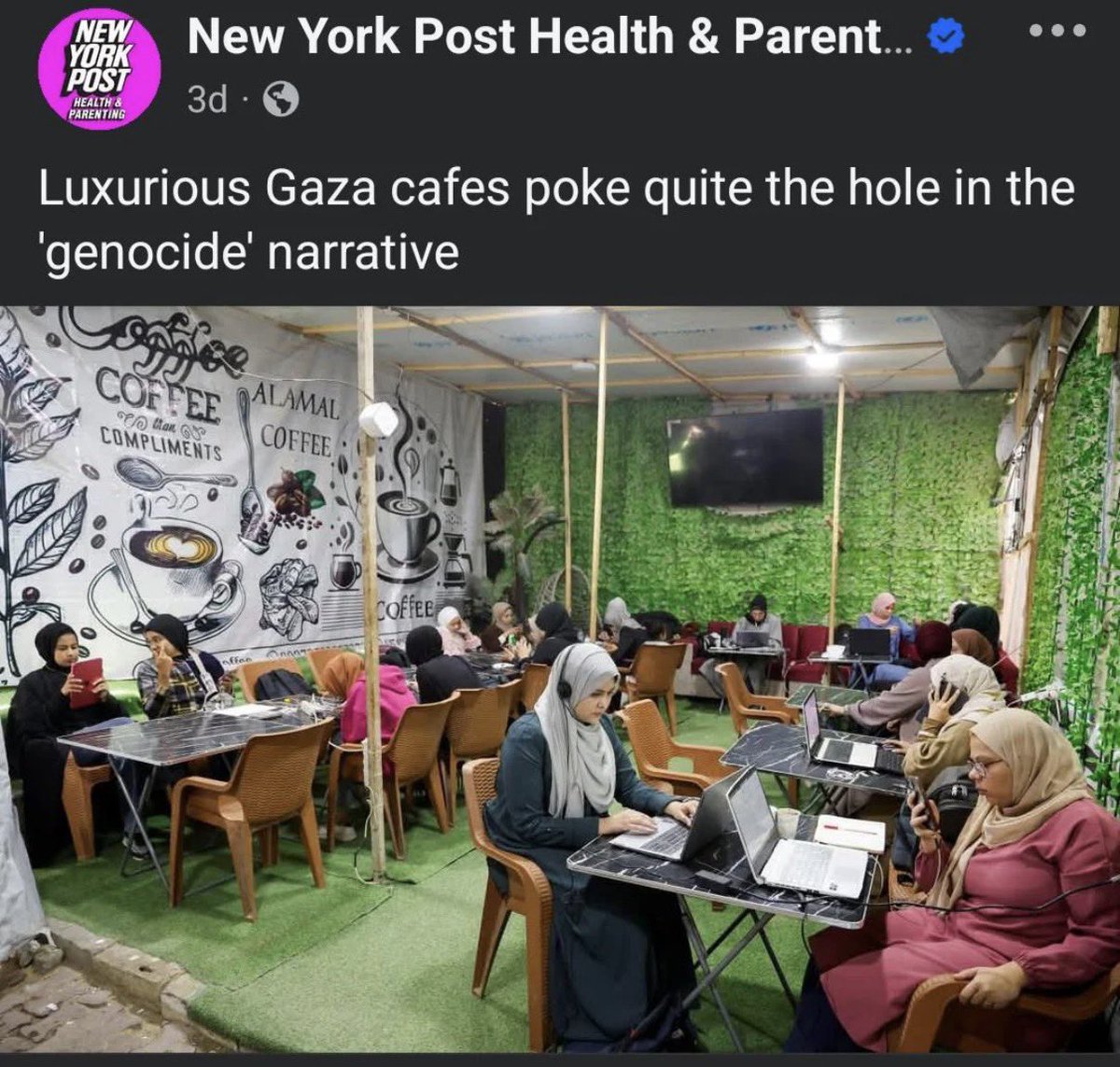
@abierkhatib In the kind of world where Gazans provide no real value to humankind, they contribute absolutely nothing but hate and terrorism yet all have laptops, cellphones, free food, etc.
English


@nelsabbey This is why you will all be deported BTW.
Voting in ethnic lines, on ethnic issues, in my white country.
When we win we will remove the vote from anyone who doesn't have British ancestry.
English
A key fact emerging from the local elections is that Black and Brown Britons appear to be done with Labour. They have switched to the Greens or indie candidates. This helps explain why Labour lost in virtually all the highly diverse areas they once were able to bank on.
English