Sabitlenmiş Tweet

RMI released this report last week which has attracted a bit of attention on social media. /1
rmi.org/insight/the-cl…
English
💧 David Mitchell
35.7K posts
@flexibledragnet
It's all about the rate of change. It won't stop, so you may as well enjoy the ride. The future is here and you are part of it. | Founder https://t.co/SQ7kO0yBl7
@bublitzkrieg @CCguerilla @predict_addict @tdietterich @arxiv I'm an economist and therefore care about tradeoffs and optimal allocation of time. I don't want productive scholars to be afraid to trust their grad students or undergrad RA's with checking citations because the penalty for having a hallucinated citation is so high.
I can't believe I'm saying this, but @Barnaby_Joyce is right. "You buy assets out of after-tax income." That's why every advanced economy taxes capital gains at a lower rate than ordinary/labour income. And if we want to lower the burden on workers th en we should tax labour income less and consumption more. theaustralian.com.au/news/tanya-pli…
The CGT discount exists because share investing has risk, ties up your money for years, and you pay tax on a lump sum capital gain = not regular income That one off gain can push your entire amount into a higher tax bracket, unlike your normal salary. The discount balances that.


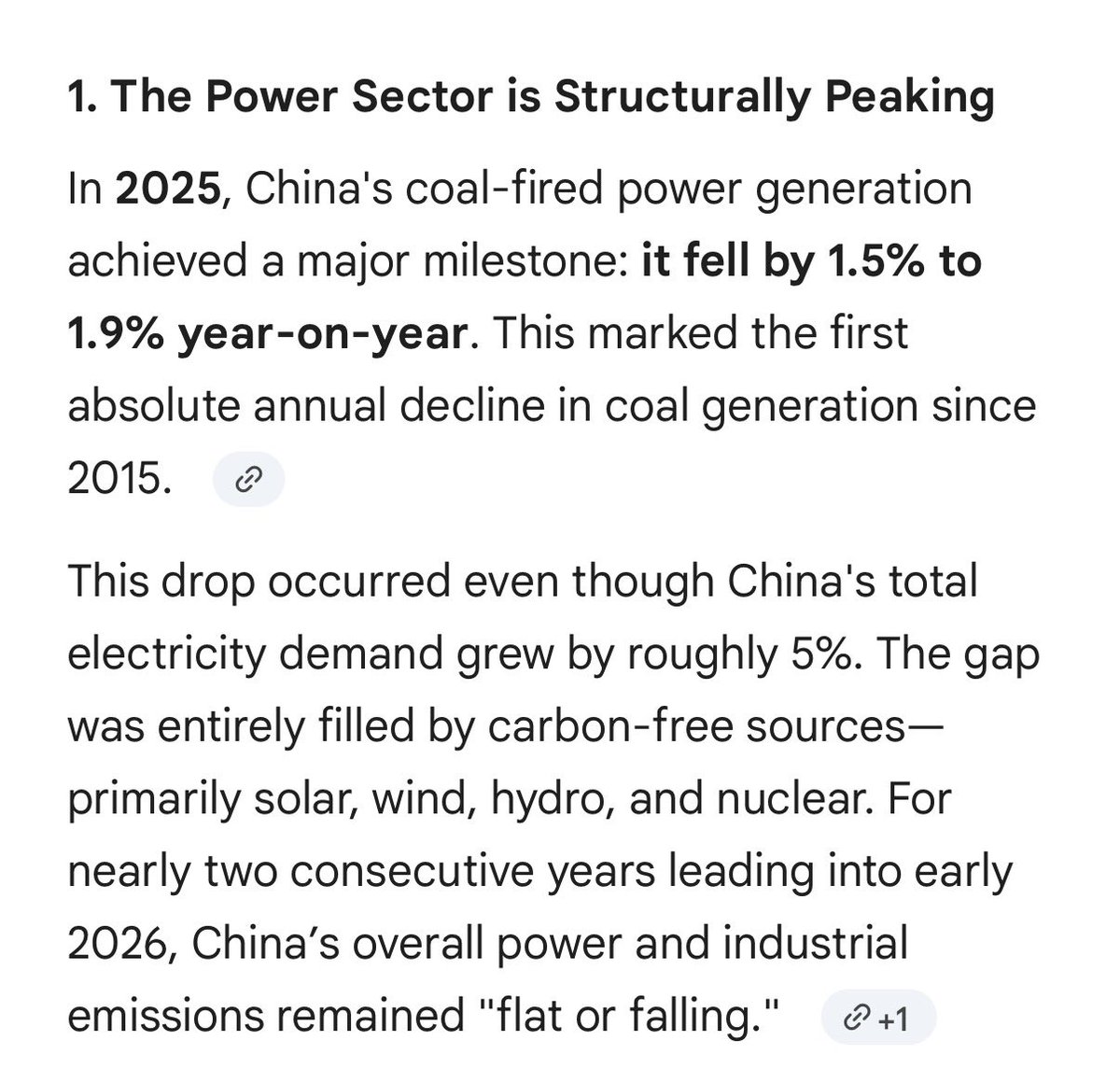
China added a Germany-sized electricity grid last year— (This Data Insight was written by @_HannahRitchie and Pablo Rosado.) We’ll often see headlines quoting how many gigawatts of new solar farms or coal plants China is building. But it’s hard to get a meaningful sense of scale for how electricity generation in China is changing. The chart puts it in perspective. In 2025 alone, China’s electricity generation increased by almost 500 terawatt-hours (TWh). This is compared here to the total amount of electricity that whole countries generate each year. Germany generates almost exactly that amount. That means China effectively added a Germany-sized grid to its electricity system in just one year. What’s also quite staggering is that almost all of this new generation came from solar and wind. China generated 340 TWh more electricity from solar than the year before. That’s more than our two home countries, the UK and Spain, generate from all sources each year. Low-carbon sources grew so much that coal power in China actually fell slightly.





World installing grid batteries at a blistering pace. A total of 112 gigawatts of batteries were deployed around the world in 2025 — 10 times the amount added just four years prior. Installations of grid batteries, which can store solar and other energy for later use, surged by 48% in 2025 from the year prior. canarymedia.com/articles/batte…
Ein schönes Beispiel, wie eine kleine Meldung, aus dem Kontext gerissen, eine subtile Eneegiewende– Propaganda ergeben kann. Oder was ist denn die Botschaft anderes, als „Wir schaffen das“ für Menschen, denen die MWh und MW wenig sagen? Deshalb erkläre ich hier den Kontext. Aber dass Sie dies einen „großen“ Speicher nennnen. Dies ist ein erster Hinweis zum Vergleich. Die Nennung der Kosten haben Sie geschickt vermieden. Bei einer Leistung von 100 MW wäre Ihr Speicher rein rechnerisch nach weniger als 5 Stunden leer. Er kann also nur zur kurzzeitigen Netzstabilisierng dienen. Diese wäre ohne die Destabilisierung des Netzes durch volatile Einspeisung durch Wind und PV– Anlagen übrigens gar nicht notwendig. Zum Vergleich, der Punmpspeicher Goldisthal hat eine Leistung von 1.060 MW und für ca. 8 Stunden Wasser, d.h. er hat damit eine Kapazität von etwas über 8.000 MWh. Alle Punpspeicher in DE haben in Summe eine Kapazität von ca. 40.000 MWh und eine Leistung von knapp 7.000 MW. Die reicht rein rechnerisch in DE für ca. 30 Minuten, praktisch keine Sekunde, da die Leistung gegenüber der Netzlast von ca. 70.000 MW viel zu gering ist. Doch auch die Pumpspeicher dienen nur zur Stabilisierung des Netzes und der Fähigkeit zum Schwarzstart. Von einer Langzeitspeicherung für Dunkelflauten ist man meilenweit entfernt. Wäre es nicht toll, wenn auch Sie demnächst einen Hinweis auf demn Kontext geben würden?