Sabitlenmiş Tweet
Human
8.5K posts


Human
@frz_human
I only repost HSR stuff. This account only contain trash, not worth stalking.
Indonesia Katılım Eylül 2018
156 Takip Edilen107 Takipçiler
Human retweetledi


@MrBrown_114 @IslamicSH_ It seems that you don't even know what the meaning of arabic word "jihad" is.
Jihad = struggle.
Jihadi = person who struggling.
You are jihadi when you study for your exam, you are jihadi when you work hard to feed your family, you are jihadi when you sick. We are all jihadis.
English

@IslamicSH_ Brilliant but that doesn’t mean we should accepts radical jihadi Islam that would actually kill him for being too knowledgeable that it threatens their dogma.
English
✨You’ve seen this in every math class:
sin(a ± b) = sin a cos b ± cos a sin b
sin(2a) = 2 sin a cos a
cos(2a) = 1 − 2 sin²(a)
🚨But did you know these formulae came from a Muslim scholar 1000 years ago?
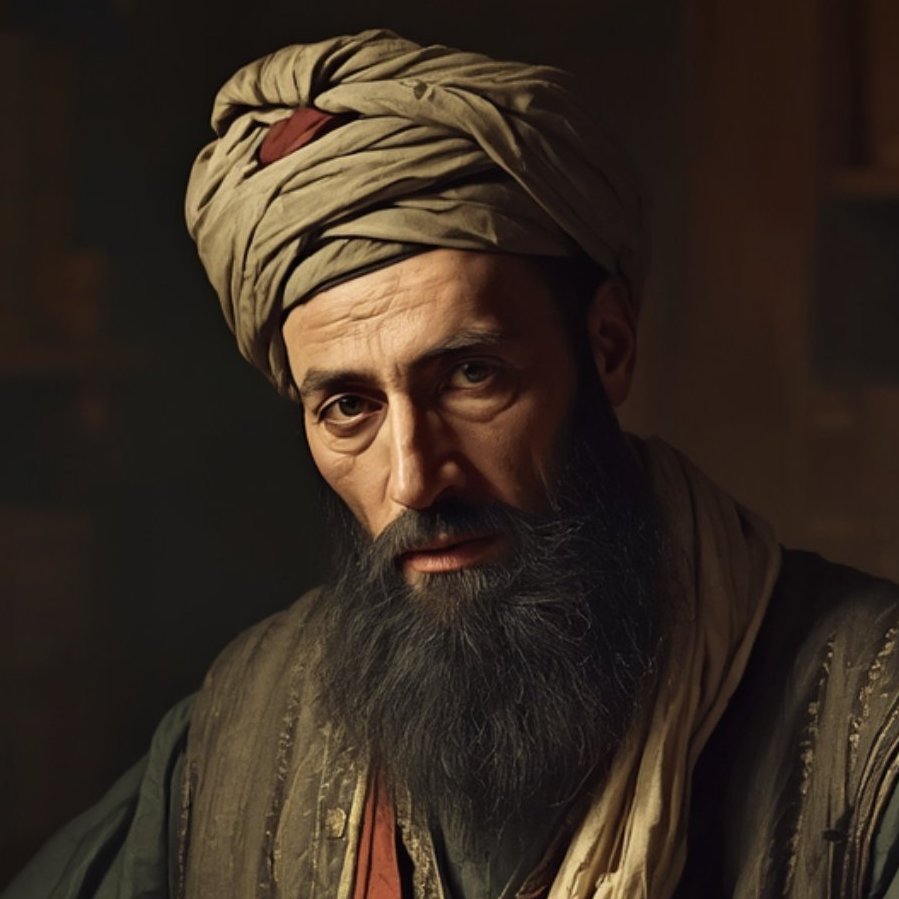
Meet Abū al-Wafā al-Būzjānī, the genius who shaped Trigonometry. 📐
Abū al-Wafā Būzhjānī (d. 998) was a Persian Muslim mathematician and astronomer from Khorasan. Born in Būzjān (near Nishapur, Iran), Būzhjānī showed early brilliance in mathematics and geometry.
He later moved to Baghdad, then the heart of the Islamic Golden Age, a city of scholars, libraries, and observatories.
In Baghdad, he became one of the leading scientists of the House of Wisdom (Bayt al-Ḥikmah). Here, he studied Greek works like Euclid and Ptolemy, and expanded them far beyond their original limits.
📐 His Contributions to Mathematics:
He established several trigonometric identities such as [sin(a±b)] in their modern form:
{sin(α ± β)= Sinα Cosβ ± Cosα Sinβ}
{sin(a + b) = Sin(a)Cos(b) + Cos(a)Sin(b)}
{Cos(2a) = 1-2sin²(a)}
{Sin(2a) = 2Sin(a) Cos(a)}
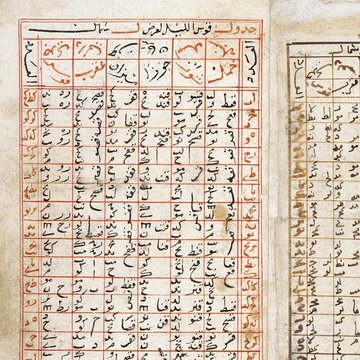
He compiled tables of sines and tangents at 15° intervals, introduced secant and cosecant, and explored the relationships between all six trigonometric lines. His work made both mathematics and astronomy quantitatively precise.
He also studied geometry, arithmetic, and number theory, writing detailed commentaries on al-Khwārizmī and Diophantus.
Some sources suggest that he introduced the tangent function, although other sources give the credit for this innovation to al-Marwazi.
🌌 His Work in Astronomy:
Abū al-Wafā designed and built a wall quadrant, a large, fixed instrument used to measure celestial altitudes with remarkable accuracy.
This invention influenced later observatories across the Islamic world.
His masterpiece, Kitāb al-Majisṭī (“The Almagest”), improved upon Ptolemy’s astronomy, described planetary motion, and developed mathematical methods for finding the Qibla direction, the direction of prayer. 🕌
In 997, he participated in an experiment to determine the difference in local time between his location, Baghdad, and that of al-Biruni (who was living in Kath, Uzbekistan).
Their result was astonishingly accurate, within about 1 hour of modern calculations. ⏱️
English
Human retweetledi


Human retweetledi


Human retweetledi


Human retweetledi


English
Human retweetledi


Human retweetledi





Human retweetledi

This is one of the most unusual sentences in any religious text. In my opinion, the most unusual in any book.
It makes a logical appeal: if it was from other than a divine source, their would have been a lot of inconsistency within the Quran.
The better translation is: much inconsistency. Not inconsistencies.
The root word here is khlf- it means change, not contradictions.
This is remarkable when you consider that the Quran was revealed over 23 years, in organic response to live events. It addresses theology, laws, household affairs, trade, divorce, marriage etc…
Yet there’s little difference tonal drift, or style change. All throughout, it’s very distinguishably Quranic.
If you read any author who has written extensively, over long periods of time, Shakespeare, Tolstoy, Dostoevsky, Marx, Virginia Woolf etc.. you’ll find that their style evolves, it changes, early Shakespeare is very different to late Shakespeare and so on.
Scholars call it register consistency and idiolect stability. Across human authors, especially under duress, these tend to fracture. Dostoevsky wrote very differently before and after his mock execution and Siberian exile. Tolstoy's late work is almost a repudiation of his early work. The psychological pressure shows.
Yet, besides the Meccan and Medinian shift, which was intentional and purposeful, there is almost no tonal drift.
Over 23 years, of which more than 15 were years of stress, persecution, defending against military attacks, the Prophet, peace be upon him, losing his first wife, his children, the period of the fatra, the sieges, etc.. yet, the style is consistent. A human would sway and change, develop with the time, etc.. find better styles. The theology is also very stable from the beginning to the end: One God, judgement day, heaven and hell, human nature, human is redeemable, God is forgiving.
It’s also incredibly unusual as a statement, because whoever made it, was aware of human psychology of authorship. That humans drift in authorship over a long time, which isn’t a very easy assessment to make in the desert, with so few books.
The argument is structurally interesting because it's self-referential and falsifiable in principle, it invites scrutiny rather than demanding blind acceptance. That's unusual for any text, religious or otherwise.
The verse also doesn't say "no inconsistency" or even "little inconsistency." It says "katheeran", much or many. The threshold being set is deliberately calibrated.
So the argument is actually more modest and therefore more defensible than critics often engage with.
It's claiming the absence of the level of inconsistency you would naturally expect from a human source operating under those conditions over that duration.
This matters because it immunises the argument against weak counterexamples. When a critic points to the Meccan/Medinan shift, the text has already pre-empted that by not claiming impossible perfection. The bar is set honestly.
Which is itself another unusual feature of the argument, it doesn't overclaim. Most apologetic arguments across religions tend to assert too much, which makes them brittle. This one is almost forensically careful about what it is and isn't saying.
والله أعلم

English
Human retweetledi


Human retweetledi


Human retweetledi

pompom! knp dia pribadinya pasrahan bgt😭😭😭😭 emg boleh buronan seimut itu?😭😭😭

Indonesia
Human retweetledi


Human retweetledi

Human retweetledi


Human retweetledi





Human retweetledi

I shaved his beard and now he looks 10 years younger 😭


English
Human retweetledi

Human retweetledi