
fstrom
6.1K posts


fstrom
@fstrom
Aktier, träning, böcker, natur, samhälle, ekonomi, börsen, familj och vänner upptar mkt av min tid. Investerar på heltid.
Sverige Katılım Kasım 2008
1.1K Takip Edilen428 Takipçiler



Förklara för mig som om jag vore 5 varför en falafel rulle kan kosta 25kr i Malmö/Lund medan det inte går att hitta under 100kr i Stockholm 💸

Svenska
Det är helt enkelt bortom fantasins gränser.
Att världens mäktigaste person (p världens mäktigaste position) inte läser rapporter, ”wingar” allt, killgissar och förlitar sig på gamla kontakter och belönar lojalitet högt över kompetens är en gåta i sig - som han kommer undan med!
Svenska
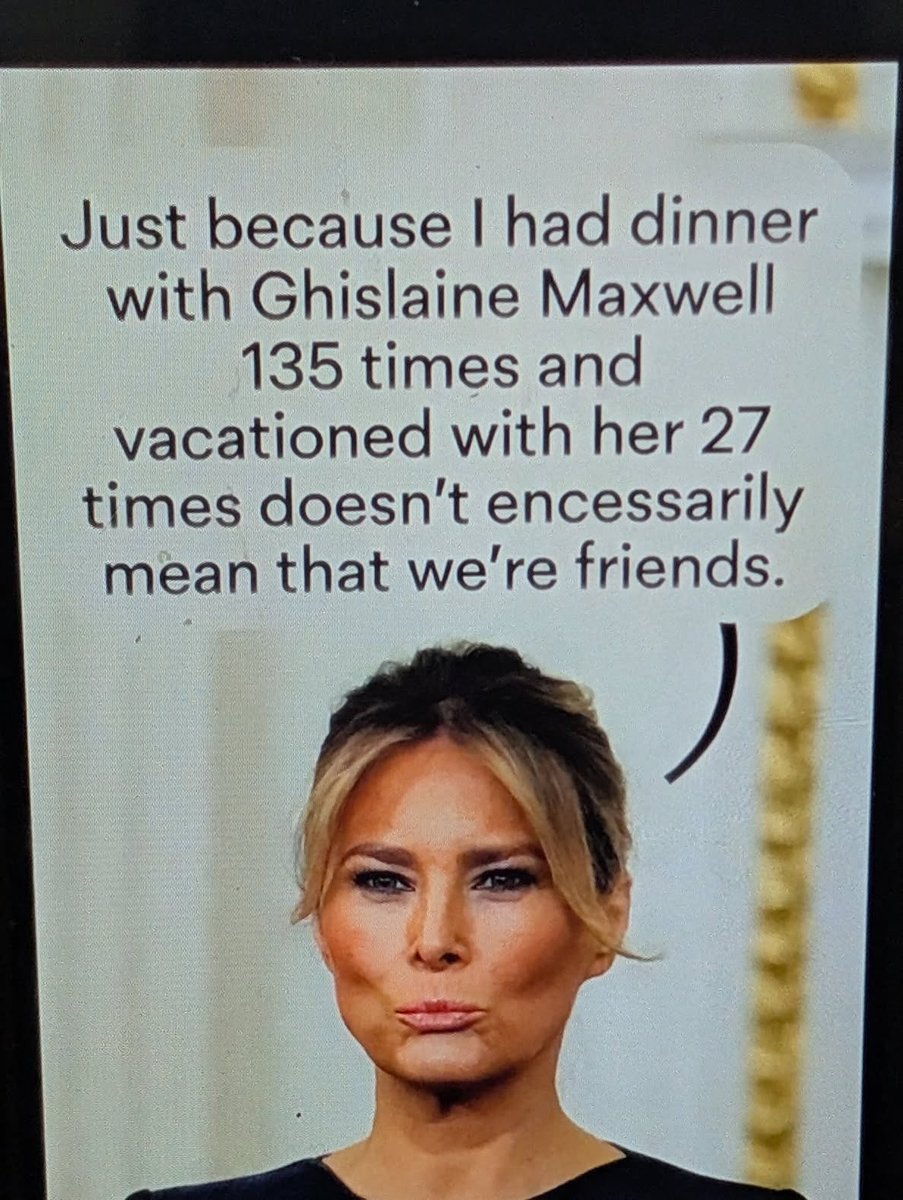

I’m confused… Didn’t her husband… The President of the United States… say that the Epstein files were a hoax and we should all move on?
Disclose.tv@disclosetv
NOW - Melania: "Now is the time for Congress to act. Epstein was not alone."
English
@CattardSlim @anders_aslund Similar to his visit at the Olympic opening ceremony in Milano… costing the American taxpayers around 50 million USD 🫤
English


fstrom retweetledi

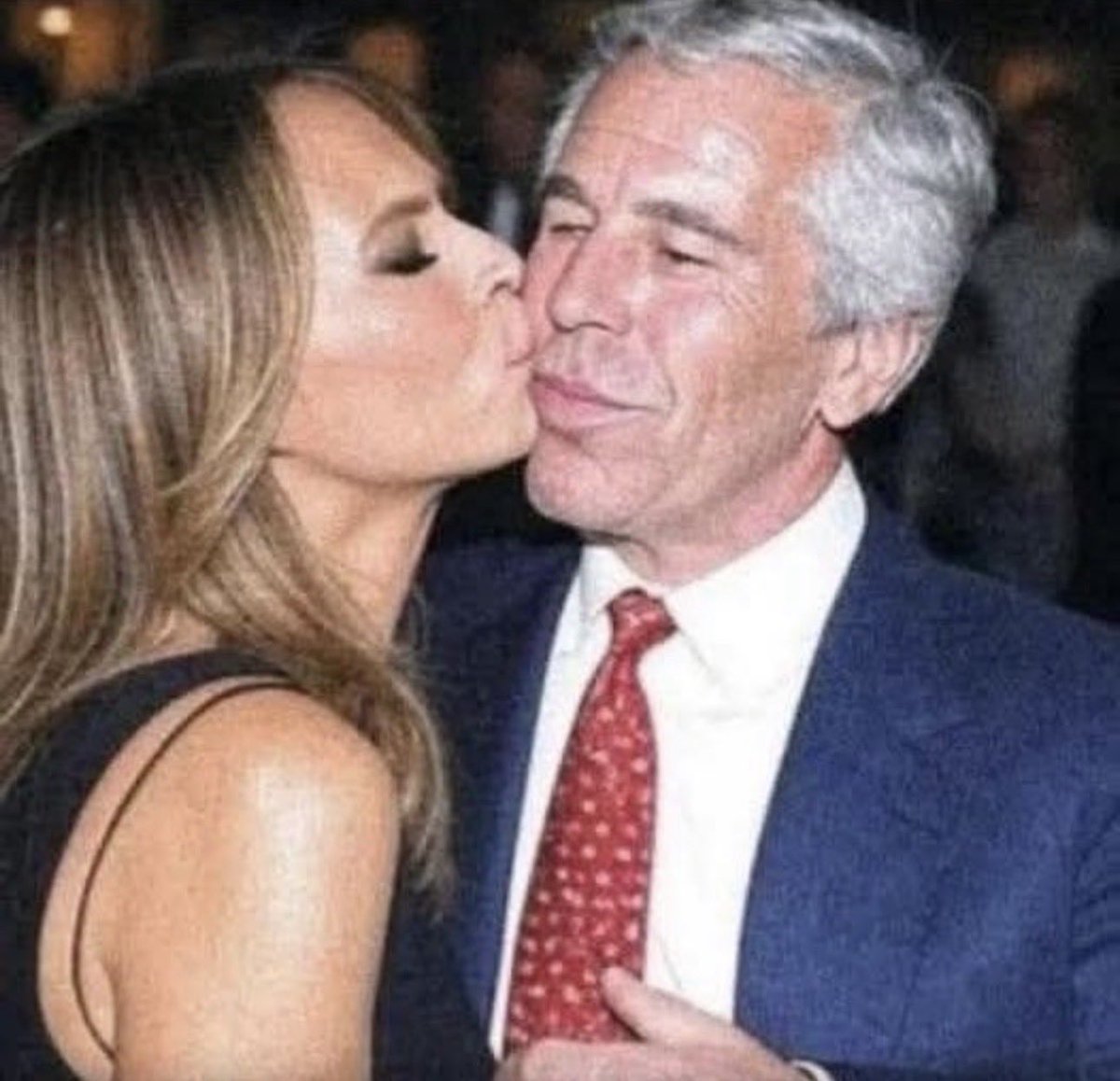
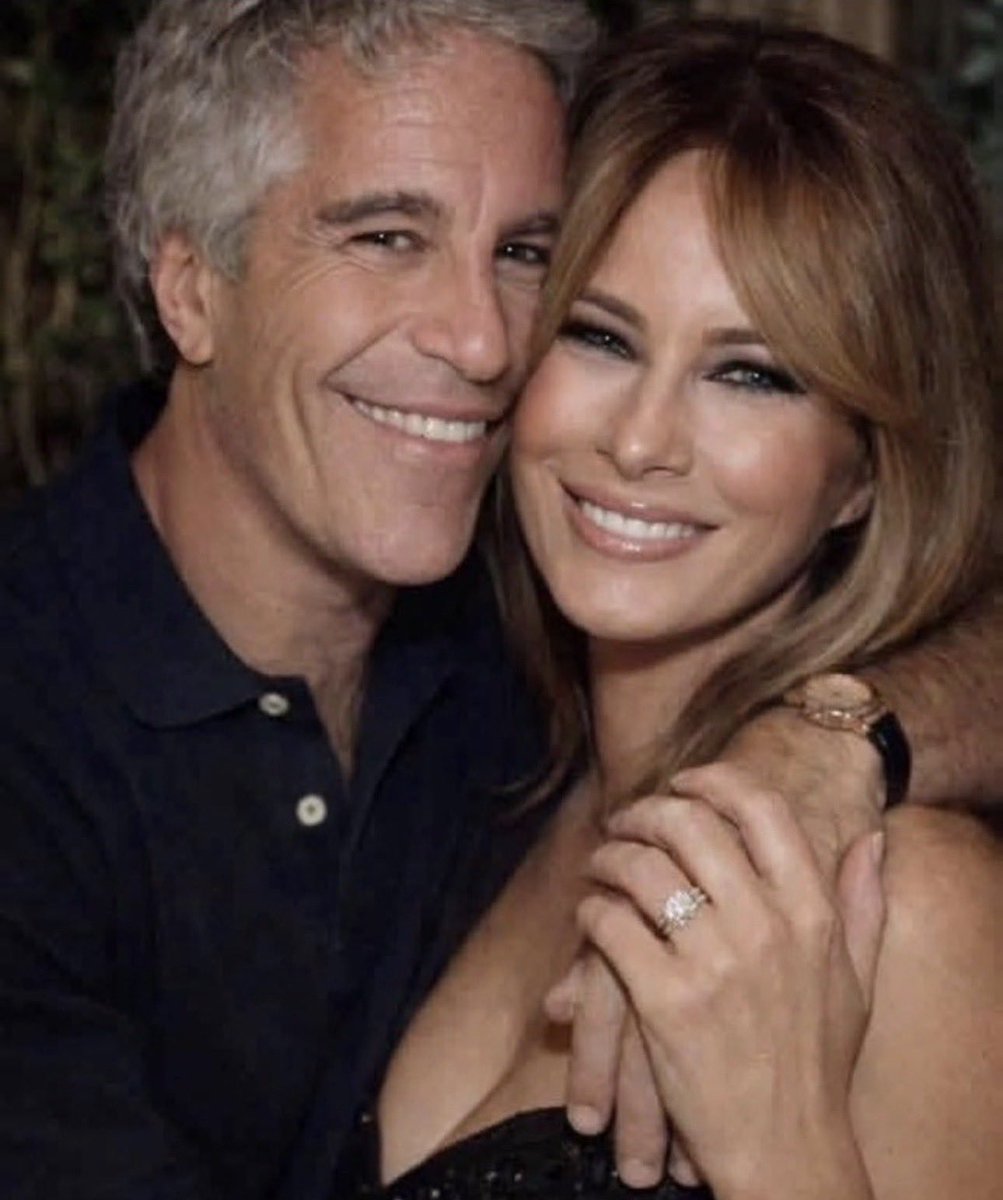
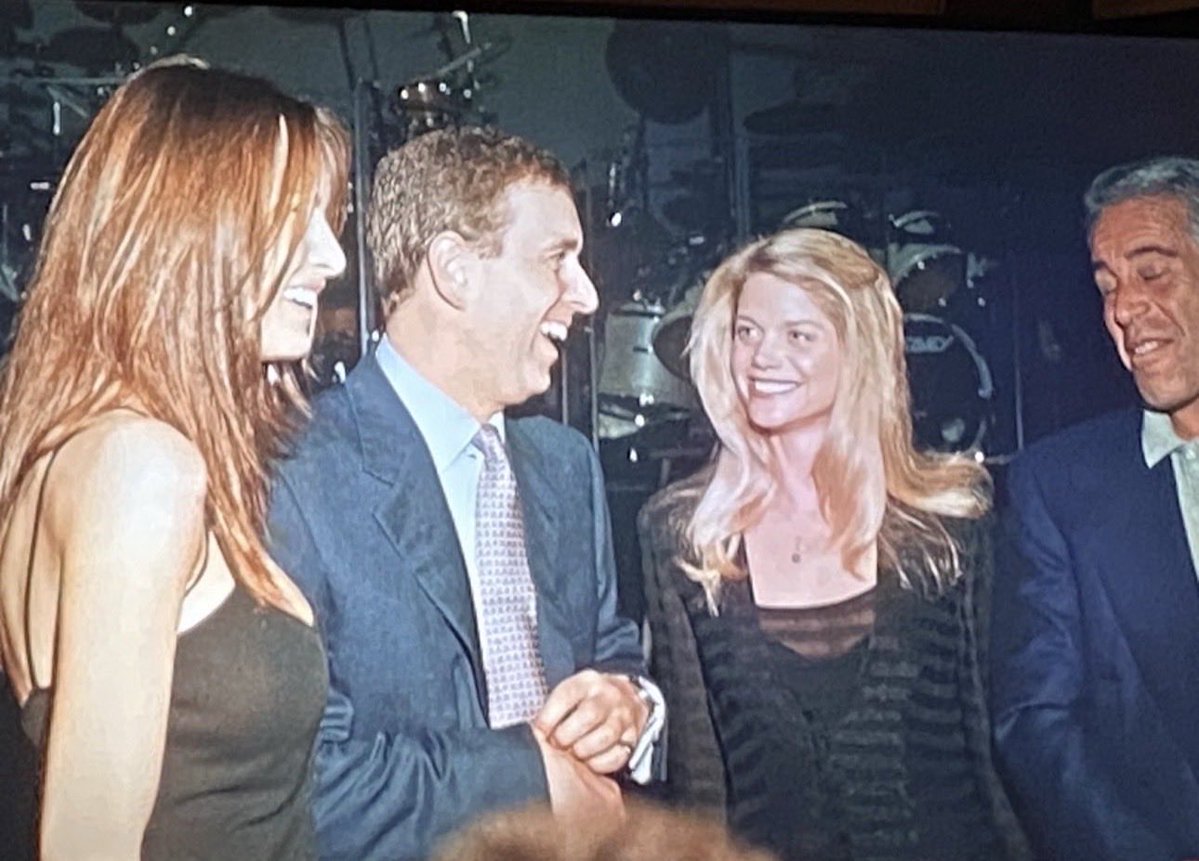
So…… First lady Melania Trump is claiming she does not know and never met Jeffrey Epstein - meanwhile:
English
fstrom retweetledi

fstrom retweetledi

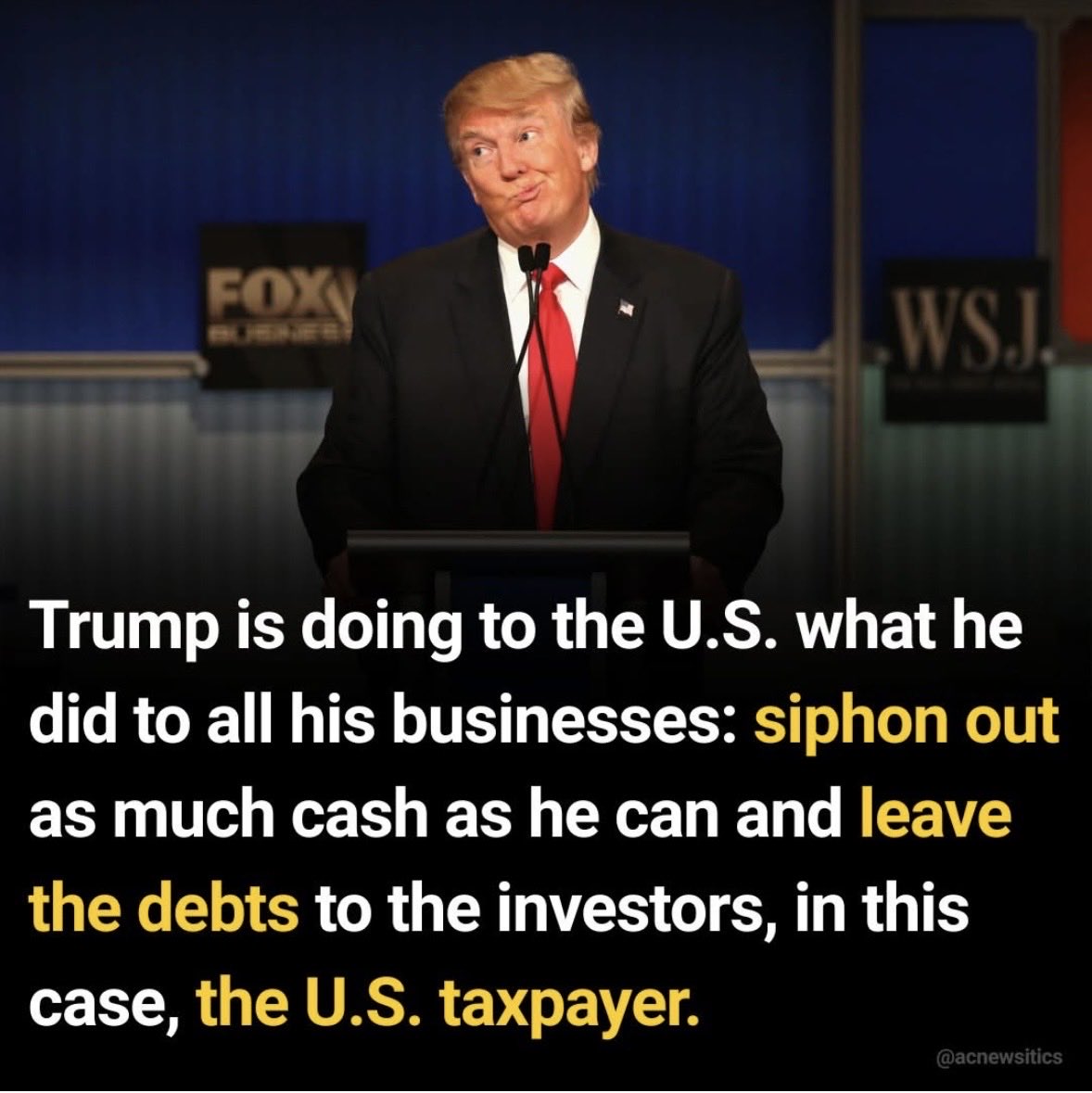
Reporter: Deliberate attacks on civilian infrastructure violate the Geneva conventions and international law.
Trump: Who are you with?
Reporter: I'm with the New York Times
Trump: Failing New York Times. Circulation is way down.
Reporter: Are you concerned that your threat to bomb power plants and bridges amount to war crimes?
Trump: No, not at all. These are disturbed people. Quiet. You no longer have credibility. You’re fake.
English
@shanaka86 You should inform the Trump administration what the war is really about.
English

In 1974, Henry Kissinger brokered a deal with Saudi Arabia: price your oil in dollars, recycle the surplus into US Treasuries, and America guarantees your security. The arrangement was never a formal treaty. It was a handshake backed by aircraft carriers. For fifty years, every barrel of oil sold anywhere on earth created demand for the dollar that financed America’s debt. The system required two things to function: Gulf oil priced in dollars, and an American navy guaranteeing the strait through which that oil flowed. Both conditions held until February 28, 2026.
Iran closed the Strait of Hormuz. Not physically but operationally, by mining approaches, attacking tankers, and establishing an IRGC toll booth that vets vessels, charges in yuan or stablecoins, and escorts approved ships through the Larak corridor. Traffic collapsed 95 percent. The oil that still flows does not flow in dollars. It flows in yuan, settled through CIPS, paid to an organisation the United States designated as a terrorist group. Iran has exported over 11.7 million barrels to China since the war began, all in the currency of a country that claims neutrality. The petrodollar is not being challenged by a BRICS policy paper. It is being challenged by a toll booth.
The United States holds $39 trillion in gross national debt. That debt is serviceable because foreign governments buy Treasuries. Foreign governments buy Treasuries because they accumulate dollars. They accumulate dollars because oil is priced in dollars. If oil stops being priced in dollars, the demand that finances the debt weakens. Saudi Arabia’s Treasury holdings fell to $134.8 billion in January 2026, down $14.7 billion in a single month. The Saudis let the 1974 agreement lapse in June 2024 without renewal. The recycling loop that Kissinger built is loosening at the same moment that the strait through which it operated is controlled by a hostile military collecting tolls in a rival currency.
This is what the war is about. Not the nuclear programme, which was the stated justification. Not the missiles, which are the visible weapons. The war is about which currency buys the molecule that powers the global economy, and the answer to that question is being determined at a 34-kilometre chokepoint by an entity that charges admission in yuan. Every American strike on Iranian infrastructure degrades the capability to maintain the toll. Every barrel of Iranian oil sold to China in yuan during the war demonstrates the toll’s viability. The strikes and the sales are running simultaneously. The petrodollar and its replacement are being tested in the same theatre at the same time.
Trump’s Tuesday deadline is the enforcement mechanism. “Power Plant Day” is not about punishing Iran for closing the strait. It is about ensuring that when the strait reopens, the oil flows in dollars and the $39 trillion remains financeable. The F-35 sales to the UAE and Saudi Arabia are not arms deals. They are petrodollar anchors, binding Gulf security to American hardware that requires American currency. The rescue proved reach. The strikes prove capability. The F-35 contracts prove commitment. And the toll booth proves that all of it might not be enough.
The 1974 handshake held for fifty years. The 2026 toll booth has operated for five weeks. The question the deadline answers tonight is whether fifty years of dollar dominance or five weeks of yuan experimentation determines what comes next.
open.substack.com/pub/shanakaans…
English
fstrom retweetledi

Karoline Leavitt: “It’s hard for President Trump to make key decisions on Iran when he doesn’t have enough intelligence.”
English
fstrom retweetledi

@SamuelDeats That long list will not cover the increase military spending. The rest will be borrowed from future generations, adding significant debt to the already huge deficit
English

@DrJStrategy Trump can’t tell Iran from Iraq. He believes Iran is an “Arab country”. He never read a military PM or update. In fact, he knows nothing about strategy or planning. He barely passed a basic dementia test.
He is absolutely and utterly clueless about anything he’s doing.
English

Food for thought.
Trump, Hormuz and the End of the Free Ride
For half a century, Western strategists have known that the Strait of Hormuz is the acute point where energy, sea power and political will intersect. That knowledge is not in dispute. What is new in this war with Iran is that the United States, under Donald Trump, has chosen not to rush to “solve” the problem. In Hegelian terms, he is refusing an easy synthesis in order to force the underlying contradiction to the surface.
The old thesis was simple: the US guarantees open sea lanes in the Gulf, and everyone else structures their economies and politics around that free insurance. Europe and the UK embraced ambitious green policies, ran down hard‑power capabilities and lectured Washington on multilateral virtue, secure in the assumption that American carriers would always appear off Hormuz. The political class behaved as if the American security guarantee were a law of nature, not a contingent choice. Their conduct today is closer to Chamberlain than Churchill: temporising, issuing statements, hoping the storm will pass without a fundamental reordering of their responsibilities.
Trump’s antithesis is to withhold the automatic guarantee at the moment of maximum stress. Militarily, the US can break Iran’s residual ability to contest the Strait; that is not the binding constraint. The point is to delay that act. By allowing a closure or semi‑closure to bite, Trump ensures that the immediate pain is concentrated in exactly the jurisdictions that have most conspicuously free‑ridden on US power: the EU and the UK. Their industries, consumers and energy‑transition assumptions are exposed.
In that context, his reported blunt message to European and British leaders, you need the oil out of the Strait more than we do; why don’t you go and take it? Is not a throwaway line. It is the verbalisation of the antithesis. It openly reverses the traditional presumption that America will carry the burden while its allies emote from the sidelines.
In this dialectic, the prize is not simply the reopening of a chokepoint. The prize is a reordered system in which the United States effectively arbitrages and controls the global flow of oil. A world in which US‑aligned production in the Americas plus a discretionary capability to secure,or not secure, Hormuz places Washington at the centre of the hydrocarbon chessboard. For that strategic end, a rapid restoration of the old status quo would be counterproductive.
A quick, surgical “fix” of Hormuz would short‑circuit the dialectic. If Trump rapidly crushed Iran’s remaining coastal capabilities, swept the mines and escorted tankers back through the Strait, Europe and the UK would heave a sigh of relief and return to business as usual: underfunded militaries, maximalist green posturing and performative disdain for US power, all underwritten by that same power. The contradiction between their dependence and their posture would remain latent.
By declining to supply the synthesis on demand, and by explicitly telling London and Brussels to “go and take it” themselves, Trump forces a reckoning. European and British leaders must confront the fact that their energy systems, their industrial bases and their geopolitical sermons all rest on an American hard‑power foundation they neither finance nor politically respect. The longer the contradiction is allowed to unfold, the stronger the eventual synthesis can be: a new order in which access to secure flows, Hormuz, Venezuela and beyond, is explicitly conditional on real contributions, not assumed as a right.
In that sense, the delay in “taking” the Strait, and the challenge issued to US allies to do it themselves, is not indecision. It is the negative moment Hegel insisted was necessary for history to move. Only by withholding the old guarantee, and by saying so out loud to those who depended on it, can Trump hope to end the free ride.

English
@HQNewsNow I honestly believed that reducing military spending was one of the goals, to decrease the huge deficit.
Instead, the biggest increase in military spending the world has ever seen will happen next year… 😳
English

Trump is seeking to pay for his new $1.5 trillion military budget by cutting the following:
$510 million - Grants for farmers and agricultural research
$82 million - Loans for rural small businesses (Fully eliminated)
$61 million - Support for farmers and food markets (Fully eliminated)
$240 million - School meals and food education for children abroad (Fully eliminated)
$659 million - Community building grants
$47 million - Support for minority-owned businesses (Fully eliminated)
$449 million - Economic development grants for communities
$1.6 billion - Weather forecasting, fisheries, and coastal protection (NOAA)
$993 million - Scientific research and technology standards
$150 million - Support for American exports and trade
$2.2 billion - Broadband and internet access programs
$8.5 billion - Funding for public schools
$1.5 billion - Vocational training and adult education (Fully eliminated)
$2.7 billion - College access and higher education support
$15.2 billion - Roads, bridges, and infrastructure projects
$1.1 billion - Home energy efficiency and clean energy programs (Fully eliminated)
$1.1 billion - Scientific research funding
$386 million - Environmental cleanup programs
$150 million - Cutting-edge clean energy research
$4 billion - Help paying home heating and cooling bills for low-income families (Fully eliminated)
$768 million - Refugee resettlement assistance
$819 million - Care and shelter for migrant children
$775 million - Local anti-poverty programs (Fully eliminated)
$5 billion - Public health programs, mental health services, and disease prevention
$5 billion - Medical research (NIH)
$129 million - Healthcare quality and safety research
$356 million - Emergency preparedness and disaster response
$1.3 billion - FEMA community disaster preparedness grants
$707 million - Cybersecurity protection for critical infrastructure
$52 million - Airport and transportation security
$40 million - Protection against chemical and biological weapons threats
$53 million - Funding for homeland security operations
$3.3 billion - Community development block grants for local neighborhoods (Fully eliminated)
$1.3 billion - Affordable housing construction grants (Fully eliminated)
$393 million - Programs to reduce homelessness
$529 million - Housing assistance for people living with HIV/AIDS (Fully eliminated)
$489 million - Housing and services for Native American communities
$50 million - Grants to help communities build more housing (Fully eliminated)
$60 million - Enforcement of fair housing and anti-discrimination laws
$58 million - Homebuyer and renter counseling services (Fully eliminated)
$45 million - Renewable energy development programs (Fully eliminated)
$1.7 billion - Grants for local law enforcement and public safety
$20 million - Civil rights mediation and legal access programs (Fully eliminated)
$1.6 billion - Job training for at-risk youth (Fully eliminated)
$395 million - Jobs program for low-income seniors (Fully eliminated)
$234 million - Worker safety and labor protection programs
$101 million - Enforcement of equal pay and workplace anti-discrimination laws
$46 million - Programs to combat child labor and forced labor abroad
$2 billion - International humanitarian aid
$1.2 billion - Food aid for hungry families abroad (Fully eliminated)
$4.3 billion - Global health and disease prevention programs
$2.7 billion - Funding for the United Nations and international partnerships
$642 million - International economic and treasury programs
$315 million - Democracy and anti-corruption programs abroad
$486 million - Grants for public transit projects
$4.2 billion - Electric vehicle charging infrastructure
$372 million - Airline service for rural and small communities
$145 million - Grants for sustainable and equitable infrastructure
$204 million - Loans and investment for underserved communities
$1.4 billion - IRS taxpayer services and enforcement
$100 million - Air pollution monitoring and reduction programs (Fully eliminated)
$1 billion - EPA grants to states for environmental protection
$2.5 billion - Clean drinking water and wastewater infrastructure funds
$90 million - Grants to reduce diesel pollution (Fully eliminated)
$3.4 billion - NASA space and earth science research
$297 million - NASA technology innovation programs
$1.1 billion - International Space Station operations
$143 million - STEM education programs
$309 million - Small business development and entrepreneurship programs
$170 million - Small Business Administration operations
$158 million - Loans for small businesses

English


‘We’re going to bring them back to the Stone Ages, where they belong,’ the US president warned in a 19-minute address that dashed investors’ hopes of an imminent end to the conflict in the Middle East. ft.trib.al/qQBzcr5

English